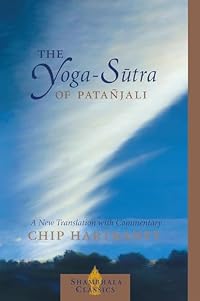
The Yoga-Sutra of Patanjali: A New Translation with Commentary (Shambhala Classics)
by Patañjali.,
On This Page
Description
In just 196 short aphorisms, this classic work of Indian philosophy spells out succinctly how the mind works, and how it is possible to use the mind to attain liberation. Compiled in the second or third century CE, the Yoga-Sutra is a road map of human consciousness--and a particularly helpful guide to the mind states one encounters in meditation, yoga, and other spiritual practices. It expresses the truths of the human condition with great eloquence: how we know what we know, why we suffer, show more and how we can discover the way out of suffering. Chip Hartranft's fresh translation and extensive, lucid commentary bring the text beautifully to life. He also provides useful auxiliary materials, including an afterword on the legacy of the Yoga-Sutra and its relevance for us today. show lessTags
Recommendations

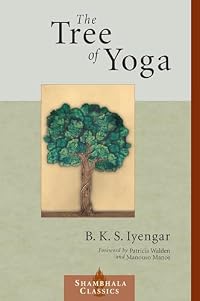
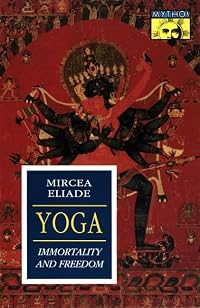
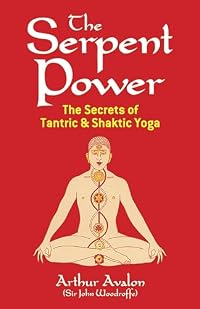
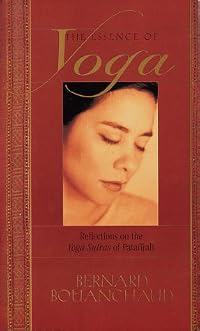



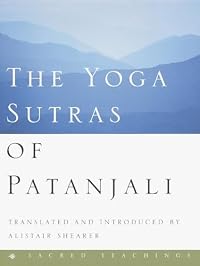
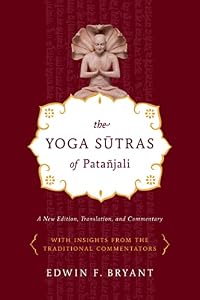


Member Reviews
Approximately two thousand years old, The Yoga-Sutra of Patañjali is the landmark scripture on classical yoga. The translation and commentary provided here by Georg Feuerstein are outstanding for their accessibility and their insight into the essential meaning of this ancient and complex text.
About the Author:
A scholar of international renown who has studied and practiced yoga since the age of fourteen, Feuerstein also brings to The Yoga-Sutra of Patañjali his experience as a professional indologist. His faithful and informed rendering of the aphorisms (sutras) is based on extensive personal research into the Sanskrit sources. Each word is explained so that the entire text becomes readily available to the western reader and student show more of yoga.
"This is certainly one of the most profound and original contributions to the understanding of classical yoga." - (Professor Mircea Eliade, University of Chicago, author of Yoga: Immortality and Freedom ). show less
About the Author:
A scholar of international renown who has studied and practiced yoga since the age of fourteen, Feuerstein also brings to The Yoga-Sutra of Patañjali his experience as a professional indologist. His faithful and informed rendering of the aphorisms (sutras) is based on extensive personal research into the Sanskrit sources. Each word is explained so that the entire text becomes readily available to the western reader and student show more of yoga.
"This is certainly one of the most profound and original contributions to the understanding of classical yoga." - (Professor Mircea Eliade, University of Chicago, author of Yoga: Immortality and Freedom ). show less
This relatively short text is a buddhistic interpretation/commentary of Patanjali's Yoga-Sutra. The basic concepts are readily explained in the introduction; I believe that this helped my understanding a lot. The core part groups several verses together and elaborates on their meaning. Various appendices provide a contemporary perspective.
Since, the text is seriously written and dense, I often had to read paragraphs multiple times. Although, most parts are clear/understandable it also contains sentences like "[...] attention must narrow its scope [...] to just those impressions that evoke the felt sense of the body [...]" (end of p.42) that I could not endow with any meaning. Those parts that I could understand seemed logically sound show more and chapter 3 (about schamanic powers) is treated with an amount of distance that I found almost appropriate.
Given the subject at hand, the level of clarity achieved by the commentator is very respectable. show less
Since, the text is seriously written and dense, I often had to read paragraphs multiple times. Although, most parts are clear/understandable it also contains sentences like "[...] attention must narrow its scope [...] to just those impressions that evoke the felt sense of the body [...]" (end of p.42) that I could not endow with any meaning. Those parts that I could understand seemed logically sound show more and chapter 3 (about schamanic powers) is treated with an amount of distance that I found almost appropriate.
Given the subject at hand, the level of clarity achieved by the commentator is very respectable. show less
Ratings
Members
- Recently Added By
Lists

Excellent Yoga Books
108 works; 5 members
Author Information

63+ Works 945 Members
Common Knowledge
- Epigraph
- Some men refuse to recognize the depth of something because they demand that the profound should manifest itself in the same way as the superficial. - A.T. de Nicolas, "Avatara" (p.8)
Verily, there is no merit higher than Yoga, no good higher than Yoga, no subtlety higher than Yoga; there is nothing that is higher than Yoga. - Yogasikha-Upaisad I.67 - First words
- Virtually nothing is known about the author of our text: at least nothing of any degree of historical certainty.
- Last words
- (Click to show. Warning: May contain spoilers.)Kaivalya-Pada: The process-of-involution of the primary-constituents, devoid of purpose for the Self, is [what is called] aloneness [of seeing], or the establishment of the power of awareness in [its] own-form. Finis.
Classifications
Statistics
- Members
- 254
- Popularity
- 126,902
- Reviews
- 2
- Rating
- (3.94)
- Languages
- English, Sanskrit, Spanish
- Media
- Paper, Ebook
- ISBNs
- 7
- ASINs
- 1