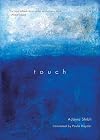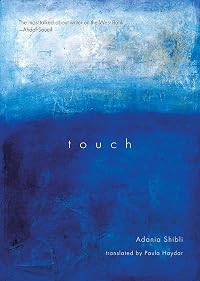
Touch
by Adania Shibli
On This Page
Description
Touch centers on a girl, the youngest of nine sisters in a Palestinian family. In the singular world of this novella, this young woman's everyday experiences-watching a funeral procession, fighting with her siblings, learning to read, perhaps falling in love-resonate until they have become as weighty as any national tragedy. The smallest sensations compel, the events of history only lurk at the edges-the question of Palestine, the massacre at Sabra and Shatila. In a language that feels at show more once natural and alienated, Shibli breaks with the traditions of modern Arabic fiction, creating a work that has been and will continue to be hailed across literatures. Here every ordinary word, ordinary action is a small stone dropped into water: of inevitable consequence. We find ourselves mesmerized one quiet ripple at a time. show lessTags
Recommendations













Member Reviews
Like a pouch of snapshots dropped and scattered, the 33 vignettes in this very short novella about a young Palestinian girl rely on the reader to put them in order and make meaning. Their spareness is riveting, and Shibli’s language (with Paula Haydar’s translation from the Arabic) is extraordinary, opening the mind and seeding the subconscious to bring forth details and a story beyond what is written on the page (for me, reminiscent of Faulkner’s As I Lay Dying). I loved it and about half-understood it; I so look forward to reading it again.
Touch is a small novel—a novella, really—of a young Palestinian girl’s life from that strange indeterminate moment we all experience when we realize for the first time that we exist, a self-defined entity (and oh, what a lonely epiphany that is), to the moment when she is married—when, in fact, she ceases to exist as a self-defined person and becomes . . . something else. Although divided into sections that evoke the senses—color, silence, language, movement—the story is told not linearly, but in the way we each think of our own lives; a series of brief moments and events that are ordered in our minds not by time so much as by significance and emotional clarity. . . read the full review
This lyrical novella invites you into the world of an observant little girl who lives with her parents and eight sisters in current-day Palestine. She is the littlest one in the family, and one gets the sense that she is loved, but a tad neglected. Everyone is always busy, so she escapes into a private space where she observes the things that make up her everyday world: colors, silence, movement, and language.
Shibli's offering is unique. The prose is creative, poetic, and touching. Instead of a linear plot, one is treated to a set of wonderfully crafted vignettes that paint a dramatic picture with great subtlety. Although she is part of a large family, this little girl is lonely. To compound her loneliness, she contracts a severe ear show more infection that causes loss of hearing, which further alienates her, but also causes an explosion of noise in her ears that compels her to seek out quiet corners. Her favorite retreat is her father's car:
"During the day she wandered far into the fields, and in the evening she sat in her father's car until everyone fell asleep. Then she would come inside, put the car keys on top of the fireplace, and go into her bedroom until the next sound came and pushed her out of the house."
She finds comfort in silence and also in books, and reading. She cannot keep her eyes off the constant movement of everything. She watches the smoke as her father sits smoking on the veranda, and tries to, "cut off the rising smoke with her fingers before it spread out in all directions: but she could not stop the smoke, which curled up around her fingers and continued to rise and disperse." In her silence, she notices the littlest movements, sounds and colors.
She adores her father. She often accompanies him on trips, and always seeks him out. When he's not home, she waits for him. There is one other person who pays attention to her: the neighbor. When it rains, he brings her coat to school; and everyone constantly teases her about him, saying that he loves her. He's the only person who shows her any affection; although it is sometimes totally misguided, and crosses the line.
The original Arabic title Masaas is astonishingly apt, and could be translated as "touch" or "feel", "relations" or "connections", and also "violation" or "encroachment". All three meanings come into play in this quiet, contemplative book, which is a delightful and poignant read. I hope that Touch will get the attention it deserves. It is special and the little girl, who is never named, lingers long after the last page is turned.
Review initially published in Issue 5 of Belletrista: http://www.belletrista.com/2010/issue5/reviews_10.php show less
Shibli's offering is unique. The prose is creative, poetic, and touching. Instead of a linear plot, one is treated to a set of wonderfully crafted vignettes that paint a dramatic picture with great subtlety. Although she is part of a large family, this little girl is lonely. To compound her loneliness, she contracts a severe ear show more infection that causes loss of hearing, which further alienates her, but also causes an explosion of noise in her ears that compels her to seek out quiet corners. Her favorite retreat is her father's car:
"During the day she wandered far into the fields, and in the evening she sat in her father's car until everyone fell asleep. Then she would come inside, put the car keys on top of the fireplace, and go into her bedroom until the next sound came and pushed her out of the house."
She finds comfort in silence and also in books, and reading. She cannot keep her eyes off the constant movement of everything. She watches the smoke as her father sits smoking on the veranda, and tries to, "cut off the rising smoke with her fingers before it spread out in all directions: but she could not stop the smoke, which curled up around her fingers and continued to rise and disperse." In her silence, she notices the littlest movements, sounds and colors.
She adores her father. She often accompanies him on trips, and always seeks him out. When he's not home, she waits for him. There is one other person who pays attention to her: the neighbor. When it rains, he brings her coat to school; and everyone constantly teases her about him, saying that he loves her. He's the only person who shows her any affection; although it is sometimes totally misguided, and crosses the line.
The original Arabic title Masaas is astonishingly apt, and could be translated as "touch" or "feel", "relations" or "connections", and also "violation" or "encroachment". All three meanings come into play in this quiet, contemplative book, which is a delightful and poignant read. I hope that Touch will get the attention it deserves. It is special and the little girl, who is never named, lingers long after the last page is turned.
Review initially published in Issue 5 of Belletrista: http://www.belletrista.com/2010/issue5/reviews_10.php show less
Adania Shibli is a Palestinian author who was recently recognized at the Hay Beirut39 Literature Festival, which featured 39 Arab authors under 39 years of age. An accomplished novelist and writer of short stories and essays, she has recently completed a PhD at the University of East London.
Touch is a novella about a young Palestinian girl, which consists of five themed sections of prose poetry: colors, silence, movement, language, and the wall. Although tragedy, sadness and isolation are present throughout the narrative, there are only a couple of fleeting references to the Palestinian struggle, which seemingly have little if any impact on the life of the girl. The writing is beautiful and evocative, and this slim book is best read show more slowly, attentively and repeatedly for fuller enjoyment and appreciation.
This is a typical excerpt from one of the sections:
The mother sat on a rocking chair that rocked back and forth until its movement faded away and she would start it again. The little girl was standing in front of her on the edge of the veranda, holding onto its iron frame, while her eyes were fixed to the sky, holding onto the edge of a cloud. Thus her journey would start through the space over the veranda, with the mother behind her, until the cloud disappeared beyond the horizon. The girl would turn her head, then look straight up again and wait for the next cloud.
She suddenly got dizzy, so she sat on the edge of the veranda and pushed her head between the railings, but they did not allow it to pass through. Her head stopped just before the ears, and so did the spinning inside it. But everywhere else in the world, in the fields stretched out before her, the spinning continued. Millions of blades of grass were moving in the same direction as the clouds. The softness of the hair of that green sea was similar to the softness of the sun's rays the moment they spilled through the clouds.
Highly recommended. show less
Touch is a novella about a young Palestinian girl, which consists of five themed sections of prose poetry: colors, silence, movement, language, and the wall. Although tragedy, sadness and isolation are present throughout the narrative, there are only a couple of fleeting references to the Palestinian struggle, which seemingly have little if any impact on the life of the girl. The writing is beautiful and evocative, and this slim book is best read show more slowly, attentively and repeatedly for fuller enjoyment and appreciation.
This is a typical excerpt from one of the sections:
The mother sat on a rocking chair that rocked back and forth until its movement faded away and she would start it again. The little girl was standing in front of her on the edge of the veranda, holding onto its iron frame, while her eyes were fixed to the sky, holding onto the edge of a cloud. Thus her journey would start through the space over the veranda, with the mother behind her, until the cloud disappeared beyond the horizon. The girl would turn her head, then look straight up again and wait for the next cloud.
She suddenly got dizzy, so she sat on the edge of the veranda and pushed her head between the railings, but they did not allow it to pass through. Her head stopped just before the ears, and so did the spinning inside it. But everywhere else in the world, in the fields stretched out before her, the spinning continued. Millions of blades of grass were moving in the same direction as the clouds. The softness of the hair of that green sea was similar to the softness of the sun's rays the moment they spilled through the clouds.
Highly recommended. show less
30 (from 2010). Touch by Adania Shibli (2002, 72 pages, read Oct 8, and again Oct 9-12)
Translated by Paula Haydar
A series of short sketches with only indirect links about a rather sad young girl in the Palestinian West Bank. This was curious the first time through, poetic, difficult the grasp or find meaning from, very quick, and then suddenly I found myself reading about the Palestinian response to Sabra and Shatila*. I read it through again, and third time, and skimmed back through several times and things begin to make sense, the links became stronger, the picture got clearer and the language Shibli uses began to have more meaning and reveal itself as not simply poetic, but layered, complex, and it does that thing some authors can do show more where it, the language, can communicate something very dark and yet be, itself, quite beautiful.
I read this for belletrista in order to take part in one of the conversations belletrista published. A first for me, both this kind of conversation and the being published. That was fun. You can find the conversation here: http://www.belletrista.com/2010/issue8/features_4.php
*http://en.wikipedia.org/wiki/Sabra_and_Shatila_massacre
2010
http://www.librarything.com/topic/90167#2381900 show less
Translated by Paula Haydar
A series of short sketches with only indirect links about a rather sad young girl in the Palestinian West Bank. This was curious the first time through, poetic, difficult the grasp or find meaning from, very quick, and then suddenly I found myself reading about the Palestinian response to Sabra and Shatila*. I read it through again, and third time, and skimmed back through several times and things begin to make sense, the links became stronger, the picture got clearer and the language Shibli uses began to have more meaning and reveal itself as not simply poetic, but layered, complex, and it does that thing some authors can do show more where it, the language, can communicate something very dark and yet be, itself, quite beautiful.
I read this for belletrista in order to take part in one of the conversations belletrista published. A first for me, both this kind of conversation and the being published. That was fun. You can find the conversation here: http://www.belletrista.com/2010/issue8/features_4.php
*http://en.wikipedia.org/wiki/Sabra_and_Shatila_massacre
2010
http://www.librarything.com/topic/90167#2381900 show less
This is a tiny book, a novella, more like a prose poem - but not quite. It doesn't follow a straightforward linear narrative, but tells its story of a young girl's impressions - colors, sounds, movement - in small vignettes. There is a certain distance in the prose that makes this ultimately a sad book but it's beautifully done and I will look for the author's other book that has been translated.
I have been reading some interesting fiction in translation from the Middle East. Women writers from this region are sadly scarce and this one is by a Palestinian author who has twice been awarded the Young Writer's Award- Palestine.
Touch is a slight novella at only 72 pages and told from the viewpoint of a small girl , the youngest of nine girls in a Palestinian family. She details the minutia of daily life where the book is divided into five sections, Colors, Silence, Movement, Language and The Wall. We are given hints of the historical events that loom larger beyond her everyday existence in that we only know as much as she does. Lyrical and beautiful prose which gently ponders the connections between a young child and her family.
Touch is a slight novella at only 72 pages and told from the viewpoint of a small girl , the youngest of nine girls in a Palestinian family. She details the minutia of daily life where the book is divided into five sections, Colors, Silence, Movement, Language and The Wall. We are given hints of the historical events that loom larger beyond her everyday existence in that we only know as much as she does. Lyrical and beautiful prose which gently ponders the connections between a young child and her family.
Members
- Recently Added By
Published Reviews
ThingScore 75
The protagonist of Adania Shibli’s Touch is a little girl, the youngest of nine sisters, who discovers love, death, literature, violence, betrayal, infidelity, alienation, loneliness and decay as she trips through the disjointed plot of a novella that runs just under 75 pages.
Shibli never names her, never describes her and fills in few details of her time and place. She defies basically show more every convention of novelistic form. There is no setting, no character development, no detectable sequence of events set in motion. Divided into five chapters, the book barely tells a story at all.
Instead, Touch purrs along like an extended prose poem – all words and sounds and images – as Shibli picks up the glinting fragments of the girl’s experience, then turns them over in her hand to see how they refract the light of a world so radically constricted and reduced. show less
Shibli never names her, never describes her and fills in few details of her time and place. She defies basically show more every convention of novelistic form. There is no setting, no character development, no detectable sequence of events set in motion. Divided into five chapters, the book barely tells a story at all.
Instead, Touch purrs along like an extended prose poem – all words and sounds and images – as Shibli picks up the glinting fragments of the girl’s experience, then turns them over in her hand to see how they refract the light of a world so radically constricted and reduced. show less
added by kidzdoc
Lists

Take Four Books
130 works; 1 member
Author Information

13+ Works 1,080 Members
Some Editions
Awards and Honors
Awards
Notable Lists
Common Knowledge
- Original publication date
- 2010-03-31 (English) (English); 2002 (Arabic) (Arabic)
- First words
- The big brown water tank stood on four legs, appearing from a distance to be an ant standing perfectly still.
- Last words
- (Click to show. Warning: May contain spoilers.)Her eyes are fixed on the rearview mirror, watching the house move away.
Classifications
- Genres
- Fiction and Literature, General Fiction
- DDC/MDS
- 892.7 — Literature & rhetoric Literatures of other languages Afro-Asiatic literatures Arabic (Egypt, Lebanon, Palestine, Saudi Arabia, Sudan)
- LCC
- PJ7962 .H425 .M5713 — Language and Literature Oriental languages and literatures Oriental philology and literature Arabic Arabic literature Individual authors or works
- BISAC
Statistics
- Members
- 96
- Popularity
- 335,262
- Reviews
- 8
- Rating
- (3.80)
- Languages
- English, Italian
- Media
- Paper, Ebook
- ISBNs
- 3
- ASINs
- 2