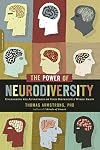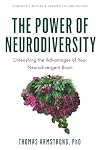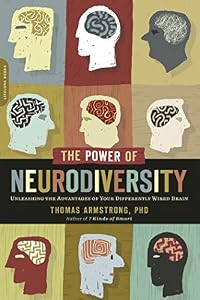
The Power of Neurodiversity: Unleashing the Advantages of Your Differently Wired Brain (published in hardcover as Neurodiversity)
by Thomas Armstrong
On This Page
Description
A new term has emerged from the disability movement in the past decade to help change the way we think about neurological disorders: Neurodiversity. ADHD. Dyslexia. Autism. The number of categories of illnesses listed by the American Psychiatric Association has tripled in the past fifty years. With so many people affected by our growing - culture of disabilities, - it no longer makes sense to hold on to the deficit-ridden idea of neuropsychological illness. With the sensibility of Oliver show more Sacks and Kay Redfield Jamison, psychologist Thomas Armstrong offers a revolutionary perspective that reframes many neuropsychological disorders as part of the natural diversity of the human brain rather than as definitive illnesses. Neurodiversity emphasizes their positive dimensions, showing how people with ADHD, bipolar disorder, and other conditions have inherent evolutionary advantages that, matched with the appropriate environment or ecological niche, can help them achieve dignity and wholeness in their lives. show lessTags
Recommendations





















Member Reviews
This is a well meaning book about an important topic that makes a case for inclusivity, positivity and adaptability towards people with outlier brain structure/mental processes. It is therefore very unfortunate that it is marred by poor and uncritical thinking about the scientific evidence in relation to the causes of these variations. Two major issues that crop up a lot in various contexts are reliance on "evolutionary psychology" and functional Magnetic Resonance Imaging (fMRI) in psychological studies. I've done it before, but it's worth taking the time again to explain why YOU should be extremely sceptical of any conclusions based solely on these approaches.
Evolutionary Psychology, first. This used to be called socio-biology but it show more had to change its name because the field became so thoroughly and frequently derided by the rest of the scientific community. Of course, it should actually have just been abandoned, but too many people were making a living out of it and weren't going to take on the much more difficult task of doing real science. And that's the problem; it isn't science, it's making up random hypotheses to explain any specific human behaviour you care to name based on why it would have benefited Stone Age individuals or communities. There is no attempt to examine whether actual Stone Age people really did or do benefit, or to determine if there are any other equally plausible explanations. Since there is no attempt to test hypotheses, there is no attempt to do actual science.
Second, fMRI: There are several types of MRI and this is specifically about the "functional" variety that attempts to map the distribution of blood in the brain with high temporal resolution. The basic idea in psychological studies using fMRI is to put a person in the imagining machine and then ask them to perform a specific mental task, such as, to take preposterous example, think of a banana. One then observes which region of the brain "lights up" i.e. notionally starts using more blood. This is then the part of the brain that evolved to deal with whatever task was set.
There are two problems. The first is specificity. "Think of a banana" isn't very specific. Do you imagine what a banana looks like? Tastes like? Smells like? Feels like? Peeled or unpeeled? Ripe or green? And on and on and on. It's possible to deal with this by making the task extremely specific, e.g. giving a mental arithmatic problem. Even in this example, there is more than one method (visual, pure memory, etc.) So if you read about such a study, check if the task is even remotely well defined and if it isn't, discard the evidence - it's unsound.
Second, and even more damning, is the "dead fish" experiment. A research team put a dead fish in an fMRI machine and told it to perform various mental tasks. Of course the fish did not perform these tasks, being dead. Nevertheless, various parts of its brain "lit up." Which tells us that fMRI simply doesn't work very well for present purposes. Results can be random and meaningless. Hence if a conclusion ONLY has fMRI and/or evolutionary psychology evidence to back it up, it's completely unreliable, however plausible it might seem. A side note on this experiment is that it won an IgNobel Prize for being a waste of research money. Put a dead fish in an MRI machine?! What a stupid thing to do! Not so - this experiment is extremely important but you can be forgiven for thinking it is dumb if you only read a headline. So don't judge science from headlines. You will end up misled.
An important caveat about fMRI is that it CAN be useful for physiological purposes e.g. locating brain injuries. The main difference is if structures seen in scans persist for a long time rather than being ephemeral artifacts created by the algorithm used to reconstruct the image from the data.
The fact that I've spent so much time warning you, dear reader, not to take the scientific contents of this book at face value is why I can't really recommend it, despite for the most part being solidly in support of the author's overall aims in regard to social acceptance of diversity in human psychology. Very disappointing. show less
Evolutionary Psychology, first. This used to be called socio-biology but it show more had to change its name because the field became so thoroughly and frequently derided by the rest of the scientific community. Of course, it should actually have just been abandoned, but too many people were making a living out of it and weren't going to take on the much more difficult task of doing real science. And that's the problem; it isn't science, it's making up random hypotheses to explain any specific human behaviour you care to name based on why it would have benefited Stone Age individuals or communities. There is no attempt to examine whether actual Stone Age people really did or do benefit, or to determine if there are any other equally plausible explanations. Since there is no attempt to test hypotheses, there is no attempt to do actual science.
Second, fMRI: There are several types of MRI and this is specifically about the "functional" variety that attempts to map the distribution of blood in the brain with high temporal resolution. The basic idea in psychological studies using fMRI is to put a person in the imagining machine and then ask them to perform a specific mental task, such as, to take preposterous example, think of a banana. One then observes which region of the brain "lights up" i.e. notionally starts using more blood. This is then the part of the brain that evolved to deal with whatever task was set.
There are two problems. The first is specificity. "Think of a banana" isn't very specific. Do you imagine what a banana looks like? Tastes like? Smells like? Feels like? Peeled or unpeeled? Ripe or green? And on and on and on. It's possible to deal with this by making the task extremely specific, e.g. giving a mental arithmatic problem. Even in this example, there is more than one method (visual, pure memory, etc.) So if you read about such a study, check if the task is even remotely well defined and if it isn't, discard the evidence - it's unsound.
Second, and even more damning, is the "dead fish" experiment. A research team put a dead fish in an fMRI machine and told it to perform various mental tasks. Of course the fish did not perform these tasks, being dead. Nevertheless, various parts of its brain "lit up." Which tells us that fMRI simply doesn't work very well for present purposes. Results can be random and meaningless. Hence if a conclusion ONLY has fMRI and/or evolutionary psychology evidence to back it up, it's completely unreliable, however plausible it might seem. A side note on this experiment is that it won an IgNobel Prize for being a waste of research money. Put a dead fish in an MRI machine?! What a stupid thing to do! Not so - this experiment is extremely important but you can be forgiven for thinking it is dumb if you only read a headline. So don't judge science from headlines. You will end up misled.
An important caveat about fMRI is that it CAN be useful for physiological purposes e.g. locating brain injuries. The main difference is if structures seen in scans persist for a long time rather than being ephemeral artifacts created by the algorithm used to reconstruct the image from the data.
The fact that I've spent so much time warning you, dear reader, not to take the scientific contents of this book at face value is why I can't really recommend it, despite for the most part being solidly in support of the author's overall aims in regard to social acceptance of diversity in human psychology. Very disappointing. show less
Your brain is not a machine: it's a rainforest. Human beings and human brains exist along continua. Categories always obscure as well as illuminate. Competence is culturally defined. Success in life comes from a combination of adapting the cognitive self to the environment and the environment to the cognitive self. There are many ways to adapt: lifestyle choices, assistive technologies, spending time with people that make you happy. Positive niche construction directly modifies the brain, enhancing its ability to respond positively. Neurodiversity as a concept is absolutely crawling with human dignity, and this is a virtuous and important book.
Ratings
Members
- Recently Added By
Author Information

25 Works 1,828 Members
Thomas Armstrong, PhD, is the author of sixteen books, including the best-selling The Myth of the ADHD Child. He has appeared on national TV shows, and his articles have been featured in many popular and professional publications around the world. His website is institute41earning.com.
Classifications
- Genres
- Nonfiction, General Nonfiction, Science & Nature
- DDC/MDS
- 616.8 — Applied Science & Technology Medicine & health Diseases, Allergies, Skin Conditions Nervous Disorders: Autism, Anorexia, OCD
- LCC
- RC455.4 .B5 .A745 — Medicine Internal medicine Internal medicine Neurosciences. Biological psychiatry. Neuropsychiatry Psychiatry
- BISAC
Statistics
- Members
- 167
- Popularity
- 195,364
- Reviews
- 2
- Rating
- (3.50)
- Languages
- English
- Media
- Paper, Ebook
- ISBNs
- 11
- ASINs
- 3