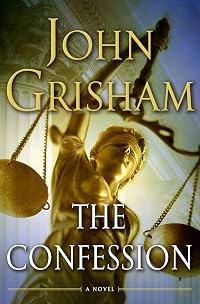
The Confession
by John Grisham
On This Page
Description
When Travis Boyette is paroled because of inoperable brain tumor, for the first time in his life, he decides to do the right thing and tell police about a crime he committed and another man is about to be executed for.Tags
Recommendations




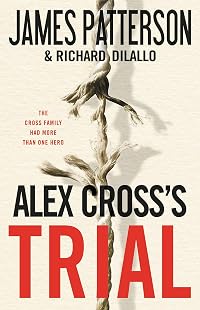
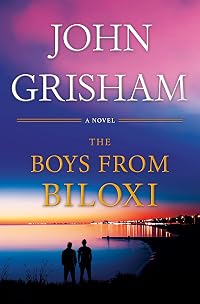
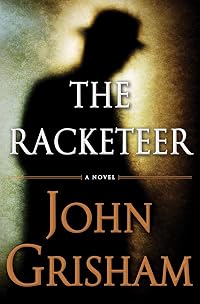
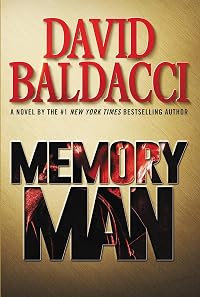

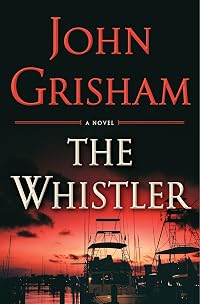
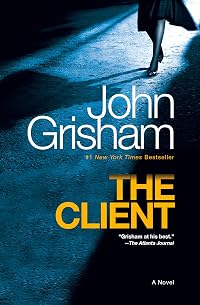
Member Recommendations
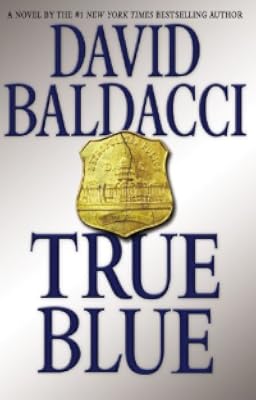
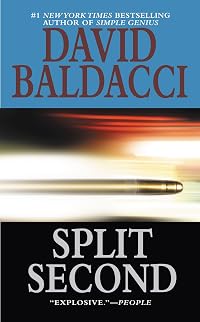
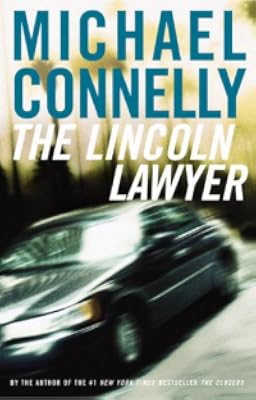
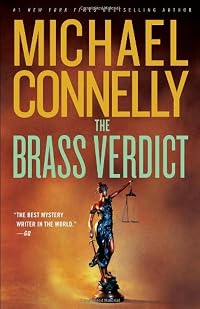
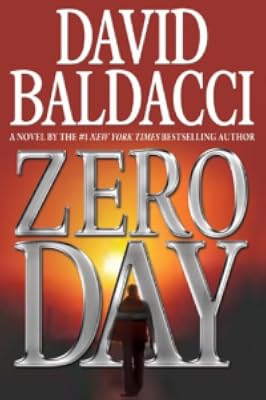
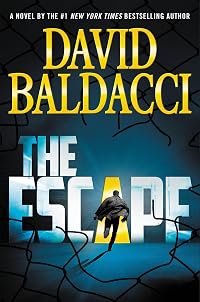
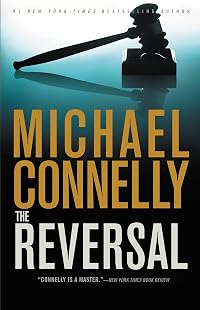
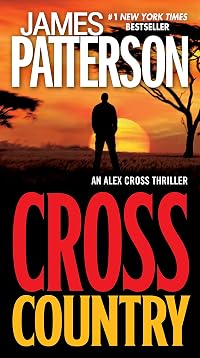
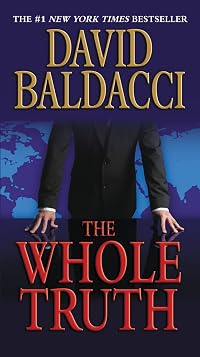
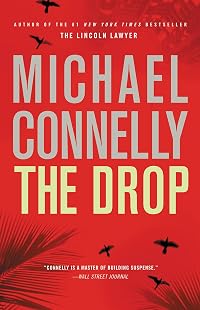
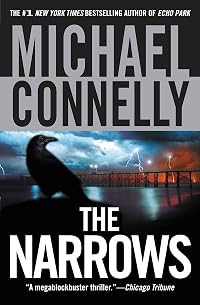
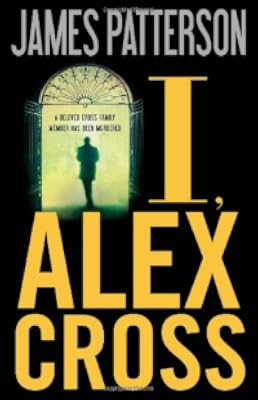
BookshelfMonstrosity If you like dramatic and suspenseful legal thrillers in which an attorney must prove the obvious untrue, you may like The Confession and Moment of Truth. Additionally, the difficulty of manipulating opinion plays into both stories.
Member Reviews
I always like Grisham's books, and never hesitate to recommend them to others. The Confession is no different. However, I recognize that there is a potentially polarizing theme to the book, e.g., the death penalty. Like Politics or Religion, the death penalty brings out emotions in people, and if the book doesn't support your point of view, you may give it an unfavorable rating, since it's often hard to listen to the other side of an argument on emotional and polarizing issues. So if you're a strong supporter of the death penalty, you may scoff at the book as the ramblings of a left-leaning, soft on crime liberal lawyer. If you're neutral on the death penalty, or against the death penalty, I would imagine you'll truly enjoy the book and show more support Grisham's theme.
Clearly, Grisham points out the negative sides of the death penalty in the book. However, while fiction, the ideas Grisham introduces are not far removed from the facts. Most all studies do point out that death penalty cases and convictions are (surprisingly) several times more expensive to the States than life prison terms without parole. So the economic argument for the death penalty doesn't hold up, and Grisham makes that point. And the fact that the book takes place in Texas, as opposed to the frequent locale of Mississippi for Grisham, is certainly no accident. Texas by itself accounts for almost as many executions as all the other states put together. And Grisham makes a special point about wrongful deaths or executing the innocent, and unfortunately, that does happen than we'd like to admit. When I wondered about it, and looked it up, I found that there have been over 130 death row inmates exonerated since 1973. I imagine all were not choir boys, but even if only half were truly innocent and were absolved from a conviction based on subsequent reviews, evidence, or information, it's a lot. Some of these cases in true life reversals are every bit as moving as the Grisham novel, and the curious might enjoy searching out Illinois ex-Governor George Ryan's speech on the death penalty sponsored by the University of Chicago Divinity School and The Pew Forum on Religion and Public Life in his state, and why he imposed a moratorium on the death penalty. He found 13 examples in his state of wrongful death-penalty convictions, cases where over zealous prosecution teams used questionable tactics to close a case and obtain a conviction, only to have subsequent irrefutable evidence come to light and prove the convicted person was innocent. Scott Turow's book, Ultimate Punishment, is also an informative look at the death penalty and how he came to oppose it. Turow has been both a prosecutor and defense lawyer, so his views on capital punishment are the result of agonizing over the subject from both sides of the bench.
So Grisham's book, while fiction, does have historical bases to draw from as real life examples. So in that light, in addition to being another well written and engaging novel, it does give the reader something to think about, assuming the reader is open to examining both sides of the death penalty issue. show less
Clearly, Grisham points out the negative sides of the death penalty in the book. However, while fiction, the ideas Grisham introduces are not far removed from the facts. Most all studies do point out that death penalty cases and convictions are (surprisingly) several times more expensive to the States than life prison terms without parole. So the economic argument for the death penalty doesn't hold up, and Grisham makes that point. And the fact that the book takes place in Texas, as opposed to the frequent locale of Mississippi for Grisham, is certainly no accident. Texas by itself accounts for almost as many executions as all the other states put together. And Grisham makes a special point about wrongful deaths or executing the innocent, and unfortunately, that does happen than we'd like to admit. When I wondered about it, and looked it up, I found that there have been over 130 death row inmates exonerated since 1973. I imagine all were not choir boys, but even if only half were truly innocent and were absolved from a conviction based on subsequent reviews, evidence, or information, it's a lot. Some of these cases in true life reversals are every bit as moving as the Grisham novel, and the curious might enjoy searching out Illinois ex-Governor George Ryan's speech on the death penalty sponsored by the University of Chicago Divinity School and The Pew Forum on Religion and Public Life in his state, and why he imposed a moratorium on the death penalty. He found 13 examples in his state of wrongful death-penalty convictions, cases where over zealous prosecution teams used questionable tactics to close a case and obtain a conviction, only to have subsequent irrefutable evidence come to light and prove the convicted person was innocent. Scott Turow's book, Ultimate Punishment, is also an informative look at the death penalty and how he came to oppose it. Turow has been both a prosecutor and defense lawyer, so his views on capital punishment are the result of agonizing over the subject from both sides of the bench.
So Grisham's book, while fiction, does have historical bases to draw from as real life examples. So in that light, in addition to being another well written and engaging novel, it does give the reader something to think about, assuming the reader is open to examining both sides of the death penalty issue. show less
The problem with reading clubs is that occasionally someone suggests a dud and one feels forced to finish the book out of courtesy to the other participants. That's what happened here.
I abhor the death penalty. I approve of Grisham's message 100%, but my goodness this book is repetitive and tedious. Not to mention I felt bruised and battered by being hit over the head constantly by the message. I listened to it and found the FF button to be incredibly useful. The irony was I could fast forward 15 minutes and think I hadn't moved forward at all. The characters are stereotypical cardboard cutouts. Their speeches (they don't talk, they proclaim,) are all cookie-cutter, but the dough gets stale quickly. The book would have been much show more stronger had there been some shades of gray, some ethical tensions. There just are none here.
For example, did the prosecutors and cops set out to kill an innocent man? Of course, not. They were subject to cultural, racial, and political pressures. An examination of the force of those pressures would have made a much more interesting book. And what if there had been no confession? How about an examination of the legal hurdles that prevent uncovering police malfeasance? Or an examination of the Supreme Court's reasoning that innocence is not a defense? (See Connick v Thomson.) To quote Reason Magazine: "Scalia has written in the past that there's nothing in the Constitution to prevent the government from executing an innocent person. He also apparently believes there's no duty for the government to preserve or turn over evidence that would prove a person's innocence. Finally, from Connick we learn he also believes that prosecutors and municipalities shouldn't be held liable to people who are wrongly convicted and imprisoned, either, even if prosecutors knowingly concealed the evidence that would have exonerated them." Now *that* would have made a fascinating book.
I don't like giving negative ratings and usually don't review books I didn't like, but in this case I resent the time spent listening to this; it was like trying to move through quicksand. Be interesting to see what the rest of the group thinks, especially since they are a particularly high-minded literary group.
Do you suppose the moderator got it wrong and it should have been Augustine's Confessions? show less
I abhor the death penalty. I approve of Grisham's message 100%, but my goodness this book is repetitive and tedious. Not to mention I felt bruised and battered by being hit over the head constantly by the message. I listened to it and found the FF button to be incredibly useful. The irony was I could fast forward 15 minutes and think I hadn't moved forward at all. The characters are stereotypical cardboard cutouts. Their speeches (they don't talk, they proclaim,) are all cookie-cutter, but the dough gets stale quickly. The book would have been much show more stronger had there been some shades of gray, some ethical tensions. There just are none here.
For example, did the prosecutors and cops set out to kill an innocent man? Of course, not. They were subject to cultural, racial, and political pressures. An examination of the force of those pressures would have made a much more interesting book. And what if there had been no confession? How about an examination of the legal hurdles that prevent uncovering police malfeasance? Or an examination of the Supreme Court's reasoning that innocence is not a defense? (See Connick v Thomson.) To quote Reason Magazine: "Scalia has written in the past that there's nothing in the Constitution to prevent the government from executing an innocent person. He also apparently believes there's no duty for the government to preserve or turn over evidence that would prove a person's innocence. Finally, from Connick we learn he also believes that prosecutors and municipalities shouldn't be held liable to people who are wrongly convicted and imprisoned, either, even if prosecutors knowingly concealed the evidence that would have exonerated them." Now *that* would have made a fascinating book.
I don't like giving negative ratings and usually don't review books I didn't like, but in this case I resent the time spent listening to this; it was like trying to move through quicksand. Be interesting to see what the rest of the group thinks, especially since they are a particularly high-minded literary group.
Do you suppose the moderator got it wrong and it should have been Augustine's Confessions? show less
Anticipating a very long plane trip, I looked for an audiobook that would keep me engaged and interested and would last long enough to get me through the return flight. My thoughts immediately went to a John Grisham novel. I like Grisham for a number of reasons, one being that his books never fail to entertain. I chose The Confession, a title that already resided on my shelf (my husband read it years ago). It was a great choice. Not only did it make the miles literally fly by, but it challenged and expanded my beliefs on capital punishment. A controversial topic to be sure, The Confession examines what it means if an innocent man is sentenced to death. All aspects are included: the media circus, the political climate, the heartbreak of show more the families on both sides, and the spiritual implications of the ultimate punishment. The story is full of twists and turns, the characters are intriguing, and the subject matter handled in a mostly even-handed manner. I think it is safe to say that Grisham writes from an anti-death penalty standpoint, a view that I also hold, though for probably different reasons. Grisham didn’t change my mind about anything, but he did cause me to see the whole process surrounding death penalty cases in a new light. An engrossing read, I recommend The Confession.
The story opens with a confession from career criminal Travis Boyette to a Lutheran pastor. Keith Schroeder doesn’t really know what to do with Travis or his statement that an innocent man is about to be executed in Texas. What follows is a race to bring the confession to light, something that is met with resistance and dismissal from all parties concerned. Travis and Keith are interesting main characters. They cannot be more different — one who has lived a life taking and manipulating, another who earnestly desires to do the right thing. Their unlikely partnership makes for good drama. Grisham’s portrayal of the circus that surrounds the upcoming execution rings true. Media, groupies, politicians, all make the situation bizarre and disturbing. While The Confession is not Christian fiction, three pastors make an appearance and an impact on the story. Keith’s views are, of course, front and center, but Grisham also shares the feelings and thoughts of the pastors of the victim’s family and the accused’s family. The three struggle in varying ways — also very realistic. The Confession is dark, so don’t expect a feel good ending. This book is one to make you think, whichever side of the debate you find yourself on. show less
The story opens with a confession from career criminal Travis Boyette to a Lutheran pastor. Keith Schroeder doesn’t really know what to do with Travis or his statement that an innocent man is about to be executed in Texas. What follows is a race to bring the confession to light, something that is met with resistance and dismissal from all parties concerned. Travis and Keith are interesting main characters. They cannot be more different — one who has lived a life taking and manipulating, another who earnestly desires to do the right thing. Their unlikely partnership makes for good drama. Grisham’s portrayal of the circus that surrounds the upcoming execution rings true. Media, groupies, politicians, all make the situation bizarre and disturbing. While The Confession is not Christian fiction, three pastors make an appearance and an impact on the story. Keith’s views are, of course, front and center, but Grisham also shares the feelings and thoughts of the pastors of the victim’s family and the accused’s family. The three struggle in varying ways — also very realistic. The Confession is dark, so don’t expect a feel good ending. This book is one to make you think, whichever side of the debate you find yourself on. show less
Although a work of fiction, this book greatly changed my view on capital punishment. For most of my life I have been pro death penalty. Living in Texas, I was proud to know that my state took a tough stand with zero tolerance against hardened criminals. As a result of this book, I now strongly doubt the integrity of the justice system and the effectiveness of capital punishment. If even one person is wrongly convicted and put to death, then the system has failed and must be carefully reexamined and possibly reformed. If one innocent person is put to death, then we ourselves become the criminal. And, those who are correctly convicted and placed on death row are not given a second chance to be redeemed with an opportunity of becoming a show more good citizen. Instead, they are whisked away to prison, ultimately stuck onto a gurney and put to death like some useless piece of trash. However, Christ redeemed the lost, the sick, and even hardened criminals. Should we should not emulate Him?
One thing I don't like about Grisham is his biased tilt to the left, always critical of those on the right. And, this showed in this book. All churchgoers are arms-bearing, Republican, death penalty, rednecks. And those on the left are the ONLY ones who take up the cause for the weak and take a stand against the death penalty. Why can't we keep this an unbiased story? Do we really have to be so polarized? Why can't we work together on these and other issues and seek reconciliation for the good of our common man? I believe someday we can and will.
If you can read past the political rhetoric I believe this can be one of Grisham's best books yet. I highly recommend it. Full of suspense and mystery with never a dull moment. And I hope it truly speaks to those who are pro capital punishment and will seek the will to change the system. show less
One thing I don't like about Grisham is his biased tilt to the left, always critical of those on the right. And, this showed in this book. All churchgoers are arms-bearing, Republican, death penalty, rednecks. And those on the left are the ONLY ones who take up the cause for the weak and take a stand against the death penalty. Why can't we keep this an unbiased story? Do we really have to be so polarized? Why can't we work together on these and other issues and seek reconciliation for the good of our common man? I believe someday we can and will.
If you can read past the political rhetoric I believe this can be one of Grisham's best books yet. I highly recommend it. Full of suspense and mystery with never a dull moment. And I hope it truly speaks to those who are pro capital punishment and will seek the will to change the system. show less
John Grisham had me right from the book jacket with The Confession. In this novel, a young man faces the death penalty and the only person in the world who can save him from his execution is a convicted felon himself. Credibility is nonexistent and there is a desperate race to the death chamber that kept me thoroughly engaged. What I like about Grisham is that his plots do not contain one hero, one villain, and three supporting characters that all exist in one setting; with Grisham, readers get countless bits of information that allow you to really see the world that is unfolding before you. These aren’t books that end with one wishing that they knew more about a particular scene or character; much research is put into his writing to show more make sure that every angle is covered.
The research that Grisham does is a large part of why I enjoy his work(s). At the end of every novel, he cites specific people who let him look around prisons, death chambers, cities, etc. This “extra” work is what makes the stories stick with me long after I have turned the final page. The Confession did nothing to change my mind of Grisham as it was fast paced and kept me up into the wee hours of the night wanting to know what was just around the corner. Thrill might not be the word I’m looking for, but it definitely is acceptable to use when describing this vivid tale of a broken judicial system.
Blake G. show less
The research that Grisham does is a large part of why I enjoy his work(s). At the end of every novel, he cites specific people who let him look around prisons, death chambers, cities, etc. This “extra” work is what makes the stories stick with me long after I have turned the final page. The Confession did nothing to change my mind of Grisham as it was fast paced and kept me up into the wee hours of the night wanting to know what was just around the corner. Thrill might not be the word I’m looking for, but it definitely is acceptable to use when describing this vivid tale of a broken judicial system.
Blake G. show less
I thought this was one of the best Grisham novels since his early classics like A Time to Kill and The Chamber. Like those, this deals with weighty issues such as racism in the criminal justice system and in American society more generally, and the principles behind and application of the death penalty. The plot concerns the nine year imprisonment of a young black man Donte Drumm, after a confession is forced out of him to having murdered his white girlfriend. The action of the story concerns the confession of the real killer in the days leading up Drumm's execution date and the frantic efforts to save the latter from being executed for a crime he did not commit. It's gripping stuff and a great liberal novel, though perhaps not handled show more with quite the delicacy of those earlier classics. show less
Sometimes I get a book that touches a subject that is large in my environment, and this book is just that. Currently, there are two death penalty cases in my state and it is making me examine my feeling on executing a murderer. My head knows the death penalty is only a deterrent to the convicted person but it is a permanent one. My heart doesn't want to think about death, mine or anyone else's. In this book, the convicted man is not guilty, but is executed anyway. The guilty man confesses right before the execution is scheduled, but he isn't believed until after he takes people to the body. Even with this, nothing changes. The state will not stop putting people on death row. As usual, John Grisham writes an riveting issue story. But so show more did Erle Stanley Garner in his Perry Mason series. show less
Members
- Recently Added By
Published Reviews
ThingScore 50
There’s a lot of padding in “The Confession.” The story’s outcome is invested with surprisingly little suspense. And the climactic moments play out long before the book is over. So this is a solid yet sluggish novel that is not one of Mr. Grisham’s barnburners.
added by lkernagh
Lists

Top Five Books of 2013
1,562 works; 721 members

Legal Stories
84 works; 12 members

HARPER LEE PRIZE FOR LEGAL FICTION
10 works; 1 member

Best books read in 2011
200 works; 51 members

Books Read in 2011
684 works; 19 members

Jarett's Books
86 works; 1 member

Same Title
115 works; 3 members

To Read
617 works; 7 members

Books Read in 2023
5,547 works; 145 members
Talk Discussions
Past Discussions
John Grisham's "The Confession." - his most Christian book yet. in Progressive Christianity (August 2012)
Author Information

324+ Works 291,238 Members
John Grisham was born in Jonesboro, Arkansas on February 8, 1955. He received a bachelor's degree in accounting from Mississippi State University. He was admitted to the bar in Mississippi in 1981 after receiving a law degree from the University of Mississippi, specializing in criminal law. While a lawyer in private practice in Southaven, show more Mississippi, Grisham served as a Democrat in the Mississippi House of Representatives from 1983 until 1990. He left the law and politics to become a full-time author. His first novel, A Time to Kill, was published in 1989. His other novels include The Partner, The Street Lawyer, The Testament, The Brethren, The Summons, The King of Torts, Bleachers, The Last Juror, The Broker, Playing for Pizza, The Appeal, Calico Joe, The Racketeer, Gray Mountain, Rogue Lawyer, The Confession, The Litigators, The Whistler, Camino Island, The Rooster Bar, and the Theodore Boone series. Several of his novels were adapted into films including The Firm, The Pelican Brief, The Client, A Time to Kill, The Rainmaker, The Chamber, A Painted House, The Runaway Jury, and Skipping Christmas. (Bowker Author Biography) show less
Some Editions
Awards and Honors
Awards
Distinctions
Common Knowledge
- Canonical title
- The Confession
- Original title
- The confession
- Original publication date
- 2010-11
- People/Characters
- Travis Boyette; Donte Drumm; Keith Schroeder; Robbie Flak; Dana Schroeder; Martha Handler (show all 8); Nicole Yarber; Joey Gamble
- Important places
- Slone, Texas, USA; Topeka, Kansas, USA; Missouri, USA
- First words
- The custodian at St. Mark's had just scraped three inches of snow off the sidewalks when the man with the cane appeared.
- Last words
- (Click to show. Warning: May contain spoilers.)There was no one to claim his body, so Adam Flores was buried in the prison cemetery, alongside dozens of other unclaimed death row inmates.
- Original language*
- Amerikanisch
- Disambiguation notice
- ISBN 0440245117 is actually for The Confession.
*Some information comes from Common Knowledge in other languages. Click "Edit" for more information.
Classifications
Statistics
- Members
- 5,102
- Popularity
- 2,707
- Reviews
- 147
- Rating
- (3.70)
- Languages
- 15 — Czech, Danish, Dutch, English, Finnish, French, German, Greek, Hungarian, Italian, Norwegian (Bokmål), Portuguese, Spanish, Swedish, Turkish
- Media
- Paper, Audiobook, Ebook
- ISBNs
- 92
- ASINs
- 35