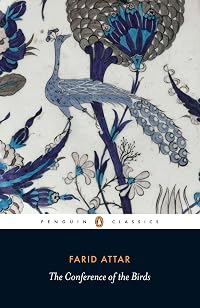
The Conference of the Birds
by Farid Ud-Din Attar, Josephine Barbereau (Editor), Marion Balalud de Saint Jean (Editor), Diane de Selliers (Editor)
On This Page
Description
"These lofty words are an antidote/ for anyone sickened by extremism's poison." Considered by Rumi to be "the master" of Sufi mystic poetry, Attar is best known for this epic poem, a magnificent allegorical tale about the soul's search for meaning. He recounts the perilous journey of the world's birds to the faraway peaks of Mount Qaf in search of the mysterious Simorgh, their sovereign. Attar's beguiling anecdotes and humor intermingle the sublime with the mundane, the spiritual with the show more worldly, while his poem models the soul's escape from the mind's rational embrace. Sholeh Wolpé re-creates for modern audiences the beauty and timeless wisdom of the original Persian, in contemporary English verse and poetic prose. show lessTags
Recommendations









Member Reviews
The Conference of the Birds is not merely an allegory; it is a spiritual anatomy of the soul.
Structured around the journey of the birds in search of their sovereign, the Simurgh, Attar constructs one of the most sophisticated mystical narratives in Persian literature. The hoopoe, as guide, summons the scattered birds—each representing a human weakness or attachment—and leads them through seven valleys: quest, love, knowledge, detachment, unity, bewilderment, and annihilation. The framework is simple; the execution is profound.
Attar’s genius lies in compression. Unlike later Sufi poets who dissolve doctrine into lyric ecstasy, Attar remains architectonic and severe. His tone is often austere, even confrontational. He does not show more console the reader; he strips them. Pride, fear, ambition, romantic obsession, attachment to status—each bird’s excuse becomes an indictment of the ego. The path is not sentimentalized. It demands the death of self-certainty.
The culmination—the revelation that the Simurgh is none other than the thirty birds who survive the journey—is among the most powerful metaphysical symbols in world literature. It articulates wahdat (unity) without collapsing transcendence into crude pantheism. The divine is encountered not as an external monarch but as the unveiled reality of purified being. The seeker and the sought are not identical in essence, yet separation dissolves at the level of realization.
What distinguishes Attar from Rumi, who was deeply influenced by him, is tone. Rumi persuades with warmth and ecstatic overflow. Attar instructs with gravity and inevitability. His world is one of spiritual peril; the stakes are ultimate. Even his anecdotes—of kings, dervishes, lovers, and madmen—carry a sharp moral edge.
The poem can feel episodic. Attar frequently interrupts the main narrative with illustrative tales, some more compelling than others. Yet this fragmentation mirrors the path itself: the traveler must confront many mirrors before recognizing the final one.
For readers approaching Sufi literature seriously, The Conference of the Birds is foundational. It is not a decorative mystical text; it is a disciplined manual disguised as poetry. It demands patience and reflection. Read slowly, its symbolism unfolds with increasing clarity.
Attar does not promise comfort. He promises transformation—and reminds us of its cost. show less
Structured around the journey of the birds in search of their sovereign, the Simurgh, Attar constructs one of the most sophisticated mystical narratives in Persian literature. The hoopoe, as guide, summons the scattered birds—each representing a human weakness or attachment—and leads them through seven valleys: quest, love, knowledge, detachment, unity, bewilderment, and annihilation. The framework is simple; the execution is profound.
Attar’s genius lies in compression. Unlike later Sufi poets who dissolve doctrine into lyric ecstasy, Attar remains architectonic and severe. His tone is often austere, even confrontational. He does not show more console the reader; he strips them. Pride, fear, ambition, romantic obsession, attachment to status—each bird’s excuse becomes an indictment of the ego. The path is not sentimentalized. It demands the death of self-certainty.
The culmination—the revelation that the Simurgh is none other than the thirty birds who survive the journey—is among the most powerful metaphysical symbols in world literature. It articulates wahdat (unity) without collapsing transcendence into crude pantheism. The divine is encountered not as an external monarch but as the unveiled reality of purified being. The seeker and the sought are not identical in essence, yet separation dissolves at the level of realization.
What distinguishes Attar from Rumi, who was deeply influenced by him, is tone. Rumi persuades with warmth and ecstatic overflow. Attar instructs with gravity and inevitability. His world is one of spiritual peril; the stakes are ultimate. Even his anecdotes—of kings, dervishes, lovers, and madmen—carry a sharp moral edge.
The poem can feel episodic. Attar frequently interrupts the main narrative with illustrative tales, some more compelling than others. Yet this fragmentation mirrors the path itself: the traveler must confront many mirrors before recognizing the final one.
For readers approaching Sufi literature seriously, The Conference of the Birds is foundational. It is not a decorative mystical text; it is a disciplined manual disguised as poetry. It demands patience and reflection. Read slowly, its symbolism unfolds with increasing clarity.
Attar does not promise comfort. He promises transformation—and reminds us of its cost. show less
The writings of the Sufis are, without a doubt, some of the most beautiful and challenging spiritual works in existence. Rumi's works are currently undergoing something of a renaissance in the Western world but the name of Farid Ud-Din Attar is not as well known. This is unfortunate, since The Conference of the Birds provides, in my opinion, a much better insight into Sufi philosophy than the bits and pieces of Rumi floating about the New Age universe.
Attar's beautiful descriptions, exquisite metaphors and delightful parables describe the stages on the soul's journey to union with God. An extended metaphor for the soul, the birds gather and travel through various valleys to reach the Simorgh - a state of ecstatic oneness with deity. The show more Hoopoe acts as the guide and provides answers to the bird's questions and doubts about the journey - usually with short illustrative tales. These tales are each tiny drops of gold, the longest being only a few hundred lines. The overarching theme is the denial of the self to gain ultimate bliss. This is no intellectual exercise and much of the advice given is shocking and revolutionary. In the extended tale of Sheik Sam'an, the Sheik leaves his faith and becomes a Christian for the love of a woman who ultimately spurns him. His apostasy and depravity astound his followers who swiftly abandon him. A Sufi teacher chastises them for their lack of faith and eventually they return to his side. Sam'an then reconverts and his love is converted too. The message would seem to be that to find God it may be necessary to abandon conventional notions of behaviour and faith and plunge forward with wild abandon, losing the self. Some of the stories may shock our sensibilities, and no doubt had the same effect on Attar's medieval audiences. A kind of counter-culture attitude is displayed in the book, with tales of romantic love between men and other "un-Islamic" behaviours challenging accepted norms.
As to the book itself, the translation is done in "heroic couplets" which according to the introduction, best suits the style of the arabic original. It at first seems a little stilted but soon lends a beauty of its own to the work. A fairly substantial introduction helps put the book in context and describes what is known of Attar's life and times. A biographical index is included which provides details on the many characters - often historical - who people the pages of the poem. This book is a beautiful little gem, filled with a lot of wisdom. It is definitely worth the read for members of any faith, even those who aren't practicing Sufis. show less
Attar's beautiful descriptions, exquisite metaphors and delightful parables describe the stages on the soul's journey to union with God. An extended metaphor for the soul, the birds gather and travel through various valleys to reach the Simorgh - a state of ecstatic oneness with deity. The show more Hoopoe acts as the guide and provides answers to the bird's questions and doubts about the journey - usually with short illustrative tales. These tales are each tiny drops of gold, the longest being only a few hundred lines. The overarching theme is the denial of the self to gain ultimate bliss. This is no intellectual exercise and much of the advice given is shocking and revolutionary. In the extended tale of Sheik Sam'an, the Sheik leaves his faith and becomes a Christian for the love of a woman who ultimately spurns him. His apostasy and depravity astound his followers who swiftly abandon him. A Sufi teacher chastises them for their lack of faith and eventually they return to his side. Sam'an then reconverts and his love is converted too. The message would seem to be that to find God it may be necessary to abandon conventional notions of behaviour and faith and plunge forward with wild abandon, losing the self. Some of the stories may shock our sensibilities, and no doubt had the same effect on Attar's medieval audiences. A kind of counter-culture attitude is displayed in the book, with tales of romantic love between men and other "un-Islamic" behaviours challenging accepted norms.
As to the book itself, the translation is done in "heroic couplets" which according to the introduction, best suits the style of the arabic original. It at first seems a little stilted but soon lends a beauty of its own to the work. A fairly substantial introduction helps put the book in context and describes what is known of Attar's life and times. A biographical index is included which provides details on the many characters - often historical - who people the pages of the poem. This book is a beautiful little gem, filled with a lot of wisdom. It is definitely worth the read for members of any faith, even those who aren't practicing Sufis. show less
English Edition (First Read)
Translations like photos remove dimensions from our perceptive reality. Reading texts like this, you know that there could be more meanings under each original words. Translation veil these meanings (sometimes, as Jacques Derrida saying) but beside that a nice read.
Italian Edition (Second Read)
Ho cambiato la mia valutazione dopo questa seconda lettura a distanza di un paio di anni. Quattro stelle meritate. Come consiglia l'autore, rileggi anche più volte se necessario ché da questa velata sposa a uno a uno cadranno i veli, tra mille moine. Ed ancora Il libro che vi porgo è fregio dei tempi, dono gentile per nobili e vili. Se all'inizio sembrò simile a ghiaccio impenetrabile, alla fine si rivelò show more indomabile fuoco.
Ringrazio per Questo, l'Upupa show less
Translations like photos remove dimensions from our perceptive reality. Reading texts like this, you know that there could be more meanings under each original words. Translation veil these meanings (sometimes, as Jacques Derrida saying) but beside that a nice read.
Italian Edition (Second Read)
Ho cambiato la mia valutazione dopo questa seconda lettura a distanza di un paio di anni. Quattro stelle meritate. Come consiglia l'autore, rileggi anche più volte se necessario ché da questa velata sposa a uno a uno cadranno i veli, tra mille moine. Ed ancora Il libro che vi porgo è fregio dei tempi, dono gentile per nobili e vili. Se all'inizio sembrò simile a ghiaccio impenetrabile, alla fine si rivelò show more indomabile fuoco.
Ringrazio per Questo, l'Upupa show less
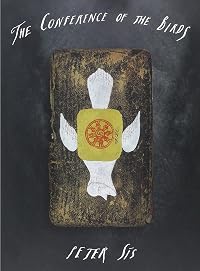
I first became aware of The Conference of the Birds when reading [b:Lipstick Jihad: A Memoir of Growing Up Iranian in America And American in Iran|54859|Lipstick Jihad A Memoir of Growing Up Iranian in America And American in Iran|Azadeh Moaveni|https://images.gr-assets.com/books/1442969418s/54859.jpg|1154834] many years ago, which sparked a fascination with the tale's message. I, however, never got around to reading the whole thing--I stalled after a couple of attempts and later experienced it through Peter Sís' interpretation. But this year's Read Harder gave me the extra push to finally spend time with the thing.
Annnnd.... I wanted to like it more. To be fair, an epic poem told almost entirely in rhyming couplets was going to be a show more challenge, as I find nearly all rhyming poetry distracting. I have also been wooed by Sís' version, which is a bit more secular than the original, and restructures the action a little. I was unprepared to spend well over half the book just listening to the birds' excuses (OMG--I did have to take a break from the whiny birds), and while in theory I liked the idea of the Hoopooe following every directive with a handful of parables, it just got to wear on me. I'm glad I read it--don't get me wrong--and I still like the message, but I may stick to revisiting the Sís version from here on out (however sacrilege that may be). In fact, I should re-re-re*read that sucker again to compare.
********
Read Harder: Poetry in translation with a theme other than love show less
Annnnd.... I wanted to like it more. To be fair, an epic poem told almost entirely in rhyming couplets was going to be a show more challenge, as I find nearly all rhyming poetry distracting. I have also been wooed by Sís' version, which is a bit more secular than the original, and restructures the action a little. I was unprepared to spend well over half the book just listening to the birds' excuses (OMG--I did have to take a break from the whiny birds), and while in theory I liked the idea of the Hoopooe following every directive with a handful of parables, it just got to wear on me. I'm glad I read it--don't get me wrong--and I still like the message, but I may stick to revisiting the Sís version from here on out (however sacrilege that may be). In fact, I should re-re-re*read that sucker again to compare.
********
Read Harder: Poetry in translation with a theme other than love show less
A beautiful mystical poem. At times, I wished the translator had chosen a freer verse. The endless heroic couplets become tedious and distracting.
So... It's kind of hard to give this only three stars because it's such a classic. But much of this was a resounding, "Meh," for me.
Granted, it's all themes and genres I'm not drawn to: mysticism, religion, epic poetry, lots of slavery and other (now) anachronistic morality, and over-wrought love imagery: -3. But it does capture a certain world view (and a certain historical and cultural place), so 1. It's a world classic, so for better or worse: 2. Certain passages were really lyrical, rhythmic, etc. (big nod to the translators): 2, maybe 3 (I'll round up.)
Granted, it's all themes and genres I'm not drawn to: mysticism, religion, epic poetry, lots of slavery and other (now) anachronistic morality, and over-wrought love imagery: -3. But it does capture a certain world view (and a certain historical and cultural place), so 1. It's a world classic, so for better or worse: 2. Certain passages were really lyrical, rhythmic, etc. (big nod to the translators): 2, maybe 3 (I'll round up.)
These poems about, the birds of the world gather to decide who is to be their king, as they have none. The hoopoe, the wisest of them all, suggests that they should find the legendary Simorgh, a mythical persian bird roughly equivalent to the western phoenix. It is an allegory of the quest for God (The Simorgh). The hoopoe respresents a sufi master and each of the other birds represents a human fault which prevents man from attaining enlightenment. When the group of thirty birds finally reach the dwelling place of the Simorgh, all they find is a lake in which they see their own reflection.
Members
- Recently Added By
Lists

100 Books to Read in a Lifetime (That Are Older Than 200 Years)
415 works; 175 members

Read These Too
458 works; 9 members
Truly old classics
63 works; 6 members

Philip Ward's Lifetime Reading Plan
592 works; 22 members

SomethingAwful TBB BOTM
66 works; 2 members

Favorite Animal Fiction
359 works; 156 members
Put a Bird On It
75 works; 12 members
Author Information

37+ Works 5,419 Members
All Editions
Some Editions
Awards and Honors
Series
Belongs to Publisher Series
Work Relationships
Is contained in
Has the adaptation
Inspired
Common Knowledge
- Canonical title
- The Conference of the Birds
- Original title
- منطق الطیر
- Alternate titles*
- La Conférence des Oiseaux; Le Langage des Oiseaux
- Original publication date
- 1177
- Important places
- Persian Empire; Central Asia; Turkey; India
- Important events
- 12th century; Islamic Golden Age; Middle Ages
- Original language*
- Persan
*Some information comes from Common Knowledge in other languages. Click "Edit" for more information.
Classifications
- Genres
- Poetry, Religion & Spirituality, Fiction and Literature
- DDC/MDS
- 891.5511 — Literature & rhetoric Literatures of other languages East Indo-European and Celtic literatures Iranian literatures Modern Persian / Farsi literature (8th century CE to present) Persian poetry ca. 1000–1389
- LCC
- PK6451 .F4 .M2813 — Language and Literature Indo-Iranian languages and literatures Indo-Iranian philology and literature Iranian philology and literature New Persian Literature Individual authors or works
- BISAC
Statistics
- Members
- 1,615
- Popularity
- 13,996
- Reviews
- 16
- Rating
- (4.01)
- Languages
- 14 — Dutch, English, Estonian, Finnish, French, German, Greek, Italian, Norwegian (Bokmål), Farsi/Persian, Portuguese, Russian, Spanish, Turkish
- Media
- Paper, Audiobook, Ebook
- ISBNs
- 87
- ASINs
- 23
