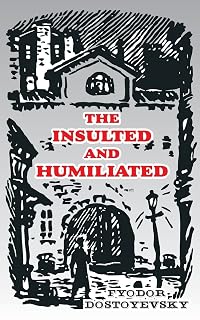
The Insulted and Injured
by Fyodor M. Dostoevsky, Fyodor Dostoyevsky
On This Page
Description
The story is narrated by a young author, Vanya, who has just released his first novel. It bears an obvious resemblance to Dostoyevsky's own first novel, Poor Folk. Vanya's close friend and former love object, Natasha runs away with prince Alexey, son of Prince Valkovsky, who hopes to gain financially by marrying Alexey off to an heiress, Katya. Meantime we meet another young girl Nellie, whom Vanya saves from an abusive household by taking her into his apartment. Nellie's story is one of show more Dostoyevsky's most moving creations which inspired Japanese director Akira Kurosawa to produce an adaptation film, Red Beard. show lessTags
Recommendations










Member Reviews
“لو أمكن أن يتوصل كل منا (وهذا مستحيل بحكم الطبيعة الإنسانية) إلى الكشف عن جميع أفكاره، إلى الكشف عن جميع هذه الأفكار دون أن يخشى أن يطلع الناس لا على ما يجرؤ أن يقوله لأحد، ولا على ما يجرؤ أن يقوله لأعز أصدقائه فحسب، بل أيضا على ما يخشى أن يعترف به أحيانا لنفسه، لخرجت من الأرض عفونة تبلغ من النتانة أنها تخنقنا جميعا.”
رحلة جديدة لسانت بطرسبرج مع دوستويفسكي الي داخل النفوس البشرية
ليكشفنا امام انفسنا وامام show more الجميع .. كل الفضائل والرذائل داخل شخصياته كالعادة
لنري انفسنا ومن حولنا ونجد الواقع المرير الأليم يقف امامنا وجها لوجه
فانيا هو صديقنا في هذه الرحلة .. صديقنا العزيز جدا فهو الأقرب الي القلب الي الانسان المحبب الي النفس
مؤلف يسعى الي أيصال مشاعره واسلوبه للجميع عن طريق كتبه ويجاهد امام العالم والمتطلبات الخيالية للحياه
نبدأ الحكايه مع فانيا عندما يقابل العجوز سميث وكلبه آزور لتبدأ الحكاية وتبدأ المعاناه
يجلس العجوز بدون كلمة واحدة ويجلس تحت قدمه كلبه الصامت آزور ليظل جالسا هكذا يحدق في الجميع بدون اي تعبيرات ويكون يوم لقاءه بفانيا في هذا المطعم هو يوم وفاته ايضا
يهمس في أذن فانيا قبل وفاته بعنوان ما بعيد ويرحل عن الدنيا حاملا معه كل ذله واهانته وجبروته ويرحل معه ايضا كلبه الوفي
وتبدأ من هنا رحلة التعرف على ماضي العجوز سميث بعد ان ينتقل صديقنا فانيا للسكن في نفس الغرفه التي كان يسكنها من قبل
ليقابل هناك هيلين او نيللي الفتاه الفقيرة حفيدة العجوز التي تعاني من الفقر والإهمال طوال حياتها مع امها وبعد وفاة امها
“الشرفاء يسهل خداعهم، حتى إذا اكتشفوا أنهم خُدعوا، اعتصموا بنوع من الاحتقار المتكبر، بدلاً من أن يلجأوا إلى القانون، إذا كان ذلك فى الإمكان.”
ليجد فانيا نفسه في مواجهة مجتمع بأكملة يفضل ان يذل ويهين كل من هم لا يملكون ومن لا يملك المال لا يملك اللسان ايضا للمطالبة بحقوقه او حتى رفع الظلم عن نفسه فمن هم اعلى لا يملكون آذان يسمعون بها فقط ألسنه وأيدي للبطش والسرقة والأخذ بدون مبرر
“إن الفقر ليس خطيئة, وإنما الخطيئة أن يكون المرء غنيا فيُهين الآخرين”
فهناك الأمير القمئ السارق الدنئ وهناك من هم في طيبة فانيا ونقاءه وهناك من هم يملكون جميع الفضائل والرذائل مثلا العجوز اخمينوف وهناك الساذج الذي لا يعرف مكانه ويتحكم فيه الجميع مثل بيدق الشطرنج مثل أليوشا
وهناك المظلوم مثل نيللي المريضة الصغيرة وهناك ايضا من هم مثل ناتاشا لا تضع لنفسها اعتبارا فقط من هم حولها والتسامح اساس الحياة مهما كان الذنب
“إنه ليشق على هؤلاء الناس أن يفقدوا بعد ذلك أوهامهم، يشق عليهم ذلك لشعورهم بأنهم أنفسهم مذنبون .. لما تنتظر أن تُعطى أكثر مما يمكن أن تعطي ؟ إن الخيبة تتربص بهؤلاء الناس من لحظة إلى لحظة..والأفضل أن يظلوا في زاويتهم هادئين، لا يخرجون منها ...”
عرض رائع لنفوس بشرية مشوهة لا يمكن ان تكون مختلفة عن نفوس الكثيرين من المحيطين بنا
احببت دوستويفسكي جدا في هذه الرواية .. مؤلمة الي ابعد الحدود وكاشفة لنفوس الجميع
ونهاية مؤثرة جدا وممتازة لتلك الأحداث
شكرا اصدقاء القراءة الرائعين علي تشجيعي لبدء تلك القراءة المميزة جدا show less
Dostoyevsky meets Charles Dickens, but without the charm. Some very moving moments, some very frustrating choices made by the characters. Since it's a Dostoyevsky novel, of course, there were plenty of epileptic fits and brain fever throughout.
“I have noticed as a trait in the female character that if woman is in fault in any way, she will sooner smooth over her offence with a thousand caresses later on than admit her fault and ask forgiveness at the moment when she is confronted with it. And so, supposing even that I have been insulted by you, I am not anxious for an apology. It will be all the better for me later on when you own your mistake and want to make it up to me . . . with a thousand caresses.”
-Prince V
“I have noticed as a trait in the female character that if woman is in fault in any way, she will sooner smooth over her offence with a thousand caresses later on than admit her fault and ask forgiveness at the moment when she is confronted with it. And so, supposing even that I have been insulted by you, I am not anxious for an apology. It will be all the better for me later on when you own your mistake and want to make it up to me . . . with a thousand caresses.”
-Prince V
This book was published in 1861, following Dostoevsky’s imprisonment in Siberia, but before his major novels (starting with Crime and Punishment in 1866). It’s interesting to see the mature Dostoevsky taking shape here, and the influence of Dickens in the character of the little orphan girl Nellie and the seamy underbelly of St. Petersburg. The novel has several fantastic characters, and moments of absolute brilliance, in particular those involving the evil Prince Valkovsky. There is also giving up love in self-sacrifice, touching parental devotion, and even occasional humor in drunken ramblings.
I liked how there were instances of the aristocracy who are evil, immoral or weak, but also others who are good and altruistic – and the show more same being true of the poor characters. There is a mix of people in each class. However, the main message of his story is that there are times when being insulted demands forgiveness, and it’s foolish to remain stubborn and estranged, and there are also times when being insulted demands sticking to one’s principles, and not compromising them even if one is bribed to do so.
I have to say Dostoevksy gets a little melodramatic at times in this story (there is a lot of sobbing, folks), the parallel and converging story of the insulted/injured is a little contrived, and the action bogs down at times in one character rushing off from one to another. However, some of these shortcomings I chalk up to 19th century literature, and to his credit, Dostoevsky does not sugar-coat the fact that evil sometimes ‘gets away with it’, and wins. He knew first-hand that it’s a tough world, and this is certainly worth reading if you’re a fan of his. show less
I liked how there were instances of the aristocracy who are evil, immoral or weak, but also others who are good and altruistic – and the show more same being true of the poor characters. There is a mix of people in each class. However, the main message of his story is that there are times when being insulted demands forgiveness, and it’s foolish to remain stubborn and estranged, and there are also times when being insulted demands sticking to one’s principles, and not compromising them even if one is bribed to do so.
I have to say Dostoevksy gets a little melodramatic at times in this story (there is a lot of sobbing, folks), the parallel and converging story of the insulted/injured is a little contrived, and the action bogs down at times in one character rushing off from one to another. However, some of these shortcomings I chalk up to 19th century literature, and to his credit, Dostoevsky does not sugar-coat the fact that evil sometimes ‘gets away with it’, and wins. He knew first-hand that it’s a tough world, and this is certainly worth reading if you’re a fan of his. show less
A bit soap-opera-ish, with a touch of Dickens. Worth a read none-the-less.
The narrator, Vanya, is a novelist in the mold of the author. One of his critics says that his books border on mawkish, and are stained by Vanya's sweat and tears, who works with such febrile intensity to complete them (always under the pressure of a deadline). This weakness is apparent in Dostoevsky's characterizations as well, as nearly everyone in this novel is in a near constant state of delirious emotional upheaval, convulsing (often literally) after every confrontation, as the narrator rushes from one scene to the next with no respite even in dreams. It is easy, not to mention disconcerting, to imagine Dostoevsky on the verge of a nervous attack, in show more hot-pursuit with his pen as he feels all the emotions as he describes them. It is impossible to sustain a climax for hundreds of pages, so this intensity undermines the arc of the story as the reader habituates to the style, and any revelations only have the force of added melodrama when they emerge.
Each character is again an exaggerated "type," although they are more involving and believable than in Dostoevsky's prior work, and seem based in part on his experience of individuals he knew in reality.
There are hints of Dostoevsky's full powers at work here, though obscured by over-use of certain techniques and under-maturation of his literary/philosophical themes. show less
The narrator, Vanya, is a novelist in the mold of the author. One of his critics says that his books border on mawkish, and are stained by Vanya's sweat and tears, who works with such febrile intensity to complete them (always under the pressure of a deadline). This weakness is apparent in Dostoevsky's characterizations as well, as nearly everyone in this novel is in a near constant state of delirious emotional upheaval, convulsing (often literally) after every confrontation, as the narrator rushes from one scene to the next with no respite even in dreams. It is easy, not to mention disconcerting, to imagine Dostoevsky on the verge of a nervous attack, in show more hot-pursuit with his pen as he feels all the emotions as he describes them. It is impossible to sustain a climax for hundreds of pages, so this intensity undermines the arc of the story as the reader habituates to the style, and any revelations only have the force of added melodrama when they emerge.
Each character is again an exaggerated "type," although they are more involving and believable than in Dostoevsky's prior work, and seem based in part on his experience of individuals he knew in reality.
There are hints of Dostoevsky's full powers at work here, though obscured by over-use of certain techniques and under-maturation of his literary/philosophical themes. show less
One of Dostoevsky's lesser-known works that is nevertheless important to take into account. The story, which features genuine, compassionate characters, is captivating, and his distinct writing style is clear. Although it is not one of his best works, it is a distinctive work of Russian literature.
Not as intellectually challenging as Dostoyevsky's other novels, but one which still carries his strong characterization. Sociopathy and romance and a love quandrangle.
This was an excellent novel by Dostoevsky. There was plot twists, extensive character studies, pervasive themes, literary merit, and rapid intrigue all combined into one. You vied for the characters and they became real in their actions, thoughts, and feelings. The plot is one that you can completely absolve yourself into and it becomes persuasive in its impetus that rides alongside you through your reading of it. I was thoroughly interested in this one and I feel it's among Dostoevsky's best novels.
4.5 stars and no less- fully earned!
4.5 stars and no less- fully earned!
Members
- Recently Added By
Lists

Russian Literature
187 works; 36 members

Books featuring alcoholics
103 works; 17 members

Books set in Saint Petersburg
16 works; 1 member

Books Read in 2017
4,249 works; 130 members

Fyodor Dostoevsky books
17 works; 1 member
Author Information

1,526+ Works 181,660 Members
One of the most powerful and significant authors in all modern fiction, Fyodor Dostoevsky was the son of a harsh and domineering army surgeon who was murdered by his own serfs (slaves), an event that was extremely important in shaping Dostoevsky's view of social and economic issues. He studied to be an engineer and began work as a draftsman. show more However, his first novel, Poor Folk (1846), was so well received that he abandoned engineering for writing. In 1849, Dostoevsky was arrested for being a part of a revolutionary group that owned an illegal printing press. He was sentenced to be executed, but the sentence was changed at the last minute, and he was sent to a prison camp in Siberia instead. By the time he was released in 1854, he had become a devout believer in both Christianity and Russia - although not in its ruler, the Czar. During the 1860's, Dostoevsky's personal life was in constant turmoil as the result of financial problems, a gambling addiction, and the deaths of his wife and brother. His second marriage in 1887 provided him with a stable home life and personal contentment, and during the years that followed he produced his great novels: Crime and Punishment (1886), the story of Rodya Raskolnikov, who kills two old women in the belief that he is beyond the bounds of good and evil; The Idiots (1868), the story of an epileptic who tragically affects the lives of those around him; The Possessed (1872), the story of the effect of revolutionary thought on the members of one Russian community; A Raw Youth (1875), which focuses on the disintegration and decay of family relationships and life; and The Brothers Karamazov (1880), which centers on the murder of Fyodor Karamazov and the effect the murder has on each of his four sons. These works have placed Dostoevsky in the front rank of the world's great novelists. Dostoevsky was an innovator, bringing new depth and meaning to the psychological novel and combining realism and philosophical speculation in his complex studies of the human condition. (Bowker Author Biography) show less

Fyodor Dostoyevsky has a Legacy Library. Legacy libraries are the personal libraries of famous readers, entered by LibraryThing members from the Legacy Libraries group.
17 Works 2,146 Members
All Editions
Some Editions
Awards and Honors
Series
Belongs to Publisher Series
Work Relationships
Common Knowledge
- Canonical title
- The Insulted and Injured
- Original title
- Братья Карамазовы; Sämtliche Romane und Novellen: Erniedrigte und Beleidigte; Brat'ya Karamazovy
- Alternate titles
- The Karamazov Brothers
- Original publication date
- 1861
- People/Characters
- Fyodor Pavlovich Karamazov; Dmitri Fyodorovich Karamazov; Ivan Fyodorovich Karamazov; Alexei Fyodorovich Karamazov; Pavel Fyodorovich Smerdyakov; Agrafena Alexandrovna Svetlova (show all 7); Katerina Ivanovna Verkhovtseva
- Important places*
- Russia
- First words
- Last year, on the evening of March 22, I had a very strange adventure.
- Quotations*
- In certe nature, dai sentimenti teneri e delicati, c'è talora una specie di caparbietà, una pudica riluttanza ad aprirsi e a manifestare, anche all'essere amato, il proprio affetto non solo davanti alla gente ma perfino e f... (show all)orse soprattutto a quattr'occhi: solo di rado prorompe in loro una tenerezza, tanto più ardente, tanto più impetuosa quanto più a lungo trattenuta.
Sì, il vecchio aveva ragione; Nelly era stata offesa, la sua ferita non aveva potuto rimarginarsi e pareva che cercasse a bella posta di esacerbarla con i suoi misteri e con la diffidenza nei riguardi di noi tutti; quasi god... (show all)esse del suo dolore, di quell'«egoismo della sofferenza», se così si può dire. - Last words
- (Click to show. Warning: May contain spoilers.)And in her eyes I read: "We might have been happy together for ever."
- Original language*
- Russo; Russian
*Some information comes from Common Knowledge in other languages. Click "Edit" for more information.
Classifications
- Genres
- General Fiction, Fiction and Literature
- DDC/MDS
- 891.733 — Literature & rhetoric Literatures of other languages East Indo-European and Celtic literatures Russian and East Slavic languages Russian fiction 1800–1917
- LCC
- PG3326 .U5 — Language and Literature Slavic languages and literatures. Baltic languages. Albanian language Slavic. Baltic. Albanian Russian literature Individual authors and works 1800-1870 Dostoyevsky
- BISAC
Statistics
- Members
- 1,394
- Popularity
- 17,093
- Reviews
- 17
- Rating
- (3.94)
- Languages
- 30 — Albanian, Arabic, Chinese, Czech, Danish, Dutch, English, Estonian, Finnish, French, German, Greek, Hungarian, Icelandic, Italian, Japanese, Lithuanian, Norwegian (Bokmål), Farsi/Persian, Polish, Romanian, Russian, Serbian, Croatian, Spanish, Swedish, Turkish, Urdu, Portuguese (Portugal), Portuguese (Brazil)
- Media
- Paper, Audiobook, Ebook
- ISBNs
- 159
- ASINs
- 54
