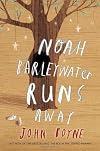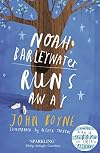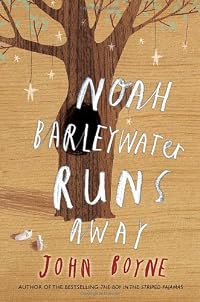
Noah Barleywater Runs Away
by John Boyne
On This Page
Description
When life at home becomes too difficult, eight-year-old Noah sets out to see the world and have an adventure, and in the forest he meets a toymaker who has a story and some advice to share.Tags
Recommendations














Member Reviews
This is the best kid's book that I've read in a really, really long time. It begins with Noah's near-surreal adventures through forest and village à la Oz and Alice's Adventures in Wonderland (making it also one of the best-written kid's books that I've read in a while). Boyne accurately captures the innocence and imagination of childhood through Noah's eight-year-old eyes. While the novel starts out somewhat confusing for readers - you're kind of wondering where the author's going with the story - it quickly morphs into a fairytale-like narrative with some deeper meanings on childhood, promises, and facing those things in life that you don't want to meet but are nevertheless unavoidable. Really, the novel is just as suitable for older show more readers as for its intended audience. For parents, I'd recommend this as a book to read aloud and digest with their children. And perhaps one of the best parts of the book is what more traditional story it ends up being a continuation of... show less
Despite this book being written for 8-12 year old's, there was much to enjoy.
As the title suggests Noah runs away from home and has quite an adventure when he comes upon a village with talking animals. They encourage him to enter the village toyshop where he encounters the toymaker, an elderly gentleman, with gentle quiet wisdom. The reader gradually learns what Noah is running from. Suspend disbelief and find you inner child with this beautifully crafted dose of magical realism. This author once again confronts a difficult topic for young people with subtlety. I will be encouraging my granddaughter to read this.
As the title suggests Noah runs away from home and has quite an adventure when he comes upon a village with talking animals. They encourage him to enter the village toyshop where he encounters the toymaker, an elderly gentleman, with gentle quiet wisdom. The reader gradually learns what Noah is running from. Suspend disbelief and find you inner child with this beautifully crafted dose of magical realism. This author once again confronts a difficult topic for young people with subtlety. I will be encouraging my granddaughter to read this.
When I started this book, I wasn't sure if I was going to like it. By the time I read the last page and closed the covers, I had a smile on my face, tears in my eyes and a sigh on my lips. Quite a turnaround!
It is certainly a strange little book, though everything grows steadily clearer as the story progresses. It opens with Noah Barleywater, an eight year-old boy, leaving his house at sunrise and running away in search of adventures. He doesn't think he has achieved enough in his life, so off he walks in search of greater things. After a few bizarre encounters in the first and second villages he passes through, he arrives in a strange little hamlet in the forest, dominated by an enormous tree and a tumbledown toy shop.
Intrigued and show more strangely compelled, he goes into the shop, even though he knows he can't afford to buy anything. All around him are wooden toys and hundreds of slightly menacing puppets - but before he can get too scared, the kindly old toymaker appears, welcoming Noah warmly into his home. Over a wonderful lunch, the mysterious toymaker tells Noah about his life, and gradually extracts Noah's own tale, and the real reason for the little boy running away. Their magical day together will change both their lives forever...
I really wasn't keen on the story to start with. It seemed overly weird, in a kind of Alice in Wonderland way, filled with nonsensical contradictions and surreal moments. It almost screams out for an adaptation by Tim Burton or Guillermo del Toro, and perhaps some of the magical things that happen to Noah would, in fact, be easier to visualise through film. It also makes it hard to know where I'd pitch the book; although it is being marketed for children and young adults, the surrealism is quite pronounced in places, and there are touches of a deliciously subtle satirical humour that I think would go over most youngsters' heads.
Despite my initial scepticism, as the pages went by I found myself as compelled as Noah - I started to adapt to the style of storytelling and my curiosity was aroused: what was really happening in Noah's family? Who was the mysterious toymaker? What was the story behind his toy shop? Everything started to make sense the further I read, and each thread was tied up beautifully by the end. The illustrations by Oliver Jeffers are charmingly simplistic, and once again Boyne excels at writing with the poignant voice of an innocent little boy.
I'd definitely recommend giving this book a try. Just don't give up without allowing yourself time to become immersed in the magic - you'll be missing a treat! show less
It is certainly a strange little book, though everything grows steadily clearer as the story progresses. It opens with Noah Barleywater, an eight year-old boy, leaving his house at sunrise and running away in search of adventures. He doesn't think he has achieved enough in his life, so off he walks in search of greater things. After a few bizarre encounters in the first and second villages he passes through, he arrives in a strange little hamlet in the forest, dominated by an enormous tree and a tumbledown toy shop.
Intrigued and show more strangely compelled, he goes into the shop, even though he knows he can't afford to buy anything. All around him are wooden toys and hundreds of slightly menacing puppets - but before he can get too scared, the kindly old toymaker appears, welcoming Noah warmly into his home. Over a wonderful lunch, the mysterious toymaker tells Noah about his life, and gradually extracts Noah's own tale, and the real reason for the little boy running away. Their magical day together will change both their lives forever...
I really wasn't keen on the story to start with. It seemed overly weird, in a kind of Alice in Wonderland way, filled with nonsensical contradictions and surreal moments. It almost screams out for an adaptation by Tim Burton or Guillermo del Toro, and perhaps some of the magical things that happen to Noah would, in fact, be easier to visualise through film. It also makes it hard to know where I'd pitch the book; although it is being marketed for children and young adults, the surrealism is quite pronounced in places, and there are touches of a deliciously subtle satirical humour that I think would go over most youngsters' heads.
Despite my initial scepticism, as the pages went by I found myself as compelled as Noah - I started to adapt to the style of storytelling and my curiosity was aroused: what was really happening in Noah's family? Who was the mysterious toymaker? What was the story behind his toy shop? Everything started to make sense the further I read, and each thread was tied up beautifully by the end. The illustrations by Oliver Jeffers are charmingly simplistic, and once again Boyne excels at writing with the poignant voice of an innocent little boy.
I'd definitely recommend giving this book a try. Just don't give up without allowing yourself time to become immersed in the magic - you'll be missing a treat! show less
Noah Barleywater ran away from home. He was eight years old. It was time he set out for adventures of his own. The first two villages he comes to are not very friendly. As he nears the third village he meets up with a couple of talking animals. They tell him about the strange tree adn the even stranger building in the village ahead. The building is a toy shop. Noah enters the toy shop and comes face to face with walls lined with puppets, an old man, and strange happenings in the shop. As he gets to know the old man we learn more about Noah and the reason he runs away. Noah discovers a box of small puppets made by toy maker's father. AS the toy maker tells the story behind each puppet, Noah learns a lesson that helps him make an show more important decision. This was sonderfully written. Like John Boyne's book, "The Boy in the Striped Pajamas", you feel an element of sadness along with happy moments, only to be punched in the emotional gut near the end. I loved this book and can't wait for next years students to be the first to read such a wonderful book. show less
Early in the morning, before breakfast, Noah Barleywater ran away from home. He took a forest path coming across many puzzling things and strange creatures and where he eventually came to a toyshop. Over the course of the day the old man who owned the shop told Noah his life story and along the way, Noah's reason for running away is revealed. This is a charming, refreshingly different story that is filled with nonsensical ideas and yet its message hits the spot. It even has a nice twist at the end.
Intended for 8-12 year olds, this charming story may be enjoyed by anyone. This would be an excellent book for a child who is facing the loss of a loved one - or anyone who is looking for an afternoon with a delightful story.
Intended for 8-12 year olds, this charming story may be enjoyed by anyone. This would be an excellent book for a child who is facing the loss of a loved one - or anyone who is looking for an afternoon with a delightful story.
Noah Barleywater has the feel of a classic folktale – it is whimsical, witty, full of adventure, works subtly on your emotions and has a rollicking charm. The style reminds me of classic James Thurber or Peter S Beagle, and I bet it would be fun to read aloud with kids.
Full review at:
http://bookgrotto.blogspot.com/2010/10/noah-barleywater-runs-away-by-john.html
Full review at:
http://bookgrotto.blogspot.com/2010/10/noah-barleywater-runs-away-by-john.html
The book is described as a fairy tale and I would agree. When you reach the final pages, you will realize that the story is the sensitively, retold tale of a wonderful, imaginary character from our childhood. The story is told with subtle humor and simple truths and the ending will surprise you.
It is about Noah Barleywater, a child who has to face problems that may be beyond his years. To escape from his fears, Noah decides to run away and have some adventures. After all, he is already 8 and has no major accomplishments to speak of, but in running away, he is also leaving his loved ones behind and is running from the problems in his life that he doesn’t want to face.
As he passes through successive towns, each with different magical show more experiences such as talking trees and animals, he is sometimes amazed and sometimes frightened. There are doors that move and speak, floors that shift and stairs that appear and disappear.
When Noah reaches a village with an unusual tree and an odd-looking house, his adventure really begins. He enters the strangely shaped house and discovers that it is a toy shop and suddenly, from out of nowhere, a gentle old man appears. He is the toymaker and he invites the very hungry Noah, to have some lunch. Soon, Noah spies a wooden chest filled with puppets, he asks the toymaker to explain what each one signifies. As the toymaker tells Noah the story of each puppet, we learn, through his memories, of the challenges he faced in life and how he dealt with them successfully in some cases, but in others he explains why he feels deep remorse for how things turned out.
Many issues of childhood and adulthood are confronted such as friendship, bullying, loss, broken and fulfilled promises, cruelty and compassion, thoughtfulness and thoughtlessness, rudeness and good manners, being careful what you wish for, dreams and nightmares, illness, aging, loneliness, love, fear, family, risk taking, following and disobeying rules and shared joy with friends and family. It might seem like too many for one book to handle but they are dealt with so deftly that they are easy to comprehend and overcome. Simple explanations prevent them from becoming too much for the reader.
When an author is good, the quiet enjoyment one receives while reading the pages is a treasure to experience. I found myself chuckling as I read along, smiling to myself at the way the seemingly innocent descriptions, formed images in my mind, almost as if the eight year old Noah, was whispering in my ear. I found myself understanding the simple concepts presented and realizing that young readers will have moments when they simply think, “aha” so that is how I should deal with that kind of a circumstance…like when you are on a train and someone is talking too loud, you simply ignore them rather than make a scene by getting angry or doing something kind for someone even though you would really rather be doing something else, because it is the right thing to do. The book is filled with these kinds of object lessons and they seem to occur very naturally without becoming too numerous or too unwieldy.
The illustrations are simple drawings that appear to be drawn by a young child of about the same age as the main character. They are a perfect complement to this marvelously entertaining story (even though it is tinged with deep sadness), about a child who learns to face his worst fears. Because of his experiences when he runs away, he ultimately makes decisions for his future and learns to appreciate his life, rather than being afraid to live because of what might ultimately happen.
At the end of the book, Noah is enlightened. The toymaker has helped him think through his problems and as they share their experiences, he learns to better handle his own. He learns that each day can be an adventure, no matter how ordinary, no matter where he is, because life is filled with choices. Sometimes we make some good ones and sometimes we make some bad ones. Some we can fix and some we cannot.
Although the story deals with a dreadfully sad and difficult problem, a child who has to face the death of a parent, the message does not come across as too overwhelming. The message delivered is really that we have to explore life, while we live it, and appreciate the moment with those we love, rather than dread what comes after it. We have to live and enjoy each day, without fearing what the future will bring. So, in the end, although the subject matter is very heavy, it is dealt with so well, that it is also uplifting, because although it deals with the possibility of great loss, it really gives us a philosophy to use to face it. It teaches us to welcome and appreciate life and to look forward to it eagerly in the present. show less
It is about Noah Barleywater, a child who has to face problems that may be beyond his years. To escape from his fears, Noah decides to run away and have some adventures. After all, he is already 8 and has no major accomplishments to speak of, but in running away, he is also leaving his loved ones behind and is running from the problems in his life that he doesn’t want to face.
As he passes through successive towns, each with different magical show more experiences such as talking trees and animals, he is sometimes amazed and sometimes frightened. There are doors that move and speak, floors that shift and stairs that appear and disappear.
When Noah reaches a village with an unusual tree and an odd-looking house, his adventure really begins. He enters the strangely shaped house and discovers that it is a toy shop and suddenly, from out of nowhere, a gentle old man appears. He is the toymaker and he invites the very hungry Noah, to have some lunch. Soon, Noah spies a wooden chest filled with puppets, he asks the toymaker to explain what each one signifies. As the toymaker tells Noah the story of each puppet, we learn, through his memories, of the challenges he faced in life and how he dealt with them successfully in some cases, but in others he explains why he feels deep remorse for how things turned out.
Many issues of childhood and adulthood are confronted such as friendship, bullying, loss, broken and fulfilled promises, cruelty and compassion, thoughtfulness and thoughtlessness, rudeness and good manners, being careful what you wish for, dreams and nightmares, illness, aging, loneliness, love, fear, family, risk taking, following and disobeying rules and shared joy with friends and family. It might seem like too many for one book to handle but they are dealt with so deftly that they are easy to comprehend and overcome. Simple explanations prevent them from becoming too much for the reader.
When an author is good, the quiet enjoyment one receives while reading the pages is a treasure to experience. I found myself chuckling as I read along, smiling to myself at the way the seemingly innocent descriptions, formed images in my mind, almost as if the eight year old Noah, was whispering in my ear. I found myself understanding the simple concepts presented and realizing that young readers will have moments when they simply think, “aha” so that is how I should deal with that kind of a circumstance…like when you are on a train and someone is talking too loud, you simply ignore them rather than make a scene by getting angry or doing something kind for someone even though you would really rather be doing something else, because it is the right thing to do. The book is filled with these kinds of object lessons and they seem to occur very naturally without becoming too numerous or too unwieldy.
The illustrations are simple drawings that appear to be drawn by a young child of about the same age as the main character. They are a perfect complement to this marvelously entertaining story (even though it is tinged with deep sadness), about a child who learns to face his worst fears. Because of his experiences when he runs away, he ultimately makes decisions for his future and learns to appreciate his life, rather than being afraid to live because of what might ultimately happen.
At the end of the book, Noah is enlightened. The toymaker has helped him think through his problems and as they share their experiences, he learns to better handle his own. He learns that each day can be an adventure, no matter how ordinary, no matter where he is, because life is filled with choices. Sometimes we make some good ones and sometimes we make some bad ones. Some we can fix and some we cannot.
Although the story deals with a dreadfully sad and difficult problem, a child who has to face the death of a parent, the message does not come across as too overwhelming. The message delivered is really that we have to explore life, while we live it, and appreciate the moment with those we love, rather than dread what comes after it. We have to live and enjoy each day, without fearing what the future will bring. So, in the end, although the subject matter is very heavy, it is dealt with so well, that it is also uplifting, because although it deals with the possibility of great loss, it really gives us a philosophy to use to face it. It teaches us to welcome and appreciate life and to look forward to it eagerly in the present. show less
Members
- Recently Added By
Lists

Fiction with Men's Given Names in the Title
302 works; 11 members
Author Information

43+ Works 31,729 Members
Acclaimed Irish novelist John Boyne was born in Dublin, Ireland on April 30, 1971. He studied English Literature at Trinity College, Dublin and Creative Writing at the University of East Anglia. He has written dozens of short stories and many novels, including the New York Times bestseller The Boy in the Striped Pyjamas. An award-winning film show more adaptation of this work was released in 2008. In 2015 his title, A History of Lonelines made The New Zealand Best Seller List. (Bowker Author Biography) show less
All Editions
Some Editions
Awards and Honors
Common Knowledge
- Canonical title*
- Noah Barleywater gaat ervandoor
- Original title
- Noah Barleywater runs away : a fairytale
- Original publication date
- 2010
- People/Characters*
- Noah Barleywater
- Dedication
- For Katie Lynch
- First words
- Noah Barleywater left home in the early morning, before the sun rose, before the dogs woke, before the dew stopped falling on the fields.
- Original language*
- Anglais (Irlande) (Irlande)
*Some information comes from Common Knowledge in other languages. Click "Edit" for more information.
Classifications
Statistics
- Members
- 483
- Popularity
- 62,504
- Reviews
- 25
- Rating
- (3.70)
- Languages
- 12 — Chinese, Dutch, English, Finnish, French, German, Galician, Italian, Portuguese, Spanish, Swedish, Turkish
- Media
- Paper, Audiobook, Ebook
- ISBNs
- 44
- ASINs
- 8