On This Page
Description
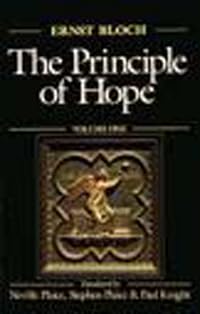
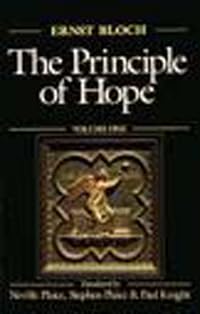
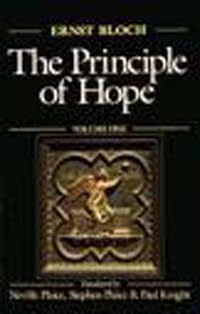
The Principle of Hope is one of the great works of the human spirit. It is a critical history of the utopian vision and a profound exploration of the possible reality of utopia. Even as the world has rejected the doctrine on which Bloch sought to base his utopia, his work still challenges us to think more insightfully about our own visions of a better world. The Principle of Hope is published in three volumes: Volume 1 lays the foundations of the philosophy of process and introduces the idea show more of the Not-Yet-Conscious--the anticipatory element that Bloch sees as central to human thought. It also contains a remarkable account of the aesthetic interpretations of utopian "wishful images" in fairy tales, popular fiction, travel, theater, dance, and the cinema. Volume 2 presents "the outlines of a better world." It examines the utopian systems that progressive thinkers have developed in the fields of medicine, painting, opera, poetry, and ultimately, philosophy. It is nothing less than an encyclopedic account of utopian thought from the Greeks to the present. Volume 3 offers a prescription for ways in which humans can reach their proper "homeland," where social justice is coupled with an openness to change and to the future. show lessTags
Recommendations
























Member Reviews
I want to write a thank you note to [a:José Muñoz|215886|José Muñoz|http://www.goodreads.com/assets/nophoto/nophoto-U-50x66.jpg] who introduced me to Ernst Bloch's work in [b:Cruising Utopia: The Then and There of Queer Futurity|10437104|Cruising Utopia The Then and There of Queer Futurity|José Muñoz|http://photo.goodreads.com/books/1302359585s/10437104.jpg|15341658]. This author is exactly what I've been looking for - a philosopher of the Not-Yet-Conscious, an esoteric Marxist theologian and more. I started with his defense of Expressionism in [b:Aesthetics and Politics|162570|Aesthetics and Politics|Theodor W. Adorno|http://photo.goodreads.com/books/1172302443s/162570.jpg|156918], then proceeded to this volume. In the span of a show more month, I've also acquired [b:Traces|344005|Traces|Ernst Bloch|http://photo.goodreads.com/books/1173910096s/344005.jpg|334346], Man On His Own and [b:Atheism in Christianity: The Religion of the Exodus and the Kingdom|6105759|Atheism in Christianity The Religion of the Exodus and the Kingdom|Ernst Bloch|http://photo.goodreads.com/books/1266513494s/6105759.jpg|266347]. The latter is especially enticing because in my Bay Area poetry scene, Giorgio Agamben rules everything around me, which is fine, I guess, but he never really lit my fire. Now I have my own go to person for atheist eschatology.
Plus, Bloch really set 'em up and knocks 'em down. Freud's bourgeois system of psychology, Heidegger's assertion of anxiety as the basic state-of-mind. Although Bloch focuses heavily on dreams, especially day dreams and seems to be delving into literary analysis (and from flipping ahead - film, too), this theoretical work far exceeds the ambitions and scope of my softy, Romantic boyfriend, Gaston Bachelard. I've known in my gut for years that reverie was not just aesthetically but also politically important.
If you cut your teeth on Hakim Bey's TAZ and Bachelard's Poetics of Space and have since pulled your hair out trying to read Being and Time, Bloch may be for you.
Nota bene: show less
Plus, Bloch really set 'em up and knocks 'em down. Freud's bourgeois system of psychology, Heidegger's assertion of anxiety as the basic state-of-mind. Although Bloch focuses heavily on dreams, especially day dreams and seems to be delving into literary analysis (and from flipping ahead - film, too), this theoretical work far exceeds the ambitions and scope of my softy, Romantic boyfriend, Gaston Bachelard. I've known in my gut for years that reverie was not just aesthetically but also politically important.
If you cut your teeth on Hakim Bey's TAZ and Bachelard's Poetics of Space and have since pulled your hair out trying to read Being and Time, Bloch may be for you.
Nota bene: show less
Ratings
Members
- Recently Added By
Author Information

132+ Works 1,938 Members
Ernst Bloch ranks as a major German Marxist philosopher. Beginning his career as author and teacher during World War I, he moved in the orbit of Marxist thought during the 1920s. In 1933 he left Germany and eventually found his way to the United States, where he created his major work The Principle of Hope. After World War II, he settled in East show more Germany, where from 1948 to 1957 he was professor at the University of Leipzig. His work eventually aroused the hostility of the authorities, and in 1961 he was granted political asylum in West Germany. Bloch departed from orthodox Marxism by attending to the problem of intellectual culture and refraining from treating it merely as superstructure determined by the materialist elements of political economy. Emphasizing the role of hope-as an inner drive, or hunger, in human beings-for a possible ideal future order, Bloch's thought may be described as utopian, involving the realization of a religious community akin to the kingdom of God, where people are no longer exploited but are free. Bloch's style echoes recent expressionism and is also rich in mystical overtones of biblical origin. Bloch died in 1977. (Bowker Author Biography) show less
Series

Belongs to Publisher Series
Common Knowledge
- Canonical title
- The Principle of Hope, Vol. 1
Classifications
Statistics
- Members
- 147
- Popularity
- 223,242
- Reviews
- 1
- Rating
- (4.38)
- Languages
- 5 — English, French, German, Portuguese, Spanish
- Media
- Paper, Ebook
- ISBNs
- 7
- ASINs
- 1