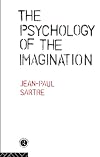
The Psychology of Imagination
by Jean-Paul Sartre
On This Page
Description
The Imaginary marks the first attempt to introduce Husserl's work into the English-speaking world. This new translation rectifies flaws in the 1948 translation and recaptures the essence of Sartre's phenomenology.Tags
Recommendations














Member Reviews
Algo espeso y de contenido recabado de otros autores, pero que contiene varias definiciones interesantes sobre el concepto de "imagen", aparentemente asociado al "pensamiento"
O que pensava um dos maiores intelectuais do século XX no início da sua carreira universitária? Em A imaginação, encontramos um Sartre pré-Existencialismo e pré-Segunda Guerra Mundial, fazendo uso de seus estudos recentes sobre a fenomenologia, método desenvolvido pelo filósofo alemão Edmund Husserl, para traçar uma história filosófica sobre a imaginação.Os conceitos apresentados pelo jovem Sartre são embriões de um novo pensamento. Em A imaginação, o autor levanta as contradições intrínsecas ao conceito de imagem, sobre o costume de se pensar a natureza da imagem a partir de uma experiência reflexiva. Já na introdução, Sartre mostra que uma folha em branco não é apenas uma folha em branco. O filósofo show more propõe uma teoria única para analisar a imagem sem renegar estudos anteriores, observando de que maneira grandes filósofos como Descartes, Leibniz, Hume e Spinoza pensaram esse conceito. show less
Jul 9, 2021Portuguese (Brazil)
Em A imaginação, o autor levanta as contradições intrínsecas ao conceito de imagem, sobre o costume de se pensar a natureza da imagem a partir de uma experiência reflexiva. Já na introdução, Sartre mostra que uma folha em branco não é apenas uma folha em branco. O filósofo propõe uma teoria única para analisar a imagem sem renegar estudos anteriores, observando de que maneira grandes filósofos como Descartes, Leibniz, Hume e Spinoza pensaram esse conceito.
May 14, 2021Portuguese (Portugal)
Ratings
Members
- Recently Added By
Author Information

706+ Works 57,277 Members
Sartre is the dominant figure in post-war French intellectual life. A graduate of the prestigious Ecole Normale Superieure with an agregation in philosophy, Sartre has been a major figure on the literary and philosophical scenes since the late 1930s. Widely known as an atheistic proponent of existentialism, he emphasized the priority of existence show more over preconceived essences and the importance of human freedom. In his first and best novel, Nausea (1938), Sartre contrasted the fluidity of human consciousness with the apparent solidity of external reality and satirized the hypocrisies and pretensions of bourgeois idealism. Sartre's theater is also highly ideological, emphasizing the importance of personal freedom and the commitment of the individual to social and political goals. His first play, The Flies (1943), was produced during the German occupation, despite its underlying message of defiance. One of his most popular plays is the one-act No Exit (1944), in which the traditional theological concept of hell is redefined in existentialist terms. In Red Gloves (Les Mains Sales) (1948), Sartre examines the pragmatic implications of the individual involved in political action through the mechanism of the Communist party and a changing historical situation. His highly readable autobiography, The Words (1964), tells of his childhood in an idealistic bourgeois Protestant family and of his subsequent rejection of his upbringing. Sartre has also made significant contributions to literary criticism in his 10-volume Situations (1947--72) and in works on Baudelaire, Genet, and Flaubert. In 1964 he was awarded the Nobel Prize in Literature and refused it, saying that he always declined official honors. (Bowker Author Biography) show less
Some Editions
Awards and Honors
Notable Lists
Series
Belongs to Publisher Series
Work Relationships
Is abridged in
Common Knowledge
- Canonical title
- The Psychology of Imagination
- Original title
- L'Imagination; Imaginaire; L'Imaginaire. Psychologie Phénoménologique de la I'magination
- Original publication date
- 1936
- First words
- Despite several preconceptions, to which we shall return shortly, it is certain that when I produce the image of Peter, it is Peter who is the object of my actual consciousness.
- Last words
- (Click to show. Warning: May contain spoilers.)Paramnesia differs from the esthetic attitude as memory differs from imagination.
- Original language
- French
Classifications
Statistics
- Members
- 556
- Popularity
- 52,716
- Reviews
- 4
- Rating
- (3.55)
- Languages
- 10 — Catalan, Chinese, Dutch, English, French, Italian, Polish, Portuguese (Portugal), Romanian, Spanish
- Media
- Paper, Ebook
- ISBNs
- 51
- ASINs
- 20