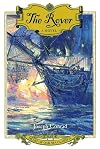
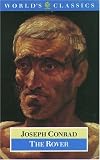
The Rover
by Joseph Conrad
On This Page
Description
As the Revolution rages in France, a seafarer named Peyrol comes to the end of a lifetime lived on the seas and seeks refuge in a remote farmhouse on the French Riviera. As he attempts to settle into a peaceful existence, Peyrol struggles to redefine himself and returns to the sea for one final voyage. The Rover is the last complete novel written by Joseph Conrad, and was published shortly before his death. HarperPerennial Classics brings great works of literature to life in digital format, show more upholding the highest standards in ebook production and celebrating reading in all its forms. Look for more titles in the HarperPerennial Classics collection to build your digital library. show lessTags
Recommendations
















Member Reviews
A straightforward adventure story, which, beneath the surface, explores the motivations and fears for having lived a life with meaning. Its elegiac and melancholy tone would have made it a fitting work with which Conrad might have concluded his writing career. As it was, The Rover was his last completed work before his death, with the unfinished Suspense: A Napoleonic Novel published posthumously. In form, it appears initially as a linear tale, but it is one that washes back in forth like a series of waves, gliding into transitions, taking up different perspectives, and only then returning to the origins of those points of view. It's quite a subtle effect, and one that illuminates both characters and the trails of the plot in a show more multi-layered fashion.
Like many of Conrad's protagonists, Peyrol, the Rover of the title, is a liminal character. His life away from the sea, albeit stretching over years and years, long enough for his hair to turn white, is but a temporary lull. He awaits his final return to the sea, a place of no fixed boundaries, no sense of permanence, no true identity, just as Peyrol's life was at Escampobar, the farmhouse where he has sought refuge after his time as a corsair in the Indian Ocean.
This is not a story of redemption. Rather, it is about the impossibility of certain men ever belonging to anything other than the tempests that drag them into adventure, literal or imaginary. Peyrol seems to mimic Conrad himself in this regard. Fitting, then, that the ultimate chapter is drawn from Conrad's own experience in narrowly escaping a coastal interceptor early in his life, as described towards the end of his autobiographical work, The Mirror of the Sea. show less
Like many of Conrad's protagonists, Peyrol, the Rover of the title, is a liminal character. His life away from the sea, albeit stretching over years and years, long enough for his hair to turn white, is but a temporary lull. He awaits his final return to the sea, a place of no fixed boundaries, no sense of permanence, no true identity, just as Peyrol's life was at Escampobar, the farmhouse where he has sought refuge after his time as a corsair in the Indian Ocean.
This is not a story of redemption. Rather, it is about the impossibility of certain men ever belonging to anything other than the tempests that drag them into adventure, literal or imaginary. Peyrol seems to mimic Conrad himself in this regard. Fitting, then, that the ultimate chapter is drawn from Conrad's own experience in narrowly escaping a coastal interceptor early in his life, as described towards the end of his autobiographical work, The Mirror of the Sea. show less
This book is set during the “Long Blockade” of Toulon, which set the stage for the Battle of Trafalgar. I needed some research on this to make sense of the plot, but the real focus is character study. I was particularly interested in the exploration of the impact of being a “survivor” of the French Revolution: ex-Royalists living next door to ex-Jacobins who wiped out half their extended families, the memories of denunciations and blood running in the streets. The title character is a man of no national or political identity, another compelling theme.
This was a little hard to follow at times. I needed an atlas to figure out where things were happening, & sometimes it was stories about things that happened in the past. The other book needed (or website) was translation from French to English, since this story took place in France it has a lot of phrases I didn't know. It starts out not long after the French Revolution, deals with the after effects. It reminds me of what I've heard about the revolution in Russia.
Ratings
Members
- Recently Added By
Lists

Best Historical Fiction
620 works; 262 members

Havet
13 works; 1 member
Author Information

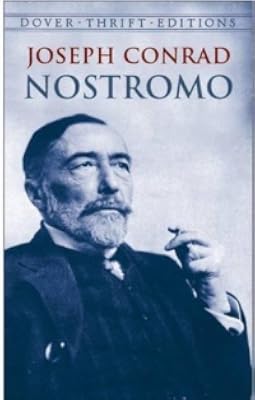
Joseph Conrad is recognized as one of the 20th century's greatest English language novelists. He was born Jozef Konrad Nalecz Korzeniowski on December 3, 1857, in the Polish Ukraine. His father, a writer and translator, was from Polish nobility, but political activity against Russian oppression led to his exile. Conrad was orphaned at a young age show more and subsequently raised by his uncle. At 17 he went to sea, an experience that shaped the bleak view of human nature which he expressed in his fiction. In such works as Lord Jim (1900), Youth (1902), and Nostromo (1904), Conrad depicts individuals thrust by circumstances beyond their control into moral and emotional dilemmas. His novel Heart of Darkness (1902), perhaps his best known and most influential work, narrates a literal journey to the center of the African jungle. This novel inspired the acclaimed motion picture Apocalypse Now. After the publication of his first novel, Almayer's Folly (1895), Conrad gave up the sea. He produced thirteen novels, two volumes of memoirs, and twenty-eight short stories. He died on August 3, 1924, in England. (Bowker Author Biography) show less
Some Editions
Series
Belongs to Publisher Series
Work Relationships
Is contained in
Common Knowledge
- Canonical title
- The Rover
- Original title
- The Rover
- Original publication date
- 1923
- People/Characters
- Jean Peyrol; Lieutenant Eugene Real; Citizen Scevola Bron; Arlette; Catherine; Michel (show all 8); Lieutenant Jack Bolt; Captain Vincent
- Important places
- Toulon, Var, Provence-Alpes-Côte d'Azur, France; Giens Peninsula, Provence-Alpes-Côte d'Azur, France
- Important events
- French Revolution
- Related movies
- The Rover (1967 | IMDb)
- Dedication
- To G. Jean Aubry In Friendship This Tale of the Last Days of a French Brother of the Coast
- First words
- After entering at break of day the inner roadstead of the Port of Toulon, exchanging several loud hails with one of the guardboats of the Fleet, which directed him to where he was to take up his berth, Master-Gunner Peyrol le... (show all)t go of the anchor of the sea-worn and battered ship in his charge, between the arsenal and the town, in full view of the principal quay.
- Last words
- (Click to show. Warning: May contain spoilers.)The breath of the evening breeze came to cool the heated rocks of Escampobar; and the mulberry tree, the only big tree on the head of the peninsula, standing like a sentinel at the gate of the yard, sighed faintly in a shudder of all its leaves, as if regretting the Brother of the Coast, the man of dark deeds, but of large heart, who often at noonday would lie down to sleep under its shade.
- Original language
- English
Classifications
Statistics
- Members
- 568
- Popularity
- 52,255
- Reviews
- 3
- Rating
- (3.65)
- Languages
- 7 — English, French, German, Italian, Polish, Russian, Spanish
- Media
- Paper, Audiobook, Ebook
- ISBNs
- 57
- ASINs
- 48