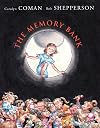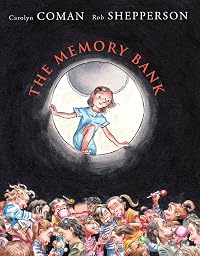
The Memory Bank
by Carolyn Coman
On This Page
Description
When Hope learns that, while her memory account is seriously low, she is a champion dreamer, she stays at the World Wide Memory Bank trying to locate her sister Honey, whom their parents abandoned and told Hope to forget.Tags
Recommendations









Member Reviews
Lemony Snickett and Roald Dahl collide with Brian Selznick in this unusual story of a sister's refusal to forget about the baby sister her parents abandon. Carolyn Coman's text is full of her signature sly humor, and Rob Shepperson's illustrations (a combination of finished pictures and unfinalized sketch art in the ARC) are beautifully expressive, but sadly, I think the target audience is going to be lost. What worked so well in Hugo Cabret with the marriage of text and graphics just doesn't flow here. An ambitious attempt, and enjoyable on several levels, but not quite a win for the audience for whom it's intended.
This is somewhat reminiscent of The Invention of Hugo Cabret in how it uses illustrations combined with the text to advance the story. Even though it's a story of parental abandonment and neglect, it's told in a light manner so most kids will not be disturbed by it. Hope and her sister Honey are devoted to each other, but their parents (who are not very present in the book) couldn't be bothered with them. They abandon Honey when she annoys them. Hope is devastated, and since she can't find Honey she spends her time in bed, dreaming. But because she hasn't been having experiences which would have added memories to her "memory bank", she is picked up by the World Wide Memory Bank (WWMB) to investigate her lack of new memories. There, she show more finally finds people who are nice to her. Not only does she love it there, she hopes that the WWMB can lead her to Honey. show less
I got an advanced reading copy of this book through the Amazon Vine program. It looked like a fun book and had excellent reviews. After reading it though I have mixed feelings about it. There were some things I really didn't like and some things I really liked.
When Hope's little sister Honey is abandoned by their terrible parents. Hope falls into a deep depression; she spends long periods of her life sleeping. Then one day a man in a van shows up to take her to the Memory Bank because of a deficiency in her memory bank account. Hope finds herself in a crazy world of memories and dreams; hoping beyond hope that she will find someway back to her sister Honey.
First let's talk about things I liked. This is a very creative book. The idea of show more a Memory Bank was very interesting and fun. The story alternates between words (mostly Hope's part of the story) and pictures (Honey's part of the story). I really thought that the authors cleverly integrated the pictures and story to create a great overall picture of what was happening. As far as the plot; this story does emphasize how great it is to have love between siblings and for siblings to care about and help each other.
Unfortunately there were a lot of things I didn't like. The story was a bit dark to read to children (and I am the queen of reading dark stories to my kid). The idea of parents abandoning a small child in the middle of the road and of Hope's almost comatose like depression are very dark and serious; and I am not sure a young kid would be ready to deal with those types of things. I get that they were supposed to kind of darkly funny; but the way it was told added a bit too much realism to not take it all seriously. I also got a very yucky feeling when Hope decides to climb in a big white unknown van with some older guy...I was thinking okay...this is sooo not something I want to teach my kid to do. Yup, son, getting into big white vans with a strange man will lead you to a magical world where everyone treats you special...
In addition to the above I thought the story was kind of boring. My son and I started reading it together but it wouldn't hold his attention, so I finished reading it myself and was mainly glad when the story was over with. While the Memory Bank idea was neat, there were a lot of miscellaneous facts about how it worked that were boring. There isn't a ton of action and the story overall is pretty predictable.
Overall, some neat ideas and concepts. I loved how the story was integrated with picture sequences to tell the story. I would read it to older children; it is too dark for younger children and would put some questionable ideas into younger kids' heads. It does tell a positive story about caring and love between sisters; but to be honest some of my son's Franklin books (like Franklin and Harriet) do the same thing. It is not something I would read again and, to be honest, I am glad I got it through Vine and didn't spend money on it. show less
When Hope's little sister Honey is abandoned by their terrible parents. Hope falls into a deep depression; she spends long periods of her life sleeping. Then one day a man in a van shows up to take her to the Memory Bank because of a deficiency in her memory bank account. Hope finds herself in a crazy world of memories and dreams; hoping beyond hope that she will find someway back to her sister Honey.
First let's talk about things I liked. This is a very creative book. The idea of show more a Memory Bank was very interesting and fun. The story alternates between words (mostly Hope's part of the story) and pictures (Honey's part of the story). I really thought that the authors cleverly integrated the pictures and story to create a great overall picture of what was happening. As far as the plot; this story does emphasize how great it is to have love between siblings and for siblings to care about and help each other.
Unfortunately there were a lot of things I didn't like. The story was a bit dark to read to children (and I am the queen of reading dark stories to my kid). The idea of parents abandoning a small child in the middle of the road and of Hope's almost comatose like depression are very dark and serious; and I am not sure a young kid would be ready to deal with those types of things. I get that they were supposed to kind of darkly funny; but the way it was told added a bit too much realism to not take it all seriously. I also got a very yucky feeling when Hope decides to climb in a big white unknown van with some older guy...I was thinking okay...this is sooo not something I want to teach my kid to do. Yup, son, getting into big white vans with a strange man will lead you to a magical world where everyone treats you special...
In addition to the above I thought the story was kind of boring. My son and I started reading it together but it wouldn't hold his attention, so I finished reading it myself and was mainly glad when the story was over with. While the Memory Bank idea was neat, there were a lot of miscellaneous facts about how it worked that were boring. There isn't a ton of action and the story overall is pretty predictable.
Overall, some neat ideas and concepts. I loved how the story was integrated with picture sequences to tell the story. I would read it to older children; it is too dark for younger children and would put some questionable ideas into younger kids' heads. It does tell a positive story about caring and love between sisters; but to be honest some of my son's Franklin books (like Franklin and Harriet) do the same thing. It is not something I would read again and, to be honest, I am glad I got it through Vine and didn't spend money on it. show less
Very like Matilda at the beginning...two devilish parents cruelly abandon Hope's little sister, Honey, and Hope finds herself touring the Memory Bank (where all memories and dreams are stored) to find Honey. She meets many warm, welcoming adults on the way. The narrative is periodically conducted with charming pictures, a la Hugo Cabret. The initially promising story grows confused at the end--a band of revolutionaries trying to destroy the memory system turns out to be a bunch of kids led by the boss' daughter, Tabula Rasa (she worrisomely refers to them as her "petite pawns." ) The ideological issues are never really resolved--are the orphans being rescued or used for Tabby's own ends?-- and murk up the works.
Reviewed by Theresa L. Stowell for TeensReadToo.com
Hope and Honey Scroggins have terrible parents. Their parents are so bad that it's no surprise to Hope when they leave tiny little Honey at the side of the road. "Just forget her" is the constant refrain from the adult members of the Scroggins family, who sell off Honey's belongings and take over their children's room. Hope is crushed and retreats into sleep to escape the heartbreak of her sister's loss.
But sleeping all of the time means that Hope isn't building any real life memories, so the Memory Bank sends a notice to Hope telling her that she has a deficit in her memory deposits. Though she doesn't understand the letter, Hope cherishes her first letter and hides it under her cot in show more the garage before going back to sleep to dream about Honey. A short time later, Mr. Obleratta shows up to take her to the WWMB, the World Wide Memory Bank.
Hope's adventure truly begins as she is placed on a conveyor belt and sent into the WWMD to justify why she is dreaming more than living. Within the WWMD, Hope meets all kinds of people and experiences positive adult relationships for the first time.
This is an enchanting story of two little girls whose love for each other ties them together despite separation and different experiences. Coman's narrative about Hope's adventure is interspersed with Shepperson's series of delightful illustrations that tell Honey's story. THE MEMORY BANK is an enjoyable experience that would work great for young readers, for classrooms, or family discussions. show less
Hope and Honey Scroggins have terrible parents. Their parents are so bad that it's no surprise to Hope when they leave tiny little Honey at the side of the road. "Just forget her" is the constant refrain from the adult members of the Scroggins family, who sell off Honey's belongings and take over their children's room. Hope is crushed and retreats into sleep to escape the heartbreak of her sister's loss.
But sleeping all of the time means that Hope isn't building any real life memories, so the Memory Bank sends a notice to Hope telling her that she has a deficit in her memory deposits. Though she doesn't understand the letter, Hope cherishes her first letter and hides it under her cot in show more the garage before going back to sleep to dream about Honey. A short time later, Mr. Obleratta shows up to take her to the WWMB, the World Wide Memory Bank.
Hope's adventure truly begins as she is placed on a conveyor belt and sent into the WWMD to justify why she is dreaming more than living. Within the WWMD, Hope meets all kinds of people and experiences positive adult relationships for the first time.
This is an enchanting story of two little girls whose love for each other ties them together despite separation and different experiences. Coman's narrative about Hope's adventure is interspersed with Shepperson's series of delightful illustrations that tell Honey's story. THE MEMORY BANK is an enjoyable experience that would work great for young readers, for classrooms, or family discussions. show less
The premise of this book is very thin. In fact, I could hardly make sense of it. I ended up skimming through it, and I liked the artwork, but nice pictures don't make an otherwise vapid chapter book fly.
Recommended Ages: Gr. 3-6
Plot Summary: Hope is told to forget about her sister after her parents leave her on the side of the road and drive off leaving Honey in a cloud of dust. Back at home, Hope is kicked out of her bedroom and into the garage where she sleeps on a cot. Her mind is consumed with her sister, but she gets distracted by the first piece of mail she's ever received, which she finds on the kitchen table with a bunch of other bills and overdue notices. It's from the bank, and she doesn't understand a word of what it all means, but it was addressed to her and she isn't used to being wanted, so she puts in under her pillow. The next day Obleratta picks her up and takes her to WWMB. Before Sterling can interrogate her, show more Violette insists Honey is her responsibility because of the dreams she produces. The next day, Honey meets many people, finding warmth and compassion for the first time in her life. she feels wanted and loved by Helen, and even Ute and Franka. When Sterling finally questions her and finds she wasn't doing anything wrong, she begs to stay and offers to polish the drawers in order to stay a little longer. All of a sudden, the alarm is going off because lollipops are being thrown down into the bank messing with the equipment. Sterling knows it is the CSG and is scared of the pressing danger, but Hope is brave and climbs up the machine to unclog the hole when she hears Honey's whistle.
Setting: future? dump near the big bank
Characters:
Hope Scroggins - doesn't understand big words, might not have ever gone to school,
Honey Scroggins - AKA Sonny Scroggins,
Mr. & Mrs. Scroggins - Hope's parents, not very nice and shouldn't be parents
Obleratta - is responsible for pick-ups and deliveries, also goes to the dump to get rid of the lobeglobes that aren't perfectly round, upset that he needs to start picking up kids, feels bad for Hope and is nice to her, answers her questions and buys her food at the gas station
Sterling - head of the World Wide Memory Bank, always has important things to do, can't say the word children, works in the everlasting memories room, lets Hope polish the drawers, warns Hope about the Clean Slate Gang (CSG)
Violette - head of the dream room, finds her work incredibly important, convinces Sterling this is where Hope belongs when she first arrives
Helen -head of the room with children's memories, finds the memories of baby's "memies" incredibly special, is warm and mother-like to Hope, gives her lots of chocolate kisses, is the first person to hear Hope's story
Ute & Franka - sorters, nice & warm towards Hope, talk like caveman, offer Hope lots of coffee cake because they think she's too skinny
Tabby - AKA Mary Martha, AKA Tabula Rasa,
Recurring Themes: dreams, loss of sibling, memories, family
Controversial Issues: none
Personal Thoughts:
Genre: fantasy (but no fantastical characters, just the idea of keeping memories in little marble-like balls)
Pacing: medium - fast because of the pictures and big font but not a whole lot of suspenseful action
Characters: not sure who the big group of children are until the end, although the reader might be able to guess
Frame: a little confusing and the fantastical elements are not fully explained in order to make this a short read
Storyline:
Activity:
Readalike: there are short passages of illustrations that tell the story, similar to Invention of Hugo Cabret show less
Plot Summary: Hope is told to forget about her sister after her parents leave her on the side of the road and drive off leaving Honey in a cloud of dust. Back at home, Hope is kicked out of her bedroom and into the garage where she sleeps on a cot. Her mind is consumed with her sister, but she gets distracted by the first piece of mail she's ever received, which she finds on the kitchen table with a bunch of other bills and overdue notices. It's from the bank, and she doesn't understand a word of what it all means, but it was addressed to her and she isn't used to being wanted, so she puts in under her pillow. The next day Obleratta picks her up and takes her to WWMB. Before Sterling can interrogate her, show more Violette insists Honey is her responsibility because of the dreams she produces. The next day, Honey meets many people, finding warmth and compassion for the first time in her life. she feels wanted and loved by Helen, and even Ute and Franka. When Sterling finally questions her and finds she wasn't doing anything wrong, she begs to stay and offers to polish the drawers in order to stay a little longer. All of a sudden, the alarm is going off because lollipops are being thrown down into the bank messing with the equipment. Sterling knows it is the CSG and is scared of the pressing danger, but Hope is brave and climbs up the machine to unclog the hole when she hears Honey's whistle.
Setting: future? dump near the big bank
Characters:
Hope Scroggins - doesn't understand big words, might not have ever gone to school,
Honey Scroggins - AKA Sonny Scroggins,
Mr. & Mrs. Scroggins - Hope's parents, not very nice and shouldn't be parents
Obleratta - is responsible for pick-ups and deliveries, also goes to the dump to get rid of the lobeglobes that aren't perfectly round, upset that he needs to start picking up kids, feels bad for Hope and is nice to her, answers her questions and buys her food at the gas station
Sterling - head of the World Wide Memory Bank, always has important things to do, can't say the word children, works in the everlasting memories room, lets Hope polish the drawers, warns Hope about the Clean Slate Gang (CSG)
Violette - head of the dream room, finds her work incredibly important, convinces Sterling this is where Hope belongs when she first arrives
Helen -head of the room with children's memories, finds the memories of baby's "memies" incredibly special, is warm and mother-like to Hope, gives her lots of chocolate kisses, is the first person to hear Hope's story
Ute & Franka - sorters, nice & warm towards Hope, talk like caveman, offer Hope lots of coffee cake because they think she's too skinny
Tabby - AKA Mary Martha, AKA Tabula Rasa,
Recurring Themes: dreams, loss of sibling, memories, family
Controversial Issues: none
Personal Thoughts:
Genre: fantasy (but no fantastical characters, just the idea of keeping memories in little marble-like balls)
Pacing: medium - fast because of the pictures and big font but not a whole lot of suspenseful action
Characters: not sure who the big group of children are until the end, although the reader might be able to guess
Frame: a little confusing and the fantastical elements are not fully explained in order to make this a short read
Storyline:
Activity:
Readalike: there are short passages of illustrations that tell the story, similar to Invention of Hugo Cabret show less
Members
- Recently Added By
Author Information

10 Works 1,299 Members
Awards and Honors
Common Knowledge
- Canonical title
- The Memory Bank
- Original title
- The Memory Bank
Classifications
Statistics
- Members
- 127
- Popularity
- 258,017
- Reviews
- 8
- Rating
- (3.59)
- Languages
- English, German, Portuguese, Swedish
- Media
- Paper
- ISBNs
- 6
- ASINs
- 1