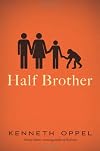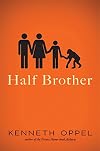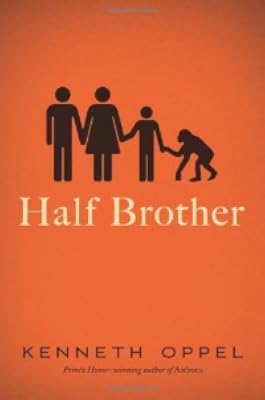
Half Brother
by Kenneth Oppel
On This Page
Description
In 1973, when a renowned Canadian behavioral psychologist pursues his latest research project--an experiment to determine whether chimpanzees can acquire advanced language skills--he brings home a baby chimp named Zan and asks his thirteen-year-old son to treat Zan like a little brother.Tags
Recommendations


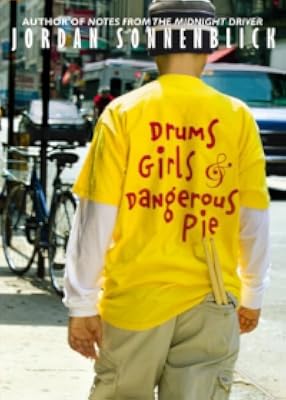
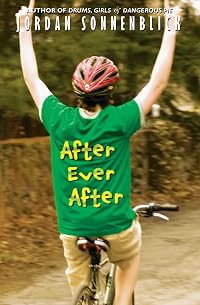
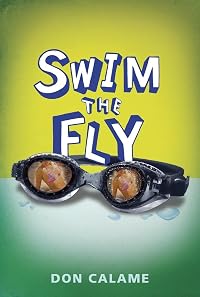
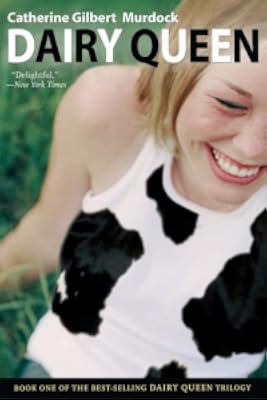



Member Recommendations
by kaledrina
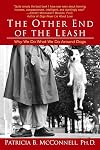
cammykitty This is non-fiction, and for an adult audience but it is one of the best animal behavior books I've read. It compares compares primate behavior (humans and chimps) to canine behavior (dogs) and points out places where we run into problems.

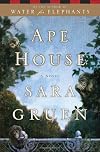
kaledrina (for older readers)
Member Reviews
Second read. First was probably when it was new. Still makes me sniffle. Thank goodness we've made some progress about the ethical treatment of (other) animals, though probably not as much as we need to.
Oppel tries to make the father a reasonable man, with his own issues that make him less attached to his 'subjects' but I just cannot sympathize with him... I think Ben is right to think that he, too, is being treated almost like an unsatisfactory subject himself.
I love that even tertiary characters, like Tim, Mike, Hugh, Susan (the evil grad student?) are real, not cardboard icons. Such a rich exploration of so many themes, so much to think/ talk about. I would love to read and discuss this with young teens.
Oppel tries to make the father a reasonable man, with his own issues that make him less attached to his 'subjects' but I just cannot sympathize with him... I think Ben is right to think that he, too, is being treated almost like an unsatisfactory subject himself.
I love that even tertiary characters, like Tim, Mike, Hugh, Susan (the evil grad student?) are real, not cardboard icons. Such a rich exploration of so many themes, so much to think/ talk about. I would love to read and discuss this with young teens.
This novel is of an early language experiment done with chimpanzees, in the seventies. It’s told from the viewpoint of a teenager whose parents work at a university. They bring home an infant chimp to raise in their home- to see if it can learn to communicate with sign language. Ben is annoyed at first, jealous of how much attention the chimpanzee demands. He’s also not happy having to attend a new school, dealing with pressure from his parents to get better grades, navigating an intense new interest in girls and trying to figure all that out while making new friends. Gradually he becomes more involved with Zan, the chimp, and starts to relate things he’s learned from his mother’s books (Jane Goodall!) with Zan’s behavior, show more also comparing to humans. He decides to be methodical in his efforts to win a girl’s attention- keeping notes on things she likes in a logbook similar to how his parents keep notes on Zan, and starts interpreting how kids behave at school- constantly shifting social status and all- with “alpha” chimp behavior. That was both funny and interesting. The family is eager to see how Zan starts picking up sign language and using it, but they come under scrutiny from the university department who brings in an expert challenging their ideas- is Zan really learning language? or is he just cleverly imitating signs to get rewards? There’s issues renewing their grant, and it becomes harder to manage keeping Zan- while he can be cute and endearing, at barely two years old he’s already stronger than any one human, can become aggressive without much notice and makes horrendous messes. This all leads to Ben’s parents deciding the chimpanzee must go- probably to a research facility where he can live with other chimps. Ben protests- he’s become fond of Zan and feels like the chimp is his little brother now- and he feels it’s unfair to treat the chimp as part of a human family and then ditch him in a new environment- will he be able to adjust? Ben’s outrage spurs him to some hasty, questionable actions- and while the ending was satisfying I felt it concluded a bit too quickly.
Overall I liked this book- I’ve read quite a few in the past about language experiments like this that were actually done with chimpanzees and gorillas, and I think this was a very well-rounded look at that for teens. It touches on all the issues without really diving deeply into any one thing- is the chimpanzee a family member or just an experimental subject? what is he really learning from them? what’s the best way to treat him fairly? At the end there are glimpses of different ways chimps are treated in other facilities- some quite grim and others more benign. Reading this made me look to see if I have other nonfiction books on similar topics on my shelf.
from the Dogear Diary show less
Overall I liked this book- I’ve read quite a few in the past about language experiments like this that were actually done with chimpanzees and gorillas, and I think this was a very well-rounded look at that for teens. It touches on all the issues without really diving deeply into any one thing- is the chimpanzee a family member or just an experimental subject? what is he really learning from them? what’s the best way to treat him fairly? At the end there are glimpses of different ways chimps are treated in other facilities- some quite grim and others more benign. Reading this made me look to see if I have other nonfiction books on similar topics on my shelf.
from the Dogear Diary show less
This is the satisfying story of a year in the life of thirteen-year-old Ben Tomlin, who moves with his academic parents to Victoria, British Columbia to embark on a study investigating whether a young chimp, if raised with humans, can acquire language: American Sign Language, that is. Awkward Ben must negotiate life at an exclusive private school in an entirely new place, having left all friends behind in Toronto. While his dad works on Project Zan, named for the chimpanzee that Ben soon begins to see as his little brother, Ben works on Project Jennifer, his own experiment of sorts trying to get Jennifer Godwin, the daughter of the chairman of the psychology department that Ben's dad is a member of, to notice him. Oppel addresses show more important questions about interspecies communication and animal rights in this book, particularly as Zan, the chimp, becomes increasingly aggressive when he doesn't get his own way. When Project Zan appears to be failing, and it looks as though the chimp will end up at a biomedical experimentation facility, Ben has to try to save his "half brother" no matter what. Ben is a believable, though not always appealing character. His forays into "alpha male" territory, his self-consciousness, and rage against his aloof academic father are well depicted while his dedication to and love for the chimpanzee are touching. This book is recommended for strong readers 13 and up. show less
I had this book out from the library for months before I could bring myself to crack it open. It seemed so fraught with peril, and I was afraid of it.
It's the story of a young man, the son of scientists, who gets inextricably involved with his parents' experiment around teaching a baby chimp ASL while raising him as a human, or as near enough to a human as to make no difference. It's also the story of a young man falling in love for the first time, and adjusting to school, and dealing with a welter of confusing feelings.
Solidly written, emotionally affecting, and not terribly wrenching. There's no happy ending coming, one can see this from the beginning. The journey is very worth taking, and I think this is a wonderful book for young show more adults who may not have thought through animals in labs and what can and does happen to them sometimes.
Set at a fairly comfortable (and believable) remove in the early 70s, it's a gripping, well-plotted tale. Some of the characters are pretty black and white, but overall it's nicely done. show less
It's the story of a young man, the son of scientists, who gets inextricably involved with his parents' experiment around teaching a baby chimp ASL while raising him as a human, or as near enough to a human as to make no difference. It's also the story of a young man falling in love for the first time, and adjusting to school, and dealing with a welter of confusing feelings.
Solidly written, emotionally affecting, and not terribly wrenching. There's no happy ending coming, one can see this from the beginning. The journey is very worth taking, and I think this is a wonderful book for young show more adults who may not have thought through animals in labs and what can and does happen to them sometimes.
Set at a fairly comfortable (and believable) remove in the early 70s, it's a gripping, well-plotted tale. Some of the characters are pretty black and white, but overall it's nicely done. show less
Ben is less than thrilled that his 13th birthday includes moving across Canada and getting a new "half brother"-a baby chimpanzee named Zan that Ben's father, a behavioral psychologist, will be raising like a human to determine if chimps can learn sign language. Gradually, Ben comes around, learning more about Zan and chimps, but he still struggles with his social life in his new school, his parents' high expectations, and Zan's role in their lives-is he family or just an "animal test subject?" Eventually he becomes Zan's greatest advocate when the project-and Zan's life-are threatened.
HALF BROTHER is a young adult cover of the chimpanzee behavioural studies novelised by Colin McAdam in A BEAUTIFUL TRUTH and Karen Joy Fowler in WE ARE show more ALL COMPLETELY BESIDE OURSELVES. Oppel's straightforward plotting and everyday language make this story an easy,engaging read not quickly forgotten. I enjoyed the juxtaposition of Ben's father's high-handed ways at home with his paternalistic arrogance in his research with chimpanzees. Oppel seems to be saying that there are families where dependent children, like animals,are treated like property. In this light the title becomes even more poignant: is Ben considered half-human by his father until he becomes an adult?
10 out of 10 for the cover!
8 out of 10 for the book. Highly recommended to all. show less
HALF BROTHER is a young adult cover of the chimpanzee behavioural studies novelised by Colin McAdam in A BEAUTIFUL TRUTH and Karen Joy Fowler in WE ARE show more ALL COMPLETELY BESIDE OURSELVES. Oppel's straightforward plotting and everyday language make this story an easy,engaging read not quickly forgotten. I enjoyed the juxtaposition of Ben's father's high-handed ways at home with his paternalistic arrogance in his research with chimpanzees. Oppel seems to be saying that there are families where dependent children, like animals,are treated like property. In this light the title becomes even more poignant: is Ben considered half-human by his father until he becomes an adult?
10 out of 10 for the cover!
8 out of 10 for the book. Highly recommended to all. show less
After being dragged across the country from Toronto to Victoria, Canada, Ben's thirteenth birthday isn't what one might call normal. You see, the reason he was dragged across the country arrives on that day—a tiny bundle of chimp they name Zan. Ben's parents are planning to experiment and study Zan by teaching him sign language to see if species other than humans can communicate with actual language. At first Ben wants nothing to do with the experiment and Zan, but gradually, as he signs with Zan, he begins to love him as he would an actual brother,—even if Ben's behavioral psychologist father sees Zan as only an experiment. But what will happen to Zan once the experiment ends?
I enjoyed this story. Ben really grows attached to Zan, show more loves him like a real brother, and it's truly touching to see what lengths Ben goes to in order to protect his little brother. Oppel also brings the serious issues of animal rights and ethical practices in working with animals to the table. This takes place in the 1970s, so there aren't as many concerns in Ben's or his parents' minds, or in the university's that funds the project, as there might be in today's world.
The secondary characters made the book for me. I loved Peter—a hippie-like dude who takes care of Zan in the best ways possible, and who can talk to Ben like an equal. Peter becomes a big ally for Ben, and a champion for getting what's best for Zan. It was also interesting to follow the relationship dynamics between Ben and both his parents. His dad tends to be jerkish and cold, but his mother is kind and gentle with both Ben and Zan, to the best of her ability.
I thought the whole Project Jennifer sideplot was hilarious. Ben has this huge crush on Jennifer, the daughter of his dad's boss, and so (in true scientist fashion) keeps a notebook he labels "Project Jennifer" and takes notes on her likes, dislikes, things he might say to her, etc.
I couldn't figure out it was taking place in the 1970s right away. It took me until after the first CD (or somewhere around there) to figure it out, from some sort of reference to the time. The beginning would have made a lot more sense to me had I known this from the start, since I was bothered by the fact that Ben's parents were just given a chimp like they were. I felt like no one thought about the potential dangers Zan would pose to his caretakers once he wasn't a baby anymore.
As for the audio, it wasn't that great. I felt like it was sloppily produced. It was clear at points that the actor had stopped recording one part and continued later, with a distinct vocal difference. At times it sounded like a different person talking, the difference was so pronounced. I didn't think di Tomasso put much emotion into the performance, and it fell flat as a result.
If the premise intrigues you, I would pick up a copy of Half Brother and read it; skip the audio version.
Disclosure: I got the audio version of this from my local library. show less
I enjoyed this story. Ben really grows attached to Zan, show more loves him like a real brother, and it's truly touching to see what lengths Ben goes to in order to protect his little brother. Oppel also brings the serious issues of animal rights and ethical practices in working with animals to the table. This takes place in the 1970s, so there aren't as many concerns in Ben's or his parents' minds, or in the university's that funds the project, as there might be in today's world.
The secondary characters made the book for me. I loved Peter—a hippie-like dude who takes care of Zan in the best ways possible, and who can talk to Ben like an equal. Peter becomes a big ally for Ben, and a champion for getting what's best for Zan. It was also interesting to follow the relationship dynamics between Ben and both his parents. His dad tends to be jerkish and cold, but his mother is kind and gentle with both Ben and Zan, to the best of her ability.
I thought the whole Project Jennifer sideplot was hilarious. Ben has this huge crush on Jennifer, the daughter of his dad's boss, and so (in true scientist fashion) keeps a notebook he labels "Project Jennifer" and takes notes on her likes, dislikes, things he might say to her, etc.
I couldn't figure out it was taking place in the 1970s right away. It took me until after the first CD (or somewhere around there) to figure it out, from some sort of reference to the time. The beginning would have made a lot more sense to me had I known this from the start, since I was bothered by the fact that Ben's parents were just given a chimp like they were. I felt like no one thought about the potential dangers Zan would pose to his caretakers once he wasn't a baby anymore.
As for the audio, it wasn't that great. I felt like it was sloppily produced. It was clear at points that the actor had stopped recording one part and continued later, with a distinct vocal difference. At times it sounded like a different person talking, the difference was so pronounced. I didn't think di Tomasso put much emotion into the performance, and it fell flat as a result.
If the premise intrigues you, I would pick up a copy of Half Brother and read it; skip the audio version.
Disclosure: I got the audio version of this from my local library. show less
I really enjoyed this book and learning about how Ben had to come to terms first with having a chimp as a "brother" and then how he realizes how much he cares for him. This is the true testament of if you love something, you do what is best for him/her. Although there are parts that I believe Oppel could have left out due to appropriateness, this was still a good book.
Members
- Recently Added By
Published Reviews
ThingScore 75
"... despite the inevitable warm fuzziness brought on by something as cute as a baby chimp, Half Brother turns out not to be your usual animal book. Oppel is rarely far away from reminding us that chimps are powerful creatures, often destructive, occasionally murderous." "Oppel is pleasingly unafraid to ask awkward questions, often right at the point where readers might have made up their show more minds. What a particular joy for a teenage reader, to be challenged rather than instructed. Parents might be surprised at the passionate discussions Half Brother ends up inspiring, along with a healthy new respect for our closest genetic cousins." show less
added by RBeffa
Lists

Red Dot 2014-2015 - Older Readers - Longlist
37 works; 4 members
Author Information

51+ Works 14,954 Members
Awards and Honors
Awards
Distinctions
Common Knowledge
- Original publication date
- 2010
- People/Characters
- Ben Tomlin; Zan
Classifications
- Genres
- Fiction and Literature, Tween, Kids, Teen, Young Adult
- DDC/MDS
- 813.54 — Literature & rhetoric American literature in English American fiction in English 1900-1999 1945-1999
- LCC
- PZ7 .O614 .H — Language and Literature Fiction and juvenile belles lettres Fiction and juvenile belles lettres Juvenile belles lettres
- BISAC
Statistics
- Members
- 615
- Popularity
- 47,454
- Reviews
- 34
- Rating
- (3.99)
- Languages
- English, French, German
- Media
- Paper, Audiobook, Ebook
- ISBNs
- 31
- ASINs
- 1