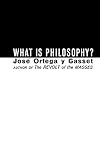
What Is Philosophy?
by José Ortega y Gasset
On This Page
Description
A work powerful and pervading in its implications not only for metaphysics but also for art, political science, and the philosophy of history.Tags
Recommendations














Member Reviews
8429210326
What Is Philosophy? by Jose Ortega y Gasset (1964)
osé Ortega y Gasset (1883-1955) is de belangrijkste en een van de beroemdste moderne Spaanse filosofen. Wat is filosofie? is ontstaan tijdens een reeks voordrachten die hij in 1929, na de sluiting van de universiteit tijdens de dictatuur van generaal Primo de Rivera en zijn daarmee samenhangende ontslag als hoogleraar, gehouden heeft in een Madrileens theater.
Onder het motto ¿helderheid is het gulle gebaar van de filosoof¿ vormt het een zeer geslaagde poging van Ortega aan iedereen te laten zien wat filosofie concreet is. Daarbij gaat hij tegelijkertijd in tegen de filosofie van Heidegger, niet alleen direct, door een kritische hervorming van diens cruciaal concept van de ¿Sorge¿, maar ook indirect, door zijn glasheldere stijl en show more schrijfwijze die volledig afwijken van de vooropgezette duisterheid en het gekunstelde esoterisme die de heideggeriaanse filosofie kenmerken.
Wat is filosofie? wordt dan ook beschouwd als een van de beste introducties tot het denken van Ortega en als een klassieke tekst in de moderne Spaanse filosofie. Als geen ander werk laat het zien dat hij een echte essayistische filosoof is, een filosoof die publiekelijk toont wat de filosoof steeds weer te doen staat: filosoferen, de filosofie ontwikkelen in de (denk)handeling van het filosoferen zelf.
Dat gebeurt in Wat is filosofie? door het proces van het denken plastisch op de planken te brengen in een ¿one man show¿.
Terwijl het denken door Ortega als essentiële limiet, als hart van de subjectiviteit en de persoon, op de objectiviteit en de wereld wordt gericht, vormt het hart van de objectiviteit voor hem het menselijke leven, oftewel, het eigen leven, ons leven, het eigen leven van iedereen. Dat (eigen) leven, waarin persoon en wereld samengaan als onscheidbare tweelingen, is het kunstwerk waaraan de mens steeds opnieuw vorm moet geven: een eindeloos project, eeuwig in wording¿ show less
Onder het motto ¿helderheid is het gulle gebaar van de filosoof¿ vormt het een zeer geslaagde poging van Ortega aan iedereen te laten zien wat filosofie concreet is. Daarbij gaat hij tegelijkertijd in tegen de filosofie van Heidegger, niet alleen direct, door een kritische hervorming van diens cruciaal concept van de ¿Sorge¿, maar ook indirect, door zijn glasheldere stijl en show more schrijfwijze die volledig afwijken van de vooropgezette duisterheid en het gekunstelde esoterisme die de heideggeriaanse filosofie kenmerken.
Wat is filosofie? wordt dan ook beschouwd als een van de beste introducties tot het denken van Ortega en als een klassieke tekst in de moderne Spaanse filosofie. Als geen ander werk laat het zien dat hij een echte essayistische filosoof is, een filosoof die publiekelijk toont wat de filosoof steeds weer te doen staat: filosoferen, de filosofie ontwikkelen in de (denk)handeling van het filosoferen zelf.
Dat gebeurt in Wat is filosofie? door het proces van het denken plastisch op de planken te brengen in een ¿one man show¿.
Terwijl het denken door Ortega als essentiële limiet, als hart van de subjectiviteit en de persoon, op de objectiviteit en de wereld wordt gericht, vormt het hart van de objectiviteit voor hem het menselijke leven, oftewel, het eigen leven, ons leven, het eigen leven van iedereen. Dat (eigen) leven, waarin persoon en wereld samengaan als onscheidbare tweelingen, is het kunstwerk waaraan de mens steeds opnieuw vorm moet geven: een eindeloos project, eeuwig in wording¿ show less
Sep 12, 2018Dutch
Ratings
Members
- Recently Added By
Author Information

Essayist and philosopher, a thinker influential in and out of the Spanish world, Jose Ortega y Gasset was professor of metaphysics at the University of Madrid from 1910 until the outbreak of the Spanish Civil War in 1936. The Revolt of the Masses, his most famous work, owes much to post-Kantian schools of thought. Ortega's predominant thesis is show more the need of an intellectual aristocracy governing in a spirit of enlightened liberalism. Although Franco, after his victory in the civil war, offered to make Ortega Spain's "official philosopher" and to publish a deluxe edition of his works, with certain parts deleted, the philosopher refused. Instead, he chose the life of a voluntary exile in Argentina, and in 1941 he was appointed professor of philosophy at the University of San Marcos in Lima, Peru. He returned to Spain in 1945 and died in Madrid. Ortega's reformulation of the Cartesian cogito displays the fulcrum of his thought. While Rene Descartes declared "Cogito ergo sum" (I think, therefore I am), Ortega maintained "Cogito quia vivo" (I think because I live). He subordinated reason to life, to vitality. Reason becomes the tool of people existing biologically in a given time and place, rather than an overarching sovereign. Ortega's philosophy consequently discloses affinities in its metaphysics to both American pragmatism and European existentialism in spite of its elitism in social philosophy. (Bowker Author Biography) show less
Work Relationships
Common Knowledge
- Canonical title*
- ¿qué es filosofía?
- Original title
- ¿Qué es filosofía?
- Original publication date
- 1957
- First words
- In matters of art, love, or ideas I think that programs and announcements are of little use.
- Last words
- (Click to show. Warning: May contain spoilers.)And yet...let us accept that world of mist as the material out of which to make a life that is more complete.
- Blurbers
- Camus, Albert
*Some information comes from Common Knowledge in other languages. Click "Edit" for more information.
Classifications
Statistics
- Members
- 377
- Popularity
- 82,786
- Reviews
- 3
- Rating
- (4.07)
- Languages
- 5 — Dutch, English, German, Portuguese, Spanish
- Media
- Paper
- ISBNs
- 17
- ASINs
- 5