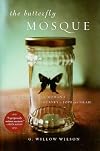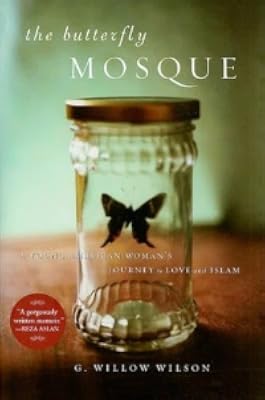
The Butterfly Mosque: A Young American Woman's Journey to Love and Islam
by G. Willow Wilson 
On This Page
Description
Documents the author's conversion from all-American atheist to Islam, a journey marked by her decision to relocate to Cairo, romance with a passionate young Egyptian, and her efforts to balance the virtues of both cultures.Tags
Recommendations


Member Reviews
This is a gorgeous memoir about a young American woman converting to Islam, moving to Egypt, and getting married to an Egyptian man (and his family) - all inside a year. Wilson writes beautifully about the challenges and happiness she found in all of this chaos. It was also fascinating to see her perspective on the place of Islam in the world - she moved to Egypt in the early 2000s, where she paid little attention to the American media and was a little blindsided by the increasing vitriol it generates about Muslims and Middle Easterners.
As an American female convert to Islam in my twenties, I saw some of myself in this book. I've never been to the Middle East and, though I did study religion in college, my coursework was not in Islam, but the feeling of inhabiting a sort of liminal space and forging one's own identity in the context of different cultural spheres is something I can relate to wholeheartedly.
As many reviewers have stated, the book is part political commentary, part travelogue, part love story, part conversion story, and part coming of age narrative. In some ways, when you break it apart like this, the book falls short in certain areas - but the whole is greater and more meaningful than the sum of its parts. The Butterfly Mosque cannot be broken down into show more categories anymore than we can. And maybe that's the point.
As a travelogue, it is beautifully written - Wilson's depictions of Cairo and the other places that she travels make you feel that you are immersed in the surroundings she describes. At times, though, I had terrifying backflashes of Eat, Pray, Love-esque white girl meets third world narrative, alternatively putting "the Other" on a pedestal while mentioning, with disgust, how dirty Cairo is.
As a coming of age narrative and a love story, the book delivers somewhat half-heartedly. The depiction of Wilson's relationship with Omar, the Egyptian man she comes to marry, lacks a cohesive narrative - perhaps it is that the love story is dropped in unexpectedly in between so many other topics that it doesn't seem to follow any logical narrative path. Then again, that could be because both love and faith often fail to follow narrative paths.
In the relationship aspect, it is Willow's connection to Omar's extended family and the other Cairenes she meets that really shines. Relationships and social connections in Islamic and Egyptian culture are depicted in all their complexity - complete with hilarious faux pas.
For me as a reader and as a Muslim, it was easy to see how Willow's political commentary on Islam and the so-called `clash of civilizations' intertwined seamlessly with the details of her conversion. As someone who has been asked the dreaded question - "so, why did you convert?" - reading someone else's conversion story rather than feeling pressured to relate my own in terms that someone else might understand was refreshing. Her dissection of fundamentalist and progressive movements in Islam should be required reading.
And most astutely, she doesn't choose sides - she chooses neither America nor Egypt, neither progressivism nor fundamentalism - she relates the complexity of how many of those concepts exist (politically, culturally, socially, and personally) and ultimately forges a path that encompasses many different and seemingly contradictory ideas.
At one point, overwhelmed by it all, she states, "The world was too big, I was too small; I couldn't contain so many contradictions." And yet the crux of the story - the moral, the redeeming factor - is that she does.
Many reviewers have complained that her conversion narrative is lacking. This is one flaw I couldn't find anywhere in the book - in fact, there are several passages in the book that struck me - as a fellow believer in God - deeply, in terms of the way she describes her faith. show less
As many reviewers have stated, the book is part political commentary, part travelogue, part love story, part conversion story, and part coming of age narrative. In some ways, when you break it apart like this, the book falls short in certain areas - but the whole is greater and more meaningful than the sum of its parts. The Butterfly Mosque cannot be broken down into show more categories anymore than we can. And maybe that's the point.
As a travelogue, it is beautifully written - Wilson's depictions of Cairo and the other places that she travels make you feel that you are immersed in the surroundings she describes. At times, though, I had terrifying backflashes of Eat, Pray, Love-esque white girl meets third world narrative, alternatively putting "the Other" on a pedestal while mentioning, with disgust, how dirty Cairo is.
As a coming of age narrative and a love story, the book delivers somewhat half-heartedly. The depiction of Wilson's relationship with Omar, the Egyptian man she comes to marry, lacks a cohesive narrative - perhaps it is that the love story is dropped in unexpectedly in between so many other topics that it doesn't seem to follow any logical narrative path. Then again, that could be because both love and faith often fail to follow narrative paths.
In the relationship aspect, it is Willow's connection to Omar's extended family and the other Cairenes she meets that really shines. Relationships and social connections in Islamic and Egyptian culture are depicted in all their complexity - complete with hilarious faux pas.
For me as a reader and as a Muslim, it was easy to see how Willow's political commentary on Islam and the so-called `clash of civilizations' intertwined seamlessly with the details of her conversion. As someone who has been asked the dreaded question - "so, why did you convert?" - reading someone else's conversion story rather than feeling pressured to relate my own in terms that someone else might understand was refreshing. Her dissection of fundamentalist and progressive movements in Islam should be required reading.
And most astutely, she doesn't choose sides - she chooses neither America nor Egypt, neither progressivism nor fundamentalism - she relates the complexity of how many of those concepts exist (politically, culturally, socially, and personally) and ultimately forges a path that encompasses many different and seemingly contradictory ideas.
At one point, overwhelmed by it all, she states, "The world was too big, I was too small; I couldn't contain so many contradictions." And yet the crux of the story - the moral, the redeeming factor - is that she does.
Many reviewers have complained that her conversion narrative is lacking. This is one flaw I couldn't find anywhere in the book - in fact, there are several passages in the book that struck me - as a fellow believer in God - deeply, in terms of the way she describes her faith. show less
This book made me feel love. It reminded me of deep emotions that come up when my thoughts and feelings meet.
Willow Wilson does excellent work in her religious autobiography. What I really noticed is that she works very hard to be self reflective without engaging in superfluous navel gazing. Her voice is extremely confident even when she is writing about her own conflicted emotions or doubts.
My own experience of self-reflection doesn't mirror this. When I look inside at myself, I don't see a fixed truth that needs to be reported honestly. I see a conflicted series of desires and traits that have shared themes, but aren't solid. So, while Wilson's writing doesn't mirror my own human experience, I'm SO HAPPY she has the craft, show more experience, and honesty to tell her story.
The Butterfly Mosque is a gift to us today. It has the superpower of humanizing the other in a time when the temptation and pressure to demonize the other feels overwhelming. Reading Wilson's story makes it harder to avoid the humanity in others. For that reason alone it's worth reading. show less
Willow Wilson does excellent work in her religious autobiography. What I really noticed is that she works very hard to be self reflective without engaging in superfluous navel gazing. Her voice is extremely confident even when she is writing about her own conflicted emotions or doubts.
My own experience of self-reflection doesn't mirror this. When I look inside at myself, I don't see a fixed truth that needs to be reported honestly. I see a conflicted series of desires and traits that have shared themes, but aren't solid. So, while Wilson's writing doesn't mirror my own human experience, I'm SO HAPPY she has the craft, show more experience, and honesty to tell her story.
The Butterfly Mosque is a gift to us today. It has the superpower of humanizing the other in a time when the temptation and pressure to demonize the other feels overwhelming. Reading Wilson's story makes it harder to avoid the humanity in others. For that reason alone it's worth reading. show less
The Butterfly Mosque is a spiritual memoir of a then twenty something American woman who falls in love with the Egyptian culture (as well as an Egyptian man) and becomes a Muslim. Though much of the memoir follows G. Willow Wilson’s odyssey, she devotes many of her pages to a frank discussion of women, Islam, and the relationship of Islam to the West. Part-essayist, part-poet, Wilson begins with the concept of the “clash of civilizations.” Is Islam really in conflict with Western values? She explores the many facets of this topic.
Wilson’s language is as consistently poignant as the title of her book. In one sentence she writes, “Down the center of this metropolis snaked the Nile, coffee-dark and wide.” And here is an show more excerpt from her memoir that is a microcosm of the book as a whole: “I didn’t know what waited for me in Egypt. I didn’t know whether the clash of civilizations was real, or whether being an American Muslim was a contradiction. But for the first time in my life, I felt unified—that had to mean something. Cultural and political differences go bone deep, but there is something even deeper. I believed that. I had to believe it.”
As a truth seeker, she is gutsy. During her sojourn abroad, she interviews spiritual leaders of Islam and even travels alone to Iran for answers. And though I wish she spent more time divulging her spiritual transformation (how she turned from an atheist to a God-believing Muslim), this is by far the best memoir about Islam that I’ve come across. In the post-9/11 era, it’s refreshing to read a book by an American woman extolling the virtues of Islam, portraying it as a religion of peace that protects women and gives them special attention. For Wilson, female empowerment is not inconsistent with Islamic values.
Wilson shows us how there are many forms of Islam, just as there are hundreds of denominations of Christianity. What we see as limiting to women in Islam is often cultural rather than religious—for instance how women are forbidden to drive in Saudi Arabia. In fact, it is the only country in the world that bans a woman from driving. In Turkey, a 99.8 percent Muslim country, a woman was prime minister just two decades ago, and women enjoy all the freedoms that men do. Turkey’s constitution actually forbids women to wear the headscarf in public places. Wilson writes, “I was surprised by how often Islam, in its purely textual form, took my side. There is no religious limit on the public spaces that women can inhabit; nothing prevents them from running businesses or driving cars, there is no reason they must walk behind men or cover their faces. A woman’s role is not defined by the kitchen and the nursery.”
Besides her timely discussion of women and Islam, Wilson also confronts the frightening environment for American Muslims during the peak Bush/Patriot Act era. She is a brave woman with a poetic voice who shows the peaceful, lyrical, nurturing side of the religion that unfortunately few in our country see. I dearly hope Wilson writes more books and continues this conversation. show less
Wilson’s language is as consistently poignant as the title of her book. In one sentence she writes, “Down the center of this metropolis snaked the Nile, coffee-dark and wide.” And here is an show more excerpt from her memoir that is a microcosm of the book as a whole: “I didn’t know what waited for me in Egypt. I didn’t know whether the clash of civilizations was real, or whether being an American Muslim was a contradiction. But for the first time in my life, I felt unified—that had to mean something. Cultural and political differences go bone deep, but there is something even deeper. I believed that. I had to believe it.”
As a truth seeker, she is gutsy. During her sojourn abroad, she interviews spiritual leaders of Islam and even travels alone to Iran for answers. And though I wish she spent more time divulging her spiritual transformation (how she turned from an atheist to a God-believing Muslim), this is by far the best memoir about Islam that I’ve come across. In the post-9/11 era, it’s refreshing to read a book by an American woman extolling the virtues of Islam, portraying it as a religion of peace that protects women and gives them special attention. For Wilson, female empowerment is not inconsistent with Islamic values.
Wilson shows us how there are many forms of Islam, just as there are hundreds of denominations of Christianity. What we see as limiting to women in Islam is often cultural rather than religious—for instance how women are forbidden to drive in Saudi Arabia. In fact, it is the only country in the world that bans a woman from driving. In Turkey, a 99.8 percent Muslim country, a woman was prime minister just two decades ago, and women enjoy all the freedoms that men do. Turkey’s constitution actually forbids women to wear the headscarf in public places. Wilson writes, “I was surprised by how often Islam, in its purely textual form, took my side. There is no religious limit on the public spaces that women can inhabit; nothing prevents them from running businesses or driving cars, there is no reason they must walk behind men or cover their faces. A woman’s role is not defined by the kitchen and the nursery.”
Besides her timely discussion of women and Islam, Wilson also confronts the frightening environment for American Muslims during the peak Bush/Patriot Act era. She is a brave woman with a poetic voice who shows the peaceful, lyrical, nurturing side of the religion that unfortunately few in our country see. I dearly hope Wilson writes more books and continues this conversation. show less
Willow becomes intrigued with Islam while a college student. She takes Arabic, moves to Egypt to work as a teacher, and quietly converts. Then, she meets a young man named Omar and falls in love.
This memoir of an American convert to Islam is as complex as Willow's (or, when you think about it, perhaps anyone's) identity. She thinks deeply about a lot of things, reflecting on the variety of Muslim beliefs, what makes a terrorist, and the attitude of the West towards Islam, all while telling her very personal story. The first half of the book, when she talks about her courtship with Omar, was the smoothest part of the read for me. While I'm a Christian, I could relate to the way she talked about her faith and her assurance in it. The rest show more of the book is less fluid, a string of occurrences I had trouble placing in time, and started to feel more like a lecture than a memoir. I resented a bit her tendency to say "even the most liberal," as if someone of my political persuasion couldn't possibly see a Muslim as anything but a terrorist, while the liberals at least tried to understand, even if they didn't always get it right. Of course, it's a complex issue, and I certainly can't argue with her personal experience. I found it eye-opening and compelling reading, overall. show less
This memoir of an American convert to Islam is as complex as Willow's (or, when you think about it, perhaps anyone's) identity. She thinks deeply about a lot of things, reflecting on the variety of Muslim beliefs, what makes a terrorist, and the attitude of the West towards Islam, all while telling her very personal story. The first half of the book, when she talks about her courtship with Omar, was the smoothest part of the read for me. While I'm a Christian, I could relate to the way she talked about her faith and her assurance in it. The rest show more of the book is less fluid, a string of occurrences I had trouble placing in time, and started to feel more like a lecture than a memoir. I resented a bit her tendency to say "even the most liberal," as if someone of my political persuasion couldn't possibly see a Muslim as anything but a terrorist, while the liberals at least tried to understand, even if they didn't always get it right. Of course, it's a complex issue, and I certainly can't argue with her personal experience. I found it eye-opening and compelling reading, overall. show less
This was a beautifully written book about the meaning of religion. Ms. Wilson finds herself shockingly connecting to Islam on a primal level - this religion speaks to a part of her deep inside in a way that nothing in her life ever has before. Though she initially struggles with revealing this fact, once she does she is able embrace the religion in a beautiful and meaningful manner.
Butterfly Mosque is also about the Ms. Wilson's love affair with Cairo. I've been to Cairo myself, and I understand the appeal of the crowded crazy streets. There is something amazing about being in a place with so much history. Like Ms. Wilson says, behind every wall and building is a hidden treasure waiting to be discovered.
The third part of Butterfly show more Mosque is Ms. Wilson's relationship with her eventual husband Omar. I found it fascinating how they worked through their cultural differences to create a meaningful and loving relationship. While he would be considered conservative by Western standards, Omar was a liberal husband by Egyptian standards and this showed through his interactions with Ms. Wilson. We should all be so lucky as to meet the perfect man.
What I loved most about this book though was the discussion about the true nature of Islam. I wrote a paper about this last term where I discussed how Sharia had been distorted to violate women's rights. As Ms. Wilson discusses, Islam is actually quite feminist friendly when taken as the religion was initially intended. Unfortunately, the media has grossly misinterpreted Islam and the intentions of Muslims. Reading books like this becomes incredibly important in order to understand what is happening in the world today.
I thought this book was incredible. It was a personal statement about finding one's way through a difficult life in opposition with what everyone else thinks is best for you. It was moving and a testament to the human spirit. I highly recommend this book. show less
Butterfly Mosque is also about the Ms. Wilson's love affair with Cairo. I've been to Cairo myself, and I understand the appeal of the crowded crazy streets. There is something amazing about being in a place with so much history. Like Ms. Wilson says, behind every wall and building is a hidden treasure waiting to be discovered.
The third part of Butterfly show more Mosque is Ms. Wilson's relationship with her eventual husband Omar. I found it fascinating how they worked through their cultural differences to create a meaningful and loving relationship. While he would be considered conservative by Western standards, Omar was a liberal husband by Egyptian standards and this showed through his interactions with Ms. Wilson. We should all be so lucky as to meet the perfect man.
What I loved most about this book though was the discussion about the true nature of Islam. I wrote a paper about this last term where I discussed how Sharia had been distorted to violate women's rights. As Ms. Wilson discusses, Islam is actually quite feminist friendly when taken as the religion was initially intended. Unfortunately, the media has grossly misinterpreted Islam and the intentions of Muslims. Reading books like this becomes incredibly important in order to understand what is happening in the world today.
I thought this book was incredible. It was a personal statement about finding one's way through a difficult life in opposition with what everyone else thinks is best for you. It was moving and a testament to the human spirit. I highly recommend this book. show less
Never failing to see the humor or compromising what she wants and believes, Willow Wilson navigates a hazardous cultural path in her enlightening memoir, The Butterfly Mosque. While studying Islam, Wilson shocks her family by converting. Eager to embrace her new religion, Wilson uproots her life and moves to Egypt, where she falls in love. Struggling to reconcile Islamic and Egyptian culture with her own values and desires, Wilson tries to build a life for herself. Her uplifting story has classical fairytale appeal in a very modern circumstance.
Members
- Recently Added By
Lists

Women in Islam
120 works; 8 members

BingoDOG 2015 Challenge
49 works; 3 members
Author Information

310+ Works 15,406 Members
G. Willow Wilson is a LibraryThing Author, an author who lists their personal library on LibraryThing.
Awards and Honors
Common Knowledge
- Canonical title
- The Butterfly Mosque: A Young American Woman's Journey to Love and Islam
- Original publication date
- 2010
- People/Characters
- G. Willow Wilson
- Important places
- Cairo, Egypt
- Dedication
- for Amu Fakhry with thanks to Warren Frazier and Elisabeth Schmitz
- First words
- In the upper reaches of the Zagros Mountains, the air changed.
- Last words
- (Click to show. Warning: May contain spoilers.)Not for the things I was leaving, but for the things I was taking with me--all I had fought for, all I had lost, and a joy so potent it felt like pain.
Classifications
- Genres
- Biography & Memoir, Religion & Spirituality, Nonfiction, General Nonfiction
- DDC/MDS
- 297.574 — Religion Other religions Islam Moral Theology, Pillars of the Faith Islamic living
- LCC
- BP170.5 .W55 .W55 — Philosophy, Psychology and Religion Islam. Bahaism. Theosophy, etc. Islam. Bahai Faith. Theosophy, etc. Missionary work of Islam
- BISAC
Statistics
- Members
- 325
- Popularity
- 98,112
- Reviews
- 20
- Rating
- (4.03)
- Languages
- Dutch, English
- Media
- Paper, Ebook
- ISBNs
- 11
- ASINs
- 6