On This Page
Description
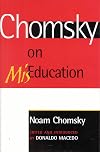
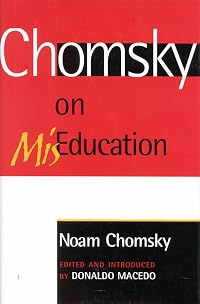
"In Chomsky on MisEducation, Noam Chomsky builds a larger understanding of our educational needs, starting with the changing role of schools today, and then broadening our view toward new models of public education for citizenship. Chomsky weaves global technological change and the primacy of responsible media with the democratic role of schools and higher education. A truly democratic society, he argues, cannot thrive in a rapidly changing world unless our approach to education - formal and show more otherwise - is dramatically reformed." "Chomsky's critique of how our current educational system "miseducates" students - and his prescriptions for change - are essential reading for teachers, parents, school administrators, activists, and anyone concerned about the future."--Jacket. show lessTags
Recommendations




Member Reviews
Chomsky reveals how the press in America is complicit with corporate interests, and how our government is also ruled by such interests- hardly a 'free' situation. One major topic of the book is documentation of U.S. terror abroad and the absence of U.S. media coverage of same. An enlightening book, and a good one to cross-reference with any of Arundhati Roy's non-fiction work, as well as Christopher Hitchens' "The Trial of Henry Kissinger," and of course, Howard Zinn's "A People's History of the United States."
Far from being "anti-American," this book is truly a look at just how anti-American jingoism and corporate capitalism can be. I would say this book is "anti-American foreign policy and hegemony," which, when faced with the facts show more of our actions abroad, any person with a conscience (and any person who believes in democracy) should be. show less
Far from being "anti-American," this book is truly a look at just how anti-American jingoism and corporate capitalism can be. I would say this book is "anti-American foreign policy and hegemony," which, when faced with the facts show more of our actions abroad, any person with a conscience (and any person who believes in democracy) should be. show less
El desarrollo de la capacidad crítica es uno de los objetivos más importantes de la educación, pero a veces es difícil conseguirlo en una sociedad que consume tanta basura y que se cree todo lo que lee o escucha por los medios de comunicación.
..nos están engañando a todos, no nos dejemos manipular
..nos están engañando a todos, no nos dejemos manipular
See Miseducation at From Word to Word
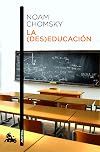
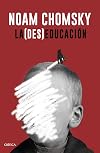
A Noam Chomsky se le reconoce mundialmente como uno de los grandes intelectuales y educadores del siglo XX. Y, sin embargo, hasta ahora no se habían recogido en ningún libro sus escritos sobre la educación y la deseducación de los ciudadanos. En éste, el gran lingüista norteamericano critica duramente nuestro actual sistema de enseñanza. Frente a la idea de que en nuestras escuelas se enseñan los valores democráticos, lo que realmente existe es un modelo colonial de enseñanza diseñado primordialmente para formar profesores cuya dimensión intelectual quede devaluada y sea sustituida por un complejo de procedimientos y técnicas; un modelo que impide el pensamiento crítico e independiente, que no permite razonar sobre lo que show more se oculta tras las explicaciones y que, por ello mismo, fija estas explicaciones como las únicas posibles. Raras veces los profesores piden a los alumnos que analicen las estructuras políticas y sociales que informan sus vidas. Raramente se insta a los estudiantes a que descubran la verdad por sí mismos. En este libro, Chomsky nos proporciona excelentes herramientas para desmontar este tipo de enseñanza pensada para la domesticación de los ciudadanos: si los educadores rechazan el adiestramiento tecnocrático que les desintelectualiza para convertirse en intelectuales auténticos que denuncien la hipocresía, las injusticias sociales y la miseria humana, conseguirán que los estudiantes asuman el reto de ensanchar los horizontes de la democracia y de la ciudadanía y, junto a ellos, trabajarán para construir un mundo menos discriminatorio, más democrático, menos deshumanizado y más justo. show less
Oct 14, 2016Spanish
El primer libro que leo de Chomsky, y no será el último. Es muy de agradecer el tono directo y sin paños calientes en que expone los datos de los temas tratados en el libro, sobre todo por cómo refleja las distintas maneras de informar según se trate de medios estadounidenses o extranjeros, acerca de los conflictos bélicos en los que han estado involucrados. Si he de poner un pero, es que por el título del libro me esperaba que se centrase más en la educación en sí, tanto en las escuelas como universidades, cuando más bien debiera llamarse, a mi modo de ver, la (des)información, ya que de eso trata: de la desinformación por parte de gobiernos y medios de comunicación afines o contrarios a los mismos.
En todo caso, una show more lectura recomendable, para arrojar algo más de luz y una perspectiva diferente acerca de la historia más reciente. show less
En todo caso, una show more lectura recomendable, para arrojar algo más de luz y una perspectiva diferente acerca de la historia más reciente. show less
Apr 18, 2014Spanish
A Noam Chomsky se le reconoce mundialmente como uno de los grandes intelectuales y educadores del siglo XX. Y sin embargo, hasta ahora no se habían recogido en ningún libro de sus escritos sobre la educación y la deseducación de los ciudadanos. En éste, el gran lingüista norteamericano critica duramente nuestro actual sistema de enseñanza.
Nov 26, 2024Spanish
Ratings
Members
- Recently Added By
Author Information

580+ Works 47,466 Members
Noam Chomsky was born in Philadelphia, Pennsylvania on December 7, 1928. Son of a Russian emigrant who was a Hebrew scholar, Chomsky was exposed at a young age to the study of language and principles of grammar. During the 1940s, he began developing socialist political leanings through his encounters with the New York Jewish intellectual show more community. Chomsky received his Ph.D. from the University of Pennsylvania, where he studied linguistics, mathematics, and philosophy. He conducted much of his research at Harvard University. In 1955, he began teaching at MIT, eventually holding the Ferrari P. Ward Chair of Modern Language and Linguistics. Today Chomsky is highly regarded as both one of America's most prominent linguists and most notorious social critics and political activists. His academic reputation began with the publication of Syntactic Structures in 1957. Within a decade, he became known as an outspoken intellectual opponent of the Vietnam War. Chomsky has written many books on the links between language, human creativity, and intelligence, including Language and Mind (1967) and Knowledge of Language: Its Nature, Origin, and Use (1985). He also has written dozens of political analyses, including Manufacturing Consent: The Political Economy of the Mass Media (1988), Chronicles of Dissent (1992), and The Prosperous Few and the Restless Many (1993). (Bowker Author Biography) show less
Series

Common Knowledge
- Canonical title
- Chomsky on Mis-Education
- Original publication date
- 2000
Classifications
Statistics
- Members
- 244
- Popularity
- 132,843
- Reviews
- 6
- Rating
- (3.59)
- Languages
- English, Italian, Spanish
- Media
- Paper, Ebook
- ISBNs
- 10
- ASINs
- 4