
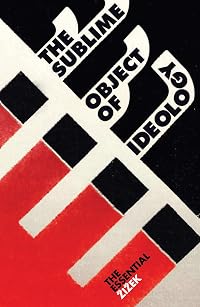
The Sublime Object of Ideology
by Slavoj Žižek
On This Page
Description
Slavoj Žižek's first book is a provocative and original work looking at the question of human agency in a postmodern world. In a thrilling tour de force that made his name, he explores the ideological fantasies of wholeness and exclusion which make up human society.Tags
Recommendations



















Member Reviews
Negativity, as a concept, was the most difficult part of this work to understand for me. Working through formulations of negativity requires you conceive of it logically (as in formal logic’s A and ~A), which sounds obvious but these formulations can become quite complicated: negativity, absolute negativity, self-negation, self-referential negation, etc. However, negativity is at the root of this book. The thesis culminated by the end is that ideology provides a microcosmic image of the subject writ large, in which the world of symbols and fantasy is one created within the subject.
A subjective world of meaning obviously envelops the material world around it, and Zizek does not argue for a solipsistic theory in which there is no show more material reality outside the head of the subject. Quite the opposite, the world is radically material, and any sense of necessary phenomena (meaning socio-historical events that necessarily precipitate future events) is engendered by the subject after the fact, interpreting that which is contingent or already given (i.e. material reality). However, there is a reality created by the subject to inscribe itself into the material world, which is where Zizek synthesizes Marx, Hegel, & Lacan.
Desire is at the heart of subjectivity, but it is ultimately always empty. Desire is something in the face of which the subject defines itself, and drive is what perennially propels the subject to seek the end of their desire. Zizek argues that the object of one’s desire will always have a shape, but is ultimately nothing. Likewise, Lacan’s Big Other - the Other who the subject encounters in other people - is ultimately nothing. The reality of sharing the planet with others is a given. We are all here, on this planet, with nature. How we internally reconcile our being here, how we define ourselves vis-a-vis other people & things, is predicated on a presupposition of an order (a symbolic order).
To ‘unmask the illusion’ does not mean that ‘there is nothing to see behind it’: what we must be able to see is precisely this nothing as such - beyond the phenomena, there is nothing but
this nothing itself, ‘nothing’ which is the subject. To conceive the appearance as ‘mere appearance’ the subject effectively has to go beyond it, to ‘pass over’ it, but what he finds there is his
own act of passage (254).
“Nothing which is the subject” feels inherently paradoxical. I exist, so how can I be nothing? This paradox is precisely the nature of subjectivity. That symbolic order is entirely composed and perpetuated in the subject, but it does not exist outside it. What we see is merely a reflection of ourselves in the world, one we impose on everything around us, but that reflection is an inverse negativity, it is a negativity which we perceive positively, as something really existing.
This symbolic externality we impose on the world (the value of objects, historical significance & necessity, power) is entirely internal. A monarch has no inherent power though we, sincerely or ironically, imbue them with power all the same. Money has no inherent value though we, sincerely or ironically, imbue it with value all the same. This order must sustain itself or it ceases to exist. The counterargument would then obviously be: “If this is just a philosophy of ‘the Emperor has no clothes,’ then why wouldn’t society simply crumble upon the utterance that money is inherently valueless, something most people already know.” Zizek argues that ideology is not something to be “unmasked” (or an emperor to be derobed), where we draw the curtain to reveal there was no Wizard of Oz but a man with a microphone. Rather, the nothing that lies beyond the signifier cannot be symbolized as not-power or not-value, it is simply “nothing as such,” a radical negativity that we as subjects cannot integrate into an order, hence its sublimity. As Zizek argues: “The Sublime is therefore the paradox of an object which, in the very field of representation, provides a view, in a negative way, of the dimension of what is unrepresentable” (263).
When we derobe the emperor, we are not suddenly satisfied in having discovered the Real. Instead, the Real is precisely the “fissure” between Emperor and Nothing, a kernel of traumatic truth that cannot be symbolized. We can only recognize it as a desire to derobe the emperor in search of something else. We are constantly seeking some Thing, an object of our desire, to sustain the order of reality. “Fantasy is basically a scenario filling out the empty space of a fundamental impossibility, a screen masking a void” (173). To truly go beyond ideology and fantasy would be to rid reality of all “value” and “meaning,” what Hegel calls “absolute understanding.”
Again, if this is the case, then why don’t we all aspire toward this obviously transcendent state of absolute understanding? Why wouldn’t we be driven to discard our material possessions, our meaningless shibboleths, our systems of arbitrary power? This is where Zizek leans on Lacan and the nature of enjoyment. We enjoy the illusion too much to do away with it. This is not in the way we use rats to prove we’ll avoid levers that electrocute us and seek levers that give us cheese, effectively what Freud called the “pleasure principle.” Zizek again leans on Lacan and the idea of going “beyond the pleasure principle.” Our desire is so immanent that we relentlessly pursue it and all its enjoyable pit stops, even if we hurt or betray ourselves in the pursuit.
It’s the enjoyment through pain (what Lacan calls jouissance) that separates Desire from craving (e.g. wanting a Twinkie is not Desire as Zizek means it). Desire is perhaps the want for happiness one believes will be satiated by a Twinkie, only to be brutally reminded upon finishing it how insufficient it was. Yet what do we want right after a Twinkie? Maybe another Twinkie because if we can just capture that feeling forever, we’ll be truly satisfied. Or maybe something salty for the same reason. Or maybe we recognize the Twinkie is bad for us and think if we just exercised some more and ate better, we would finally attain that satisfaction in life. All of these are impossibilities. Desire’s synonym, “want,” is perhaps as apt a term because of its synonymy with “lack.” We want something because we want for something. Desire is precisely this lack, one with nothing at its core.
Ideology is what the subject depends upon to sustain this fantasy, this jouissance, this enjoyment. To transcend it would mean self-destruction. There would be no subjectivity as we know it without ideology and the symbolic order. The sublime object is therefore that which confronts the subject with its own negativity, with its own existence as contradiction, nothingness, and paradox. It is an object which the subject cannot symbolize and therefore cannot integrate into itself. The common misconception of the Hegelian dialectic would say this friction within the subject would produce some new synthesis, reconciling the thesis & antithesis to result in absolute knowledge. However, this friction is precisely what sustains us. The constant definition vis-a-vis some other. The subject is defined by the fact the dialectic has no end, that it is always changing, never fixed. We are defined by our constantly becoming. show less
A subjective world of meaning obviously envelops the material world around it, and Zizek does not argue for a solipsistic theory in which there is no show more material reality outside the head of the subject. Quite the opposite, the world is radically material, and any sense of necessary phenomena (meaning socio-historical events that necessarily precipitate future events) is engendered by the subject after the fact, interpreting that which is contingent or already given (i.e. material reality). However, there is a reality created by the subject to inscribe itself into the material world, which is where Zizek synthesizes Marx, Hegel, & Lacan.
Desire is at the heart of subjectivity, but it is ultimately always empty. Desire is something in the face of which the subject defines itself, and drive is what perennially propels the subject to seek the end of their desire. Zizek argues that the object of one’s desire will always have a shape, but is ultimately nothing. Likewise, Lacan’s Big Other - the Other who the subject encounters in other people - is ultimately nothing. The reality of sharing the planet with others is a given. We are all here, on this planet, with nature. How we internally reconcile our being here, how we define ourselves vis-a-vis other people & things, is predicated on a presupposition of an order (a symbolic order).
To ‘unmask the illusion’ does not mean that ‘there is nothing to see behind it’: what we must be able to see is precisely this nothing as such - beyond the phenomena, there is nothing but
this nothing itself, ‘nothing’ which is the subject. To conceive the appearance as ‘mere appearance’ the subject effectively has to go beyond it, to ‘pass over’ it, but what he finds there is his
own act of passage (254).
“Nothing which is the subject” feels inherently paradoxical. I exist, so how can I be nothing? This paradox is precisely the nature of subjectivity. That symbolic order is entirely composed and perpetuated in the subject, but it does not exist outside it. What we see is merely a reflection of ourselves in the world, one we impose on everything around us, but that reflection is an inverse negativity, it is a negativity which we perceive positively, as something really existing.
This symbolic externality we impose on the world (the value of objects, historical significance & necessity, power) is entirely internal. A monarch has no inherent power though we, sincerely or ironically, imbue them with power all the same. Money has no inherent value though we, sincerely or ironically, imbue it with value all the same. This order must sustain itself or it ceases to exist. The counterargument would then obviously be: “If this is just a philosophy of ‘the Emperor has no clothes,’ then why wouldn’t society simply crumble upon the utterance that money is inherently valueless, something most people already know.” Zizek argues that ideology is not something to be “unmasked” (or an emperor to be derobed), where we draw the curtain to reveal there was no Wizard of Oz but a man with a microphone. Rather, the nothing that lies beyond the signifier cannot be symbolized as not-power or not-value, it is simply “nothing as such,” a radical negativity that we as subjects cannot integrate into an order, hence its sublimity. As Zizek argues: “The Sublime is therefore the paradox of an object which, in the very field of representation, provides a view, in a negative way, of the dimension of what is unrepresentable” (263).
When we derobe the emperor, we are not suddenly satisfied in having discovered the Real. Instead, the Real is precisely the “fissure” between Emperor and Nothing, a kernel of traumatic truth that cannot be symbolized. We can only recognize it as a desire to derobe the emperor in search of something else. We are constantly seeking some Thing, an object of our desire, to sustain the order of reality. “Fantasy is basically a scenario filling out the empty space of a fundamental impossibility, a screen masking a void” (173). To truly go beyond ideology and fantasy would be to rid reality of all “value” and “meaning,” what Hegel calls “absolute understanding.”
Again, if this is the case, then why don’t we all aspire toward this obviously transcendent state of absolute understanding? Why wouldn’t we be driven to discard our material possessions, our meaningless shibboleths, our systems of arbitrary power? This is where Zizek leans on Lacan and the nature of enjoyment. We enjoy the illusion too much to do away with it. This is not in the way we use rats to prove we’ll avoid levers that electrocute us and seek levers that give us cheese, effectively what Freud called the “pleasure principle.” Zizek again leans on Lacan and the idea of going “beyond the pleasure principle.” Our desire is so immanent that we relentlessly pursue it and all its enjoyable pit stops, even if we hurt or betray ourselves in the pursuit.
It’s the enjoyment through pain (what Lacan calls jouissance) that separates Desire from craving (e.g. wanting a Twinkie is not Desire as Zizek means it). Desire is perhaps the want for happiness one believes will be satiated by a Twinkie, only to be brutally reminded upon finishing it how insufficient it was. Yet what do we want right after a Twinkie? Maybe another Twinkie because if we can just capture that feeling forever, we’ll be truly satisfied. Or maybe something salty for the same reason. Or maybe we recognize the Twinkie is bad for us and think if we just exercised some more and ate better, we would finally attain that satisfaction in life. All of these are impossibilities. Desire’s synonym, “want,” is perhaps as apt a term because of its synonymy with “lack.” We want something because we want for something. Desire is precisely this lack, one with nothing at its core.
Ideology is what the subject depends upon to sustain this fantasy, this jouissance, this enjoyment. To transcend it would mean self-destruction. There would be no subjectivity as we know it without ideology and the symbolic order. The sublime object is therefore that which confronts the subject with its own negativity, with its own existence as contradiction, nothingness, and paradox. It is an object which the subject cannot symbolize and therefore cannot integrate into itself. The common misconception of the Hegelian dialectic would say this friction within the subject would produce some new synthesis, reconciling the thesis & antithesis to result in absolute knowledge. However, this friction is precisely what sustains us. The constant definition vis-a-vis some other. The subject is defined by the fact the dialectic has no end, that it is always changing, never fixed. We are defined by our constantly becoming. show less
No limite da minha capacidade de ouvinte de áudios-livros, o objeto sublime da ideologia é um livro interessante, recheado das piadas de tiozão características do autor, e que brilha em muitos momentos, com sua profusão de aproximações, a partir da mútua interação lacan-hegel. Se não há nada por trás da ilusão, mas apenas o fato de que essa necessidade de colocar coisas por trás tem que ser tematizada, aceitada, refletida, porque é constitutiva de nossa interação com o mundo (porque há realidade nele, isto é, descompasso, uma série de faltas que impulsionam), então talvez possamos compreender e operar melhor com o Grande Outro. Talvez também operar melhor com a linguagem e o que nela parece fugir dela, show more significantes que teimam em exercer poder sobre as pessoas, além das fantasias inalcansáveis, ditas pequenos objetos a. E essa constelação que se liga ao sublime, o inacessível tematizável, se liga ao sujeito, e à ideologia.
Notas: 1. O paranóico que vai ao analista tem medo que a abolição da sua ilusão acabe com aquilo que determina seu caráter. Que o analisata vá roubar dele o que lhe é mais caro. 2. E os direitistas se identificam com o lado fraco e ridículo de seus líderes políticos, os xiliques de Hitler, por exemplo. 3. A crítica da ideologia passa por identificar o que é excluído do simbólico para voltar como uma construção paranóica (do judeu, do comunista - sintomas do social, projeções do fato de que a própria sociedade não funciona, fantasias que regulam as justificativas pra se continuar disfuncional). 4. Nas políticas do povo, a palavra povo sofre a inversão - a política que branda "pelo povo", define o que "povo" é ao reinvindicar "povo" como apenas aqueles que apoiam aquela política. 5. Quando falam que faltará papel higiênico por um fake news sabemos que só os idiotas cairão nessa. Mas compramos papel higiênico, pressupondo um outro idiota, existente ou não, causando assim a falta de papel. show less
Notas: 1. O paranóico que vai ao analista tem medo que a abolição da sua ilusão acabe com aquilo que determina seu caráter. Que o analisata vá roubar dele o que lhe é mais caro. 2. E os direitistas se identificam com o lado fraco e ridículo de seus líderes políticos, os xiliques de Hitler, por exemplo. 3. A crítica da ideologia passa por identificar o que é excluído do simbólico para voltar como uma construção paranóica (do judeu, do comunista - sintomas do social, projeções do fato de que a própria sociedade não funciona, fantasias que regulam as justificativas pra se continuar disfuncional). 4. Nas políticas do povo, a palavra povo sofre a inversão - a política que branda "pelo povo", define o que "povo" é ao reinvindicar "povo" como apenas aqueles que apoiam aquela política. 5. Quando falam que faltará papel higiênico por um fake news sabemos que só os idiotas cairão nessa. Mas compramos papel higiênico, pressupondo um outro idiota, existente ou não, causando assim a falta de papel. show less
Odd to come at this after having already read a fair amount of Zizek (Parallax View, Desert of the Real, Violence, Enjoy Your Symptom!, Plague of Fantasies, chunks of Puppet and the Dwarf): everything new is old again. Key Zizekian concepts first (?) articulated here include interpassivity and the subject/object supposed to believe; the desire to abolish contradiction in a rational totality as fascist; antisemitism and jealousy over the unified pleasure of the other; and the other as subject supposed to enjoy; the sublime nothing as the radical thing-in-itself; "cynical reason" as already accounted for in ideology and capitalism; the obscene sustaining excess of the Law; "fantasy is on the side of reality"; retroactively changing the show more past in a standard psychoanalytic reversal of cause and effect; quilting points; anamorphis; renunciation and surplus enjoyment; and etc. Baring the thick reading of Hegel in the last chapter, it's all familiar. That's fine.
Strikes me now that Zizek's method is primarily phenomenological: how does it (in his case, Das Ding rather than, say, a table) appear to consciousness, specifically, HUMAN consciousness (there's no sense in Zizek of von Uexküll's ever having existed: he remains a humanist or at least an anthropocentrist through and through). There may be a Real out there, but he's ultimately concerned with the internal, constitutive alienation of human (primarily male) pretensions to identity. And his approach would work equally well whether that human had just woke up in a blank white room or if that human were in a crowd or if that human contained a (intestinal bacteriological) crowd. So that's a problem. Second problem: the Hegelian method, as a method of binaries, only inadequately describes actually existing networked processes of change. My saying this of course is the voice of my recent reading in Latour and Harman, but there you go. I'm interested in a world bigger than the one I find in my head. show less
Strikes me now that Zizek's method is primarily phenomenological: how does it (in his case, Das Ding rather than, say, a table) appear to consciousness, specifically, HUMAN consciousness (there's no sense in Zizek of von Uexküll's ever having existed: he remains a humanist or at least an anthropocentrist through and through). There may be a Real out there, but he's ultimately concerned with the internal, constitutive alienation of human (primarily male) pretensions to identity. And his approach would work equally well whether that human had just woke up in a blank white room or if that human were in a crowd or if that human contained a (intestinal bacteriological) crowd. So that's a problem. Second problem: the Hegelian method, as a method of binaries, only inadequately describes actually existing networked processes of change. My saying this of course is the voice of my recent reading in Latour and Harman, but there you go. I'm interested in a world bigger than the one I find in my head. show less
You can be sure of three things when reading Zizek. He will spend many pages endorsing Hegel. He will spend many pages justifying a Lacanian reading of Hegel. He will spend many pages using Hitchcock films as illustration. To his benefit, this means that having read one of Zizek's books you are about 80% of the way toward finishing any of his others. (This also explains how he has been able to produce so many new books every year for the past three decades.)
Unfortunately for this book, many of the ideas put forth herewithin have been refined and are more convincingly put-forth in his later work. Overall I'm not a huge fan of Zizek. There are many things to dislike about him, but perhaps the worst is that he is probably right.
Unfortunately for this book, many of the ideas put forth herewithin have been refined and are more convincingly put-forth in his later work. Overall I'm not a huge fan of Zizek. There are many things to dislike about him, but perhaps the worst is that he is probably right.
This was the book that got me on to Zizek. His witty and engaging style towers over his turgid philosopher rivals. Watch Zizek dressed in ratty T-shirts and jeans and flip-flops debate rivals in suits and ties on YouTube to fully appreciate his ridiculous genius.
I don't know nearly enough about the subject to properly read this book. It revolves around the philosophy of a French psychotherapist named Lacan who I'd not heard of before, which meant that I had no idea what was even being discussed. He mixes in a lot of Hegel, Marx, and some Freud, who I'm at least somewhat familiar with, and aims it all at a critique of post-modern society. I gave up trying to understand when he started talking about anti-post-structuralism, as if that concept was supposed to make any sense to me. I suppose I could google all the terms and references that I don't get, but prefer to be coddled at least a little bit by the author and not deliberately made to feel a fool.
The density of the subject matter is matched show more by the density of the writing. Sentences are typically comprised of at least 3-4 subclauses, and it's often not clear how they fit together or what they're trying to say, let alone how they relate to the statements that precede and follow. Having watched a few videos of the author, this is how he speaks too, so I was expecting it but it makes for difficult reading.
Just as I was getting really frustrated and about to give up, I abandoned the attempt to follow closely, and instead focused on picking up the few accessible gems that are sprinkled throughout. Even catching just one or two thoughts per page made it a somewhat worthwhile experience. show less
The density of the subject matter is matched show more by the density of the writing. Sentences are typically comprised of at least 3-4 subclauses, and it's often not clear how they fit together or what they're trying to say, let alone how they relate to the statements that precede and follow. Having watched a few videos of the author, this is how he speaks too, so I was expecting it but it makes for difficult reading.
Just as I was getting really frustrated and about to give up, I abandoned the attempt to follow closely, and instead focused on picking up the few accessible gems that are sprinkled throughout. Even catching just one or two thoughts per page made it a somewhat worthwhile experience. show less
Intense. I've got a much better understanding of what Lacan is getting at, or at least what Zizek is getting at in his other books when he talks about Lacan.
After reading this, you'll never think about ideology the same way. Probably one of Zizek's best, though I haven't read them all.
4 stars oc
After reading this, you'll never think about ideology the same way. Probably one of Zizek's best, though I haven't read them all.
4 stars oc
Members
- Recently Added By
Author Information

323+ Works 17,976 Members
Slavoj Zizek is a Hegelian philosopher, Lacanian psychoanalyst, and political activist. He is international director of the Birkbeck Institute for the Humanities, and Global Distinguished Professor of German at New York University. He is the author of numerous books on dialectical materialism, as well as critique of ideology and art, including show more Event, and Trouble in Paradise, both published by Melville House. show less
Awards and Honors
Series
Belongs to Publisher Series
The Essential Žižek (1.1)
Work Relationships
Is contained in
Common Knowledge
- Canonical title
- The Sublime Object of Ideology
Classifications
- Genres
- Philosophy, Nonfiction, General Nonfiction, Literature Studies and Criticism
- DDC/MDS
- 140 — Philosophy & psychology Philosophical schools of thought Specific philosophical schools and viewpoints
- LCC
- B823.3 .Z59 — Philosophy, Psychology and Religion Philosophy (General) By period Modern Special topics and schools of philosophy
- BISAC
Statistics
- Members
- 1,250
- Popularity
- 19,622
- Reviews
- 11
- Rating
- (3.89)
- Languages
- 11 — English, Estonian, Finnish, German, Italian, Polish, Portuguese, Russian, Spanish, Swedish, Turkish
- Media
- Paper, Audiobook, Ebook
- ISBNs
- 22
- UPCs
- 1
- ASINs
- 4