97 Members (4.00)
On This Page
Description
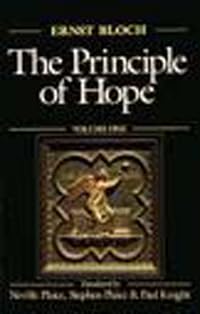
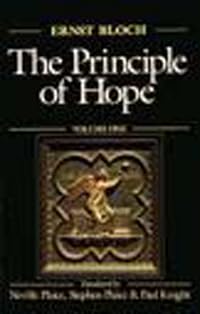
The Principle of Hope is one of the great works of the human spirit. It is a critical history of the utopian vision and a profound exploration of the possible reality of utopia. Even as the world has rejected the doctrine on which Bloch sought to base his utopia, his work still challenges us to think more insightfully about our own visions of a better world. The Principle of Hope is published in three volumes: Volume 1 lays the foundations of the philosophy of process and introduces the idea show more of the Not-Yet-Conscious--the anticipatory element that Bloch sees as central to human thought. It also contains a remarkable account of the aesthetic interpretations of utopian "wishful images" in fairy tales, popular fiction, travel, theater, dance, and the cinema. Volume 2 presents "the outlines of a better world." It examines the utopian systems that progressive thinkers have developed in the fields of medicine, painting, opera, poetry, and ultimately, philosophy. It is nothing less than an encyclopedic account of utopian thought from the Greeks to the present. Volume 3 offers a prescription for ways in which humans can reach their proper "homeland," where social justice is coupled with an openness to change and to the future. show lessTags
Recommendations

























Member Reviews
Members
- Recently Added By
Author Information

132+ Works 1,938 Members
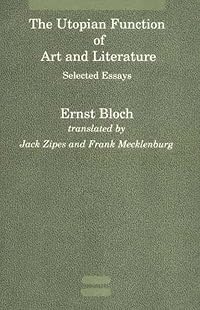
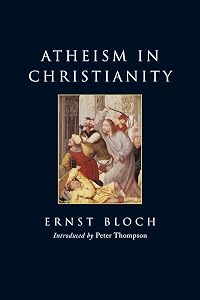
Ernst Bloch ranks as a major German Marxist philosopher. Beginning his career as author and teacher during World War I, he moved in the orbit of Marxist thought during the 1920s. In 1933 he left Germany and eventually found his way to the United States, where he created his major work The Principle of Hope. After World War II, he settled in East show more Germany, where from 1948 to 1957 he was professor at the University of Leipzig. His work eventually aroused the hostility of the authorities, and in 1961 he was granted political asylum in West Germany. Bloch departed from orthodox Marxism by attending to the problem of intellectual culture and refraining from treating it merely as superstructure determined by the materialist elements of political economy. Emphasizing the role of hope-as an inner drive, or hunger, in human beings-for a possible ideal future order, Bloch's thought may be described as utopian, involving the realization of a religious community akin to the kingdom of God, where people are no longer exploited but are free. Bloch's style echoes recent expressionism and is also rich in mystical overtones of biblical origin. Bloch died in 1977. (Bowker Author Biography) show less
Series

Belongs to Publisher Series
Common Knowledge
- Canonical title
- The Principle of Hope, Vol. 2
Classifications
Statistics
- Members
- 97
- Popularity
- 332,886
- Rating
- (4.00)
- Languages
- 6 — English, French, German, Portuguese, Spanish, Turkish
- Media
- Paper, Ebook
- ISBNs
- 9
- ASINs
- 1