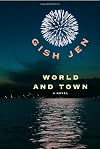
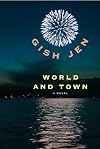
World and Town
by Gish Jen
On This Page
Description
Two years after burying her husband and best friend, 68-year-old Hattie Kong moves to a small New England town where she is joined by a Cambodian family and reunited with an ex-lover before tackling challenges in the form of fundamentalist Christians and struggling family farms.Tags
Recommendations







Member Reviews
The main character of World and Town is Hattie - a widow in her 70s who was born in China of a Chinese father and a missionary white mother and sent to the US to be raised by relatives when the communists took over China. Besides her husband, Hattie has lost her best friend to cancer and when a Cambodian family takes up residence in a neighboring trailer, she spends much of her time helping them. In addition, an old colleague (and lover) returns to the small town which further complicates Hattie's life and brings up old memories she'd just as soon forget. Most of the book is from Hattie's perspective but there are two other sections - one told by the teenage Cambodian daughter Sophee and one by Hattie's neighbor Everett who has been show more kicked out of his house by his born-again wife. Where Hattie's voice rings true, the parts by Sophee and Everett are really self-conscious attempts at capturing a teenage and a rural man's voice and I found them awkward.
So...not great, but good parts and Hattie is a wonderful main character, very complex. I'd have been happy if the whole book had been about her. I get where Jen was going and I admire what she was setting out to do - exploring the loneliness of aging, reason vs superstition, the tensions between old and new, the lure of the evangelical church to the new immigrant - but don't feel like she ultimately got there.
Still, a flawed book by a good writer grappling with contemporary America is preferable to mindlss fluff about nothing. show less
So...not great, but good parts and Hattie is a wonderful main character, very complex. I'd have been happy if the whole book had been about her. I get where Jen was going and I admire what she was setting out to do - exploring the loneliness of aging, reason vs superstition, the tensions between old and new, the lure of the evangelical church to the new immigrant - but don't feel like she ultimately got there.
Still, a flawed book by a good writer grappling with contemporary America is preferable to mindlss fluff about nothing. show less
This book caught my eye at the bookstore but I bought Ha Jin's Waiting instead. Soon after I regretted not buying World and Town and I was compelled to go back to the bookstore and buy it. I am glad I did. I usually find it difficult to give five stars to modern literature because I often find the classics so much better. Will this be a classic? I don't think so, but it might just be one of those long-lost gems in years to come. This novel covers so much ground yet brings it together so well. It is a book of contrasts. Old age, youth. Children, death. Multiculturalism but from so many angles. Chinese history. Cambodian history. Vietnam veterans, the disintegration of the family farm, the end of long-term marriages, foster homes. show more Religion - Christianity, Buddhism, Confucianism, burial, suicide, ethnic gangs, multilingualism, academia, science versus religion, religion versus science, pets, old love, new love. Kids who say "like" in the middle of every sentence, small town life, emails from home to the diaspora (like letters that form part of the dialogue in earlier novels), music, farming, hippies. In many ways it presents a version of the United States as it is rather than as it is imagined by some (I can only guess, but it resonates with the realities of Australia's cultural diversity). And it all concentrates on a small town in the north. I wondered if Hattie, the protagonist, would start to bore me. She just seemed so old. I think of Scott Fitzgerald who said nobody wants to read about poor people. But Hattie is so complex, so interesting. She is nosy, an artist, a scientist, a teacher, lonely. Yet she has a drive and a sense of self-discovery that makes you forget she is an old retired Chinese-American widow living in a small town. The connections with the rest of the world, the different ideas of filial responsibility, of God's work versus the manipulation of churches that prey (not pray!) on the vulnerable. The book even mentions the idea of "third culture kids" (something I have only ever read about in academia). It taught me a few things about adaptability and change, too (p. 232):
Even pigeons try to connect what they do with what happens to them. Really, they have no control. But they're wired to try anyway. They have a connection bias, just like people - a tendency to look for cause and effect, whether it's there or not.Did you know that "Houdini had a tool pocket in the lining of his mouth"? I didn't. Now I have to find out if it's true. Do you know (p. 246):
...what it meant to have had our structures adapted and readapted, but never fundamentally redesigned[?]I didn't. I don't know whether to call this a lovely story or an inspiring yet realistic tale. But I did love the book and I look forward to reading some more of Gish Jen's work. In an era of xenophobic nonsense, this novel sheds some light on what the world is like beneath the veneer of how things used to be. show less
This is a deeply and uniquely American novel: World and Town raises contemporary issues and themes that are timeless and does so in a very readable and fast-paced story. There's insight and intelligence, humor, and compassion in Jen’s portrayal of a group of everyday people who see their world dramatically changing when a Cambodian family settles in their midst in a small New England town. We identify with these normal, average people who feel “just like us” as they seek to hold onto what is familiar and comforting while responding to the intrusion of “The World” with all its different values and confront twenty-first century problems large and small in sometimes clumsy, sometimes graceful, and always deeply humane and show more recognizable ways. Gish Jen is a wonderful author whose care for the people she creates is clear and loving, and whose insights into the human heart reveal her compassion and brilliance. show less
Hattie is living in a secluded area near the lake, content with her three dogs and her comfortable mantle of mellowed grief. She’s not a recluse—she has friends and activities, and is vocal in small town affairs—but she seems to enjoy her solitude. But then, the peace of her wooded neighborhood is disturbed by a trailer being dropped on some nearby mushy land and, with it, a Cambodian family of five.
Hattie Kong is the half Chinese daughter of an American missionary mother and a Chinese father. She is a widow, a mother of a grown son now traveling the world, a former neuroscientist and teacher. During the Cultural Revolution, Hattie was sent to the US by her parents, whose fates were then at risk.
The Chhungs are a patched show more together family, the father, mother and oldest son are relatives—survivors of the Khmer Rough—who found each other in a refugee camp and formed a family, more children came along after they got to the U.S.. They lived for a time in the city, some of the kids got in trouble, and the family eventually made contact with a church who placed them in the small town of Riverlake in Northern New England (perhaps Vermont).
Gish Jen has populated the town of Riverlake and her story with more than just Hattie and the Chhungs, of course, but here is where her story begins. It would be easy to think you know where this story is going, just from what has been laid out, but you’d be wrong. The unfolding of the story is such that I hestitate to tell much more of it here but prefer to leave it for your own discovery. And Jen has always written the kind of credible, comfortable characters that stay with the reader and draw us back to the story even when we are not reading it—we can’t help but get involved with them.
This latest novel by one of America’s great writers, is a thoughtful novel about the things we believe in, and the things or people to which we give our lives. But more than that, it is about the subsequent choices we make, the actions we take and, perhaps even more, the actions we choose not to take. There’s a fair bit about faith, religion and superstition, but Jen opens her story up to a larger commonality that speaks to all of us. And as the title suggests, it’s also about relationships, family, community, and the world—like a set of Babushka dolls, each a reflection of and part of the other. There’s a lot in this book, more than small town Riverlake, and perhaps more than even I expected. show less
Hattie Kong is the half Chinese daughter of an American missionary mother and a Chinese father. She is a widow, a mother of a grown son now traveling the world, a former neuroscientist and teacher. During the Cultural Revolution, Hattie was sent to the US by her parents, whose fates were then at risk.
The Chhungs are a patched show more together family, the father, mother and oldest son are relatives—survivors of the Khmer Rough—who found each other in a refugee camp and formed a family, more children came along after they got to the U.S.. They lived for a time in the city, some of the kids got in trouble, and the family eventually made contact with a church who placed them in the small town of Riverlake in Northern New England (perhaps Vermont).
Gish Jen has populated the town of Riverlake and her story with more than just Hattie and the Chhungs, of course, but here is where her story begins. It would be easy to think you know where this story is going, just from what has been laid out, but you’d be wrong. The unfolding of the story is such that I hestitate to tell much more of it here but prefer to leave it for your own discovery. And Jen has always written the kind of credible, comfortable characters that stay with the reader and draw us back to the story even when we are not reading it—we can’t help but get involved with them.
This latest novel by one of America’s great writers, is a thoughtful novel about the things we believe in, and the things or people to which we give our lives. But more than that, it is about the subsequent choices we make, the actions we take and, perhaps even more, the actions we choose not to take. There’s a fair bit about faith, religion and superstition, but Jen opens her story up to a larger commonality that speaks to all of us. And as the title suggests, it’s also about relationships, family, community, and the world—like a set of Babushka dolls, each a reflection of and part of the other. There’s a lot in this book, more than small town Riverlake, and perhaps more than even I expected. show less
In World and Town, Gish Jen’s fourth novel, the small Vermont town of Riverlake isn’t quite sure how to interact with a troubled Cambodian family that moves into a trailer under the sponsorship of a local church. Hattie Kong, a 68-year-old widow grieving both her husband and her best friend, lives next to the newcomers and befriends their 12-year-old daughter, Sophy. To complicate matters, Hattie’s first love returns to town after a long absence. It is a tribute to Jen’s abilities as a writer that this novel tackles so many different themes—love, death, grief, friendship, family, community, religion, domestic abuse, drugs, alcoholism—and yet never feels messy or overextended.
Jen’s prose is both blunt and dense, as show more exemplified by the novel’s first few sentences:
"Last week, a family moved in down the hill—Cambodian. They plan to build themselves a little house, people say. Hoping that the house will—ta daah!—become a home. Well, that’s not so simple, Hattie happens to know. But never mind; this is an age of flux. She, Hattie Kong, came from China; her neighbors from Cambodia; is there anyone not coming from somewhere?"
Jen’s writing has the satisfying heft of 9-grain bread, but it’s lightened with enough humor to avoid being overly weighty. The details of her characters’ lives and relationships are revealed slowly and obliquely. Jen leaves much unsaid, trusting in her readers to pay attention. Such writing rewards close and patient reading. World and Town is a masterful depiction of the world from the perspective of a small town.
This review also appears on my blog Literary License. show less
Jen’s prose is both blunt and dense, as show more exemplified by the novel’s first few sentences:
"Last week, a family moved in down the hill—Cambodian. They plan to build themselves a little house, people say. Hoping that the house will—ta daah!—become a home. Well, that’s not so simple, Hattie happens to know. But never mind; this is an age of flux. She, Hattie Kong, came from China; her neighbors from Cambodia; is there anyone not coming from somewhere?"
Jen’s writing has the satisfying heft of 9-grain bread, but it’s lightened with enough humor to avoid being overly weighty. The details of her characters’ lives and relationships are revealed slowly and obliquely. Jen leaves much unsaid, trusting in her readers to pay attention. Such writing rewards close and patient reading. World and Town is a masterful depiction of the world from the perspective of a small town.
This review also appears on my blog Literary License. show less
World and Town is about a woman (age 67, how unusual is that for a main character?) who was born in China of a Chinese father and an American mother who was the daughter of missionaries but went native. When the cultural revolution threatened they managed to sneak her to America where eventually she becomes a neurobiologist and teacher with a large number of people who depend on her and love her but she continues to feel like an outsider. The book is about principles of all types: scientific, economic, academic, religious- Confucian, christian, fundamentalist christian - and what to do when they conflict with personal relationships. There's a welcome and liberal use of the term hogwash. A major portion of the book revolves around the show more attempt of the main character, Hattie, to help some Cambodian immigrants who have moved in next door. Everything is very complicated and Hattie ends up being far more forgiving than I could ever imagine myself being. I don't know if that's because of her age and sense of mortality or the fact that she lives in a small town where one is forced to get along with one's neighbors out of necessity, or because of her Chinese - Confucian background. However she manages it, Hattie is fascinating character. show less
World and Town tells the story of Hattie, a 50-something half Chinese, half American woman living in New England. She has recently lost both her husband and her best friend to cancer, after which she took early retirement from her job as a science teacher and moved back to a small town she had spent time in as a young woman. She has joined a walking club and a yoga class, made some new friends, and settled down with her dogs and her paintbrushes to work through her grief and live the rest of her life.
But she can’t entirely escape her past – she thinks constantly about her two lost soulmates and her dead parents, her Chinese relatives continually harass her about relocating her parents’ bones from the US to the family burial ground show more in China, and an old lover, whose family has long owned a house in the town, returns – is he looking for her or is it a coincidence?
Nor can she avoid the present – even in this traditional old town, it’s the 21st Century (the book is set in 2001) and there’s no hiding place from all that that implies. Family farms struggle. An evangelical church has provocatively opened a school right opposite the town’s public school. A Wal-mart type discounter applies to open a store. The town meeting debates plans to install a phone mast. And, of course, in September a bigger global event intrudes (9/11 is not at all the focus of the book, though, it just gets mentioned almost in passing).
The main part of the story, though, concerns a Cambodian family who, courtesy of the church, move into a caravan on the land adjacent to Hattie’s. She gets very involved in their lives, which are chaotic and traumatized, and it is clear that they, too, represent a type of 21st Century American life.
Not every bit of this book worked for me, and in particular I thought quite a few of the secondary characters were clunky and unrealistic. But I very much liked that the protagonist was a middle aged woman dealing with loss, with change, with aging, with real life, both good and bad, in a real life way. Hattie is seeking peace and balance in her life, but she doesn’t travel around India in search of gurus, or become an alcoholic, or go into therapy, or discover she was abused as a child. She just lives, like most of us do. Stuff happens, and life goes on.
I recommend this book for anyone, although it might best be enjoyed by “women of a certain age”, like Hattie, like me, and like many of us here on LT, and by readers who are tired of the trials and tribulations of troubled teenagers and confused young adults, and just want to read about someone more, well, grown up for a change. show less
But she can’t entirely escape her past – she thinks constantly about her two lost soulmates and her dead parents, her Chinese relatives continually harass her about relocating her parents’ bones from the US to the family burial ground show more in China, and an old lover, whose family has long owned a house in the town, returns – is he looking for her or is it a coincidence?
Nor can she avoid the present – even in this traditional old town, it’s the 21st Century (the book is set in 2001) and there’s no hiding place from all that that implies. Family farms struggle. An evangelical church has provocatively opened a school right opposite the town’s public school. A Wal-mart type discounter applies to open a store. The town meeting debates plans to install a phone mast. And, of course, in September a bigger global event intrudes (9/11 is not at all the focus of the book, though, it just gets mentioned almost in passing).
The main part of the story, though, concerns a Cambodian family who, courtesy of the church, move into a caravan on the land adjacent to Hattie’s. She gets very involved in their lives, which are chaotic and traumatized, and it is clear that they, too, represent a type of 21st Century American life.
Not every bit of this book worked for me, and in particular I thought quite a few of the secondary characters were clunky and unrealistic. But I very much liked that the protagonist was a middle aged woman dealing with loss, with change, with aging, with real life, both good and bad, in a real life way. Hattie is seeking peace and balance in her life, but she doesn’t travel around India in search of gurus, or become an alcoholic, or go into therapy, or discover she was abused as a child. She just lives, like most of us do. Stuff happens, and life goes on.
I recommend this book for anyone, although it might best be enjoyed by “women of a certain age”, like Hattie, like me, and like many of us here on LT, and by readers who are tired of the trials and tribulations of troubled teenagers and confused young adults, and just want to read about someone more, well, grown up for a change. show less
Members
- Recently Added By
Lists

Books Read in 2016
4,666 works; 197 members
Author Information

15+ Works 2,745 Members
Awards and Honors
Awards
Distinctions
Classifications
Statistics
- Members
- 210
- Popularity
- 155,000
- Reviews
- 16
- Rating
- (3.50)
- Languages
- English, French
- Media
- Paper, Audiobook, Ebook
- ISBNs
- 12
- ASINs
- 1