The Tenth Parallel: Dispatches from the Fault Line Between Christianity and Islam
by Eliza Griswold
On This Page
Description
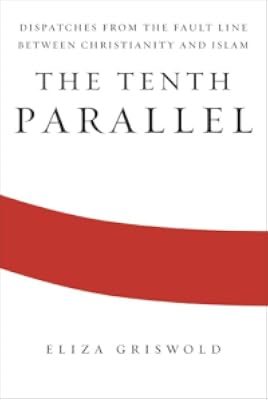
Award-winning investigative journalist and poet, Eliza Griswold has spent the past seven years traveling between the equator and the tenth parallel: in Nigeria, the Sudan, and Somalia, and in Indonesia, Malaysia, and the Philippines. The stories she tells in "The Tenth Parallel" show us that religious conflicts are also conflicts about land, water, oil, and other natural resources, and that local and tribal issues are often shaped by religious ideas. Above all, she makes clear that, for the show more people she writes about, one's sense of God is shaped by one's place on earth; along the tenth parallel, faith is geographic and demographic. show lessTags
Recommendations




Member Reviews
Griswold travels the 10th parallel, spending time in Northern Nigeria, Sudan, Somalia, Indonesia, the Philippines, etc., exploring the frontier between the Muslim world and the (southern) Christian world.
This book is a reminder that much of the Muslim world isn't the way we see it described in the Middle East, and much of the Christian world is very much different from our Western context. Nearly a quarter of the world’s Christians now live south of the 10th parallel, next door to Muslims, many of whom are migrating from the north to escape the impact of global climate change and other concerns. Along this frontier, there are clashes which get simplified in the West as religious violence, but which are far more complicated than that. show more
I was reminded that the narratives we receive are often simplified so much as to make them false--this became clear when, while reading this book, I read in the media and in dispatches from aid organizations very different accounts of the clashes between Fulani herders and Christian farmers in northern Nigeria. I serve on the board of an international relief and development organization called World Renew, and the varying accounts has been a topic of discussion even at the board level, since some of our donors often hear different stories from other aid organizations than they do from our (Christian) staff people who are working closely with (Muslim) Fulani herders, and therefore have a somewhat different take on the violence.
This book was even more interesting to me as a person of faith, because of Griswold herself: she grew up in a very religious (Christian) family (her father was an Anglican bishop), but grew up wondering how "smart people could believe in God." Griswold not only interacts with everyday Christians and Muslims in the countries she visits, but also with missionaries on both sides (including Gracia Burnham, who was held captive by abu-Sayyaf in the Philippines for years), and with those in power, including Franklin Graham and Omar el-Bashir (the president of Sudan). While one sees her own biases at play, she readily admits them and works to get beyond them, thus adding to the depth of her writing. Whether you are a person of faith or not, whether or not you are deeply involved in development and justice issues in some of the countries discussed, this book is a worthwhile read. show less
This book is a reminder that much of the Muslim world isn't the way we see it described in the Middle East, and much of the Christian world is very much different from our Western context. Nearly a quarter of the world’s Christians now live south of the 10th parallel, next door to Muslims, many of whom are migrating from the north to escape the impact of global climate change and other concerns. Along this frontier, there are clashes which get simplified in the West as religious violence, but which are far more complicated than that. show more
I was reminded that the narratives we receive are often simplified so much as to make them false--this became clear when, while reading this book, I read in the media and in dispatches from aid organizations very different accounts of the clashes between Fulani herders and Christian farmers in northern Nigeria. I serve on the board of an international relief and development organization called World Renew, and the varying accounts has been a topic of discussion even at the board level, since some of our donors often hear different stories from other aid organizations than they do from our (Christian) staff people who are working closely with (Muslim) Fulani herders, and therefore have a somewhat different take on the violence.
This book was even more interesting to me as a person of faith, because of Griswold herself: she grew up in a very religious (Christian) family (her father was an Anglican bishop), but grew up wondering how "smart people could believe in God." Griswold not only interacts with everyday Christians and Muslims in the countries she visits, but also with missionaries on both sides (including Gracia Burnham, who was held captive by abu-Sayyaf in the Philippines for years), and with those in power, including Franklin Graham and Omar el-Bashir (the president of Sudan). While one sees her own biases at play, she readily admits them and works to get beyond them, thus adding to the depth of her writing. Whether you are a person of faith or not, whether or not you are deeply involved in development and justice issues in some of the countries discussed, this book is a worthwhile read. show less
Griswold travels the 10th parallel, spending time in Northern Nigeria, Sudan, Somalia, Indonesia, the Philippines, etc., exploring the frontier between the Muslim world and the (southern) Christian world.
This book is a reminder that much of the Muslim world isn't the way we see it described in the Middle East, and much of the Christian world is very much different from our Western context. Nearly a quarter of the world’s Christians now live south of the 10th parallel, next door to Muslims, many of whom are migrating from the north to escape the impact of global climate change and other concerns. Along this frontier, there are clashes which get simplified in the West as religious violence, but which are far more complicated than that. show more
I was reminded that the narratives we receive are often simplified so much as to make them false--this became clear when, while reading this book, I read in the media and in dispatches from aid organizations very different accounts of the clashes between Fulani herders and Christian farmers in northern Nigeria. I serve on the board of an international relief and development organization called World Renew, and the varying accounts has been a topic of discussion even at the board level, since some of our donors often hear different stories from other aid organizations than they do from our (Christian) staff people who are working closely with (Muslim) Fulani herders, and therefore have a somewhat different take on the violence.
This book was even more interesting to me as a person of faith, because of Griswold herself: she grew up in a very religious (Christian) family (her father was an Anglican bishop), but grew up wondering how "smart people could believe in God." Griswold not only interacts with everyday Christians and Muslims in the countries she visits, but also with missionaries on both sides (including Gracia Burnham, who was held captive by abu-Sayyaf in the Philippines for years), and with those in power, including Franklin Graham and Omar el-Bashir (the president of Sudan). While one sees her own biases at play, she readily admits them and works to get beyond them, thus adding to the depth of her writing. Whether you are a person of faith or not, whether or not you are deeply involved in development and justice issues in some of the countries discussed, this book is a worthwhile read. show less
This book is a reminder that much of the Muslim world isn't the way we see it described in the Middle East, and much of the Christian world is very much different from our Western context. Nearly a quarter of the world’s Christians now live south of the 10th parallel, next door to Muslims, many of whom are migrating from the north to escape the impact of global climate change and other concerns. Along this frontier, there are clashes which get simplified in the West as religious violence, but which are far more complicated than that. show more
I was reminded that the narratives we receive are often simplified so much as to make them false--this became clear when, while reading this book, I read in the media and in dispatches from aid organizations very different accounts of the clashes between Fulani herders and Christian farmers in northern Nigeria. I serve on the board of an international relief and development organization called World Renew, and the varying accounts has been a topic of discussion even at the board level, since some of our donors often hear different stories from other aid organizations than they do from our (Christian) staff people who are working closely with (Muslim) Fulani herders, and therefore have a somewhat different take on the violence.
This book was even more interesting to me as a person of faith, because of Griswold herself: she grew up in a very religious (Christian) family (her father was an Anglican bishop), but grew up wondering how "smart people could believe in God." Griswold not only interacts with everyday Christians and Muslims in the countries she visits, but also with missionaries on both sides (including Gracia Burnham, who was held captive by abu-Sayyaf in the Philippines for years), and with those in power, including Franklin Graham and Omar el-Bashir (the president of Sudan). While one sees her own biases at play, she readily admits them and works to get beyond them, thus adding to the depth of her writing. Whether you are a person of faith or not, whether or not you are deeply involved in development and justice issues in some of the countries discussed, this book is a worthwhile read. show less
Basically this book is a travelogue, albeit, a travelogue with a social consciousness and a religious and educational agenda. Griswold is the product of a deeply religious upbringing and she brings this sensitivity to this work. The book sets out to explore the area of the world inside of the ten degrees north and south latitudes from the equator. This is the area of the world in which Christianity and Islam are in constant contact with the results of that contact oftentimes being violent. Griswold explores the reasons for these conflicts and comes to the conclusion that most of the conflict is historical use of religion to provide clear boundaries between the two religions. Added to this potent mix of historical resistance to show more proselytizing and expansion is mass migration caused by global warming in the case of Africa, and the population explosion and the resulting loss of resources in Malaysia, Indonesia, and the Philippines. Add to both of these the ready availability of arms and the willingness of both religions to see conversion to one or the other religion as an imperative and the result is violence and political domination of scare resources. Simply put, it is often a matter of survival to belong to one religion or the other. Faith has little to do with it.
This was a hard book to start but an easy book to finish. At first it seemed dull and academic - another one of those tomes that we all should read, but can't find the time to concentrate on it. Fortunately for the reader, the text has natural dividing lines that create shorter chunks of reading material, giving the reader time to ponder and process that material. As I read and accumulated some background knowledge I began to see how the problems faced in the various countries built on each other forming a division, oftentimes in the same country, that empathy and compassion can't seem to cross. Both of those emotions are, according to the tenants of both faiths, pillars of their Faiths. The book takes the time to reveal the part that economic development and oppertunity, or the lack thereof, plays in this constant conflict. This economic disparity is commonly caused by political maneuvering by the person, or persons in power, and in some cases, not caused by the lack of resources. It is simple corruption and the desire to remain in power. show less
This was a hard book to start but an easy book to finish. At first it seemed dull and academic - another one of those tomes that we all should read, but can't find the time to concentrate on it. Fortunately for the reader, the text has natural dividing lines that create shorter chunks of reading material, giving the reader time to ponder and process that material. As I read and accumulated some background knowledge I began to see how the problems faced in the various countries built on each other forming a division, oftentimes in the same country, that empathy and compassion can't seem to cross. Both of those emotions are, according to the tenants of both faiths, pillars of their Faiths. The book takes the time to reveal the part that economic development and oppertunity, or the lack thereof, plays in this constant conflict. This economic disparity is commonly caused by political maneuvering by the person, or persons in power, and in some cases, not caused by the lack of resources. It is simple corruption and the desire to remain in power. show less
Both insightful and intrepid, Eliza Griswold journeyed through Africa and Asia along the tenth parallel, the line of latitude 700 miles north of the equator where nearly 25% of the world’s Muslims and Christians compete for resources, converts and political power. A poet with an ear for simple but evocative language, Griswold takes the reader through the dust of encroaching desertification as she attends an indigenous Indonesian wedding, meets with African rape victims, sits with a Muslim religious leader as he tries to resolve local disputes, and observes an election where voters line up in a barren field behind the candidate of their choice. After reading about her meetings with the homosexual and Muslim denouncing Anglican Bishop show more Akinola of Nigeria I still have no sympathy with his views, but I now have some understanding of why he thinks the way he does. Griswold’s own empathy serves her well; believers on both sides of the religious divide open up to her. As an agnostic daughter of the former presiding bishop of the Episcopal Church, Griswold even shares a flash of private connection with crusading evangelist Franklin Graham when she meets him in Africa—though they have very different ideas they are both PKs, preacher’s kids, with childhoods that were a struggle between belief and rebellion. My copy of THE TENTH PARALLEL is tabbed with more than 30 post-it notes marking sections I thought were so perceptive and illuminating I knew I’d want to read them again. show less
Fantastic writing. A lot of this is really interesting on a human level, but by the second half begins to feel a bit repetitive, and I'm not sure I learned a lot I didn't already know. Essentially, Christianity and Islam are clashing with each other pretty much everywhere. Fervent believers of one faith deeply distrust the fervent believers of the other. This leads to petty rivalries, deep unhappiness, and violence. As I said, not a huge eye-opener. But Griswold writes well and her depictions of the various people she meets are fascinating.
I was particularly interested in Franklin Graham and Gracia Burnham, two American evangelists who have vastly different experiences.
I was particularly interested in Franklin Graham and Gracia Burnham, two American evangelists who have vastly different experiences.
Fantastic writing. A lot of this is really interesting on a human level, but by the second half begins to feel a bit repetitive, and I'm not sure I learned a lot I didn't already know. Essentially, Christianity and Islam are clashing with each other pretty much everywhere. Fervent believers of one faith deeply distrust the fervent believers of the other. This leads to petty rivalries, deep unhappiness, and violence. As I said, not a huge eye-opener. But Griswold writes well and her depictions of the various people she meets are fascinating.
I was particularly interested in Franklin Graham and Gracia Burnham, two American evangelists who have vastly different experiences.
I was particularly interested in Franklin Graham and Gracia Burnham, two American evangelists who have vastly different experiences.
A discussion of the issues along the 10th parallel that make it such a disputed zone - religion and resources. Muslims and Christians square off against each other, and among themselves, seeking control of both the natural resources and the human population. The author writes well, and spent a lot of time visiting the area, during some tough times, to interview key players. It's a shame, then, that her use of historical sources is so weak. There are some places that will send you running to the bibliography to check out her sources, statements for instance that the evangelical Christians of the 19th century were leaders in the movement for women's rights. None of her sources ere from that time; all her historical sources are books show more written recently (in the latter half of the 20th century up to present). It's a shame, because the book is very even-handed, not seeking to excuse or rationalize violence and hatred, only to figure out what is driving it. She avoids the choosing of sides that is so common in books of this sort, preferring to let the heinous behavior of both sides speak for itself, each of course blaming it on the other side. A good introduction to the subject, but the reader needs to remain somewhat skeptical based on her somewhat naive use of sources. show less
Members
- Recently Added By
Published Reviews
ThingScore 100
“The Tenth Parallel” is a beautifully written book, full of arresting stories woven around a provocative issue — whether fundamentalism leads to violence — which Griswold investigates through individual lives rather than caricatures or abstractions.
added by lquilter
Author Information

9+ Works 941 Members
Eliza Griswold is the author of Wideawake Field and The Tenth Parallel: Dispatches from the Fault Line Between Christianity and Islam, as well as the translator of I Am the Beggar of the World, a collection of Afghan women's folk poems. A contributing writer at The New Yorker, she was awarded the 2019 Pulitzer Prize in General Nonfiction for Amity show more and Prosperity: One Family and the of America. show less
Awards and Honors
Awards
Common Knowledge
- Important places
- Indonesia; The Philippines; Sudan; Somalia; Nigeria
Classifications
- Genres
- Religion & Spirituality, Nonfiction, General Nonfiction, Travel
- DDC/MDS
- 297.28309 — Religion Other religions Islam Theological Conceptions and Doctrines
- LCC
- BP172 .G758 — Philosophy, Psychology and Religion Islam. Bahaism. Theosophy, etc. Islam. Bahai Faith. Theosophy, etc. Relation of Islam to other religions
- BISAC
Statistics
- Members
- 331
- Popularity
- 96,458
- Reviews
- 15
- Rating
- (3.84)
- Languages
- English, Portuguese
- Media
- Paper, Audiobook, Ebook
- ISBNs
- 17
- ASINs
- 7