On This Page
Description
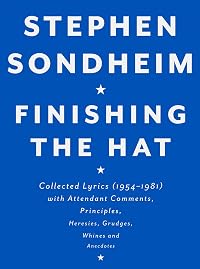
Stephen Sondheim has won seven Tonys, an Academy Award, seven Grammys, a Pulitzer Prize and the Kennedy Center Honors. His lyrics have become synonymous with musical theater and popular culture, and here Sondheim has not only collected his lyrics for the first time, he is giving readers a rare personal look into his life as well as his remarkable productions. Along with the lyrics for all of his musicals from 1954 to 1981--including West Side Story, Company, Follies, A Little Night Music and show more Sweeney Todd--Sondheim treats us to never-before-published songs cut or discarded from each show. He discusses his relationship with his mentor, Oscar Hammerstein II, and his collaborations with extraordinary talents from Leonard Bernstein to Angela Lansbury. The anecdotes--filled with pointed observations and intimate details--transport us back to a time when theater was a major pillar of American culture. Best of all, Sondheim offers unparalleled insights into songwriting.--From publisher description. show lessTags
Recommendations








Member Reviews
In this remarkable volume, Stephen Sondheim collects the lyrics (used, unused and reused) from his first 10 Broadway productions ("West Side Story" to "Merrily We Roll Along") as well as his first professional production ("Saturday Night") and another piece ("The Frogs"). A second volume - 'Look, I Made A Hat' - will follow in late 2011 with all his post-1981 lyrics, as well as his earlier TV and film work, and (assumedly) various songs he wrote for individual productions in the early days. And indeed, these two volumes are going to have pride of place on my shelf for many years to come.
To call Sondheim intelligent is a cruel understatement. As evidenced by the lyrics here, he never just dashes off a song and ignores it: a change of show more pronoun or a shift in tense conveys so much meaning in a Sondheim song. He discusses here the use of non-Latinate words in "Pacific Overtures", the reasons why some patter songs ("Getting Married Today") have a strong sense of structure while others ("The Worst Pies in London") do not, why inter-rhymes should only be used in the right situations with the right characters, and so on. Duly, Sondheim gives credit to the book writers with whom he has worked, and the array of talented directors, cast and crew who brought these visions to life. Sondheim is an artisan and part of a team, true enough. But this cannot disguise the fact that he is musical theatre's Shakespeare, never shirking from a challenge and always presenting us with more dimensions than we could have thought possible. This is a masterclass in song writing (not just for musicals, incidentally) written by the unparalleled master of the form.
In addition, Sondheim offers up his distilled thoughts on a number of 'Golden Age' lyricists - from Gershwin and Porter, to Fields and Hammerstein - but refuses to sugarcoat his opinions. Noel Coward is taken out and shot, basically. It's refreshing, first of all, to hear these uncensored comments. Sondheim is by no means cruel: personal opinions may surface, but we're presented primarily with academic discussions on the failings (or successes) of the typically-accepted pantheon of American songwriters. (My personal favourite was when Sondheim pointed the obvious flaws in some of Henry Higgins' lyrics in "My Fair Lady" - a musical he very much enjoys, but suggests is less gramatically correct than someone of Higgins' idiosyncracies would accept.)
At the same time, though, Sondheim is not a fool: he acknowledges that the pre-Hammerstein lyricists were working in a different era, with different goals as to character creation. The aim is not to limit the enjoyment of those who listen to this songs, but merely to argue for recognition of the growth and evolution of the medium. And Sondheim himself hardly gets off lightly: he is his own harshest critic, disdainful of lyrics that I - and many other fans - would surely adore. (The sweetest moments - although few and far between - come when he acknowledges that he does like a particular lyric of his own, one example being the simple but chilling "...and it was" from the end of 'Four Black Dragons'.)
At the end of the day, this is a necessity for Sondheads, highly recommended for any lovers of the musical theatre, and really a good read for anyone who has pondered lyric writing, or just enjoys the creation of art. Like all fans, I'm sure, there were many lines when I was disappointed to see no annotations but - of course - most of the time there would be very little to be said other than "this was good" or "this was bad". His lyrics stand as testaments to the art of presenting character, plot, theme and emotion through song. I don't mind when 'mainstream audiences' prefer to attend "Grease" or "Jersey Boys" to "Pacific Overtures"; that is the status quo in any artistic medium. But it does annoy me to a feverish degree when 'Broadway lovers' or 'musical theatre geeks' spend their days belting out tunes from 'Wicked' - whose lyrics I'd love to hear Sondheim take apart - while ignoring the great variety of works featured in this two-volume collection. I truly hope that - with re-releases of his recordings, and the release of these books - the lyrics contained herein, along with their masterful music, characters and stories can come to be appreciated by a far wider audience. show less
To call Sondheim intelligent is a cruel understatement. As evidenced by the lyrics here, he never just dashes off a song and ignores it: a change of show more pronoun or a shift in tense conveys so much meaning in a Sondheim song. He discusses here the use of non-Latinate words in "Pacific Overtures", the reasons why some patter songs ("Getting Married Today") have a strong sense of structure while others ("The Worst Pies in London") do not, why inter-rhymes should only be used in the right situations with the right characters, and so on. Duly, Sondheim gives credit to the book writers with whom he has worked, and the array of talented directors, cast and crew who brought these visions to life. Sondheim is an artisan and part of a team, true enough. But this cannot disguise the fact that he is musical theatre's Shakespeare, never shirking from a challenge and always presenting us with more dimensions than we could have thought possible. This is a masterclass in song writing (not just for musicals, incidentally) written by the unparalleled master of the form.
In addition, Sondheim offers up his distilled thoughts on a number of 'Golden Age' lyricists - from Gershwin and Porter, to Fields and Hammerstein - but refuses to sugarcoat his opinions. Noel Coward is taken out and shot, basically. It's refreshing, first of all, to hear these uncensored comments. Sondheim is by no means cruel: personal opinions may surface, but we're presented primarily with academic discussions on the failings (or successes) of the typically-accepted pantheon of American songwriters. (My personal favourite was when Sondheim pointed the obvious flaws in some of Henry Higgins' lyrics in "My Fair Lady" - a musical he very much enjoys, but suggests is less gramatically correct than someone of Higgins' idiosyncracies would accept.)
At the same time, though, Sondheim is not a fool: he acknowledges that the pre-Hammerstein lyricists were working in a different era, with different goals as to character creation. The aim is not to limit the enjoyment of those who listen to this songs, but merely to argue for recognition of the growth and evolution of the medium. And Sondheim himself hardly gets off lightly: he is his own harshest critic, disdainful of lyrics that I - and many other fans - would surely adore. (The sweetest moments - although few and far between - come when he acknowledges that he does like a particular lyric of his own, one example being the simple but chilling "...and it was" from the end of 'Four Black Dragons'.)
At the end of the day, this is a necessity for Sondheads, highly recommended for any lovers of the musical theatre, and really a good read for anyone who has pondered lyric writing, or just enjoys the creation of art. Like all fans, I'm sure, there were many lines when I was disappointed to see no annotations but - of course - most of the time there would be very little to be said other than "this was good" or "this was bad". His lyrics stand as testaments to the art of presenting character, plot, theme and emotion through song. I don't mind when 'mainstream audiences' prefer to attend "Grease" or "Jersey Boys" to "Pacific Overtures"; that is the status quo in any artistic medium. But it does annoy me to a feverish degree when 'Broadway lovers' or 'musical theatre geeks' spend their days belting out tunes from 'Wicked' - whose lyrics I'd love to hear Sondheim take apart - while ignoring the great variety of works featured in this two-volume collection. I truly hope that - with re-releases of his recordings, and the release of these books - the lyrics contained herein, along with their masterful music, characters and stories can come to be appreciated by a far wider audience. show less
The remarkable thing about this collection of lyrics – just volume one – is that it's a series of essays in disguise, as Sondheim delivers potted judgements on practitioners of musical theatre past (never living) and his view of the history and state of the art, as well as annotating lyrics with alternative versions, cuts, and corrections (taking the opportunity to make improvements decades after they were written). Remarkable insight into the process of a great writer.
http://shawjonathan.wordpress.com/2011/05/04/stephen-sondheim-finishing-the-hat/
Lyrics of songs you’ve never heard or recall only vaguely don’t make riveting reading, but a master craftsman’s unsparing reflections on his work, and that of his colleagues, collaborators, mentors and rivals is another story.
Thecomments of the subtitle include are illuminating notes on the writing of particular songs and brief accounts the development of thirteen musicals. There are three principles: Content Dictates Form, Less Is More, and God Is in the Details, all in the service of Clarity. The heresies, grudges, whines etc, range from classic showbiz anecdotes (Hermione Gingold’s audition for A Little Night Music is my favourite, closely show more followed by Ingmar Bergman’s praise of her performance) to mini-essays on a score of eminent writers for musical theatre. There’s a list of the cardinal sins of lyric writing, a spirited advocacy of full rhyme, and any number of fascinating insights into the elation, heartbreak and drudgery of working on Broadway.
Approaching 80 when he wrote the book, Sondheim doesn’t mince words. You don’t have to agree with his evaluation of Noel Coward as the master of condescending blather or Lorenz Hart as gifted but lazy to relish his straight talk. Mostly, his frankness remains respectful: he may ‘cringe at the bloodless quaintness of the ballads’ of Gilbert and Sullivan and be baffled when he hears an audience laugh at one of their songs, but he acknowledges their importance in the history of musical theatre, and allows that his failure to enjoy them may reflect a lack in himself. On the subject of ignorant, lazy or arrogant reviewers and critics, though, he gives no quarter.
This, along with the companion volume due out in 2011, Look, I Made a Hat, is probably as close to an autobiography as Sondheim will give us. show less
Lyrics of songs you’ve never heard or recall only vaguely don’t make riveting reading, but a master craftsman’s unsparing reflections on his work, and that of his colleagues, collaborators, mentors and rivals is another story.
Thecomments of the subtitle include are illuminating notes on the writing of particular songs and brief accounts the development of thirteen musicals. There are three principles: Content Dictates Form, Less Is More, and God Is in the Details, all in the service of Clarity. The heresies, grudges, whines etc, range from classic showbiz anecdotes (Hermione Gingold’s audition for A Little Night Music is my favourite, closely show more followed by Ingmar Bergman’s praise of her performance) to mini-essays on a score of eminent writers for musical theatre. There’s a list of the cardinal sins of lyric writing, a spirited advocacy of full rhyme, and any number of fascinating insights into the elation, heartbreak and drudgery of working on Broadway.
Approaching 80 when he wrote the book, Sondheim doesn’t mince words. You don’t have to agree with his evaluation of Noel Coward as the master of condescending blather or Lorenz Hart as gifted but lazy to relish his straight talk. Mostly, his frankness remains respectful: he may ‘cringe at the bloodless quaintness of the ballads’ of Gilbert and Sullivan and be baffled when he hears an audience laugh at one of their songs, but he acknowledges their importance in the history of musical theatre, and allows that his failure to enjoy them may reflect a lack in himself. On the subject of ignorant, lazy or arrogant reviewers and critics, though, he gives no quarter.
This, along with the companion volume due out in 2011, Look, I Made a Hat, is probably as close to an autobiography as Sondheim will give us. show less
Yep, that about covers it. Lyrics from Saturday Night to Merrily We Roll Along, though really I’m only in it for Sweeney Todd, the Demon Barber of Fleet Street, the cast recording of Angela Lansbury & George Hearn so familiar to me that I can tell when that production diverged from the lyrics he puts down in the book. The man hates critics and grumps that musicals are the only art form reviewed by illiterates; at least, he says, visual art is usually reviewed by failed visual artists. For me, the interest was mostly in the musicals and not in his extensive commentary.
Finishing the Hat includes the lyrics for Sondheim's shows from Saturday Night (conceived of before West Side Story, but unperformed until 1997) to the wonderful (if poorly received) Merrily We Roll Along. Interspersed among all of the lyrics are overviews of the shows as well as short essays and notes about the songs (hence the Comments, Principles, Heresies, Grudges, Whines, and Anecdotes from the book's subtitle). The book also contains Sondheim's original notes and reflections on other lyric writers (all deceased), such as Oscar Hammerstein II (Sondheim's mentor), Irving Berlin, and Cole Porter. In short, this book is a musical lover's dream come true.
While the lyrics are the real star of the book (and, as Sondheim noted in his show more interview with Terry Gross for NPR's Fresh Air, they read very well on the page), I found myself really enjoying his thoughts upon revisiting the lyrics. For instance, his explanation for changing "Rich and Happy" to "That Frank" not only helps us understand his rationale for the change but also gives us a deeper appreciation for the thought that he puts into his music and lyrics. I also enjoyed Sondheim's forthrightness and candor, which rarely devolve into malicious gossip (the closest he gets is in his recollections of The Frogs). He is quick to praise the lyricists who came before him and influenced his work (as his pastiche work in Follies shows), but he also does not hold back when it comes to critiquing their more questionable lyrics. Even as I felt myself getting defensive on behalf of lyricists like Gershwin (whose work Sondheim refers to as "Rhyming poison"), Sondheim uses specific examples to prove his points, and even when I admire the lyricist in question, I often found myself understanding and agreeing with Sondheim's anlysis.
One of the roads I didn't take was taking a course (or set of courses) dedicated to musical theatre. However, Sondheim's Finishing the Hat provides a veritable master class on musical theatre and the thought and care that go into creating a musical. Read it while listening to Sondheim's songs, and you will get the full appreciation of a master at work.
To read my full review, please go to: http://apparentlynotderanged.blogspot.com/2010/11/book-review-finishing-hat-coll... show less
While the lyrics are the real star of the book (and, as Sondheim noted in his show more interview with Terry Gross for NPR's Fresh Air, they read very well on the page), I found myself really enjoying his thoughts upon revisiting the lyrics. For instance, his explanation for changing "Rich and Happy" to "That Frank" not only helps us understand his rationale for the change but also gives us a deeper appreciation for the thought that he puts into his music and lyrics. I also enjoyed Sondheim's forthrightness and candor, which rarely devolve into malicious gossip (the closest he gets is in his recollections of The Frogs). He is quick to praise the lyricists who came before him and influenced his work (as his pastiche work in Follies shows), but he also does not hold back when it comes to critiquing their more questionable lyrics. Even as I felt myself getting defensive on behalf of lyricists like Gershwin (whose work Sondheim refers to as "Rhyming poison"), Sondheim uses specific examples to prove his points, and even when I admire the lyricist in question, I often found myself understanding and agreeing with Sondheim's anlysis.
One of the roads I didn't take was taking a course (or set of courses) dedicated to musical theatre. However, Sondheim's Finishing the Hat provides a veritable master class on musical theatre and the thought and care that go into creating a musical. Read it while listening to Sondheim's songs, and you will get the full appreciation of a master at work.
To read my full review, please go to: http://apparentlynotderanged.blogspot.com/2010/11/book-review-finishing-hat-coll... show less
Thoroughly enjoyed this compendium of lyrics, anecdotes, pictures, incidents and (as usual for musical theatre productions) incipient insanity. Truly fascinating, although the better one knows the shows, the more one can appreciate the stories. I played in pit orchestras for productions of West Side Story, Company and Sweeney Todd; there is no doubt that haviing the music in one's head makes it easier, at least for me, to read and appreciate the lyrics! All in all delightful and a must for afficiandos of musical theatre.
I love most Sondheim songs so it's not surprising that I loved this book. It's a big (oversize) book filled with photos from his shows, lyrics, handwritten notes and anecdotes about his relationships with lots of other musicians, lyricists, and collaborators. It's basically a crash course in lyric writing which I found fascinating. To start with, I never knew there were so many different types of rhymes ... true rhymes, near rhymes, visual rhymes, regional rhymes, assonance, consonance, run-on, identities, etc. You'll learn why he used a particular word over another in a song and why certain lyrics didn't make it into a show. This book covers his thoughts and personal notes on 13 shows from West Side Story, Company, Sweeney Todd and show more Follies just to name a few. Can't wait for volume two! show less
Members
- Recently Added By
Lists

Books Read in 2023
5,638 works; 147 members

Non-Fiction Worth Reading
1,025 works; 257 members
Talk Discussions
Past Discussions
155. Finishing the Hat and Look, I Made a Hat by Stephen Sondheim in Backlisted Book Club (March 2022)
Author Information

303+ Works 5,955 Members
Stephen Sondheim was born in New York and studied music at Williams College, where he wrote the lyrics and music for two college shows. Sondheim also studied at Princeton University with Milton Babbit. He received recognition for writing lyrics for Leonard Bernstein's West Side Story (1957) and success as a lyricist-composer with A Funny Thing show more Happened on the Way to the Forum (1962). However, his next musical, Anyone Can Whistle (1964), was unsuccessful. The production of Company (1970) again established Sondheim as a major composer and lyricist on Broadway. Sondheim's other productions include Follies (1971); A Little Night Music (1973), wherein its leading song, "Send in the Clowns," was awarded a Grammy in 1976; and Sunday in the Park with George (1983), a musical inspired by George Seurat's famous painting "A Sunday Afternoon on the Island of La Grande Jatte." He has won him three Tony Awards, a Grammy Award, the New York Drama Critics Circle Best Musical Award, and the Pulitzer Prize. (Bowker Author Biography) show less
Awards and Honors
Series

Work Relationships
Is contained in
Common Knowledge
- Canonical title
- Finishing the Hat
- Alternate titles
- Finishing the Hat: Collected Lyrics, with Attendant Comments, Principles, Heresies, Grudges, Whines, and Anecdotes
- Original publication date
- 2010
- People/Characters
- Stephen Sondheim
- Epigraph
- "I collabor him and he collabors me." – George Furth, Merrily We Roll Along
- Dedication
- To my unsung collaborators:
Julius J. Epstein,
Arthur Laurents,
Burt Shevelove,
Larry Gelbart,
George Furth,
James Goldman,
John Weidman,
Hugh Wheeler,
James Lapine - First words
- This book is a contradiction in terms.
- Quotations
- Poetry is an art of concision, lyrics of expansion. Poems depend on packed images, on resonance and juxtaposition, on density.
Poetry can be set to music gracefully ... but the music benefits more from the poem which gives it structure than the poem does from the music, which often distorts not only the poet's phrasing but also the language itself, c... (show all)lipping syllables short or extending them into near-unintelligibility. Music straitjackets a poem and prevents it from breathing on its own, whereas it liberates a lyric. Poetry doesn't need music; lyrics do.
Classifications
- Genres
- Music, Biography & Memoir, Nonfiction
- DDC/MDS
- 782.140268 — Arts & recreation Music Vocal music Operas and related dramatic vocal forms; concert versions Musicals modified standard subdivisions Miscellany; texts; treatises on music scores and recordings Texts, treatises on music scores and recordings Librettos, lyrics
- LCC
- ML54.6 .S69 .S66 — Music Literature on music Literature on music Librettos. Texts. Scenarios
- BISAC
Statistics
- Members
- 590
- Popularity
- 50,035
- Reviews
- 16
- Rating
- (4.50)
- Languages
- English
- Media
- Paper
- ISBNs
- 2
- ASINs
- 4