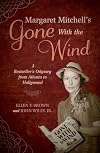
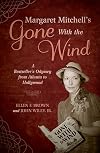
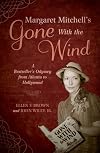
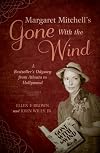
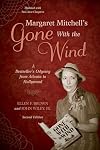
Margaret Mitchell's Gone With the Wind: A Bestseller's Odyssey from Atlanta to Hollywood
by Ellen F. Brown
On This Page
Description
"Margaret Mitchell's Gone With the Wind: A Bestseller's Odyssey from Atlanta to Hollywood" presents the first comprehensive overview of how this iconic novel became an international phenomenon that has managed to sustain the public's interest for seventy-five years. Various Mitchell biographies and several compilations of her letters tell part of the story, but, until now, no single source has revealed the full saga. This entertaining account of a literary and pop culture phenomenon tells show more how Mitchell's book was developed, marketed, distributed, and otherwise groomed for success in the 1930s-and the savvy measures taken since then by the author, her publisher, and her estate to ensure its longevity. show lessTags
Recommendations















Member Reviews
A biography of a book? Absolutely. Ellen Brown and John Wiley Jr have written a fast-paced, totally intriguing, full-of-life tome on the birth and life of Margaret Mitchell's GONE WITH THE WIND. Their excellent research into Mitchell and her husband's communications with MacMillan Publishing have produced a book that is sure to fly its way into the charts. There is nothing dry or boring about Brown and Wiley's work. They are superb writers capable of taking an unlikely subject and writing about it in a way that draws the reader in the same way a particularly well-crafted mystery might.
One learns a great deal about the publishing industry in the United States in the 1930s, foreign copyrights (which may sound boring but will actually hold show more the reader's interest), and the pain of becoming famous overnight. One empathizes with Margaret Mitchell who yearned for a quiet life in her native South, but who was thrust into the national spotlight almost overnight - and this in the days before cable TV and internet! Brown and Wiley's book - although only secondarily examining the effect of fame on someone who was not prepared for it - certainly makes us reflect on the dangers of suddenly becoming a household name.
One of the notables aspects of this book is that the reader may find that there are not a lot of likeable characters among this real-life cast. Mitchell seems like a polite Southern lady on the surface, but her way of dealing with the reality of her new life and the publishing world may make a few readers throw up their hands. Particularly uncomfortable are the control issues exhibited by John Marsh, Mitchell's husband. Although some may view it as sweet that a husband would go to such extents to protect his wife, others will raise eyebrows at the extent Marsh went to control issues far beyond what he could actually dictate.
The crew at MacMillian - Unconcerned? Incompetent? Always on vacation? There are questions raised on every page - and often answered - about the way the publishing industry went about business in the 1930s. Brown and Wiley manage to write about the tightrope between pleasing the author and making money in such a way that we feel we are crossing that tightrope as we read about their daily concerns. It is difficult to imagine that anyone has written a book that exposes the publishing industry in quite this way.
Mitchell's brother? David O. Selznick? Marion Saunders, the foreign rights' agent? Not one of these real-life characters seems very likeable. Of course, this isn't a book about participants in a personality contest. It reads more like a competition for the right to be deemed the biggest devil.
All of these weird personalities make fascinating reading, however, and Brown and Wiley's book is much better reading than half of what is on the market at the moment. Read it for a close-up look at the publishing industry, for insight into the effects of sudden fame, to understand more about the American South and manners in society, and for an introduction to a large cast of fascinating - although ultimately dislikable - people.
With the exception of Margaret Baugh, Mitchell's long-time secretary and Bessie Jackson, her housekeeper, it appears that there are not many people who appear in this book as likeable. That said, the book is FABULOUS. Read it. The journey is incredible. Who ever thought the biography of a book could be so compelling? show less
One learns a great deal about the publishing industry in the United States in the 1930s, foreign copyrights (which may sound boring but will actually hold show more the reader's interest), and the pain of becoming famous overnight. One empathizes with Margaret Mitchell who yearned for a quiet life in her native South, but who was thrust into the national spotlight almost overnight - and this in the days before cable TV and internet! Brown and Wiley's book - although only secondarily examining the effect of fame on someone who was not prepared for it - certainly makes us reflect on the dangers of suddenly becoming a household name.
One of the notables aspects of this book is that the reader may find that there are not a lot of likeable characters among this real-life cast. Mitchell seems like a polite Southern lady on the surface, but her way of dealing with the reality of her new life and the publishing world may make a few readers throw up their hands. Particularly uncomfortable are the control issues exhibited by John Marsh, Mitchell's husband. Although some may view it as sweet that a husband would go to such extents to protect his wife, others will raise eyebrows at the extent Marsh went to control issues far beyond what he could actually dictate.
The crew at MacMillian - Unconcerned? Incompetent? Always on vacation? There are questions raised on every page - and often answered - about the way the publishing industry went about business in the 1930s. Brown and Wiley manage to write about the tightrope between pleasing the author and making money in such a way that we feel we are crossing that tightrope as we read about their daily concerns. It is difficult to imagine that anyone has written a book that exposes the publishing industry in quite this way.
Mitchell's brother? David O. Selznick? Marion Saunders, the foreign rights' agent? Not one of these real-life characters seems very likeable. Of course, this isn't a book about participants in a personality contest. It reads more like a competition for the right to be deemed the biggest devil.
All of these weird personalities make fascinating reading, however, and Brown and Wiley's book is much better reading than half of what is on the market at the moment. Read it for a close-up look at the publishing industry, for insight into the effects of sudden fame, to understand more about the American South and manners in society, and for an introduction to a large cast of fascinating - although ultimately dislikable - people.
With the exception of Margaret Baugh, Mitchell's long-time secretary and Bessie Jackson, her housekeeper, it appears that there are not many people who appear in this book as likeable. That said, the book is FABULOUS. Read it. The journey is incredible. Who ever thought the biography of a book could be so compelling? show less
 This review was written for LibraryThing Early Reviewers.
I’ve never read a book about a book before. Instead of writing another biography of Mitchell or the making of the movie, the authors have created a nonfiction account of the making of a book. It discusses everything from the writing process to the publisher’s correspondence to selling the movie rights and defending the copyright.
I feel like this book should have been titled “Don’t Ever Write a Book If You’re An Introvert.” Poor Margaret Mitchell spent years crafting Gone With the Wind, only to discover that when it was finally finished her headaches had just begun. This book chronicles the decades of back and forth between the author and her publisher, literary agent, fans, movie producers, etc.
From the moment Mitchell show more handed the first scattered chapters over to the publisher, her privacy and free time seemed to be “gone with the wind” (sorry, I couldn’t help myself). Mitchell’s husband worked with her to manage all of the contracts/letters/lawsuits that went hand-in-hand with her success. It was amazing how one book, even a wonderful one like GWTW, could create such an avalanche of both money and stress.
The fact that the book’s success came in the midst of the Great Depression is a testament to its overwhelming popularity. People were willing to pay $3 for a copy, a huge sum at that time. The fact that America joined WWII only a few years after GWTW’s publication also had a big effect on foreign translations and distribution. Hitler even banned the book because his regime didn’t want people reading a story about strong characters surviving during a horrible war.
**SPOILERS ALERT**
I had no idea that Mitchell was hit by a car and died only 13 years after her book was published. I was completely shocked by that. I wonder what other books she might have written if she’d had a longer life.
**SPOILERS OVER**
It is a fascinating read, but I don’t think it would be for anyone who doesn’t either love Gone With the Wind or have a deep desire to get a behind the scenes look at the publishing world. As someone who loved GWTW, I enjoyed the book, but I felt it was bogged down with too much minutia in the middle. But it definitely make me want to re-read the original story again and gave me a deeper appreciation of the phenomenon that was (and is) Gone With the Wind. show less
I feel like this book should have been titled “Don’t Ever Write a Book If You’re An Introvert.” Poor Margaret Mitchell spent years crafting Gone With the Wind, only to discover that when it was finally finished her headaches had just begun. This book chronicles the decades of back and forth between the author and her publisher, literary agent, fans, movie producers, etc.
From the moment Mitchell show more handed the first scattered chapters over to the publisher, her privacy and free time seemed to be “gone with the wind” (sorry, I couldn’t help myself). Mitchell’s husband worked with her to manage all of the contracts/letters/lawsuits that went hand-in-hand with her success. It was amazing how one book, even a wonderful one like GWTW, could create such an avalanche of both money and stress.
The fact that the book’s success came in the midst of the Great Depression is a testament to its overwhelming popularity. People were willing to pay $3 for a copy, a huge sum at that time. The fact that America joined WWII only a few years after GWTW’s publication also had a big effect on foreign translations and distribution. Hitler even banned the book because his regime didn’t want people reading a story about strong characters surviving during a horrible war.
**SPOILERS ALERT**
I had no idea that Mitchell was hit by a car and died only 13 years after her book was published. I was completely shocked by that. I wonder what other books she might have written if she’d had a longer life.
**SPOILERS OVER**
It is a fascinating read, but I don’t think it would be for anyone who doesn’t either love Gone With the Wind or have a deep desire to get a behind the scenes look at the publishing world. As someone who loved GWTW, I enjoyed the book, but I felt it was bogged down with too much minutia in the middle. But it definitely make me want to re-read the original story again and gave me a deeper appreciation of the phenomenon that was (and is) Gone With the Wind. show less
This review was written for LibraryThing Early Reviewers.This book was amazing! I wished I wouldn't have waited so long to read it. This is the engrossing story of how a national bestseller was made. I adore Gone With the Wind, and I found the process of how it was created enthralling. I never would have guessed that a book about the publishing and management of a book's copyright could keep me up until 3 in the morning. Margaret Mitchell created an American classic in Gone With the Wind, a book that if not everyone has read, most nearly everyone knows the reference or has seen the film. Mitchell did not publish any other books, and after reading this I understand why.
Margaret Mitchell wanted desperately to remain a private person in the midst of a bestselling juggernaut. She and her husband show more went to great lengths to insure her privacy and the protection of her literary masterpiece. Having unwillingly been thrust into the public spotlight at one time myself, I felt a great empathy and kinship with the Margaret Mitchell of this book. She and her husband suffered poor health, yet were the subject of gossip, intellectual theft, and the machinations of greedy people through the wonderful story she created.
One of the aspects of the book I found particularly intriguing was the problems of international copyright - especially during World War II. I was troubled by how little an author's intellectual property is respected in other countries. Mitchell and her husband's efforts to protect her novel were fascinating, yet troubling. I've seen some foreign covers for famous books which appear to be poorly made and the cover having absolutely nothing to do with the novel, and it all makes sense after reading this book. She and her husband were definitely ahead of their time in trying to protect their property.
Mitchell also was ahead of her time when fighting for quality printing. She fought for better bindings and paper on several occasions. I find this admirable, being a book collector myself. Granted, she had the clout to do so, but this is a very pressing problem. I imagine many don't see it since we apparently are supposed to read only e-books, but I adore the paper book for many reasons and for a play on a famous Charlton Heston quote "you have to pry it from my cold, dead hands."
Having not heard of Mitchell's tragic end and the fallout from it, I found it particularly distressing after I felt so much a part of their world during the reading of this book. After Mitchell and her husband's deaths, the path of the rights of the novel was fascinating and disturbing at the same time. The quest for a sequel and commercialization were fairly recent additions to the Gone With the Wind story. I read Alexandra Ripley's Scarlett, which I found out of character with the original book and coarse. I couldn't bring myself to read Rhett's People, having been so disappointed with Scarlett. The rights were supposed to travel through the family, but Mitchell's brother gave them to his law partners. In the past 20 years or so, Gone With the Wind has been so highly commercialized, I find it sad. Mitchell clearly did not want sequels or film adaptations, yet that is clearly what the estate is doing today. They seem more interested in making money than protecting the story Margaret Mitchell and her husband fought so hard for so many years to protect.
I found this book a wonderful tale of a surprise bestseller as well as a tale about what happens to someone who becomes an unwitting celebrity. Brown and Wiley created a very readable book that was very well researched and plotted out to perfection. I was drawn into Mitchell's world and followed her along the path from relative unknown reporter to superstar author. This is the best book I've read in a while, and I never thought I would find such delight in a book about a book. This one is definitely staying in my library, for it is a fascinating tale of love, money, war, and intrigue. What more could you ask from a classic American success story? show less
Margaret Mitchell wanted desperately to remain a private person in the midst of a bestselling juggernaut. She and her husband show more went to great lengths to insure her privacy and the protection of her literary masterpiece. Having unwillingly been thrust into the public spotlight at one time myself, I felt a great empathy and kinship with the Margaret Mitchell of this book. She and her husband suffered poor health, yet were the subject of gossip, intellectual theft, and the machinations of greedy people through the wonderful story she created.
One of the aspects of the book I found particularly intriguing was the problems of international copyright - especially during World War II. I was troubled by how little an author's intellectual property is respected in other countries. Mitchell and her husband's efforts to protect her novel were fascinating, yet troubling. I've seen some foreign covers for famous books which appear to be poorly made and the cover having absolutely nothing to do with the novel, and it all makes sense after reading this book. She and her husband were definitely ahead of their time in trying to protect their property.
Mitchell also was ahead of her time when fighting for quality printing. She fought for better bindings and paper on several occasions. I find this admirable, being a book collector myself. Granted, she had the clout to do so, but this is a very pressing problem. I imagine many don't see it since we apparently are supposed to read only e-books, but I adore the paper book for many reasons and for a play on a famous Charlton Heston quote "you have to pry it from my cold, dead hands."
Having not heard of Mitchell's tragic end and the fallout from it, I found it particularly distressing after I felt so much a part of their world during the reading of this book. After Mitchell and her husband's deaths, the path of the rights of the novel was fascinating and disturbing at the same time. The quest for a sequel and commercialization were fairly recent additions to the Gone With the Wind story. I read Alexandra Ripley's Scarlett, which I found out of character with the original book and coarse. I couldn't bring myself to read Rhett's People, having been so disappointed with Scarlett. The rights were supposed to travel through the family, but Mitchell's brother gave them to his law partners. In the past 20 years or so, Gone With the Wind has been so highly commercialized, I find it sad. Mitchell clearly did not want sequels or film adaptations, yet that is clearly what the estate is doing today. They seem more interested in making money than protecting the story Margaret Mitchell and her husband fought so hard for so many years to protect.
I found this book a wonderful tale of a surprise bestseller as well as a tale about what happens to someone who becomes an unwitting celebrity. Brown and Wiley created a very readable book that was very well researched and plotted out to perfection. I was drawn into Mitchell's world and followed her along the path from relative unknown reporter to superstar author. This is the best book I've read in a while, and I never thought I would find such delight in a book about a book. This one is definitely staying in my library, for it is a fascinating tale of love, money, war, and intrigue. What more could you ask from a classic American success story? show less
This review was written for LibraryThing Early Reviewers.One of my favorite books (and favorite movies) is Margaret Mitchell’s Gone With the Wind. I’m not alone in my opinion, it seems - GWTW is thought to be one of the ten most widely read books in the world, right up there with The Bible and Harry Potter and The DaVinci Code.
It’s hard to believe that such a popular book was the author’s first and only novel, but as Ellen Brown and John Wiley Jr. explain in their new book – which is not so much a biography of Mitchell as of GWTW itself – the instant bestseller proved to be such a behemoth that it dominated Mitchell’s time and energy for decades. From the beginning, Mitchell was under pressure; her manuscript was in disarray and it very nearly missed its publication date. A show more brilliant marketing campaign by Macmillan, her American publisher, created an insatiable demand for GWTW. The book’s popularity was on a scale unprecedented in the industry, but with critical acclaim came voracious fans and never-ending requests for Mitchell’s time. Worse still, copyright protection laws for American authors in foreign countries were weak or nonexistent, and Mitchell and her family (first her husband and later her brother, too) constantly fought to protect the author’s work.
This book is fascinating. Although I knew that I liked GWTW, I never realized the huge impact the book had on how books are marketed and distributed. The Mitchell Estate has been a powerhouse in protecting the rights of authors both in America and overseas, whether they were chasing down rogue publishers printing pirated copies of the novel or stopping the production of unauthorized sequels and merchandise. GWTW is not just a novel, it’s an entire industry – and I had no idea.
Reading about Margaret Mitchell’s life after the novel was released really highlights the American obsession with celebrity. She disliked public speaking, and absolutely refused to go on speaking tours or make public speeches. (Can you imagine a first-time author refusing such publicity today?) She had great respect for her fans, and endeavored to answer each letter she received (sometimes dozens or hundreds each day) – if anyone wants to know why a second novel never appeared, I’d blame the mountain of correspondence. Although some of her choices might come across as ungrateful – at one point she decided that she would cease to sign books, and stuck to the decision for the rest of her life – the book also reveals just how detrimental the attention was to her health, and how completely her story took over both her life and her husband’s.
But I found the second half of the book even more interesting. It covers the history of GWTW after Mitchell’s death, when management of the Mitchell Estate passed to her husband, her brother, and ultimately to a group of lawyers who continue to defend the work today. The book has never gone out of print, largely to the careful management and marketing that continues today. I’m left wondering if the book would have experienced the same longevity and success if the movie hadn’t been such a hit. If the author hadn’t worked so vigilantly to protect the book in overseas market, would the copyright laws be in their present state or would they still be as weak as they were in the 1930s-50s?
It feels strange to call this the “biography of a book” but that’s essentially what Margaret Mitchell’s Gone With the Wind is. If you’re a fan of the original novel, or if you’re interested in the publishing world, it’s a fascinating study of one book’s impact on an author’s life, on an industry, and on the world. show less
It’s hard to believe that such a popular book was the author’s first and only novel, but as Ellen Brown and John Wiley Jr. explain in their new book – which is not so much a biography of Mitchell as of GWTW itself – the instant bestseller proved to be such a behemoth that it dominated Mitchell’s time and energy for decades. From the beginning, Mitchell was under pressure; her manuscript was in disarray and it very nearly missed its publication date. A show more brilliant marketing campaign by Macmillan, her American publisher, created an insatiable demand for GWTW. The book’s popularity was on a scale unprecedented in the industry, but with critical acclaim came voracious fans and never-ending requests for Mitchell’s time. Worse still, copyright protection laws for American authors in foreign countries were weak or nonexistent, and Mitchell and her family (first her husband and later her brother, too) constantly fought to protect the author’s work.
This book is fascinating. Although I knew that I liked GWTW, I never realized the huge impact the book had on how books are marketed and distributed. The Mitchell Estate has been a powerhouse in protecting the rights of authors both in America and overseas, whether they were chasing down rogue publishers printing pirated copies of the novel or stopping the production of unauthorized sequels and merchandise. GWTW is not just a novel, it’s an entire industry – and I had no idea.
Reading about Margaret Mitchell’s life after the novel was released really highlights the American obsession with celebrity. She disliked public speaking, and absolutely refused to go on speaking tours or make public speeches. (Can you imagine a first-time author refusing such publicity today?) She had great respect for her fans, and endeavored to answer each letter she received (sometimes dozens or hundreds each day) – if anyone wants to know why a second novel never appeared, I’d blame the mountain of correspondence. Although some of her choices might come across as ungrateful – at one point she decided that she would cease to sign books, and stuck to the decision for the rest of her life – the book also reveals just how detrimental the attention was to her health, and how completely her story took over both her life and her husband’s.
But I found the second half of the book even more interesting. It covers the history of GWTW after Mitchell’s death, when management of the Mitchell Estate passed to her husband, her brother, and ultimately to a group of lawyers who continue to defend the work today. The book has never gone out of print, largely to the careful management and marketing that continues today. I’m left wondering if the book would have experienced the same longevity and success if the movie hadn’t been such a hit. If the author hadn’t worked so vigilantly to protect the book in overseas market, would the copyright laws be in their present state or would they still be as weak as they were in the 1930s-50s?
It feels strange to call this the “biography of a book” but that’s essentially what Margaret Mitchell’s Gone With the Wind is. If you’re a fan of the original novel, or if you’re interested in the publishing world, it’s a fascinating study of one book’s impact on an author’s life, on an industry, and on the world. show less
This review was written for LibraryThing Early Reviewers.I first knew about “Gone With the Wind” from hearing about the movie. In the late 1960s, (when I was 14), the film was re-released, and I saw it in a local theatre, on the wide screen. I was so taken with the film, I had to read the book, and purchased a paperback copy for a (then) whopping $1.25, and could not put it down. Since then, I’ve seen the movie twice on the big screen, numerous times on TV and DVD, and delightedly inherited a 1938 edition of the book from a great-aunt, which I read twice. In 2002, I visited Atlanta for a family wedding and stayed at the Georgian Terrace Hotel, where several social functions were held for the 1939 premiere of the filmed version of “GWTW”, and visited the Margaret Mitchell house where show more she wrote the novel.
That said, I was thrilled to be selected by Library Thing to get a review copy of “Margaret Mitchell’s Gone With the Wind: A Bestseller’s Odyssey from Atlanta to Hollywood”. This incredibly well researched book is a fascinating read for anyone who is a fan of the novel or the film, or anyone in the publishing world. It tells us the story of what is perhaps the most famous great American epic novel, from conception to afterlife.
The authors introduce us to Margaret Mitchell – a gentle Southerner who never wanted all the attention and acclaim she received from her one and only work of literature. She wrote the book over a period of several years, the various chapters haphazardly stacked in manila envelopes all over her tiny residence.
She was urged by a friend, Lois Cole, who worked for Macmillan Publishing, to send the manuscript to Macmillan, and the publisher realized they had gold on their hands. From there, Margaret Mitchell’s life (and that of her husband, John Marsh) was forever changed.
This book is filled with nuggets of information and details about every step in the life of GWTW. What was most surprising to me was the reluctance of Ms. Mitchell to participate in so many events surrounding the publication of GWTW, which was the most highly anticipated novel in years. Conversely, after the publication, she maintained a private persona, but answered every fan letter, signed hundreds of copies of the book that were sent to her home for signature, and was stopped constantly by fans all over Atlanta as she went about her daily life.
The book also gives us insight into the intricate and convoluted web of contracts and ensuing lawsuits that were to plague Margaret Mitchell, starting with the movie rights. Naively, Mitchell and Marsh allowed Macmillan to broker the deal with David O. Selznick rather than get involved with an agent who would have most likely gotten them a lot more money than the $50,000 they received. It was also of interest to note that at times, it seemed like Macmillan shirked some responsibility, most notably allowing Mitchell to navigate the shark infested waters of foreign copyrights and royalties by herself. They had lawsuits over piracy, royalties and copyrights in various parts of the world at any given time for a period of many years. After World War II, the Marshes were to discover that the agent they believed in had embezzled more than $30,000 of royalties from them.
“Gone With the Wind” lives on. After Mitchell’s untimely death in 1949, her literary estate passed to her husband John Marsh, and eventually to her brother, Stephens Mitchell, who was also her attorney. Her estate carefully protects Scarlett, Rhett, and “Gone With the Wind”, some 75 years after its publication.
This engrossing, well written book proves that “Gone With the Wind” still fascinates the public, and will continue to do so for generations to come. show less
That said, I was thrilled to be selected by Library Thing to get a review copy of “Margaret Mitchell’s Gone With the Wind: A Bestseller’s Odyssey from Atlanta to Hollywood”. This incredibly well researched book is a fascinating read for anyone who is a fan of the novel or the film, or anyone in the publishing world. It tells us the story of what is perhaps the most famous great American epic novel, from conception to afterlife.
The authors introduce us to Margaret Mitchell – a gentle Southerner who never wanted all the attention and acclaim she received from her one and only work of literature. She wrote the book over a period of several years, the various chapters haphazardly stacked in manila envelopes all over her tiny residence.
She was urged by a friend, Lois Cole, who worked for Macmillan Publishing, to send the manuscript to Macmillan, and the publisher realized they had gold on their hands. From there, Margaret Mitchell’s life (and that of her husband, John Marsh) was forever changed.
This book is filled with nuggets of information and details about every step in the life of GWTW. What was most surprising to me was the reluctance of Ms. Mitchell to participate in so many events surrounding the publication of GWTW, which was the most highly anticipated novel in years. Conversely, after the publication, she maintained a private persona, but answered every fan letter, signed hundreds of copies of the book that were sent to her home for signature, and was stopped constantly by fans all over Atlanta as she went about her daily life.
The book also gives us insight into the intricate and convoluted web of contracts and ensuing lawsuits that were to plague Margaret Mitchell, starting with the movie rights. Naively, Mitchell and Marsh allowed Macmillan to broker the deal with David O. Selznick rather than get involved with an agent who would have most likely gotten them a lot more money than the $50,000 they received. It was also of interest to note that at times, it seemed like Macmillan shirked some responsibility, most notably allowing Mitchell to navigate the shark infested waters of foreign copyrights and royalties by herself. They had lawsuits over piracy, royalties and copyrights in various parts of the world at any given time for a period of many years. After World War II, the Marshes were to discover that the agent they believed in had embezzled more than $30,000 of royalties from them.
“Gone With the Wind” lives on. After Mitchell’s untimely death in 1949, her literary estate passed to her husband John Marsh, and eventually to her brother, Stephens Mitchell, who was also her attorney. Her estate carefully protects Scarlett, Rhett, and “Gone With the Wind”, some 75 years after its publication.
This engrossing, well written book proves that “Gone With the Wind” still fascinates the public, and will continue to do so for generations to come. show less
This review was written for LibraryThing Early Reviewers.The over-wrought saga of producer David O. Selznick bringing “Gone with the Wind” to the screen has been told in books and movies, particularly the nation-wide search for an actress to play the irrepressible Scarlett O’Hara. Famously, the movie began shooting even before Vivien Leigh was cast as the heroine. Now Ellen Brown and John Wiley offer a book that shows the creation of the novel and protection of it over the years is an even more involved tale in “Margaret Mitchell’s Gone with the Wind: A Bestseller’s Odyssey from Atlanta to Hollywood.”
Drawn from existing research and from the author’s extensive collection of letters, many never before seen outside the family, the work paints an engrossing portrait of Mitchell. show more Short of stature, but full of personality, the fledgling novelist was an insecure writer, convinced that her manuscript was unworthy of attention. Indeed, the description of Mitchell’s writing process, with bundles and envelopes of various chapters stacked throughout her apartment, accumulating over the years, suggest that publication in any form was a minor miracle.
After the project was discovered by editors at Macmillan through a personal friend of Mitchell’s who worked for the publishing house, there was a lengthy and careful negotiation, convincing Mitchell and her husband John Marsh that the book should be published, and helping them through the process of finishing and editing the manuscript. In fact, the business aspect of the novel cannot be underestimated; this process of negotiating with publishers, including dozens overseas, over issues of royalties and copyright would dominate the rest of Mitchell’s life and her estate for decades.
In the hands of lesser authors, the extended saga of overseas publication and copyright protection could be bland, if not completely unreadable. Instead, the complications, including the disruptions caused by World War II, coupled with the enormous success of the novel around the world offer insight into the strong-willed Mitchell, who with her husband was personally involved in these business matters over the years.
In many ways, the success of the novel (and then the Hollywood adaptation) was far beyond anyone’s dreams for the material, bringing as many complications as opportunities. Unlike many authors eager to gain celebrity status – either to sell more books or to gratify their own egos, or both – Mitchell consistently avoided the limelight. Despite the advance publicity for the novel and film, the author made only a handful of promotional appearances and gave only a couple of interviews. Often, Mitchell’s desire for privacy was as much a burden as if she had participated actively in promoting her book.
After Mitchell’s untimely death, the story of the novel continued, with rights transferring first to Marsh and then to Mitchell’s brother Stephens, who made the decision to finally authorize a sequel – something Margaret Mitchell staunchly refused to do throughout her life.
Overall, the book is surprising and engrossing, an unexpected page-turner about the award-winning novel that many feel is one of the great books of all time. In this history, authors Brown and Wiley discover a character as compelling as the feisty Scarlett O’Hara in the courteous, insecure, and tough as nails Margaret Mitchell. show less
Drawn from existing research and from the author’s extensive collection of letters, many never before seen outside the family, the work paints an engrossing portrait of Mitchell. show more Short of stature, but full of personality, the fledgling novelist was an insecure writer, convinced that her manuscript was unworthy of attention. Indeed, the description of Mitchell’s writing process, with bundles and envelopes of various chapters stacked throughout her apartment, accumulating over the years, suggest that publication in any form was a minor miracle.
After the project was discovered by editors at Macmillan through a personal friend of Mitchell’s who worked for the publishing house, there was a lengthy and careful negotiation, convincing Mitchell and her husband John Marsh that the book should be published, and helping them through the process of finishing and editing the manuscript. In fact, the business aspect of the novel cannot be underestimated; this process of negotiating with publishers, including dozens overseas, over issues of royalties and copyright would dominate the rest of Mitchell’s life and her estate for decades.
In the hands of lesser authors, the extended saga of overseas publication and copyright protection could be bland, if not completely unreadable. Instead, the complications, including the disruptions caused by World War II, coupled with the enormous success of the novel around the world offer insight into the strong-willed Mitchell, who with her husband was personally involved in these business matters over the years.
In many ways, the success of the novel (and then the Hollywood adaptation) was far beyond anyone’s dreams for the material, bringing as many complications as opportunities. Unlike many authors eager to gain celebrity status – either to sell more books or to gratify their own egos, or both – Mitchell consistently avoided the limelight. Despite the advance publicity for the novel and film, the author made only a handful of promotional appearances and gave only a couple of interviews. Often, Mitchell’s desire for privacy was as much a burden as if she had participated actively in promoting her book.
After Mitchell’s untimely death, the story of the novel continued, with rights transferring first to Marsh and then to Mitchell’s brother Stephens, who made the decision to finally authorize a sequel – something Margaret Mitchell staunchly refused to do throughout her life.
Overall, the book is surprising and engrossing, an unexpected page-turner about the award-winning novel that many feel is one of the great books of all time. In this history, authors Brown and Wiley discover a character as compelling as the feisty Scarlett O’Hara in the courteous, insecure, and tough as nails Margaret Mitchell. show less
This review was written for LibraryThing Early Reviewers.Margaret Mitchell (1900-1949) grew up in Atlanta, listening to older folks telling stories of the Civil War (1861-1865). While recuperating from an ankle injury in 1926 that largely confined her to her home, Mitchell began writing a novel set in Georgia during the 1860s and 1870s that drew upon the tales she had heard as a child. In her mind, she mapped out the complete story and, using a technique she had learned as a newspaper reporter, began writing from the end.
Mitchell's book, of course, developed into Gone With the Wind. Macmillan published it in 1936, and the lives of its author and her husband, John Marsh, were never the same. GWTW enjoyed unprecedented success, and the Marshes found themselves plowing new territory as they, show more along with Margaret's brother, attorney Stephens Mitchell, negotiated movie contracts, licensing agreements, and foreign rights. The last of these proved to be especially vexing, especially in light of the complications caused by World War II. Macmillan could not be relied upon for help; indeed, relations with the company seemed at times to border on another civil war. In addition to the all-encompassing task of ensuring that her literary rights were respected, Mitchell had to contend with a flood of fans who wanted autographs, mementoes, and money. A reason why she never wrote another book was that she couldn't endure it again.
Ellen F. Brown and John Wiley have done an admirable job of telling the GWTW story. Their extensive research draws upon Mitchell's papers, private collections, and interviews, brought together in an engaging style that keeps readers turning the pages. GWTW enthusiasts will enjoy reading its "biography," but this book's value goes beyond GWTW to chronicle the evolution of authors' rights and to present a revealing look at mid-twentieth-century publishing. A very enjoyable and enlightening book; highly recommended. show less
Mitchell's book, of course, developed into Gone With the Wind. Macmillan published it in 1936, and the lives of its author and her husband, John Marsh, were never the same. GWTW enjoyed unprecedented success, and the Marshes found themselves plowing new territory as they, show more along with Margaret's brother, attorney Stephens Mitchell, negotiated movie contracts, licensing agreements, and foreign rights. The last of these proved to be especially vexing, especially in light of the complications caused by World War II. Macmillan could not be relied upon for help; indeed, relations with the company seemed at times to border on another civil war. In addition to the all-encompassing task of ensuring that her literary rights were respected, Mitchell had to contend with a flood of fans who wanted autographs, mementoes, and money. A reason why she never wrote another book was that she couldn't endure it again.
Ellen F. Brown and John Wiley have done an admirable job of telling the GWTW story. Their extensive research draws upon Mitchell's papers, private collections, and interviews, brought together in an engaging style that keeps readers turning the pages. GWTW enthusiasts will enjoy reading its "biography," but this book's value goes beyond GWTW to chronicle the evolution of authors' rights and to present a revealing look at mid-twentieth-century publishing. A very enjoyable and enlightening book; highly recommended. show less
This review was written for LibraryThing Early Reviewers.Members
- Recently Added By
Author Information
1 Work 136 Members
Ellen F. Brown is a rare book dealer and freelance writer specializing in stories about antiquarian bodies and the rare book industry. She lives in Richmond. Virginia. John Wiley, Jr., owns one of the largest collections of Gone With the Wind memorabilia in private hands, including every American edition of the novel and more than seven hundred show more foreign editions. He writes a quarterly newsletter, The Scarlett Letter, for GWTW fans and collectors. show less
Work Relationships
Is a study of
Common Knowledge
- People/Characters
- Margaret Mitchell; David O. Selznick; Vivien Leigh; Clarke Gable; Alice Randall; Daniel McCaig (show all 7); Alexandra Ripley
- Important places
- Atlanta, Georgia, USA; New York, New York, USA
- Related movies
- Gone with the Wind (1939 | IMDb)
Classifications
Statistics
- Members
- 136
- Popularity
- 239,639
- Reviews
- 30
- Rating
- (4.20)
- Languages
- English
- Media
- Paper, Ebook
- ISBNs
- 5
- ASINs
- 2