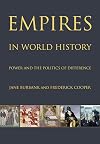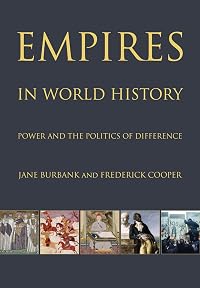
Empires in World History: Power and the Politics of Difference
by Jane Burbank, Frederick Cooper
On This Page
Description
How empires have used diversity to shape the world order for more than two millenniaEmpires—vast states of territories and peoples united by force and ambition—have dominated the political landscape for more than two millennia. Empires in World History departs from conventional European and nation-centered perspectives to take a remarkable look at how empires relied on diversity to shape the global order. Beginning with ancient Rome and China and continuing across Asia, Europe, the show more Americas, and Africa, Jane Burbank and Frederick Cooper examine empires' conquests, rivalries, and strategies of domination—with an emphasis on how empires accommodated, created, and manipulated differences among populations.Burbank and Cooper examine Rome and China from the third century BCE, empires that sustained state power for centuries. They delve into the militant monotheism of Byzantium, the Islamic Caliphates, and the short-lived Carolingians, as well as the pragmatically tolerant rule of the Mongols and Ottomans, who combined religious protection with the politics of loyalty. Burbank and Cooper discuss the influence of empire on capitalism and popular sovereignty, the limitations and instability of Europe's colonial projects, Russia's repertoire of exploitation and differentiation, as well as the "empire of liberty"—devised by American revolutionaries and later extended across a continent and beyond.With its investigation into the relationship between diversity and imperial states, Empires in World History offers a fresh approach to understanding the impact of empires on the past and present. show lessTags
Recommendations
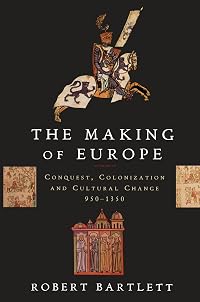
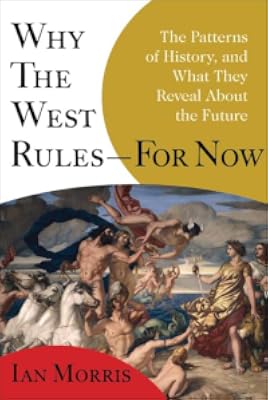
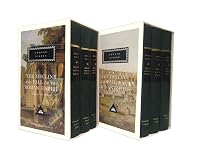
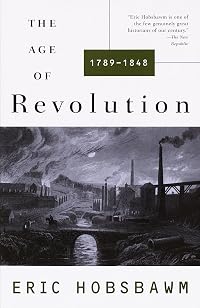





Member Reviews
There are a number of places in this book where I felt the authors let their criticisms of the US, and to a lesser extent of Europe, get out of balance with their criticisms of non-Western empires. E.g. there seemed to be an emphasis on the (well-studied, "popular") failings of Western colonialism but Ottoman and Chinese (historical and current) population destruction, movements, etc. were treated... blandly? Uncritically (in the common sense of the word)? This is perhaps the result of bias: as Americans (as I am) it is easier and more comfortable (in the dominant academic and progressive culture, clearly not in conservative or reactionary segments) to "judge" ourselves.
To be clear (see 5 stars) this did not diminish the book greatly, show more in my view, but it did stick out in a number of places. That critique aside, this book explores how empires have managed people throughout history and indirectly (and in one or two places in the conclusion more directly) asks the questions, "Were/are empires all bad?" and, "What has nationalism/the nation-state gotten wrong?" show less
To be clear (see 5 stars) this did not diminish the book greatly, show more in my view, but it did stick out in a number of places. That critique aside, this book explores how empires have managed people throughout history and indirectly (and in one or two places in the conclusion more directly) asks the questions, "Were/are empires all bad?" and, "What has nationalism/the nation-state gotten wrong?" show less
Ratings
Members
- Recently Added By
Lists

Big History
72 works; 1 member
Author Information

7+ Works 322 Members
Jane Burbank is Professor of History and Russian and Slavic Studies at New York University.
1 Work 1 Member
Awards and Honors
Awards
Common Knowledge
- Original publication date
- 2010
Classifications
Statistics
- Members
- 209
- Popularity
- 156,791
- Reviews
- 1
- Rating
- (3.70)
- Languages
- 5 — Chinese, English, German, Spanish, Turkish
- Media
- Paper, Ebook
- ISBNs
- 8
- ASINs
- 5