On This Page
Description
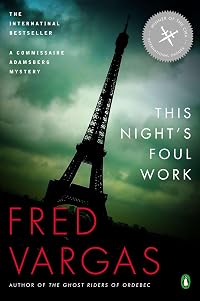
On the outskirts of Paris, two men have been found with their throats cut, and despite the common assumption that the crime is a drug-related incident, Commissaire Adamsberg becomes convinced that the deaths are the work of a serial killer with split personalities and enlists the assistance of pathologist Ariane Lagarde to help him unravel the truth.Tags
Recommendations














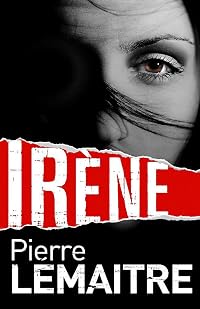



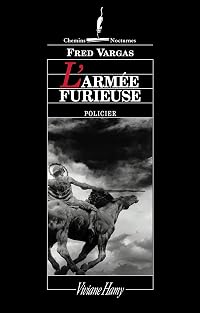





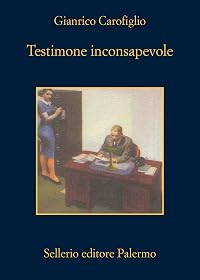
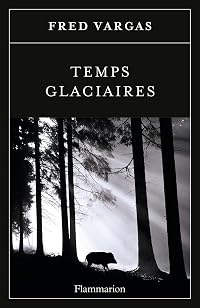










Member Recommendations


LongDogMom Both books are police procedurals with a quirky detective that injects humour into a serious murder mystery.
Member Reviews
Wow. I am very impressed with Vargas' ability to use her scientific background to create an amazing and complex plot. She whips local feuds, revenge, dissociation disorder, jealousy, and superstition into a frenzy of a foundation for an excellent mystery.
Her story lines usually are mostly cerebral with little action. But In This Night's Foul Work she uses both:science, much thinking by Adamsberg, Danglard, Retancourt and others, and tons of physical action by virtually everyone. Vargas has also more fully developed the personalities of Adamsberg's team, revealing their unique strengths and weaknesses.
I particularly noted the line on p.99:"When women went off the rails, Adamsberg said; the world seemed to teter on its axis."
Speaks to show more how men view women as virtually invisible, and while taking them for granted, also hold them to a 'higher' moral standard, placing them on the proverbial pedestal. This may be why Adamsberg and others felt sick arresting a woman serial killer prior to their current case.
An excellent, smart and gripping read. show less
Her story lines usually are mostly cerebral with little action. But In This Night's Foul Work she uses both:science, much thinking by Adamsberg, Danglard, Retancourt and others, and tons of physical action by virtually everyone. Vargas has also more fully developed the personalities of Adamsberg's team, revealing their unique strengths and weaknesses.
I particularly noted the line on p.99:"When women went off the rails, Adamsberg said; the world seemed to teter on its axis."
Speaks to show more how men view women as virtually invisible, and while taking them for granted, also hold them to a 'higher' moral standard, placing them on the proverbial pedestal. This may be why Adamsberg and others felt sick arresting a woman serial killer prior to their current case.
An excellent, smart and gripping read. show less
Fifth in the Adamsberg series, and another where one of the Three Evangelists has a walk-on part as an expert. The Commissaire has more or less recovered from his nasty experiences in Quebec and is starting to get used to the idea of being a father, but another unpleasant story from his distant past seems to have come back to bite him. And he's confronted not only with a new subordinate who insists on speaking in alexandrines, but also with a baffling set of incidents that are obviously all linked, since this is a crime novel after all, but for the first three hundred pages or so they stubbornly resist falling into place. Once again, it turns out to be a mystery that can only be solved by refusing to follow strictly logical lines. show more
Together with Sous les vents de Neptune, this is one of the best I've read so far in the series: Vargas gives herself the time and space to explore her large cast of characters in some depth, and there's a good balance between mystery, suspense and comedy. It is one that you shouldn't read out of sequence if you can avoid it, because there is information in the next book that removes at least some of the doubts you're supposed to have whilst reading this one.
(I was puzzled by the English title, which looks as though it should be another line from Macbeth but isn't: according to Wikipedia it's taken from the translation of one of the many lines of verse in the text. The French title relies on a pun that doesn't work in English, so in this case it's pretty obvious why the English publishers had to come up with something else.) show less
Together with Sous les vents de Neptune, this is one of the best I've read so far in the series: Vargas gives herself the time and space to explore her large cast of characters in some depth, and there's a good balance between mystery, suspense and comedy. It is one that you shouldn't read out of sequence if you can avoid it, because there is information in the next book that removes at least some of the doubts you're supposed to have whilst reading this one.
(I was puzzled by the English title, which looks as though it should be another line from Macbeth but isn't: according to Wikipedia it's taken from the translation of one of the many lines of verse in the text. The French title relies on a pun that doesn't work in English, so in this case it's pretty obvious why the English publishers had to come up with something else.) show less
In this installment of Fred Vargas' crime series featuring Commissaire Adamsberg, there is a new member of the Serious Crime Squad: a man who often speaks in twelve-syllable alexandrine verse. Adamsberg's unorthodox hunt for a dissociative serial killer produces rifts between the squad's positivists and the cloud-shovellers who maintain faith in his willingness to incorporate seeming coincidences into the investigation. Backed by a variety of characters serving as Greek chorus, this novel finds Adamsberg hauling around a pair of 10-point antlers, confronting childhood vulnerabilities, and following around a cat tagged with a tracking device. He also finds time to read to his infant son, as in the following passage:
Adamsberg put the book show more down, meeting his son's gaze.
"I don't know what the hell the 'opus spicutum' is, son, and I don't care. So we can agree about that. But I'm going to teach you how we resolve a problem like this when it crops up in our lives. How to proceed when you don't understand something. Just watch."
Adamsberg took out his mobile and slowly tapped out a number under the child's unconcerned eyes.
"What you do is you call Danglard," he explained. "It's quite simple. Just remember that, always keep his phone number about you."
I rate this novel at 8 out of 10 stars. show less
Adamsberg put the book show more down, meeting his son's gaze.
"I don't know what the hell the 'opus spicutum' is, son, and I don't care. So we can agree about that. But I'm going to teach you how we resolve a problem like this when it crops up in our lives. How to proceed when you don't understand something. Just watch."
Adamsberg took out his mobile and slowly tapped out a number under the child's unconcerned eyes.
"What you do is you call Danglard," he explained. "It's quite simple. Just remember that, always keep his phone number about you."
I rate this novel at 8 out of 10 stars. show less
Vargas writes with precision and directness about vague thoughts and actions, intuitions, and twisted, strangled conversations. She creates characters who push the boundaries of normality and jams them all into one car or police station or pub. She revives ancient mysteries and uses them to motivate murders (with much throat slashing). She does not plod or plot herself through a novel, she breaks all standard police procedure, and she bounces from one revelation to the final one, often without logic or any planning on the part of her head detective. Her mysteries are different and both enjoyable and infuriating. I suspect that is why she has done so well. I shall continue reading her.
In Foul Work she focuses on the apparently show more dysfunctional crime squad run by head detective Adamsberg. And the dysfunctional cat that lives on the copier. But dysfunction solves the offbeat crimes missed by the rest of France's police forces. show less
In Foul Work she focuses on the apparently show more dysfunctional crime squad run by head detective Adamsberg. And the dysfunctional cat that lives on the copier. But dysfunction solves the offbeat crimes missed by the rest of France's police forces. show less
I love Fred Vargas. Her books are amazing, intricate, twisty matrixes (the last making them difficult to talk about), filled with strange but endearing characters and beautifully unexpected imagery. Commissaire Jean-Baptisite Adamsberg has already displaced Lord Peter Whimsy in my affections, and he is on his way to dislodging Mr. Holmes from his long-held position as my favorite detective. Yes, they're that good.
Being more than a little bit fond of the Jean-Baptiste Adamsberg series I was very annoyed with myself when I got a bit behind with the releases and had to make an effort to catch up. Poor me. So tragic. Having to spend some time with one of my favourite, eccentric detectives and the rest of his team of mildly odd compatriots.
THIS NIGHT'S FOUL WORK sees Adamsberg team pretty well settled, so the introduction of any new lieutenant could be complicated. Louis Veyrenc is even more disruptive, with his tendency to speak in verse (twelve-syllable alexandrines to be accurate), to say nothing of his oddly striped hair and his deeply held, childhood grudge against Adamsberg. Which grudge Adamsberg is pretty well oblivious to until slapped over show more the head with the evidence. He's somewhat preoccupied by the return into his life of old nemesis Ariane Legarde, pathologist, and Adamsberg enemy since he questioned her conclusions in a case twenty-three years earlier. But there are crimes at the centre of this book and typically baffling at that. You can only guess at what the connection could be between the ritual killing of stags in the hills of Normandy, two local "lads" found murdered after raiding the graves of recently deceased spinsters, and the escape from prison of a seventy-five-year old multiple killer nurse that Adamsberg has dealt with before.
Needless to say THIS NIGHT'S FOUL WORK has a wonderful feeling of the Gothic about it. Odd glimpses of shadowy figures creeping around graveyards; curses past and present; places with strange histories; things going bump in the night in Adamsberg's new house; childhood grudges; deeply held beliefs; long enmities and friction. Lots and lots of friction. All of action swirls around Adamsberg as he sort of floats through life. He's more a cerebral than rush around detective, prone to leaps of faith and acute observations - his odd behaviour is no longer regarded as anything out of the ordinary by a team which kind of specialises in odd behaviour. But this team is also capable of immense kindness, understanding and support for each other - they are the perfect group to spend time with if you like things just that little bit batty.
If you're not aware of this series - Fred Vargas is the pen name of Frédérique Audouin-Rouzeau, French medievalist and archaeologist. Vargas, as of THIS NIGHT'S FOUL WORK a twice winner of the Duncan Lawrie International Dagger award, is translated by Siân Reynolds who does a sterling job at translating the language but keeping the overall feel and quirkiness of the books.
Just a quick word of warning - I rather like a series where it doesn't matter if you get them all out of order. In the main I've read the Adamsberg books all over the place but in this case, with the next book AN UNCERTAIN PLACE out already, you'd really be best to read THIS NIGHT'S FOUL WORK first. Without this, earlier, book I suspect a reader could get bamboozled otherwise as there's a lot of setup for AN UNCERTAIN PLACE in THIS NIGHT'S FOUL WORK.
Needless to say I just love these books. But really - don't read them if you're looking for precise behaviour, keen logic, rules and regulations being followed, and no idiosyncrasies. Do read them if you're looking for humour, darkness, quirky, a hugely entertaining police procedurals... well police scenarios. Let's go with that... show less
THIS NIGHT'S FOUL WORK sees Adamsberg team pretty well settled, so the introduction of any new lieutenant could be complicated. Louis Veyrenc is even more disruptive, with his tendency to speak in verse (twelve-syllable alexandrines to be accurate), to say nothing of his oddly striped hair and his deeply held, childhood grudge against Adamsberg. Which grudge Adamsberg is pretty well oblivious to until slapped over show more the head with the evidence. He's somewhat preoccupied by the return into his life of old nemesis Ariane Legarde, pathologist, and Adamsberg enemy since he questioned her conclusions in a case twenty-three years earlier. But there are crimes at the centre of this book and typically baffling at that. You can only guess at what the connection could be between the ritual killing of stags in the hills of Normandy, two local "lads" found murdered after raiding the graves of recently deceased spinsters, and the escape from prison of a seventy-five-year old multiple killer nurse that Adamsberg has dealt with before.
Needless to say THIS NIGHT'S FOUL WORK has a wonderful feeling of the Gothic about it. Odd glimpses of shadowy figures creeping around graveyards; curses past and present; places with strange histories; things going bump in the night in Adamsberg's new house; childhood grudges; deeply held beliefs; long enmities and friction. Lots and lots of friction. All of action swirls around Adamsberg as he sort of floats through life. He's more a cerebral than rush around detective, prone to leaps of faith and acute observations - his odd behaviour is no longer regarded as anything out of the ordinary by a team which kind of specialises in odd behaviour. But this team is also capable of immense kindness, understanding and support for each other - they are the perfect group to spend time with if you like things just that little bit batty.
If you're not aware of this series - Fred Vargas is the pen name of Frédérique Audouin-Rouzeau, French medievalist and archaeologist. Vargas, as of THIS NIGHT'S FOUL WORK a twice winner of the Duncan Lawrie International Dagger award, is translated by Siân Reynolds who does a sterling job at translating the language but keeping the overall feel and quirkiness of the books.
Just a quick word of warning - I rather like a series where it doesn't matter if you get them all out of order. In the main I've read the Adamsberg books all over the place but in this case, with the next book AN UNCERTAIN PLACE out already, you'd really be best to read THIS NIGHT'S FOUL WORK first. Without this, earlier, book I suspect a reader could get bamboozled otherwise as there's a lot of setup for AN UNCERTAIN PLACE in THIS NIGHT'S FOUL WORK.
Needless to say I just love these books. But really - don't read them if you're looking for precise behaviour, keen logic, rules and regulations being followed, and no idiosyncrasies. Do read them if you're looking for humour, darkness, quirky, a hugely entertaining police procedurals... well police scenarios. Let's go with that... show less
What a lot of disparate elements come together in the plot of THIS NIGHT’S FOUL WORK by Fred Vargas. An ancient recipe for eternal life. One elderly district nurse who just happens to be a serial killer, recently escaped from gaol. Two men murdered, their throats cut in what looks like a drugs-related killing. Stags found dead in Normandy with their hearts cut out. Someone who polishes the soles of his shoes. Snowball the station cat so devoted to a policewoman that he’ll travel over thirty kilometres in search of her.
Someone close to the inquiry into the drug-related killings is manipulating the investigation.
Commissaire Jean Baptiste Adamsberg has recently returned from enforced leave and finds himself working with a pathologist show more whose apple cart he upset two decades ago. He has moved into a new house haunted by the Wicked Silent Sister, Saint Clarisse, a serial killer of gullible women, before the Revolution.
To add to the feast for the reader there are some odd, vividly drawn, characters in Adamsberg’s team: Veyrenc, the new lieutenant who spouts Racine constantly, and is assigned to guarding Camille, the mother of Adamsberg’s baby son Tom; his colleague Commandant Dangland who works ceaselessly to eliminate Unsolved Questions; Estalere who has a knack and passion for memorising trivial detail; and Retancourt, devoted to protecting Adamsberg with her own life, to name just a few.
THIS NIGHT’S FOULS WORK showcases Adamsberg at his best, sifting and sorting a smorgasbord of information. Adamsberg is equally at home in the country and in the city. His methods are eccentric but his team recognises that eventually they will solve the case. There is an eclectic mix of folklore, history, mystery and just plain human interest. I wouldn’t classify this as a pacey novel. In some ways it lurches from one crisis point to another. It abounds in red herrings and the way forward can be hard to see. Tension builds, then climaxes, only to build again as a new element is included. As in other Vargas novels, at times the plot strains the bounds of plausibility and some readers may find this a leap too far. For me this didn’t matter.
THIS NIGHT’S FOUL WORK, translated from the French by Sian Reynolds, is #4 in the Adamsberg series. It was first published as Dans les bois eternels in 2006. The second in the series, SEEKING WHOM HE MAY DEVOUR, was a finalist for a Dagger Award in 2005. Vargas went on to win the Duncan Lawrie International Dagger twice with THE THREE EVANGELISTS (2006) and WASH THIS BLOOD CLEAN FROM MY HAND (2007) show less
Someone close to the inquiry into the drug-related killings is manipulating the investigation.
Commissaire Jean Baptiste Adamsberg has recently returned from enforced leave and finds himself working with a pathologist show more whose apple cart he upset two decades ago. He has moved into a new house haunted by the Wicked Silent Sister, Saint Clarisse, a serial killer of gullible women, before the Revolution.
To add to the feast for the reader there are some odd, vividly drawn, characters in Adamsberg’s team: Veyrenc, the new lieutenant who spouts Racine constantly, and is assigned to guarding Camille, the mother of Adamsberg’s baby son Tom; his colleague Commandant Dangland who works ceaselessly to eliminate Unsolved Questions; Estalere who has a knack and passion for memorising trivial detail; and Retancourt, devoted to protecting Adamsberg with her own life, to name just a few.
THIS NIGHT’S FOULS WORK showcases Adamsberg at his best, sifting and sorting a smorgasbord of information. Adamsberg is equally at home in the country and in the city. His methods are eccentric but his team recognises that eventually they will solve the case. There is an eclectic mix of folklore, history, mystery and just plain human interest. I wouldn’t classify this as a pacey novel. In some ways it lurches from one crisis point to another. It abounds in red herrings and the way forward can be hard to see. Tension builds, then climaxes, only to build again as a new element is included. As in other Vargas novels, at times the plot strains the bounds of plausibility and some readers may find this a leap too far. For me this didn’t matter.
THIS NIGHT’S FOUL WORK, translated from the French by Sian Reynolds, is #4 in the Adamsberg series. It was first published as Dans les bois eternels in 2006. The second in the series, SEEKING WHOM HE MAY DEVOUR, was a finalist for a Dagger Award in 2005. Vargas went on to win the Duncan Lawrie International Dagger twice with THE THREE EVANGELISTS (2006) and WASH THIS BLOOD CLEAN FROM MY HAND (2007) show less
Members
- Recently Added By
Lists

Best 21st Century Books (So Far)
670 works; 86 members

Books Read in 2016
4,666 works; 199 members

Books Read in 2018
4,360 works; 110 members

Books Read in 2009
464 works; 11 members
Author Information

54+ Works 15,381 Members
Some Editions
Awards and Honors
Series

Belongs to Publisher Series
Common Knowledge
- Canonical title
- This Night's Foul Work
- Original title
- Dans les bois éternels
- Alternate titles
- La tercera virgen
- Original publication date
- 2006-05 (original French) (original French); 2008 (English: Reynolds) (English: Reynolds)
- People/Characters
- Commissaire Jean-Baptiste Adamsberg
- Important places
- Paris, France; Normandy, France
- First words
- By fixing his curtain to one side with a clothes-peg, Lucio could better observe the new neighbour at his leisure.
- Last words
- (Click to show. Warning: May contain spoilers.)'Stands to reason,' he punctuated.
- Disambiguation notice
- aka: This Night's Foul Work; The Eternal Forest
Classifications
Statistics
- Members
- 1,335
- Popularity
- 18,000
- Reviews
- 63
- Rating
- (3.94)
- Languages
- 16 — Catalan, Czech, Danish, Dutch, English, Finnish, French, German, Italian, Norwegian (Bokmål), Norwegian, Russian, Spanish, Swedish, Portuguese (Portugal), Portuguese (Brazil)
- Media
- Paper, Audiobook, Ebook
- ISBNs
- 56
- ASINs
- 19