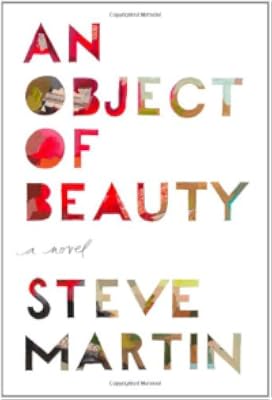
An Object of Beauty
by Steve Martin
On This Page
Description
"Steve Martin's latest novel examines the glamour and the subterfuge of the fine art world in New York City"--Provided by publisher.Tags
Recommendations












Member Reviews
Lacey Yeager, an up and coming art dealer, is the protagonist of Steve Martin's latest work, which spans about fifteen years in the New York City art world. Daniel Franks, is the narrator writing the book to excise Lacey from his mind.
We follow Lacey from her entry-level job at Sotheby's to a high end gallery on the Upper East Side, to Chelsea, where Lacey opens her own gallery.
Martin takes us deep into the art world, to the behind the scenes look at auction houses, to the houses of collectors, even to international dealings. We learn about expensive European art, the Picasos, the Van Goghs to the modern pop art of Andy Warhol and a new movement. Martin also takes us through the financial ups and downs of the art world as it shifts from show more conservative to modern art, survives 9/11 and the stock market crash of 2008. We follow Lacey's life as it parallels to this world.
Lacey and Daniel became friends in college and both end up in Manhattan, Lacey as a dealer, Daniel as a writer of art. Lacey is young, smart, ambitious, slightly manipulative, and beautiful.
Her walk-on role at Sotheby's stood in contrast to her starring role in the East Village bars and cafes. After her practiced and perfected subway ride home, which was timed like a ballet-her foot forward, the subway car opening just in time to catch her-she knew the bar lights were coming on, voices were raised, music edging out onto the sidewalks. She felt like the one bright light, the spot-lit girl scattering fairy dust...
Though I really enjoyed this book, I can't say I had a lot of love for the characters. Daniel is pretty boring. But I did not find Lacey as evil as I think the author intended her to be portrayed. Yes, she is ambitious but I'm sure no more than any up and coming art dealer that wants to make a name for themselves. Lacey has a relationship with a wealthy French art dealer who is madly in love with her, though Lacey does not return his affection to that degree. But she doesn't use him for anything other than sex and fun nor does she make him any promises. But somehow I felt that this relationship was supposed to epitomize Lacey's amorality, which I just did not see.
Near the beginning of the book, we learn that Lacey has come into a significant amount of money, but we are not told how. This event is alluded to throughout the book until we finally learn how that came about. This was another time that I think was supposed make me dislike Lacey, but it was rather a let down after the long build up. I won't spoil it, but it was not the crime of the century. The fact that Daniel played a role which eventually comes to haunt him, did not make me feel sympathetic to him. Really, at no point in this book did I see anything to justify Daniel's resentment of Lacey.
Although I did not see Lacey as I think the author meant me to, I still very much enjoyed this book and the very detailed look into the art world. Martin's writing is excellent as always. However, the story lacked the poignancy of The Shopgirl, in part because of its main focus on art and partly because there really was no connection with the characters. Some of the minor characters were interesting, especially the collectors, but neither Lacey nor Daniel had much depth. If I had not been interested in the art aspects, I probably would not have liked this novel. This work is not for everyone, I could see many being bored; if they aren't interested in art, they won't like this book. It seemed as if Martin wanted to write about the art world that he loves and the characters were just something to tell the story around.
I think my review makes it sound as if I liked the book less than I did. But I didn't, it just wasn't the book it was made out to be.
my rating 4/5 show less
We follow Lacey from her entry-level job at Sotheby's to a high end gallery on the Upper East Side, to Chelsea, where Lacey opens her own gallery.
Martin takes us deep into the art world, to the behind the scenes look at auction houses, to the houses of collectors, even to international dealings. We learn about expensive European art, the Picasos, the Van Goghs to the modern pop art of Andy Warhol and a new movement. Martin also takes us through the financial ups and downs of the art world as it shifts from show more conservative to modern art, survives 9/11 and the stock market crash of 2008. We follow Lacey's life as it parallels to this world.
Lacey and Daniel became friends in college and both end up in Manhattan, Lacey as a dealer, Daniel as a writer of art. Lacey is young, smart, ambitious, slightly manipulative, and beautiful.
Her walk-on role at Sotheby's stood in contrast to her starring role in the East Village bars and cafes. After her practiced and perfected subway ride home, which was timed like a ballet-her foot forward, the subway car opening just in time to catch her-she knew the bar lights were coming on, voices were raised, music edging out onto the sidewalks. She felt like the one bright light, the spot-lit girl scattering fairy dust...
Though I really enjoyed this book, I can't say I had a lot of love for the characters. Daniel is pretty boring. But I did not find Lacey as evil as I think the author intended her to be portrayed. Yes, she is ambitious but I'm sure no more than any up and coming art dealer that wants to make a name for themselves. Lacey has a relationship with a wealthy French art dealer who is madly in love with her, though Lacey does not return his affection to that degree. But she doesn't use him for anything other than sex and fun nor does she make him any promises. But somehow I felt that this relationship was supposed to epitomize Lacey's amorality, which I just did not see.
Near the beginning of the book, we learn that Lacey has come into a significant amount of money, but we are not told how. This event is alluded to throughout the book until we finally learn how that came about. This was another time that I think was supposed make me dislike Lacey, but it was rather a let down after the long build up. I won't spoil it, but it was not the crime of the century. The fact that Daniel played a role which eventually comes to haunt him, did not make me feel sympathetic to him. Really, at no point in this book did I see anything to justify Daniel's resentment of Lacey.
Although I did not see Lacey as I think the author meant me to, I still very much enjoyed this book and the very detailed look into the art world. Martin's writing is excellent as always. However, the story lacked the poignancy of The Shopgirl, in part because of its main focus on art and partly because there really was no connection with the characters. Some of the minor characters were interesting, especially the collectors, but neither Lacey nor Daniel had much depth. If I had not been interested in the art aspects, I probably would not have liked this novel. This work is not for everyone, I could see many being bored; if they aren't interested in art, they won't like this book. It seemed as if Martin wanted to write about the art world that he loves and the characters were just something to tell the story around.
I think my review makes it sound as if I liked the book less than I did. But I didn't, it just wasn't the book it was made out to be.
my rating 4/5 show less
Steve Martin has given us a well-written, tightly plotted view of the art world in the recent and current economy. He certainly seems to have done his homework to be able to present realistic scenes of auction houses, private galleries, international jet-set buyers, and less than honorable wheeler-dealers. The protagonist, Lacey Yaeger, an aggressive up-and-comer in the art world, takes us on a roller coaster ride of emotions, motivations, love affairs, and monetary ups and downs. Told through the voice of art writer Daniel Franks, her career, her mentors, her co-workers, her love affairs, and her competition are all well drawn and pulled together to provide a taunt story that keeps the reader turning pages long past bedtime.
In addition show more to a good story and some good basic explanations of art, art history, and how art is collected and sold, the book features twenty-two beautiful four color plates of many of the works featured in the book. The pictures added the extra frosting to a good solid cake. Steve Martin has certainly proved that his writing abilities are on a par with his acting and directing. show less
In addition show more to a good story and some good basic explanations of art, art history, and how art is collected and sold, the book features twenty-two beautiful four color plates of many of the works featured in the book. The pictures added the extra frosting to a good solid cake. Steve Martin has certainly proved that his writing abilities are on a par with his acting and directing. show less
An in-depth look at the world of art and art dealing, set in the early 1990s-2010s. An art journalist relates the story of Lacey, an ambitious beautiful and recent art history major graduate, who climbs the rungs of the art world --from auction houses, to dealers, to finally getting her own gallery. She is ruthless but not gratuitously mean. She uses her beauty but in a shallow kind of way and remained, at least to this reader, a sympathetic character. She rides the economic fortunes through both 9/11 and the financial collapse of 2008. She --and we, as readers-- sees how a piece of art can move from being an object to beauty to become an object of wealth, to be possessed. It is a clever metaphor for Lacey's own life and relationships. show more Martin is not the world's best writer --sometimes overly arch and dry-- but he nails this one. Better than Shopgirl. If you're "into" art at all, read this! show less
The story of a young, ambitious and amoral woman whose career desires are stoked at her first job at Sotheby's in New York. Over the decade or so that the book covers, her rise to eventual ownership of her own gallery takes her through the East Coast art world, Russia, and the wealthy men and women for whom art is not so much a matter of beauty as it is of perceived beauty. Lacey Yeager's rise parallels that of the meteoric rise in fine art prices in the late 1990s, and her eventual downfall matches that of the wealthy society to which she attached herself. Steve Martin is a man of multiple gifts: a competent magician, breakthrough stand-up comic, gifted screenplay writer, talented comic and (occasionally) dramatic actor, fine banjo show more player and bluegrass musician, novelist, and now a man who at least has absorbed enough research to be able to present a convincing inside look into the world of fine art, its creators, fans, buyers and sellers. Envy bubbles within me. The book is well-written, clever and witty, and probably destined to be a movie with Steve Martin as the narrator. The storyline touches on a few of my favorite artists, and some of the actual paintings that play a role in the book are depicted in color plates. show less
Lacey is a young woman entering the art field as a seller at a gallery and she is determined to succeed in the business. Her story is told through the eyes of her college friend Daniel.
I really wanted to like this book and had anticipated that I would. A story about the art world as told by Steve Martin (whose other books I'd love)? Sign me up! But I found it terribly dull and just plain awful.
To tackle the first part: terribly dull. Nothing much really happens in this book. There were a couple of moments where it seemed like the story could get really interesting -- once when Lacey suspects her boss might be behind a famous art theft and then later when Lacey is accused of fixing an art auction. But both plotlines peter out pretty show more quickly and lack any real exciting action. Instead we hear about Lacey's sexual exploits, which can't really be described as relationships because she makes a point of how it's only about sex for her.
Which brings me to the second point: just plain awful. I didn't feel this with other books I read by Martin, but this seems like a master class in how to write women badly. Everything that Lacey does is tied in to her sexuality somehow. She's that mystical woman that no man can ever really 'possess.' I don't remember the exact language used because it's been a couple of months between reading and reviewing, but it was pretty much all eyeroll worthy.
To add insult to injury, the audiobook version was not read by Martin but by someone else who just added to the dullness by not breathing life into the characters. A few accents/voices were created, but the reading was overall fairly placid and borderline monotone.
I felt like I walked away from this book having just wasted time. I gained no new insights into the art world and I certainly didn't care about these characters or what happened to them. show less
I really wanted to like this book and had anticipated that I would. A story about the art world as told by Steve Martin (whose other books I'd love)? Sign me up! But I found it terribly dull and just plain awful.
To tackle the first part: terribly dull. Nothing much really happens in this book. There were a couple of moments where it seemed like the story could get really interesting -- once when Lacey suspects her boss might be behind a famous art theft and then later when Lacey is accused of fixing an art auction. But both plotlines peter out pretty show more quickly and lack any real exciting action. Instead we hear about Lacey's sexual exploits, which can't really be described as relationships because she makes a point of how it's only about sex for her.
Which brings me to the second point: just plain awful. I didn't feel this with other books I read by Martin, but this seems like a master class in how to write women badly. Everything that Lacey does is tied in to her sexuality somehow. She's that mystical woman that no man can ever really 'possess.' I don't remember the exact language used because it's been a couple of months between reading and reviewing, but it was pretty much all eyeroll worthy.
To add insult to injury, the audiobook version was not read by Martin but by someone else who just added to the dullness by not breathing life into the characters. A few accents/voices were created, but the reading was overall fairly placid and borderline monotone.
I felt like I walked away from this book having just wasted time. I gained no new insights into the art world and I certainly didn't care about these characters or what happened to them. show less
I was am completely charmed by this book.
Full disclosure: I wasn't expecting much of Steve Martin. I haven't read Shopgirl, and I think I was secretly expecting something lowbrow and full of the outlandish masquerading as the comic, The Jerk in novel form. But from the moment I opened the book to the first page, I was pleasantly surprised:
That first sentence (okay, aside from the unnecessarily split infinitive) is practically pitch perfect. It sets forth the conceit of the book, a faux roman à clef, and gives you a glimpse of the show more relationship between the subject and the narrator: she is someone who has left an indelible imprint on his life, and writing this story is his attempt to move on.
I love how this sentence forgives the narrator for knowing too much. A curious strength of this book is the distance of the narrator from the story. For much of it he is not directly involved, and so the narrative is more third-person than first-person, despite the directed-at-the-reader exposition I've quoted above. The wonderful thing about this is that it imitates, or perhaps even symbolizes, his relationship with Lacey: she is obviously important to him (he's writing her story, for God's sake), but he is also aware that he is not terribly important to her, so too many first-person sentences would exaggerate his significance to her story.
I also love this book for what it's not. It's not pretentious, despite the gorgeous color reproductions of artwork that are scattered throughout, and some almost tongue-in-cheek use of art-world argot. It isn't overly plotted, either; the story unfolds in a natural, lifelike way, by which I mean that it's not always exciting or dramatic, but there is almost always something worth observing. It doesn't try too hard to be profound, and despite raising a few questions of ethics I'm not sure there's any big moral to take away, just food for thought. (Or maybe not so much "food" as hors d'oeuvres: small, perfect bites that fill you up without your realizing it.)
And I love, LOVE the quiet, uncertain-but-hopeful note on which it ends. The last paragraph, like the opening sentence, is absolutely pitch perfect. show less
Full disclosure: I wasn't expecting much of Steve Martin. I haven't read Shopgirl, and I think I was secretly expecting something lowbrow and full of the outlandish masquerading as the comic, The Jerk in novel form. But from the moment I opened the book to the first page, I was pleasantly surprised:
I am tired, so very tired of thinking about Lacey Yeager, yet I worry that unless I write her story down, and see it bound and tidy on my bookshelf, I will be unable to ever write about anything else.
That first sentence (okay, aside from the unnecessarily split infinitive) is practically pitch perfect. It sets forth the conceit of the book, a faux roman à clef, and gives you a glimpse of the show more relationship between the subject and the narrator: she is someone who has left an indelible imprint on his life, and writing this story is his attempt to move on.
I will tell you her story from my own recollections . . . [but if] you occasionally wonder how I know about some of the events I describe in this book, I don't. I have found that -- just as in real life -- imagination sometimes has to stand in for experience.
I love how this sentence forgives the narrator for knowing too much. A curious strength of this book is the distance of the narrator from the story. For much of it he is not directly involved, and so the narrative is more third-person than first-person, despite the directed-at-the-reader exposition I've quoted above. The wonderful thing about this is that it imitates, or perhaps even symbolizes, his relationship with Lacey: she is obviously important to him (he's writing her story, for God's sake), but he is also aware that he is not terribly important to her, so too many first-person sentences would exaggerate his significance to her story.
I also love this book for what it's not. It's not pretentious, despite the gorgeous color reproductions of artwork that are scattered throughout, and some almost tongue-in-cheek use of art-world argot. It isn't overly plotted, either; the story unfolds in a natural, lifelike way, by which I mean that it's not always exciting or dramatic, but there is almost always something worth observing. It doesn't try too hard to be profound, and despite raising a few questions of ethics I'm not sure there's any big moral to take away, just food for thought. (Or maybe not so much "food" as hors d'oeuvres: small, perfect bites that fill you up without your realizing it.)
And I love, LOVE the quiet, uncertain-but-hopeful note on which it ends. The last paragraph, like the opening sentence, is absolutely pitch perfect. show less
what an amazing novel. Martin wrote with a beautifully prosaic voice, and kept me spellbound throughout. I highly recommend this novel, if not for the characters, story line, or art history lesson, then for the pictures, which I loved him adding. It sure saved me time from Googling them online, in order to refresh my memory.
Martin's descriptions of the art, and the era, were more than apt; they were precise and unerring. He knew the art world like he'd LIVED the art world, and knew all the characters intimately. I didn't like the character, but I don't think you're supposed to, unless you identify with her. But who cares? I was more than enjoying the novel. I wished I could live between the pages... and wondrously enough, I've often show more wondered if bidding on a piece of work at an auction, just to drive up the price, was illegal or not!!
Some of his lines were so beautifully written, I was astonished: "Lacey was just as happy alone as with company. When she was alone she was potential; with others she was realized." and "But sometimes mercy falls like light snow on open palms, and sometimes it falls stinging and hard from ominous clouds."
This man can do more than walk and chew gum at the same time. He is truly gifted, in many, many ways. I cannot wait until he prints his next gift to us, the public. show less
Martin's descriptions of the art, and the era, were more than apt; they were precise and unerring. He knew the art world like he'd LIVED the art world, and knew all the characters intimately. I didn't like the character, but I don't think you're supposed to, unless you identify with her. But who cares? I was more than enjoying the novel. I wished I could live between the pages... and wondrously enough, I've often show more wondered if bidding on a piece of work at an auction, just to drive up the price, was illegal or not!!
Some of his lines were so beautifully written, I was astonished: "Lacey was just as happy alone as with company. When she was alone she was potential; with others she was realized." and "But sometimes mercy falls like light snow on open palms, and sometimes it falls stinging and hard from ominous clouds."
This man can do more than walk and chew gum at the same time. He is truly gifted, in many, many ways. I cannot wait until he prints his next gift to us, the public. show less
Members
- Recently Added By
Published Reviews
ThingScore 58
"I couldn’t be a woman," Steve Martin once joked, "because I’d play with my breasts all day." Now he has written a novel about a young woman, but nearly the only thing he can imagine about her is wanting to play with her breasts. The Object of Beauty is a nasty exercise in narcissism, particularly in the narcissism of the famous.
added by atbradley
Dark subject matter is conveyed with certain smart-assey detachment. Martin knows when to drop a joke in before things get too serious. Timing. Comedians have it.
added by WeeklyAlibi
“An Object of Beauty” follows the New York art world climb of Lacey Yeager. She is a charismatic character yet a very odd one to have emerged from the imagination of Steve Martin. Although Lacey is treated as this book’s main source of fascination, it’s less interesting to look at her point-blank than to look at her while wondering what Mr. Martin sees.
One aspect of this novel’s show more allure is the ambiguity with which Mr. Martin frames Lacey’s fierce, outsize ambitions. Is her story meant to be the appreciatively told tale of a canny New York predator? That of a relative innocent whose values change in the presence of vast sums of art-market money? Or that of a stylishly attractive dynamo who, with only minimal irony, recognizes herself in the monstrous goddess that Willem de Kooning painted as “Woman I?”
Is she an unalloyed opportunist? Or is she as intoxicated with art as she is with the leverage and entrée that expertise will bring? Is she stirred by art’s erotic power or just someone who sexually exploits the acquisitive passions of insatiable collectors? Does she share the collectors’ boys’-club competitive spirit (for surely this is a man’s world, at least in the way it is depicted by Mr. Martin)? Or is she just a woman who’s inordinately good at manipulating rich, credulous men? . . . show less
One aspect of this novel’s show more allure is the ambiguity with which Mr. Martin frames Lacey’s fierce, outsize ambitions. Is her story meant to be the appreciatively told tale of a canny New York predator? That of a relative innocent whose values change in the presence of vast sums of art-market money? Or that of a stylishly attractive dynamo who, with only minimal irony, recognizes herself in the monstrous goddess that Willem de Kooning painted as “Woman I?”
Is she an unalloyed opportunist? Or is she as intoxicated with art as she is with the leverage and entrée that expertise will bring? Is she stirred by art’s erotic power or just someone who sexually exploits the acquisitive passions of insatiable collectors? Does she share the collectors’ boys’-club competitive spirit (for surely this is a man’s world, at least in the way it is depicted by Mr. Martin)? Or is she just a woman who’s inordinately good at manipulating rich, credulous men? . . . show less
added by PLReader
Lists

a picture or a thousand words
39 works; 5 members
Author Information

69+ Works 18,136 Members
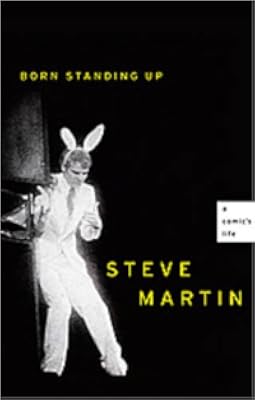
Steve Martin was born on August 14, 1945 in Waco, Texas. He studied at Long Beach State College. He has acted in such films as The Jerk; Roxanne; Planes, Trains and Automobiles; Bowfinger; Father of the Bride; Cheaper by the Dozen; and Shopgirl, which was adapted from a novel he wrote. He has won an Emmy for his comedy writing and Grammies for his show more comedy albums. He has made several appearances on The Tonight Show and Saturday Night Live. He has written several books including Shopgirl, Cruel Shoes, Pure Drivel, The Pleasure of My Company, and An Object of Beauty. He also wrote a play entitled Picasso at the Lapin Agile and a memoir entitled Born Standing Up. During the 1990s, he wrote various pieces for The New Yorker. In 2002, he adapted the Carl Sternheim play The Underpants, which ran Off-Broadway at Classic Stage Company and in 2008, co-wrote and produced Traitor. In 2013 he published a memoir entitled Born Standing Up: A Comic's Life. This book tells the story of his beginnings as a magician and comedian at a young age and follows through his career lifetime. (Bowker Author Biography) show less
Awards and Honors
Distinctions
Work Relationships
Is abridged in
Common Knowledge
- Canonical title
- An Object of Beauty
- Original publication date
- 2010-11-23
- People/Characters
- Lacey Yeager; Daniel Franks; Patrice Claire; Barton Talley; Jonah Marsh
- Important places
- Sotheby's (New York, New York, USA); Chelsea, New York, New York, USA; The Carlyle (New York, New York, USA); St. Petersburg, Russia; Manhattan, New York, New York, USA
- Important events
- September 11 Attacks
- First words
- I am tired, so very tired of thinking about Lacey Yeager, yet I worry that unless I write her story down, and see it bound and tidy on my bookshelf, I will be unable to ever write about anything else.
- Quotations
- "I think Lacey is the kind of person who will always be okay."
When she was alone, she was potential; with others she was realized. Alone she was self-contained, her tightly spinning magnetic energy oscillating around her. When in company, she had invisible tethers to everyone in the roo... (show all)m: as they moved away, she pulled them in.
Was every transgression capable of being so well hid? It suggested that one could connect the dots between any two people in any room and perhaps stumble onto an unknown relationship.
"Do you know we tape all our auctions?"
When Lacey began these computations, her toe crossed ground from which it is difficult to return: she started converting objects of beauty into objects of value. - Blurbers
- Oates, Joyce Carol
Classifications
Statistics
- Members
- 1,918
- Popularity
- 11,187
- Reviews
- 96
- Rating
- (3.49)
- Languages
- English, Italian, Spanish
- Media
- Paper, Audiobook, Ebook
- ISBNs
- 22
- ASINs
- 16