
Jim Alexander
Author of What's Wrong Now, Millicent?
Works by Jim Alexander
Birds of Prey, Vol. 1 #91 2 copies
METAL HURLANT #13 2 copies
Judge Dredd Mega-Special # 6 2 copies
The Art of Conversation: How to Talk to Anyone, Anywhere, Anytime, and Overcome Shyness and Social Anxiety (2022) 2 copies
2000 AD # 926 1 copy
The Ripper Legacy #2 1 copy
The Ripper Legacy #3 1 copy
The Ripper Legacy #1 1 copy
Gabriel 1 copy
New Lives, Old Souls: Fascinating reincarnation evidence from case studies using Hypnotic Regression (2021) 1 copy
Truth Or Consequences 1 copy
Associated Works
Judge Dredd The Megazine # 53 (2.33) — Writer, some editions — 2 copies
Tagged
Common Knowledge
- Gender
- male
Members
Reviews
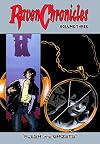
Published by Gary Reed’s Caliber Comics, Raven Chronicles was something off the beaten path and very fun when it came out. The investigations into the paranormal by a group working for the mysterious Raven blew a lot of stuff out of the water. Being a bit more difficult to get ahold of only made their allure stronger back in the day for fans.
Each story contained far more text and story than most comics, and they were drawn in pen/ink black and white, giving them an entirely different vibe. show more There was that X-Files season one vibe, when you were excited about and wanted to tell other people about your discovery. Raven Chronicles had an ensemble cast, so there were many characters we got to know who had distinct personalities.
Edgar Allen Raven was the founder of the organization who investigated the paranormal. He was a mysterious figure and little was known about him. He had a pet crow named Odin.
Those who worked for Raven were a diverse bunch with their own skill sets:
Emmanuel “Manny” Chancu — Freelance writer
Adam Basura — Ex-FBI agent
Dr. Lonnie Talbot — She is a doctor with degrees in medicine and chemistry
Amy Berg — She’s the older teenage ward of Dr. Talbot, but she lives at Raven Headquarters
Miles Eddington — Raven’s assistant and the frontman for Raven Inc.
Dale Hackworth — Not a field agent, but a researcher adept with many things he despises, like computers.
Curt Davis — Raven’s shadowy “fixer”
Mr. Smith — Raven’s government contact, who provide the gang with the official and unofficial story at times
Elvis — Raven’s driver and bodyguard, a former wrestler
Michael Branden — A Philadelphia cop who often recommends Raven because they get results. Has a murky connection to Dr. Talbot, possibly romantic
Kent Conners — A mechanical engineer with a belief in UFOs
Michelle Conners — Kent’s wife, a computer hack
I received the compilations as a Christmas gift from a friend last year, having lost my issues over the decades, and I’ve been going through them again with great pleasure. Eric Jackson created Raven Chronicles, and Chet Jacques is credited with developing the comic. Publisher of Caliber, Gary Reed, wrote many but not all of the Raven Chronicle stories. Craig Brasfield is credited with the original character design.
The four stories in this second compilation are as follows:
WOLF COUNTRY — (Writer: Jim Alexander, Illustrator: Chris Jones)
Loved Jim Alexander’s story, really awesome. However, Chris Jones’ illustrations, while good, seemed a bit sparse in fine detail of secondary stuff like settings.
THE GHOST OF ALONSO MANN — (Writer: Gary Reed, Illustrator: Galen Showman)
This one is flipped from the previous entry in what I liked and what I didn’t. Galen’s illustrations were full and top notch, really great work. Detroit’s Garry Reed’s story, however, seemed out of place within the vibe of Raven Chronicles. He apparently wanted to insert some racial/ethnic/social thing so he dug deep — and I mean deep — into history to find an incident he could base the story on.
This story kind of turned me off this time around, the social justice soap box inserted into Raven Chronicles. Three or four pages have so much text that wasn’t dialog, it seemed more like being preached to about injustice in a kind of info drop disguised as backstory. Not a bad story, but easy to spot in one of those “which item doesn’t belong here” deals. A lot of Reed’s stories were great — he passed in 2016 — but for me this was just a rare miss.
DEADLANDS — (Writer: Gary Reed, Illustrators: Paul Kowalski, Avido Khahaifa)
Good story by Reed, good illustrations by Kowalski and Khahaifa, a poignant ending.
THE COMPENSATORS — (Writer: Martin Conaghan, Illustrator: Will Pickering)
This one and Wolf Country are probably my favorites in this gathering of issues 9-12.
If you’re looking for something a little different, give Raven Chronicles a try if you can track them down. show less
Each story contained far more text and story than most comics, and they were drawn in pen/ink black and white, giving them an entirely different vibe. show more There was that X-Files season one vibe, when you were excited about and wanted to tell other people about your discovery. Raven Chronicles had an ensemble cast, so there were many characters we got to know who had distinct personalities.
Edgar Allen Raven was the founder of the organization who investigated the paranormal. He was a mysterious figure and little was known about him. He had a pet crow named Odin.
Those who worked for Raven were a diverse bunch with their own skill sets:
Emmanuel “Manny” Chancu — Freelance writer
Adam Basura — Ex-FBI agent
Dr. Lonnie Talbot — She is a doctor with degrees in medicine and chemistry
Amy Berg — She’s the older teenage ward of Dr. Talbot, but she lives at Raven Headquarters
Miles Eddington — Raven’s assistant and the frontman for Raven Inc.
Dale Hackworth — Not a field agent, but a researcher adept with many things he despises, like computers.
Curt Davis — Raven’s shadowy “fixer”
Mr. Smith — Raven’s government contact, who provide the gang with the official and unofficial story at times
Elvis — Raven’s driver and bodyguard, a former wrestler
Michael Branden — A Philadelphia cop who often recommends Raven because they get results. Has a murky connection to Dr. Talbot, possibly romantic
Kent Conners — A mechanical engineer with a belief in UFOs
Michelle Conners — Kent’s wife, a computer hack
I received the compilations as a Christmas gift from a friend last year, having lost my issues over the decades, and I’ve been going through them again with great pleasure. Eric Jackson created Raven Chronicles, and Chet Jacques is credited with developing the comic. Publisher of Caliber, Gary Reed, wrote many but not all of the Raven Chronicle stories. Craig Brasfield is credited with the original character design.
The four stories in this second compilation are as follows:
WOLF COUNTRY — (Writer: Jim Alexander, Illustrator: Chris Jones)
Loved Jim Alexander’s story, really awesome. However, Chris Jones’ illustrations, while good, seemed a bit sparse in fine detail of secondary stuff like settings.
THE GHOST OF ALONSO MANN — (Writer: Gary Reed, Illustrator: Galen Showman)
This one is flipped from the previous entry in what I liked and what I didn’t. Galen’s illustrations were full and top notch, really great work. Detroit’s Garry Reed’s story, however, seemed out of place within the vibe of Raven Chronicles. He apparently wanted to insert some racial/ethnic/social thing so he dug deep — and I mean deep — into history to find an incident he could base the story on.
This story kind of turned me off this time around, the social justice soap box inserted into Raven Chronicles. Three or four pages have so much text that wasn’t dialog, it seemed more like being preached to about injustice in a kind of info drop disguised as backstory. Not a bad story, but easy to spot in one of those “which item doesn’t belong here” deals. A lot of Reed’s stories were great — he passed in 2016 — but for me this was just a rare miss.
DEADLANDS — (Writer: Gary Reed, Illustrators: Paul Kowalski, Avido Khahaifa)
Good story by Reed, good illustrations by Kowalski and Khahaifa, a poignant ending.
THE COMPENSATORS — (Writer: Martin Conaghan, Illustrator: Will Pickering)
This one and Wolf Country are probably my favorites in this gathering of issues 9-12.
If you’re looking for something a little different, give Raven Chronicles a try if you can track them down. show less
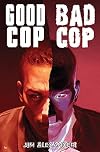
Summary: Good Cop Bad Cop opens with DI Brian Fisher interviewing a murder suspect. Alone. (Note: If this sounds like a bad idea, it is.) Fisher is effective at keeping the suspect off-kilter, but he’s clearly a bit off-kilter himself, even as his good cop self. His inner “bad cop” arrives, throws him into attack mode, and during the ensuing scuffle, part of the suspect’s earlobe is bitten off. Though the scuffle was caught on video, somehow the recording equipment is damaged and show more what happened isn’t fully captured. Though the police administration are puzzled (or are they?) by this, they don’t ask him, and he doesn’t tell. Even an official investigation by a committee he dubs the “Three Wise Men” doesn’t result in changes.
He does, however, get a partner. He’s always been the loner in the force, but DS Julie Spenser is now along to supervise and/or get in the way. He’s also required to meet with a police psychologist, Dr. Dawn, to investigate the inner workings of his brain.
Fisher doesn’t have control over when the bad self arrives or reacts to circumstances. His good self is truly a good person: he wants to behave with integrity. He’s appalled at the crimes his bad cop self commits in his investigations. But can the good Fisher confess his alter-ego’s crimes? What–or who–will win?
Issues
(I can’t really say that it didn’t work, only that there are some drawbacks.)
The slang.
Some of the slang won’t be obvious to American readers unless they favor Scottish crime novels. Fortunately, I’ve read enough Ian Rankin to know most of the words. I still had to look up a few.
Numpty is “a stupid or ineffectual person.”
Manky, according to the Urban dictionary, is “Scottish slang word to describe a situation, person or object in a poor state of affairs. Commonly used in Scottish bars to describe the state of the toilets or glasses.” Eww.
A Ned is, again according to Urban Dictionary, a “Non Educated Delinquents, have a habit of standing around on street corners drinking 98% of the worlds supply of Buckfast, wearing enough cheap gold to make a prostitute blush whilst thinking that tucking their shell suit bottoms into their socks is the hieght of fashion. Also like to shout slipknot at anyone who doesn’t conform to the above.”
Is this a weak point for a novel set in Scotland to use Scottish slang? Not at all. I may have to incorporate a few of these into my vocabulary! I just thought this was worth mentioning.
Point of view changes
This one’s tricky. Certain chapters and parts of chapters are told from DS Julie Spenser’s 1st person point of view. The view might change from Fisher to Spenser and back again in the course of a few pages. (This doesn’t happen often.) The sections aren’t labelled with names. Though they are broken into clear sections with a separator, it’s not always immediately clear who is speaking when both characters use 1st person POV. It might take a few lines before I realize that it’s Spenser’s view or Fisher’s view.
What works
Strong narrative voice
This voice captured me from the first sentence. Alexander drew me in with his opening chapter. The second person point of view was effective, as it makes the action feel immediate and relevant but also implicates us, the reader, in the crimes that we refuse to see.
Characterization
Brian Fisher, obviously, is the person (people?) Alexander dives deepest inside. He’s a master of self-deception, yet he’s capable of surprising insights. He blames his job for his thoughts and persuades himself that there’s nothing he can do about it. Yet he imposes a “three strikes” rule on himself: three murders and he’s out. He’ll turn himself in, he tells himself. But will he? we wonder, or will bad Fisher silence the good Fisher?
There’s a lot of savage violence. (This is not a book for the faint of heart!) Some of the violence comes from Fisher, our hero/villain. I’ve written before about my mixed feelings about graphic violence. What makes it bearable is that Fisher, the good Fisher, truly loathes the actions of the bad Fisher. And he is aware of his second self:
He also has other good insights:
Ah, I wonder, but is this another one of good Fisher’s self-deceptions, his way of normalizing the evil inside him?
But Fisher’s not the only one who is well characterized. DS Julie Spenser has a character arc of her own. Her mother suffers from dementia and no longer knows her daughter. Spenser’s worries and thoughts about memory, identity, and what makes us who we are ties in with Fisher’s problems.
The plot
Let’s just say that there are twists I didn’t see coming. (I’m usually good at guessing plot twists.) I won’t say anything more. No spoilers!
Bottom line:
This is a well-written, well-plotted novel. If you can handle the violence, read it. show less
He does, however, get a partner. He’s always been the loner in the force, but DS Julie Spenser is now along to supervise and/or get in the way. He’s also required to meet with a police psychologist, Dr. Dawn, to investigate the inner workings of his brain.
Fisher doesn’t have control over when the bad self arrives or reacts to circumstances. His good self is truly a good person: he wants to behave with integrity. He’s appalled at the crimes his bad cop self commits in his investigations. But can the good Fisher confess his alter-ego’s crimes? What–or who–will win?
Issues
(I can’t really say that it didn’t work, only that there are some drawbacks.)
The slang.
Some of the slang won’t be obvious to American readers unless they favor Scottish crime novels. Fortunately, I’ve read enough Ian Rankin to know most of the words. I still had to look up a few.
Numpty is “a stupid or ineffectual person.”
Manky, according to the Urban dictionary, is “Scottish slang word to describe a situation, person or object in a poor state of affairs. Commonly used in Scottish bars to describe the state of the toilets or glasses.” Eww.
A Ned is, again according to Urban Dictionary, a “Non Educated Delinquents, have a habit of standing around on street corners drinking 98% of the worlds supply of Buckfast, wearing enough cheap gold to make a prostitute blush whilst thinking that tucking their shell suit bottoms into their socks is the hieght of fashion. Also like to shout slipknot at anyone who doesn’t conform to the above.”
Is this a weak point for a novel set in Scotland to use Scottish slang? Not at all. I may have to incorporate a few of these into my vocabulary! I just thought this was worth mentioning.
Point of view changes
This one’s tricky. Certain chapters and parts of chapters are told from DS Julie Spenser’s 1st person point of view. The view might change from Fisher to Spenser and back again in the course of a few pages. (This doesn’t happen often.) The sections aren’t labelled with names. Though they are broken into clear sections with a separator, it’s not always immediately clear who is speaking when both characters use 1st person POV. It might take a few lines before I realize that it’s Spenser’s view or Fisher’s view.
What works
Strong narrative voice
This voice captured me from the first sentence. Alexander drew me in with his opening chapter. The second person point of view was effective, as it makes the action feel immediate and relevant but also implicates us, the reader, in the crimes that we refuse to see.
Characterization
Brian Fisher, obviously, is the person (people?) Alexander dives deepest inside. He’s a master of self-deception, yet he’s capable of surprising insights. He blames his job for his thoughts and persuades himself that there’s nothing he can do about it. Yet he imposes a “three strikes” rule on himself: three murders and he’s out. He’ll turn himself in, he tells himself. But will he? we wonder, or will bad Fisher silence the good Fisher?
There’s a lot of savage violence. (This is not a book for the faint of heart!) Some of the violence comes from Fisher, our hero/villain. I’ve written before about my mixed feelings about graphic violence. What makes it bearable is that Fisher, the good Fisher, truly loathes the actions of the bad Fisher. And he is aware of his second self:
The other me, he was always there. I was always aware of him burrowing, snuggling and lurking, just at the back of my head. (pg. 132)
He also has other good insights:
. . . everybody was hiding something. The good and the bad stashed away inside of us, in safe keeping, at least for some of the time (pg. 139)
Ah, I wonder, but is this another one of good Fisher’s self-deceptions, his way of normalizing the evil inside him?
But Fisher’s not the only one who is well characterized. DS Julie Spenser has a character arc of her own. Her mother suffers from dementia and no longer knows her daughter. Spenser’s worries and thoughts about memory, identity, and what makes us who we are ties in with Fisher’s problems.
The plot
Let’s just say that there are twists I didn’t see coming. (I’m usually good at guessing plot twists.) I won’t say anything more. No spoilers!
Bottom line:
This is a well-written, well-plotted novel. If you can handle the violence, read it. show less

There's not much love out there for Calhab Justice. Current 2000 AD editor Matt Smith offers an introduction to this volume that can be described equivocal at best, and even writer Jim Alexander in an interview at the back of the book can only say he has "made his peace" with it.
All that said, though, it's not as bad as you might fear. The loch-broad Scottish stereotypes are used in good humour and pretty much in line with what you'd expect from the Judge Dredd universe – it's not as if show more Mega-City One was a sensitive analysis of modern East Coast America.
In fact the first couple of strips in this collection are actually pretty passable. There are some decent gags and a nice satirical line on 90s Scottish politics that informs the story without overwhelming it.
As Alexander admits at the end of the volume, it's in the later strips that Calhab Justice loses its way. The structure's a mess and, in trying to be obscure, the plot becomes impenetrable – something that's not helped by Lol's oh-so dark, oh-so crowded artwork. The ideas are good (particularly the little speech about believing in God "in lateral terms") but they're poorly executed. show less
All that said, though, it's not as bad as you might fear. The loch-broad Scottish stereotypes are used in good humour and pretty much in line with what you'd expect from the Judge Dredd universe – it's not as if show more Mega-City One was a sensitive analysis of modern East Coast America.
In fact the first couple of strips in this collection are actually pretty passable. There are some decent gags and a nice satirical line on 90s Scottish politics that informs the story without overwhelming it.
As Alexander admits at the end of the volume, it's in the later strips that Calhab Justice loses its way. The structure's a mess and, in trying to be obscure, the plot becomes impenetrable – something that's not helped by Lol's oh-so dark, oh-so crowded artwork. The ideas are good (particularly the little speech about believing in God "in lateral terms") but they're poorly executed. show less

You May Also Like
Associated Authors
Statistics
- Works
- 40
- Also by
- 5
- Members
- 106
- Popularity
- #181,886
- Rating
- 3.5
- Reviews
- 4
- ISBNs
- 26