
Raman K. Prinja
Author of Planetarium: Welcome to the Museum
About the Author
Works by Raman K. Prinja
Tagged
Common Knowledge
- Gender
- male
Members
Reviews
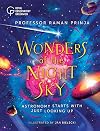
Gazing into the stars gains meaning and depth as these pages dive into the facts of space and beyond.
This is a well-rounded look at not only the constellations found in the night sky but explains about the stars, galaxies an other aspects of space surrounding them. Starting with tips about star-gazing, the book then gives a brief explanation of the type of stars before heading into the constellations. These concentrate on some of the more known ones (both northern and southern hemisphere) show more and goes into a bit of depth about the special aspects surrounding each one. The following chapters then give information about planets, moons, meteors, comets, auroras, satellites, galaxies and more. So, there's quite a bit of aspects covered.
I enjoyed to see how clearly the information is brought across, while still remaining interesting. The author never talks down to the reader and never allows a monotone, teaching atmosphere to develop. The information is brought across naturally and adds in little hints on how readers can observe certain aspects themselves. Each page holds short explanations or information broken down around fitting illustrations. Gazing here and there at the different topics allows the eyes to explore and keeps droning info-blocks away. It invites readers to flip through as desired and concentrate on whatever themes interest them the most...and come back later to explore others. The index and glossary at the end of the book also offers assistance in finding certain topics.
The illustrations are well done and work with the text hand-in-hand. Not only do these make details and information understandable, but the colors and artistic style invite in and add a lovely touch of atmosphere. There's also an easy activity at the end of the book, which explores orbits.
This is a very well-done read about stars, space, and more for the middle grade audience. I do see this one not only be of interest to space fans but also useful for homeschoolers or even school libraries. I received an ARC and found the read very well done. show less
This is a well-rounded look at not only the constellations found in the night sky but explains about the stars, galaxies an other aspects of space surrounding them. Starting with tips about star-gazing, the book then gives a brief explanation of the type of stars before heading into the constellations. These concentrate on some of the more known ones (both northern and southern hemisphere) show more and goes into a bit of depth about the special aspects surrounding each one. The following chapters then give information about planets, moons, meteors, comets, auroras, satellites, galaxies and more. So, there's quite a bit of aspects covered.
I enjoyed to see how clearly the information is brought across, while still remaining interesting. The author never talks down to the reader and never allows a monotone, teaching atmosphere to develop. The information is brought across naturally and adds in little hints on how readers can observe certain aspects themselves. Each page holds short explanations or information broken down around fitting illustrations. Gazing here and there at the different topics allows the eyes to explore and keeps droning info-blocks away. It invites readers to flip through as desired and concentrate on whatever themes interest them the most...and come back later to explore others. The index and glossary at the end of the book also offers assistance in finding certain topics.
The illustrations are well done and work with the text hand-in-hand. Not only do these make details and information understandable, but the colors and artistic style invite in and add a lovely touch of atmosphere. There's also an easy activity at the end of the book, which explores orbits.
This is a very well-done read about stars, space, and more for the middle grade audience. I do see this one not only be of interest to space fans but also useful for homeschoolers or even school libraries. I received an ARC and found the read very well done. show less

This gorgeous book features a collection of stunning photographs, most in color, of images of stars, planets, moons, and galaxies from NASA (via the Hubble Space Telescope), the European Space Agency (ESA) via its Mars mission, and the European Southern Observatory (ESO) in Chile. It is accompanied by explanatory text beginning with the history of space exploration and how dramatically it has changed with the development of giant telescopes on Earth and observatories in orbit in space. show more
Chapters include Follow the Water (about the search for habitable worlds beyond our own); Origins (re the birth of stars and galaxies and ripples from the Big Bang); Cosmic Fireworks (novae and quasars, inter alia); Enigmas and Exoticas (including the hunt for dark matter and evidence of the expansion of the universe); and a discussion of what lies ahead for deep space exploration.
The content is illuminating in every sense. This book would make a welcome and educational additional to any “coffee table book” collection. show less
Chapters include Follow the Water (about the search for habitable worlds beyond our own); Origins (re the birth of stars and galaxies and ripples from the Big Bang); Cosmic Fireworks (novae and quasars, inter alia); Enigmas and Exoticas (including the hunt for dark matter and evidence of the expansion of the universe); and a discussion of what lies ahead for deep space exploration.
The content is illuminating in every sense. This book would make a welcome and educational additional to any “coffee table book” collection. show less

Like other books in the “50 Things” series, this small book is replete with excellent illustrations, fascinating fact-boxes, and easy to understand information.
The author, Raman Prinja, is a professor in astrophysics at University College London. He is the author of many “popular science” books, as well as the award-winning book for kids Science Crazy.
The subject matter of this book takes us into outer space, from planets and galaxies to the latest theories in cosmology.
I thought show more several omissions noteworthy.
The first has to do with the author’s small box on the evolution in science from belief in a geocentric universe to that of a heliocentric universe. Dr. Prinja mentions Ptolemy and Copernicus, but not Galileo. While Galileo wasn’t the first to claim that the earth revolved around the sun rather than the other way around, his contribution was extremely important; Galileo's telescope offered evidence of orbital motion around Jupiter by its moons, and he was far more influential than Copernicus in popularizing the notion of a heliocentric system. He also ignited a battle with the Catholic Church that was highly significant for the course of the Enlightenment.
A second odd omission comes with the discussion of Pluto. Most of us grew up thinking Pluto was the ninth planet. Discovered in 1930, students all over the world for the next 76 years learned it was a part of our solar system. The author introduces Pluto only as “a dwarf planet that orbits in the outer Solar System” and never even mentions that it used to have full planetary status.
I thought the author missed out on a great opportunity to bring up some basic concepts in his discussion of constellations. He doesn’t indicate that constellations - pictures perceived out of groups of stars - only make sense when viewed from Earth, because the constituent stars are located in different places in time and space.
I admit to being rather offended that the author remarked on the crucial discovery of cepheid variables only with respect to Edwin Hubble’s study of them. But Hubble based his own research on the pioneering work of Henrietta Leavitt, his assistant who was paid just $10.50 a week, while Hubble became famous. For a long time women were not accepted as “astronomers.” I don’t think that fact is, or should be, outside the scope of this book.
In addition, the index is just barely adequate, a common problem in the “50 Things” series.
Nevertheless, there are lots of positives about this book. The author found many ways to include engrossing aspects of a huge subject, and thanks to giant orbiting telescopes like the Chandra X-Ray Observatory, some amazing photographs. Importantly, given the mix of pictures, facts, and infographics, I don’t think anyone is going to be bored or intimidated by the subject matter.
Evaluation: This book does a very good job at introducing the subjects of astronomy and cosmology to students. All the eye-popping pictures and facts will no doubt inspire further inquiries, at which time any omitted portions will become clear. Great infographics with plenty of photos will make the time fly as you learn the basics. Most importantly, the author summarizes very potentially complex subjects, like dark matter and dark energy, in a way that anyone can understand. A brief glossary is at the back of the book. show less
The author, Raman Prinja, is a professor in astrophysics at University College London. He is the author of many “popular science” books, as well as the award-winning book for kids Science Crazy.
The subject matter of this book takes us into outer space, from planets and galaxies to the latest theories in cosmology.
I thought show more several omissions noteworthy.
The first has to do with the author’s small box on the evolution in science from belief in a geocentric universe to that of a heliocentric universe. Dr. Prinja mentions Ptolemy and Copernicus, but not Galileo. While Galileo wasn’t the first to claim that the earth revolved around the sun rather than the other way around, his contribution was extremely important; Galileo's telescope offered evidence of orbital motion around Jupiter by its moons, and he was far more influential than Copernicus in popularizing the notion of a heliocentric system. He also ignited a battle with the Catholic Church that was highly significant for the course of the Enlightenment.
A second odd omission comes with the discussion of Pluto. Most of us grew up thinking Pluto was the ninth planet. Discovered in 1930, students all over the world for the next 76 years learned it was a part of our solar system. The author introduces Pluto only as “a dwarf planet that orbits in the outer Solar System” and never even mentions that it used to have full planetary status.
I thought the author missed out on a great opportunity to bring up some basic concepts in his discussion of constellations. He doesn’t indicate that constellations - pictures perceived out of groups of stars - only make sense when viewed from Earth, because the constituent stars are located in different places in time and space.
I admit to being rather offended that the author remarked on the crucial discovery of cepheid variables only with respect to Edwin Hubble’s study of them. But Hubble based his own research on the pioneering work of Henrietta Leavitt, his assistant who was paid just $10.50 a week, while Hubble became famous. For a long time women were not accepted as “astronomers.” I don’t think that fact is, or should be, outside the scope of this book.
In addition, the index is just barely adequate, a common problem in the “50 Things” series.
Nevertheless, there are lots of positives about this book. The author found many ways to include engrossing aspects of a huge subject, and thanks to giant orbiting telescopes like the Chandra X-Ray Observatory, some amazing photographs. Importantly, given the mix of pictures, facts, and infographics, I don’t think anyone is going to be bored or intimidated by the subject matter.
Evaluation: This book does a very good job at introducing the subjects of astronomy and cosmology to students. All the eye-popping pictures and facts will no doubt inspire further inquiries, at which time any omitted portions will become clear. Great infographics with plenty of photos will make the time fly as you learn the basics. Most importantly, the author summarizes very potentially complex subjects, like dark matter and dark energy, in a way that anyone can understand. A brief glossary is at the back of the book. show less
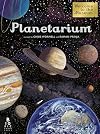
Excellent illustrations in lovely large format. Why the typos, though? It turns out that the absolute best way to read this book is not to read it at all; just admire the illustrations, which are lovely and very distinctive, and read the captions.
Lists
Awards


You May Also Like


Associated Authors
Statistics
- Works
- 30
- Members
- 637
- Popularity
- #39,574
- Rating
- 4.1
- Reviews
- 7
- ISBNs
- 137
- Languages
- 12