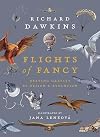
What's good about this book? Quite a bit actually.
This is the era of cheap color printing and Shutterstock, and it's very typical for a non-fiction book to be illustrated with a heterogeneous collection of free images, scattered without judgement, and frequently without any useful caption, here and there within the book. This book was designed for illustration, and the illustrator was reasonably well-selected. Her humans are less good than her animals and her machines, as is frequently the case even with talented illustrators. But overall, this book is so refreshing due to the fact that its text and his illustrations form a pleasing and coherent whole.
The other good thing about the book is that Dawkins has a point to make: that there is physics, and that living things have evolved and machines have been designed within the constraints of that physics, which is real and that in many cases, the machines have, due to those constraints, turned out something like the living things, which have turned out something like each other, even if not closely related. This is a good point and an interesting one which Dawkins can illustrate with many interesting examples.
What's bad about it? The occasional malapropism. The occasional jokey aside, nearly mandatory these days for a book written for young adults, but always tiresome. A bit of pomposity and sentimentality here and there. The occasional dig at Christians and Christianity, which is tiresome and reveals a Dawkins who has always show more taken a simplistic view of rhetoric, and now seems to believe that all art must be representational.
Absolutely worth reading, and only occasionally, and only moderately, annoying. show less
This is the era of cheap color printing and Shutterstock, and it's very typical for a non-fiction book to be illustrated with a heterogeneous collection of free images, scattered without judgement, and frequently without any useful caption, here and there within the book. This book was designed for illustration, and the illustrator was reasonably well-selected. Her humans are less good than her animals and her machines, as is frequently the case even with talented illustrators. But overall, this book is so refreshing due to the fact that its text and his illustrations form a pleasing and coherent whole.
The other good thing about the book is that Dawkins has a point to make: that there is physics, and that living things have evolved and machines have been designed within the constraints of that physics, which is real and that in many cases, the machines have, due to those constraints, turned out something like the living things, which have turned out something like each other, even if not closely related. This is a good point and an interesting one which Dawkins can illustrate with many interesting examples.
What's bad about it? The occasional malapropism. The occasional jokey aside, nearly mandatory these days for a book written for young adults, but always tiresome. A bit of pomposity and sentimentality here and there. The occasional dig at Christians and Christianity, which is tiresome and reveals a Dawkins who has always show more taken a simplistic view of rhetoric, and now seems to believe that all art must be representational.
Absolutely worth reading, and only occasionally, and only moderately, annoying. show less
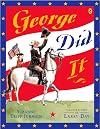
This is the second book I've seen by this author/illustrator combination and it is quite as good as the first. This one is about George Washington, who takes on one demanding role after another. As with the previous book, the illustrations capture the historical situation. In the first, Washington is attempting to return to his life as English country gentleman in Virginia, but is being chased wildly by the people who want to bring him back into politics. There is even a sunset, which he appears to be trying to ride off into. Then comes the back story: on one page Washington looks glumly at a bunch of farmers who he must turn into soldiers, on the other he swelters at the Constitutional Convention while Benjamin Franklin sleeps, James Madison writes, and Alexander Hamilton becomes highly excited. It takes several pages to for George to be persuaded, but when he is elected by a unanimous vote, he can not say no. So he packs, and he gives directions, and he packs some more; finally he sets out on a triumphal journey, encountering parade after parade, and party after party in his honor. I'm sure the orangutans are not made up. Finally comes the inauguration and the next day, Washington takes on the new challenge: President of the United States of America.
This novel was written in the 50s, when there were people still alive who could remember the astonishing news of the discoveries of Sir Arthur Evans at Knossos and not long after Linear B was finally decoded. Nowadays, I don't think anyone is terribly amazed by Cretan prehistory, or even thinks much about it but it had been in the news then.
The story is a retelling of the myth of Theseus as prehistoric fiction. The story of Orpheus is also part of this fictional adaptation. Orpheus has traveled so widely he has seen icebergs, like the much later Pytheas.
In the fictional world of Theseus, the legend of Agamemnon is already a myth, but it is a religious myth about a king who returns to find that in his absence his wife has made herself Queen in her own right, as a priestess of the earth mother goddess, and who finds himself promptly sacrificed on his return. The hero Herakles is also a myth to Theseus, so that he names a bull after him. Rhadamanthus is also an ancient legend and the Minos is a title, not a name.
The other mythical characters who occur in the novel are part of the Theseus legend, as far as I understand.
The Cretan artificers speak in front of Theseus of the Pharaoh of Egypt who worships only the sun god, and encourages originality in art. This is Akhenaten, of course.
The theory that the eruption of the volcano on Thera/Santorini had caused the downfall of the rulers of Knossos was a popular one when Renault wrote, she went with it.
The title of the book is apt. show more Kings just go on dying all through this fairly short novel. This is partly because some of them are year kings; crowned in order to be sacrificed so that the crops will grow. Theseus defeats and kills one such at the beginning of the novel and is present during the Dionysian rite at which another dies. Other kings who die are Minos, the Minotaur, and Theseus's own father, Aigeus. The King Horse is sacrificed when Theseus is a boy, to get the whole theme of a king who is a sacrificed started.
In Theseus's recollection, his sense of his own destiny is very strong. Yet now he is mired in regret and sorrow, knowing how it ultimately all turned out.
In her author's note, Renault repudiates the kind of choice that Henry Treece would have made, to make of Theseus a mere roving adventurer with whom his putative father, Aigeus, strikes a deal. Well, her style is more romantic than Treece's, and I think she is just a better writer. However, she seems to follow Robert Graves's lead in positing a struggle between an ancient matriarchal earth mother religion and an invading patriarchal sky father religion.
So much of the Theseus myth is rather nicely turned into semi-realistic prehistory. The Minotaur is the son of a bull leaper and the queen, not a bull and a queen. The mechanical bull is a constructed thing, used for practicing without the very considerable challenge of a real bull. Theseus does follow a thread through the labyrinth, in that enormous palace it wouldn't be hard to get lost.
I don't know of anyone else who wrote such a vivid recreation of this time period, maybe no one ever will again. show less
The story is a retelling of the myth of Theseus as prehistoric fiction. The story of Orpheus is also part of this fictional adaptation. Orpheus has traveled so widely he has seen icebergs, like the much later Pytheas.
In the fictional world of Theseus, the legend of Agamemnon is already a myth, but it is a religious myth about a king who returns to find that in his absence his wife has made herself Queen in her own right, as a priestess of the earth mother goddess, and who finds himself promptly sacrificed on his return. The hero Herakles is also a myth to Theseus, so that he names a bull after him. Rhadamanthus is also an ancient legend and the Minos is a title, not a name.
The other mythical characters who occur in the novel are part of the Theseus legend, as far as I understand.
The Cretan artificers speak in front of Theseus of the Pharaoh of Egypt who worships only the sun god, and encourages originality in art. This is Akhenaten, of course.
The theory that the eruption of the volcano on Thera/Santorini had caused the downfall of the rulers of Knossos was a popular one when Renault wrote, she went with it.
The title of the book is apt. show more Kings just go on dying all through this fairly short novel. This is partly because some of them are year kings; crowned in order to be sacrificed so that the crops will grow. Theseus defeats and kills one such at the beginning of the novel and is present during the Dionysian rite at which another dies. Other kings who die are Minos, the Minotaur, and Theseus's own father, Aigeus. The King Horse is sacrificed when Theseus is a boy, to get the whole theme of a king who is a sacrificed started.
In Theseus's recollection, his sense of his own destiny is very strong. Yet now he is mired in regret and sorrow, knowing how it ultimately all turned out.
In her author's note, Renault repudiates the kind of choice that Henry Treece would have made, to make of Theseus a mere roving adventurer with whom his putative father, Aigeus, strikes a deal. Well, her style is more romantic than Treece's, and I think she is just a better writer. However, she seems to follow Robert Graves's lead in positing a struggle between an ancient matriarchal earth mother religion and an invading patriarchal sky father religion.
So much of the Theseus myth is rather nicely turned into semi-realistic prehistory. The Minotaur is the son of a bull leaper and the queen, not a bull and a queen. The mechanical bull is a constructed thing, used for practicing without the very considerable challenge of a real bull. Theseus does follow a thread through the labyrinth, in that enormous palace it wouldn't be hard to get lost.
I don't know of anyone else who wrote such a vivid recreation of this time period, maybe no one ever will again. show less
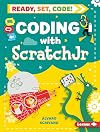
This is a project book for children. There are four projects presented, along with some useful techniques.
As with the other books, there are callouts that present some real world related trivia. As is usual with trivia, these facts lack context. They are clearly visually distinguished from the project instructions, though, so a child who wants to ignore them can do so fairly easily.
As with the other books, there are callouts that present some real world related trivia. As is usual with trivia, these facts lack context. They are clearly visually distinguished from the project instructions, though, so a child who wants to ignore them can do so fairly easily.
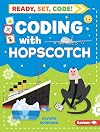
Hopscotch is another block based language that you can run on your tablet. The interface is more controlled than that for Scratch, you don't drag and drop blocks; you select the blocks that will fit from the menus provided. It's not a bad design, and it does work.
Around five small projects are presented. The first is a Titanic project, where the Titanic hits the iceberg. That struck me as an odd choice, given that lots of people died because of that. Better if the Titanic had avoided the iceberg. Another somewhat odd choice is the little callouts on the pages, giving mini-facts about the subject of each project. Most of them lack enough context to make much sense; they are mere trivia. I think that is the style of all the books in the series, and it doesn't do much for any of them.
Around five small projects are presented. The first is a Titanic project, where the Titanic hits the iceberg. That struck me as an odd choice, given that lots of people died because of that. Better if the Titanic had avoided the iceberg. Another somewhat odd choice is the little callouts on the pages, giving mini-facts about the subject of each project. Most of them lack enough context to make much sense; they are mere trivia. I think that is the style of all the books in the series, and it doesn't do much for any of them.

When I was a child I read all sorts of nation founding and preserving myths, tales of Ulster, the Fianna, the Cid, whoever. This was another of those nation founding myths, but a bit more foreign. I liked it fine then, and remember just a bit of it. But it's not very thrilling now and the way those heroes are dressed in the illustrations are preposterous. I guess I prefer my Attila a lot more historical and not the great, great, grandson of Noah. Nimrod is impressively long lived, I've gotta say.
The Cimmerians show up in this tale; it is notable that Conan (the Barbarian) is more properly known as "the Cimmerian". Perhaps, in her illustrations, Seredy was following the Conan rule that the colder the temperature gets the less the hero wears, until, when surrounded by nothing but snow and ice he's usually stripped down to a pair of fur boots and some kind of fur bikini.
The Cimmerians show up in this tale; it is notable that Conan (the Barbarian) is more properly known as "the Cimmerian". Perhaps, in her illustrations, Seredy was following the Conan rule that the colder the temperature gets the less the hero wears, until, when surrounded by nothing but snow and ice he's usually stripped down to a pair of fur boots and some kind of fur bikini.
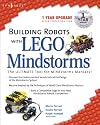
This isn't a project book. It's full of useful tips for building Lego RCX mechanisms and numerous depictions of completed machines that illustrate one of the principles discussed. I've made good use of it. Its only obvious defect so far is that it discusses some basic geometry concepts as if they're daunting, positively apologizing for all that math, but when it discusses some physics, which is, in my opinion, a great deal more difficult, it leaves off all the apologizing. Perhaps the writers started out convinced they had to apologize for all matter that seemed like science, but realized that the book was quite long enough, and that they were tired of apologizing.
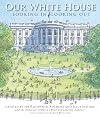
I was quite disappointed by this book when I received it. I believed that the author was the famous illustrator David Macaulay and that this was a previously unknown to me architectural work by him. It turns out that he is the cover artist only. Instead of being an architectural book, this is much more a history book, consisting of short, semi-fictional works by many children's books authors, about some thing or other during a term of some president or other. There are also some stand-alone illustrations by well-regarded children's book illustrators. While some of the illustrations are rather good, the book is just a scrapbook of miscellaneous bits, and so no part of it, other than perhaps some the illustrations that head each part, can really make much of an impression.
The book has a still functioning accompanying website, https://ourwhitehouse.org, which may in some ways be better. You can see some of the better illustrations there, like the illustrated map of downtown DC by Roxie Munro for Part VII: https://ourwhitehouse.org/wp-content/uploads/2016/03/The-Great-House-Endures-by-... , or the illustration by Bagram Ibatoulline of George Washington, map in hand, looking over the future site of the capital for Part I: https://ourwhitehouse.org/wp-content/uploads/2016/07/From-the-Foundation-Up-by-B... . The burning of the White House by the British during the Madison presidency, painted by Wendell Minor, isn't too bad either: show more target="_top">https://ourwhitehouse.org/wp-content/uploads/2016/06/Struggling-to-Stand-by-Wend... . But most of the other illustrations have too small a scope to work well; they don't capture any broad theme. show less
The book has a still functioning accompanying website, https://ourwhitehouse.org, which may in some ways be better. You can see some of the better illustrations there, like the illustrated map of downtown DC by Roxie Munro for Part VII: https://ourwhitehouse.org/wp-content/uploads/2016/03/The-Great-House-Endures-by-... , or the illustration by Bagram Ibatoulline of George Washington, map in hand, looking over the future site of the capital for Part I: https://ourwhitehouse.org/wp-content/uploads/2016/07/From-the-Foundation-Up-by-B... . The burning of the White House by the British during the Madison presidency, painted by Wendell Minor, isn't too bad either: show more target="_top">https://ourwhitehouse.org/wp-content/uploads/2016/06/Struggling-to-Stand-by-Wend... . But most of the other illustrations have too small a scope to work well; they don't capture any broad theme. show less

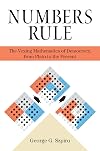
This is a history, by a mathematician, of mathematical thinking about elections. Unfortunately, wherever there is more history than math it is clueless and irritating. Since I have extremely practical reasons for consulting the book, I could wish the author had stuck to the math.
After giving up on this book in annoyance, because I could not stand the first chapter, which is about Plato's "Republic", shear annoyance has compelled me to return to this book, after I gave up on the chapter on electoral districts in Jordan Ellenberg's "Shape" (because it was so annoying). "Shape" was published during the derangements, and I think Ellenberg, like many other authors, must have been told to get plenty of Trump hate into the book if he wanted it promoted. From now and for the next decade, it will not be necessary to look at the copyright date for some books; all the impertinent Trump hate will date the book nicely.
What has driven me to take up this book again is the recent decision by the Supreme Court regarding "race" and election districts. The selection of districts is actually a tricky mathematical and even statistical problem. In Massachusetts, the proportion of voters who cast a vote for Trump, about 40%, is often compared with the proportion of Republican representatives to Congress, 0%, and this fact presented as proof that the electoral districts are gerrymandered. Some easy math will tell us that this fact does not constitute such proof. How to assess whether the show more districts are fair or not is a much more difficult mathematical question. Actually, we all know that the party in power has done as much as is within its power to retain power, so, yes, of course the districts are gerrymandered to the nth degree. The question really is is whether that would make any difference to the election outcomes, even if the elections were secure, which of course they are not, by design.
Another reason to attempt to read this book again is some pending Massachusetts legislation about so-called "jungle primaries", where the separate primaries for each political property are merged into a single runoff preliminary election. What would be the effect? Again, this requires a bit of math, which this book might help with.
I think that the best strategy for approaching this book is to read it in reverse order of the chapters, however difficult that turns out to be. It is fairly likely that there is no better book in any library in all of Massachusetts. Loins, therefore, girded. show less
After giving up on this book in annoyance, because I could not stand the first chapter, which is about Plato's "Republic", shear annoyance has compelled me to return to this book, after I gave up on the chapter on electoral districts in Jordan Ellenberg's "Shape" (because it was so annoying). "Shape" was published during the derangements, and I think Ellenberg, like many other authors, must have been told to get plenty of Trump hate into the book if he wanted it promoted. From now and for the next decade, it will not be necessary to look at the copyright date for some books; all the impertinent Trump hate will date the book nicely.
What has driven me to take up this book again is the recent decision by the Supreme Court regarding "race" and election districts. The selection of districts is actually a tricky mathematical and even statistical problem. In Massachusetts, the proportion of voters who cast a vote for Trump, about 40%, is often compared with the proportion of Republican representatives to Congress, 0%, and this fact presented as proof that the electoral districts are gerrymandered. Some easy math will tell us that this fact does not constitute such proof. How to assess whether the show more districts are fair or not is a much more difficult mathematical question. Actually, we all know that the party in power has done as much as is within its power to retain power, so, yes, of course the districts are gerrymandered to the nth degree. The question really is is whether that would make any difference to the election outcomes, even if the elections were secure, which of course they are not, by design.
Another reason to attempt to read this book again is some pending Massachusetts legislation about so-called "jungle primaries", where the separate primaries for each political property are merged into a single runoff preliminary election. What would be the effect? Again, this requires a bit of math, which this book might help with.
I think that the best strategy for approaching this book is to read it in reverse order of the chapters, however difficult that turns out to be. It is fairly likely that there is no better book in any library in all of Massachusetts. Loins, therefore, girded. show less

Possibly the most wildly romantic historical novel ever written. Leaves any novel by Sir Walter Scott absolutely in the dust. The N. C. Wyeth illustrations are perfect for this story of passion, honor and travail. The history is there, also, and many historical persons, of whom the most likely to be instantly recognized are Sir Francis Drake and Sir Walter Raleigh, make regular appearances in the narrative.
It is another of those books which have no natural place in the modern public library; too sophisticated and subtle for the YA section, too noble and romantic for the adult section, too mature for the children's section. Sigh.
It is another of those books which have no natural place in the modern public library; too sophisticated and subtle for the YA section, too noble and romantic for the adult section, too mature for the children's section. Sigh.
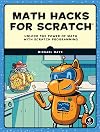
I expected something very different, something that used the visual aspects of the Scratch programming language. What this is instead is a pretty straightforward book about doing math with the Scratch language. That's Ok too, but if you're doing that at all you should just take the plunge and use Snap! instead of Scratch, for better mathing.
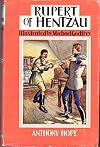
The love of a beautiful and virtuous woman has turned Rudolf Rassendyl from a debonair English layabout to a debonair English knight, devoted to a singular goal. This love, and the little tokens thereof, are what start the plot rolling again. The tokens are preposterous, but if they didn't exist Rupert of Hentzau's machinations would have had to be made more complex. Something was going to give, with Rupert scheming and knowing too much, the king so unstable, ill, and jealous. The plot is full of ill-informed characters dashing rapidly from one of the familiar locations to another, occasionally arriving in the nick of time, but often as not too late. Very little works out as planned.
Rudolf is as heroic as heroic can possibly be. Just occasionally, in moments of conversation between Rudolf and Sapt, the characteristic Rudolf of "The Prisoner of Zenda", practical and even a bit caustic, reappears. Rupert's scheming has diminished him just a bit, he is no longer the blithe agent of chaos from the previous book, but seems a little seedy.
The story is told by Fritz von Tarlenheim many years after the events. Everything is resolved with the utmost pathos, but resolved it definitely is. If Fritz felt any dissatisfaction with Rudolf then he has forgotten it now, there is nothing but adoration in his recollections.
James, Rudolf's imperturbable and unexplained valet, is clearly an agent of the English secret service.
Rudolf is as heroic as heroic can possibly be. Just occasionally, in moments of conversation between Rudolf and Sapt, the characteristic Rudolf of "The Prisoner of Zenda", practical and even a bit caustic, reappears. Rupert's scheming has diminished him just a bit, he is no longer the blithe agent of chaos from the previous book, but seems a little seedy.
The story is told by Fritz von Tarlenheim many years after the events. Everything is resolved with the utmost pathos, but resolved it definitely is. If Fritz felt any dissatisfaction with Rudolf then he has forgotten it now, there is nothing but adoration in his recollections.
James, Rudolf's imperturbable and unexplained valet, is clearly an agent of the English secret service.
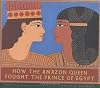
Tamara Bower wrote three unusual and clever books about ancient Egypt. They are unusual because they are so erudite, containing the real text of various original Egyptian texts, and because they are so cleverly illustrated. This book is a retelling of an Egyptian folktale found on a papyrus from the Ptolemaic era. If I had to guess, I would say the tale was derived from the Greek legend of Theseus. Tamara Bower's illustrations and text are pleasingly erudite but also kind of fun. On p. 23 the Amazon queen imagines herself smiting the captive Egyptian prince in a pose that is a perpetual cliche of Egyptian art, from the earliest times; it appears on the obverse of the Narmer palette, which is the side usually shown in books for children, and probably also in painting from Tutankhamun's tomb, made thousands of year later. The whole book is really well done throughout.
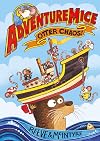
A bit harum scarum, but the illustrations, especially the cutaway view of Mouse Base, are fun.
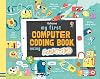
This is a ScratchJr project book written for children. It's spiral bound and 48 pages long. The first 12 pages are abstract remarks about coding, which are best skipped. The artwork is a certain kind of flat artwork which I feel is far too prevalent nowadays, but works well for a book that is really just a set of project instructions. There are some small chapters devoted to specific projects, and some to how to use important parts of the Scratch IDE, like the paint interface. I thought all of this was rather well done.
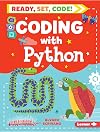
This book is about coding on the trinket.io platform, which is a Scratch-alike where the blocks are translated into Python library source. That's actually a very nice idea but the site is scheduled to shut down in August. The organization is open sourcing all the code, which is good of them, but likely the idea will wither away, to be replaced with a new similar thing eventually.
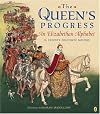
It was for the Bagram Ibatoulline illustrations and the historical subject that I checked this book out. The main text is an ABC, with short four line stanzas for every letter, which tell a story of the progress of Queen Elizabeth I during one English summer. Also on each page is some more explanatory text, for older readers. This book is very well-executed, but the poem seemed a little contrived and clumsy. The story of an attempted assassination is based on real events.

I like this better, somehow, than I liked "Visual Games". Like the other book, a lot of the book is not about actual games. There are, for example, some quite good diagrams of Alexandrian Greek water-driven devices in the section called "Enigmas, riddles, games of logic: Enigmas". How they ended up in that section, I do not know as they are ancient engineering and have nothing to do with riddles or logic. There are descriptions of many games and their variants, along with artists' renderings of the game boards.
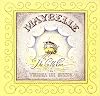
Maybelle is another in Virginia Lee Burton's list of anthropomorphic vehicles. As with "Mike Mulligan and his Steam Shovel" the best part of the book is the drawings, for children, of the mechanics of the vehicle. Virginia Lee Burton almost seems like a precursor to David Macaulay with her whimsical yet accurate diagrams.
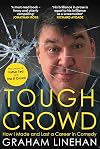
The autobiography of a cancelled author. Linehan started out as a music writer for the Irish equivalent of the NME, and moved to London and to writing comedy. Some of the comedy was really successful. Then he weighed in on gender ideology and women's rights, and his career was demolished. He is now divorced, has been arrested by British police a few times, lives in Arizona as far as I know, has a Substack, the Glinner Report, and is writing a comedy screenplay, again.
Linehan's framing device is poignant, his reading is charmingly accented, and he can be quite funny. The most visceral observation is his remark about how the Irish pub smoking ban uncovered the smells that the cigarette smoke had hidden, of the urinal cakes, and the smells they were supposed to hide. An unanticipated side-effect. Some of his similes moved me to laughter.
I think, given his character, he would have taken the plunge eventually, but he went over the edge under the influence of powerful painkillers, having just undergone testicle removal surgery (cancer). By the time he was out of the hospital his life had been changed, his fair weather friends were all gone, etc.
The narrative is great, but I do not share his convictions about the significance of comedy and music journalism. I am too much the scientist, I guess.
Linehan's framing device is poignant, his reading is charmingly accented, and he can be quite funny. The most visceral observation is his remark about how the Irish pub smoking ban uncovered the smells that the cigarette smoke had hidden, of the urinal cakes, and the smells they were supposed to hide. An unanticipated side-effect. Some of his similes moved me to laughter.
I think, given his character, he would have taken the plunge eventually, but he went over the edge under the influence of powerful painkillers, having just undergone testicle removal surgery (cancer). By the time he was out of the hospital his life had been changed, his fair weather friends were all gone, etc.
The narrative is great, but I do not share his convictions about the significance of comedy and music journalism. I am too much the scientist, I guess.
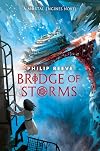
I think Philip Reeve's world of Mortal Engines books are getting lighter. If this was the original series, the characters would mostly be dead, not forging on like something out of Tintin.
There's a passage near the end that suggests to me that Reeve is getting fed up with the literary establishment.
It is sad that these books are not getting the uptake that they deserve. Still, I can not wait until the next one, which will no doubt contain new discoveries, new battles, and old characters.
There's a passage near the end that suggests to me that Reeve is getting fed up with the literary establishment.
It is sad that these books are not getting the uptake that they deserve. Still, I can not wait until the next one, which will no doubt contain new discoveries, new battles, and old characters.
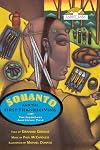
This is a good short movie about Squanto. It answers a few of the perplexing questions that Metaxas's book "Squanto and the Miracle of Thanksgiving" raises. It is not really animated, but rather illustrated, with paintings by Michael Donato. Graham Greene's narration is excellent. I think it would be highly recommended for Christian homeschoolers in Massachusetts, but I'm not a Christian homeschooler, and I liked it.
Blockly is really a library of general support for programming in a Scratch-like environment. This book tries to describe some applications or websites that use Blockly, but at 24 pages, that's basically undoable. Best to stick with Scratch 3.0, which uses a fork of Blockly, that way its possible to be specific and stick to one app. At least one of the book's links is dead. It's not really useful.
Squanto and the Miracle of Thanksgiving: A Harvest Story from Colonial America of How One Native American's Friendship Saved the Pilgrims by Eric Metaxas
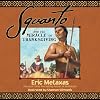
Squanto's story told from Squanto's viewpoint, with a very Christian message. The story raises more questions than it answers.
When the Heavens Went on Sale: The Misfits and Geniuses Racing to Put Space Within Reach by Ashlee Vance
Good book to bring you up-to-date with the state of space in 2023. Written by a journalist with a concentration on personalities and limited attention to physics or engineering.

The illustrations are vigorous! Katy, the caboose of the title, is the principal character in the majority of the illustrations. Her eyes, which are windows, show her mood. The locomotive, generally the star of a train book, appears in only a few illustrations, but dominates them all. The locomotive has a quite remarkable nose, which is cylindrical, and eyes which are lamps. The eyes show all, when the locomotive is briskly moving along level ground they are pleased, as the locomotive lunges to the top of a precipitous mountain in the western United States, the locomotive is positively raging. I enjoyed it.
There is one grim aside about squealing pigs in box cars.
There is one grim aside about squealing pigs in box cars.
This a 24 page manual for the ScratchJr programming environment for young children. Simple and clear, in no way misleading.
A nicely bound and illustrated collection of essays on the Royal Society, with an enthusiastic and as usual somewhat misinformed introduction by Bill Bryson. Here is a partial review of the essays.
1. "At the Beginning: More Things in Heaven and Earth" by James Gleick.
I have read Gleick's brief biography of Isaac Newton. Gleick's work is well known and no book about Isaac Newton can avoid the Royal Society. He was a reasonably good choice for the first essayist, and he writes a brief introduction to the early days of the Society. It is weird to see so many well-known names on the founding document and it substantiates David Wootton's claim in "The Invention of Science" that science was pretty much invented in England. Of course, it helped that the Royal Society was open to foreign members, so that science didn't have to be invented solely by the English. The following passage really resonated with me.
"Their first purpose," said Thomas Spratt, writing his "history" of the Society when it was barely fledged, "was no more, than onely the satisfaction of breathing a freer air, and of conversing in quiet one with another, without being ingag'd in the passions, and madness of that dismal Age."
This truly is one of the appeals of science, properly pursued. It is one reason why the injection of politics into ostensible "science" books being published these days is so distressing.
2. "Of the Madness of Mad Scientists: Jonathan Swift's Grand Academy" by Margaret Atwood
I nearly skipped show more this essay, because I feel that novelists, with very rare exceptions, are not able to interpret reality at all well. Certainly Atwood's track record on reality is not that good, although her novel writing is, last time I checked. This was just a history of mad scientist portrayals, starting with Jonathan Swift's portrayal of Laputa in "Gulliver's Travels" which can not fail to have been inspired by the Royal Society and going on more or less to the modern day. Nothing deep, and nothing wrong, and as one would expect from Atwood, where it encounters reality, fairly clueless.
It made me nostalgic for that excellent movie of Karel Zeman's "Invention for Destruction", which Atwood probably doesn't know about, but which is a fairly lighthearted example of the mad scientist genre, since the scientist is merely tricked, not evil, and the handsome hero saves the day, and there are balloons and submarines and everything so Vernesque.
3. "Lost in Space: The Spiritual Crisis of Newtonian Cosmology" by Margaret Wertheim
I skipped this one. One must draw a line somewhere.
4. "Atoms of Cognition: Metaphysics in the Royal Society, 1715 - 2010" by Neil Stephenson
This essay was republished in Stephenson's essay collection, "Some Remarks", so I'm already familiar with it. It was fun to re-read it in a nicely bound form with good illustrations, though. It's about metaphysics generally, and specifically about Leibniz's grand metaphysical notions. Leibniz and Newton are both important characters in Neal Stephenson's enormous "Baroque Cycle", and it's hard not to like Leibniz, just from the portrayal of him in those books. One can sympathize with Newton, but can not really cotton to him. The essay is a re-interpretation of Leibniz's ideas as perhaps reborn or restated in modern physics. It's interesting, it's snappy, as Stephenson's writing usually is, and it contains in the text several references of interest.
5. "What's in a Name? Rivalries and the Birth of Modern Science" by Rebecca Newberger Goldstein
I once attempted Goldstein's book about Godel, and found it unrewarding. This essay is too long, but more rewarding. It seems to argue that science as it was being invented by the Royal Society, transformed the two pillars of previous understanding of the natural world, observation and logic, into two more aggressive forms of the same thing, experimentation and mathematical analysis (what is now known in college mathematics as "applied math"). I think she's on to something there.
The tension between the mathematicians and the experimentalists is real. When I was young, I could not bear to tinker, I wanted to lay everything out mathematically before I began, out of conviction. That was very inhibiting. As an adult, I have learned to value heuristics rather more.
6. "Charged Atmospheres: Promethean Science and the Royal Society" by Simon Schaffer
This is the only work I have ever read by this author but I have heard much about his most famous book, "Leviathan and the Air Pump", in David Wootton's "The Invention of Science". This small essay seems to be of a piece with the larger work; the author likes to bang on about how social forces influence the scientific ideas that people credit. Of course they do, but apparently the author likes to argue that this observed fact means that social forces determine credibility, and that credibility decides scientific truth. Wootton, in opposition to this view, believes that science is related to reality, and so do I! There was nothing so terribly bad about this essay in itself, it gives dates and actions taken, and there was history, but no science.
7. "A New Age of Flight: Joseph Banks Goes Ballooning" by Richard Holmes
I have already enjoyed two books by Richard Holmes, "Age of Wonder" and "Falling Upward" so I was rather looking forward to this essay about the dawn of the age of ballooning and the somewhat veiled interest that Joseph Banks took in the new technology of aerostation. It was good, but not extra-ordinarily so. I believe that it was written prior to "Falling Upward" or excerpted from that book while it was in progress. There is too much similarity between this essay and an early chapter of "Falling Upward" for anything else to be true. show less
1. "At the Beginning: More Things in Heaven and Earth" by James Gleick.
I have read Gleick's brief biography of Isaac Newton. Gleick's work is well known and no book about Isaac Newton can avoid the Royal Society. He was a reasonably good choice for the first essayist, and he writes a brief introduction to the early days of the Society. It is weird to see so many well-known names on the founding document and it substantiates David Wootton's claim in "The Invention of Science" that science was pretty much invented in England. Of course, it helped that the Royal Society was open to foreign members, so that science didn't have to be invented solely by the English. The following passage really resonated with me.
"Their first purpose," said Thomas Spratt, writing his "history" of the Society when it was barely fledged, "was no more, than onely the satisfaction of breathing a freer air, and of conversing in quiet one with another, without being ingag'd in the passions, and madness of that dismal Age."
This truly is one of the appeals of science, properly pursued. It is one reason why the injection of politics into ostensible "science" books being published these days is so distressing.
2. "Of the Madness of Mad Scientists: Jonathan Swift's Grand Academy" by Margaret Atwood
I nearly skipped show more this essay, because I feel that novelists, with very rare exceptions, are not able to interpret reality at all well. Certainly Atwood's track record on reality is not that good, although her novel writing is, last time I checked. This was just a history of mad scientist portrayals, starting with Jonathan Swift's portrayal of Laputa in "Gulliver's Travels" which can not fail to have been inspired by the Royal Society and going on more or less to the modern day. Nothing deep, and nothing wrong, and as one would expect from Atwood, where it encounters reality, fairly clueless.
It made me nostalgic for that excellent movie of Karel Zeman's "Invention for Destruction", which Atwood probably doesn't know about, but which is a fairly lighthearted example of the mad scientist genre, since the scientist is merely tricked, not evil, and the handsome hero saves the day, and there are balloons and submarines and everything so Vernesque.
3. "Lost in Space: The Spiritual Crisis of Newtonian Cosmology" by Margaret Wertheim
I skipped this one. One must draw a line somewhere.
4. "Atoms of Cognition: Metaphysics in the Royal Society, 1715 - 2010" by Neil Stephenson
This essay was republished in Stephenson's essay collection, "Some Remarks", so I'm already familiar with it. It was fun to re-read it in a nicely bound form with good illustrations, though. It's about metaphysics generally, and specifically about Leibniz's grand metaphysical notions. Leibniz and Newton are both important characters in Neal Stephenson's enormous "Baroque Cycle", and it's hard not to like Leibniz, just from the portrayal of him in those books. One can sympathize with Newton, but can not really cotton to him. The essay is a re-interpretation of Leibniz's ideas as perhaps reborn or restated in modern physics. It's interesting, it's snappy, as Stephenson's writing usually is, and it contains in the text several references of interest.
5. "What's in a Name? Rivalries and the Birth of Modern Science" by Rebecca Newberger Goldstein
I once attempted Goldstein's book about Godel, and found it unrewarding. This essay is too long, but more rewarding. It seems to argue that science as it was being invented by the Royal Society, transformed the two pillars of previous understanding of the natural world, observation and logic, into two more aggressive forms of the same thing, experimentation and mathematical analysis (what is now known in college mathematics as "applied math"). I think she's on to something there.
The tension between the mathematicians and the experimentalists is real. When I was young, I could not bear to tinker, I wanted to lay everything out mathematically before I began, out of conviction. That was very inhibiting. As an adult, I have learned to value heuristics rather more.
6. "Charged Atmospheres: Promethean Science and the Royal Society" by Simon Schaffer
This is the only work I have ever read by this author but I have heard much about his most famous book, "Leviathan and the Air Pump", in David Wootton's "The Invention of Science". This small essay seems to be of a piece with the larger work; the author likes to bang on about how social forces influence the scientific ideas that people credit. Of course they do, but apparently the author likes to argue that this observed fact means that social forces determine credibility, and that credibility decides scientific truth. Wootton, in opposition to this view, believes that science is related to reality, and so do I! There was nothing so terribly bad about this essay in itself, it gives dates and actions taken, and there was history, but no science.
7. "A New Age of Flight: Joseph Banks Goes Ballooning" by Richard Holmes
I have already enjoyed two books by Richard Holmes, "Age of Wonder" and "Falling Upward" so I was rather looking forward to this essay about the dawn of the age of ballooning and the somewhat veiled interest that Joseph Banks took in the new technology of aerostation. It was good, but not extra-ordinarily so. I believe that it was written prior to "Falling Upward" or excerpted from that book while it was in progress. There is too much similarity between this essay and an early chapter of "Falling Upward" for anything else to be true. show less
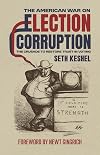
Kind of an autobiography, but in this case an autobiography of a man who was able to predict the outcome of the 2024 election fairly precisely. How does he do it? He looks for indicators that he thinks are not coincidental. The most obvious is voter registration data; if there is a shift in party registration that signals a coming shift in the voting behavior of said voters.
While the author has genuine and realistic concerns about election corruption, that is not really what this book is about. The middle of the book has a section explaining why the author believes that, sans election corruption, Trump would have won the 2020 election. Each point is called "irrefutable", but none are. Each is, rather, an observation about another weird thing that happened that doesn't usually happen in presidential elections.
Of course, I agree with Keshel that US elections have been rendered insecure. Motivated by concerns about election insecurity, I became for a while a poll watcher and then I wrote a few articles about elections for the local online newspaper. "The Silent Death of the Secret Ballot" (https://insidelowell.com/the-silent-death-of-the-secret-ballot/) was the first, "What to Do If You Already Voted, but It Wasn’t You"(https://insidelowell.com/what-to-do-if-you-already-voted-but-it-wasnt-you/) was the next. The first received a lot of motivated scoffing; the second, rather grimly, got the attention of a few non-local residents who had found themselves in the situation show more described after the 2024 election. Finally, I did a post-election analysis after the 2024 results were in, "How Did 5,000 Votes Disappear in Just 4-Years" (https://insidelowell.com/how-did-5000-votes-disappear-in-just-4-years/), and yes, something unprecedented happened between the 2020 and the 2024 elections in Lowell, MA, and it does look rather suspicious. I haven't done any more around election integrity because there is really not much to be done about it in Massachusetts, where insecure election practices are mandated by the Democrat legislature, because these practices favor Democrat candidates.
Is this book useful for someone like me who wants election integrity for the obvious reason that without it democracy becomes a joke and is set aside for violence? Not really, unfortunately. show less
While the author has genuine and realistic concerns about election corruption, that is not really what this book is about. The middle of the book has a section explaining why the author believes that, sans election corruption, Trump would have won the 2020 election. Each point is called "irrefutable", but none are. Each is, rather, an observation about another weird thing that happened that doesn't usually happen in presidential elections.
Of course, I agree with Keshel that US elections have been rendered insecure. Motivated by concerns about election insecurity, I became for a while a poll watcher and then I wrote a few articles about elections for the local online newspaper. "The Silent Death of the Secret Ballot" (https://insidelowell.com/the-silent-death-of-the-secret-ballot/) was the first, "What to Do If You Already Voted, but It Wasn’t You"(https://insidelowell.com/what-to-do-if-you-already-voted-but-it-wasnt-you/) was the next. The first received a lot of motivated scoffing; the second, rather grimly, got the attention of a few non-local residents who had found themselves in the situation show more described after the 2024 election. Finally, I did a post-election analysis after the 2024 results were in, "How Did 5,000 Votes Disappear in Just 4-Years" (https://insidelowell.com/how-did-5000-votes-disappear-in-just-4-years/), and yes, something unprecedented happened between the 2020 and the 2024 elections in Lowell, MA, and it does look rather suspicious. I haven't done any more around election integrity because there is really not much to be done about it in Massachusetts, where insecure election practices are mandated by the Democrat legislature, because these practices favor Democrat candidates.
Is this book useful for someone like me who wants election integrity for the obvious reason that without it democracy becomes a joke and is set aside for violence? Not really, unfortunately. show less
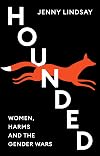
A book that documents the relentless hounding of sex realist women, principally in the UK. Rachel Rooney's hounding tops this author's personal chart, perhaps because they are both poets.