
Edwin Rosskam
Author of 12 Million Black Voices
Works by Edwin Rosskam
San Francisco: West Coast Metropolis 4 copies
Vecinos 1 copy
Tagged
Common Knowledge
There is no Common Knowledge data for this author yet. You can help.
Members
Reviews
(book #62 from 2022):
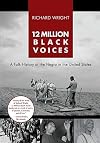
12 Million Black Voices by Richard Wright
Photo-Direction: Edwin Rosskam (selected and edited the FSA photographs for the text)
published: 1941
format: 148-page large size paperback with photos
acquired: December 24, 2022 read: Dec 25, 2022 time reading: 2:58, 1.2 mpp
rating: 4½
genre/style: historical manifesto with photos theme: Richard Wright
locations: United States (especially Alabama, Georgia, Oklahoma, Chicago and Washington, D.C.)
about the author: American author born show more on a Mississippi plantation in 1908
My Litsy post:
But the photographs...
Called poetic or elegant prose, this is really a kind of historical manifesto on the crimes of America against African Americans, contextualized as an economic power struggle between the wealthiest (whites), and on the manipulation of poor white tensions by directing them towards white/black divisions. The photographs, almost all depression-era images from the FSA, are magnificent. Terrific text/photo combo.
---
Richard Wright had just published two very successful books when this came out. Born in the south, when he moved to Chicago in 1927 he became involved in the Communist party, partially because the party was actively non-racist. It allowed him access to a community of intellectuals who would help him develop as a writer and thinker. In 1937 he moved to New York, where the party was more openly racist, and where he began to drift from the party (partially because he felt he needed more time to write). In 1949 he would openly write an essay on being an ex-communist.
I mention that because his Communist thinking may lie in the subtext here. This is not a Communist work, but it is what I would call a manifesto, and is a history presented within mainly an economic context. The history of American racism is placed with the history of American economic power struggles - both the struggles between northern and southern wealth, where blacks formed the economic backbone of the south, and in the control of masses by the wealthy by redirecting white angst away from the wealthy and towards blacks instead. (That is by creating American white privilege.)
It's also interesting because even the craziest stuff is entirely accurate (as far as I could tell).
Regarding the FSA photos: The Farm Security Administration is mostly known for sponsoring famous Depression-era photographers, like Walker Evans. Edwin Rosskam poured through these highend collections to select the photographs to match this text. Almost all the photographs are FSA.
---
This is a nice book. Anyone interested should pursue a physical copy to better appreciate the photographs and the text/photo mixture.
2022
https://www.librarything.com/topic/347061#8028148 show less
12 Million Black Voices by Richard Wright
Photo-Direction: Edwin Rosskam (selected and edited the FSA photographs for the text)
published: 1941
format: 148-page large size paperback with photos
acquired: December 24, 2022 read: Dec 25, 2022 time reading: 2:58, 1.2 mpp
rating: 4½
genre/style: historical manifesto with photos theme: Richard Wright
locations: United States (especially Alabama, Georgia, Oklahoma, Chicago and Washington, D.C.)
about the author: American author born show more on a Mississippi plantation in 1908
My Litsy post:
But the photographs...
Called poetic or elegant prose, this is really a kind of historical manifesto on the crimes of America against African Americans, contextualized as an economic power struggle between the wealthiest (whites), and on the manipulation of poor white tensions by directing them towards white/black divisions. The photographs, almost all depression-era images from the FSA, are magnificent. Terrific text/photo combo.
---
Richard Wright had just published two very successful books when this came out. Born in the south, when he moved to Chicago in 1927 he became involved in the Communist party, partially because the party was actively non-racist. It allowed him access to a community of intellectuals who would help him develop as a writer and thinker. In 1937 he moved to New York, where the party was more openly racist, and where he began to drift from the party (partially because he felt he needed more time to write). In 1949 he would openly write an essay on being an ex-communist.
I mention that because his Communist thinking may lie in the subtext here. This is not a Communist work, but it is what I would call a manifesto, and is a history presented within mainly an economic context. The history of American racism is placed with the history of American economic power struggles - both the struggles between northern and southern wealth, where blacks formed the economic backbone of the south, and in the control of masses by the wealthy by redirecting white angst away from the wealthy and towards blacks instead. (That is by creating American white privilege.)
It's also interesting because even the craziest stuff is entirely accurate (as far as I could tell).
Regarding the FSA photos: The Farm Security Administration is mostly known for sponsoring famous Depression-era photographers, like Walker Evans. Edwin Rosskam poured through these highend collections to select the photographs to match this text. Almost all the photographs are FSA.
---
This is a nice book. Anyone interested should pursue a physical copy to better appreciate the photographs and the text/photo mixture.
2022
https://www.librarything.com/topic/347061#8028148 show less
An entertaining, thoughtful novel situated in Puerto Rico about a "Continental" who has rejected his work for the U.S. bureaucracy, and has become enchanted by the lives of the poor on the island. His sympathies lie so closely with the slum dwellers that he (Emil) lives among them in a shack with a garden made from bric-a-brac and cast-off mechanical parts. Don Emilio, as he is known to the luckless dwellers of "The Little Mud", turns away from American values, money, progress and political show more domination to throw in his lot with them.
This novel charts Emil's course from the family farm, life in the bureaucracy and marriage until he determines to stay put on the island. Rosskam develops his story by providing a historical narrative within it. As an example, Don Emilio is a witness to the Ponce Massacre of 1937, an incident in which police attacked a nationalist march.
Bravo to Wellington City Library for having this little gem tucked away in its Stack Shelves. show less
This novel charts Emil's course from the family farm, life in the bureaucracy and marriage until he determines to stay put on the island. Rosskam develops his story by providing a historical narrative within it. As an example, Don Emilio is a witness to the Ponce Massacre of 1937, an incident in which police attacked a nationalist march.
Bravo to Wellington City Library for having this little gem tucked away in its Stack Shelves. show less

12 Million Black Voices, first published in 1941, combines Wright's prose with startling photographs selected by Edwin Rosskam from the Security Farm Administration files compiled during the Great Depression. The photographs include works by such giants as Walker Evans, Dorothea Lange, and Arthur Rothstein. From crowded, rundown farm shacks to Harlem storefront churches, the photos depict the lives of black people in 1930s America their misery and weariness under rural poverty, their show more spiritual strength, and their lives in northern ghettos. Wright's accompanying text eloquently narrates the story of these 90 pictures and delivers a powerful commentary on the origins and history of black oppression in this country. Also included are new prefaces by Douglas Brinkley, Noel Ignatiev, and Michael Eric Dyson. "Among all the works of Wright, 12 Million Black Voices stands out as a work of poetry, ... passion, ... and of love."David Bradley "A more eloquent statement of its kind could hardly have been devised."The New York Times Book Review show less
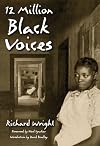
A book that is appropriate for a wide variety of ages from adults to upper elementary that documents black history in the U.S. from the period of slavery through the period preceeding the civil rights movement. Photography complements the writing. I found this to be very informative about the unfair housing practices in northern urban areas that were used to keep blacks in poverty throughout generations.
Lists
"We" narration (1)
Statistics
- Works
- 9
- Members
- 202
- Popularity
- #109,081
- Rating
- 4.2
- Reviews
- 4
- ISBNs
- 7