
Erik Spiekermann
Author of Stop Stealing Sheep & Find out How Type Works
About the Author
Erik Spiekermann is an information architect, author of books and articles on type and typography, and the designer of such typefaces as FF Meta, ITC Officina, FF Info, LoType, and Berliner Grotesk, among others. Founder of MetaDesign, Spiekermann now works as a freelance design consultant E.M. show more Ginger is a writer and editor whose work with type and typography spans printing and display technologies from letterpress to digital. After 12 years as managing editor of the journal Fine Print, she was a manager in the Adobe Originals Type Group, and at FontShop San Francisco. She is currently executive editor at Octavo, in Oakland, California show less
Image credit: Uncredited image found at typoberlin.de
Works by Erik Spiekermann
Associated Works
One Hundred Great Books on Typography: The Ultimate Typographic Library (2016) — Contributor — 9 copies, 1 review
Tagged
Common Knowledge
- Birthdate
- 1947-05-30
- Gender
- male
- Education
- Free University of Berlin
- Occupations
- type designer
professor - Organizations
- University of the Arts, Bremen, Germany
- Nationality
- Germany
- Birthplace
- Stadthagen, Lower Saxony, Germany
- Places of residence
- Berlin, Germany
London, England, UK - Associated Place (for map)
- Germany
Members
Reviews
Rating: 4* of five
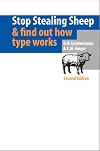
The Book Description: A classic guide to typography -- now updated for the Web -- More than 200 full-color illustrations and photographs bring the discussion of typography to life.
-- Updated to include new material on Web typography and other forms of online text display.
This classic typography book, first published in 1993, is now updated with brand-new typefaces, fonts, and illustrations. Internationally renowned graphic designer Erik Spiekermann explains in everyday show more terms what typography is and offers design guidance in choosing type for legibility, meaning, and aesthetic appeal. Stop Stealing Sheep and Find Out How Type Works, 2nd Edition guides the reader through all aspects of typography, from the history and mechanics of type, to training the eye to recognize and choose typefaces. Uncover type's roots and placement within society and learn how to use space and layout to improve overall communication. This elegant guide for readers of all levels is revised and updated to discuss the particular design challenges of type on the Internet. Note: This title was originally announced in the October 2000 Pearson Technology Group catalog.
My Review: Books about type are a guilty little pleasure for me, one I do my best to hide underneath a front of ignorance and indifference. People, by which I mean boring, unimaginative consumers of Stuff, are seriously snotty and cuttingly dismissive of typeheads when their difference comes to light. “My gawd, don't you have anything better to obsess about?!” is the most printable of the snarls I've had directed at me when I venture to observe a sign's efforts to communicate are vitiated to the point of incomprehensibility by the typeface used.
But this book is so much fun, I will go on and review it, and inform the uninterested that their uninterestingness is showing. Don't bother commenting. I'll only be rude to you. Loudly and at length.
Now...for the initiates, the Cool Kids...here's a hit from the hookah of type maven Spiekermann that will keep you snickering at the spirited writing and musing on history's chanciness at the stories he's telling. How a typeface survived in the days before the web is really a function of chance. The examples that the book gives are a hoot, the sample word he chose is “Handgloves,” which for no reason I can explain caused me to burst forth in gales of mirth, the defense of Comic Sans alone...!
I learned a lot about the story of type. I learned a lot more about the role of type in problem-solving, social (Interstate signage, form design) and commercial (brand identity, book design) than I ever knew I didn't know. I had a rare experience all the while: I had fun.
Not for everyone, for sure and certain! But a gas and a half for the amenable. show less
The Book Description: A classic guide to typography -- now updated for the Web -- More than 200 full-color illustrations and photographs bring the discussion of typography to life.
-- Updated to include new material on Web typography and other forms of online text display.
This classic typography book, first published in 1993, is now updated with brand-new typefaces, fonts, and illustrations. Internationally renowned graphic designer Erik Spiekermann explains in everyday show more terms what typography is and offers design guidance in choosing type for legibility, meaning, and aesthetic appeal. Stop Stealing Sheep and Find Out How Type Works, 2nd Edition guides the reader through all aspects of typography, from the history and mechanics of type, to training the eye to recognize and choose typefaces. Uncover type's roots and placement within society and learn how to use space and layout to improve overall communication. This elegant guide for readers of all levels is revised and updated to discuss the particular design challenges of type on the Internet. Note: This title was originally announced in the October 2000 Pearson Technology Group catalog.
My Review: Books about type are a guilty little pleasure for me, one I do my best to hide underneath a front of ignorance and indifference. People, by which I mean boring, unimaginative consumers of Stuff, are seriously snotty and cuttingly dismissive of typeheads when their difference comes to light. “My gawd, don't you have anything better to obsess about?!” is the most printable of the snarls I've had directed at me when I venture to observe a sign's efforts to communicate are vitiated to the point of incomprehensibility by the typeface used.
But this book is so much fun, I will go on and review it, and inform the uninterested that their uninterestingness is showing. Don't bother commenting. I'll only be rude to you. Loudly and at length.
Now...for the initiates, the Cool Kids...here's a hit from the hookah of type maven Spiekermann that will keep you snickering at the spirited writing and musing on history's chanciness at the stories he's telling. How a typeface survived in the days before the web is really a function of chance. The examples that the book gives are a hoot, the sample word he chose is “Handgloves,” which for no reason I can explain caused me to burst forth in gales of mirth, the defense of Comic Sans alone...!
I learned a lot about the story of type. I learned a lot more about the role of type in problem-solving, social (Interstate signage, form design) and commercial (brand identity, book design) than I ever knew I didn't know. I had a rare experience all the while: I had fun.
Not for everyone, for sure and certain! But a gas and a half for the amenable. show less
Spiekermann and Ginger have, essentially, nothing to say. Unfortunately, they spend over 150 pages saying it. The worst of it is that there are all kinds of color photos, headings, etc., so the book is printed on heavy, glossy paper. This is bad because [a] glossy paper is hard to read text on (as any designer should know) and [b] both heavy/glossy paper and color inks are expensive. Thus, you must pay $20 for a book that could very easily be condensed into a $1.50 pamphlet.
This book is show more often touted as an introduction into type because it is basic and easy to access. The problem is that it is too basic. If you know what a serif is, this book is too basic for you. If you know that it is possible to adjust the spacing between letters, words, or lines of type, then this book is way too basic for you—even if you aren’t familiar with terms like letterspacing and leading. Get a book that will be a real introduction—if you’re going to learn about type, learn enough that it will make a difference. If you want easy access, pick up something by Robin P. Williams (doesn’t matter what—they’re all about the same). If you really want to learn something, get Robert Bringhurst’s The Elements of Typographic Style. Whatever you do, pass this book up. You could learn more, cheaper, from a high-school yearbook instructor. show less
This book is show more often touted as an introduction into type because it is basic and easy to access. The problem is that it is too basic. If you know what a serif is, this book is too basic for you. If you know that it is possible to adjust the spacing between letters, words, or lines of type, then this book is way too basic for you—even if you aren’t familiar with terms like letterspacing and leading. Get a book that will be a real introduction—if you’re going to learn about type, learn enough that it will make a difference. If you want easy access, pick up something by Robin P. Williams (doesn’t matter what—they’re all about the same). If you really want to learn something, get Robert Bringhurst’s The Elements of Typographic Style. Whatever you do, pass this book up. You could learn more, cheaper, from a high-school yearbook instructor. show less
I've been reading quite a few books on typography and design this month, and (considering the topic is so fascinating) they've been a bit dry, or fluffy--either extreme. This one hits the sweet spot, straight through the middle--not so academic as to bore the bejeezus out of you, not so jejeune as to induce eyerolling. Lots of fonts explicated along the way, with coherent explanations of what makes them special. Very recommended. (I can't hand out 5 stars willy-nilly--it's not going to win show more any literary awards, and it didn't move me to tears, so 4 it is.)
(Note: 5 stars = amazing, wonderful, 4 = very good book, 3 = decent read, 2 = disappointing, 1 = awful, just awful. I'm fairly good at picking for myself so end up with a lot of 4s). I feel a lot of readers automatically render any book they enjoy 5, but I grade on a curve! show less
(Note: 5 stars = amazing, wonderful, 4 = very good book, 3 = decent read, 2 = disappointing, 1 = awful, just awful. I'm fairly good at picking for myself so end up with a lot of 4s). I feel a lot of readers automatically render any book they enjoy 5, but I grade on a curve! show less
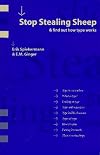
One of the worst typography/graphic-design books out there. If you're looking for practical advice, look to any of Robin Williams' ubiquitous books (I recommend The Non-Designer's Design Book, though finding significant differences among her books is like finding significant differences among cheap Merlots). If you're looking for theory/discussion/criticism, look anywhere but here. Gill, Morison, Tschichold, even Goudy—there are loads of more interesting, far more insightful books out there. show more If I may say so, look through my typography books. I'd recommend any of them as opposed to this unoriginal, poorly written, poorly designed mess. show less
You May Also Like


Associated Authors
Statistics
- Works
- 18
- Also by
- 3
- Members
- 888
- Popularity
- #28,846
- Rating
- 3.9
- Reviews
- 15
- ISBNs
- 24
- Languages
- 3
- Favorited
- 2