
Richard Stemp
Author of The Secret Language of the Renaissance: Decoding the Hidden Symbolism of Italian Art
About the Author
Richard Stemp graduated from Clare College, Cambridge with a degree in Natural Sciences and History of Art. He followed this with a PhD on "Sculpture in Ferrara in the 15th Century". After a year at the Academy of Live and Recorded Arts he now shares his time between art and theatre. Richard show more lectures on art history and guides thoughout London and across Europe. show less
Works by Richard Stemp
The Secret Language of the Renaissance: Decoding the Hidden Symbolism of Italian Art (2006) 233 copies, 1 review
The Secret Language of Churches & Cathedrals: Decoding the Sacred Symbolism of Christianity's Holy Buildings (2010) — Author — 157 copies, 4 reviews
TAJOMNÝ JAZYK KOSTOLOV A KATEDRÁL* Výklad posvätnej symboliky kresťanských sakrálnych stavieb (2010) 1 copy, 1 review
Tagged
Common Knowledge
Members
Reviews
The Secret Language of the Renaissance: Decoding the Hidden Symbolism of Italian Art by Richard Stemp
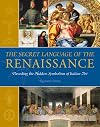
Of all the art books/coffee table books I own, this is one of the few I've actually read cover to cover. On the whole, I liked it, but it wasn't exactly what I was expecting, nor is it a particularly scholarly work. There's nothing new here -- just the packaging is unusual. More about that presently.
If you've taken an art history course that covers the period from 1400 to, say, 1525, this book provides a refresher. Most of the art works covered are familiar. Just coincidentally, I recently show more watched a Teaching Company course entitled, Great Artists of the Italian Renaissance, taught by William Kloss, which covers much of the same material. However, Kloss organized his course chronologically. Stemp organized his book topically, and the topics make all the difference.
As I said, this book was not what I was expecting. I actually believed the dust jacket blurb which said, and I quote: "For all those who relish esoteric symbolism, cryptic codes and the riches of Renaissance Italy itself." The riches of Renaissance Italy are amply presented. Symbolism is explained to a certain extent, but as for "esoteric symbolism" or "cryptic codes," that is a gross overstatement. Perhaps it would be esoteric to someone from Mars who has never seen a Renaissance painting in his life, or cryptic to someone who is unschooled in a Western cultural and religious background, but definitely interesting to students of said Western culture, religion and mythology.
The book, like Caesar's Gaul, is divided in three parts: The first part gives a breezy introduction to the state of the arts -- painting, sculpture, architecture and decorative arts -- and literature in 15th century Italy. In the course of the book, a few representative works from the preceeding and succeeding centuries are discussed to illustrate a point. But by and large, coverage is limited to the period from approximately 1400 to 1525.
The second part of the book is called, "The Language of the Renaissance," and enumerates categories of tools used by artists to convey meaning, knowledge of which aids the viewer in anylizing a particular work of art. Such categories include objects and their meanings, color, light and shade, perspective, proportion, geometry, gesture and body language, layers of meaning, and many more. Each category is illustrated by two or more works of art, all in full color.
Part three is called "The Thematic Decoder." This section takes important paintings and analyzes them in terms of the ideas explored in the previous section, and adds a bit more in the process. Again, this section is presented topically under such headings as "The Bible," "The Church," "Heaven & Earth," "The Antique," "Mythology," "Scholarship," "Government," "Power & Wealth," "War & Peace," "Life & Society," and more. Each of these sections is illustrated by several masterpieces which are discussed in detail.
Most of the so-called mystery surrounding Renaissance art has more to do with our modern loss of cultural references that were well-known to cultured people alive at the time. We in our time obviously require detailed explanation of the seemingly irrelevant elements depicted in paintings, but I would hardly classify any of them as essoteric. They were never hidden. They merely became lost to our understanding.
Aside from the misleading blurb referenced above -- and let that be a lesson: Don't believe everything you read on a book's jacket -- my only criticism of the book is related to its apparent lack of scholarship. One doesn't doubt what is presented. That is not the problem. But while it gives the names of works, the artists, the dates and locations, it leaves out the dimensions. This can be very important when contemplating a reproduction in a book. Also there are no footnotes, endnotes or otherwise. For instance, there are numerous references to noncanonical stories of Christian saints, but it fails to mention the sources of such stories. One can surmise that many of them came from The Golden Legend, but that work is not mentioned, either.
On the whole, however, this is a very useful book, one well worth reading from cover to cover. And it is wonderful to have so many important works gathered together in one beautifully produced full color volume. show less
If you've taken an art history course that covers the period from 1400 to, say, 1525, this book provides a refresher. Most of the art works covered are familiar. Just coincidentally, I recently show more watched a Teaching Company course entitled, Great Artists of the Italian Renaissance, taught by William Kloss, which covers much of the same material. However, Kloss organized his course chronologically. Stemp organized his book topically, and the topics make all the difference.
As I said, this book was not what I was expecting. I actually believed the dust jacket blurb which said, and I quote: "For all those who relish esoteric symbolism, cryptic codes and the riches of Renaissance Italy itself." The riches of Renaissance Italy are amply presented. Symbolism is explained to a certain extent, but as for "esoteric symbolism" or "cryptic codes," that is a gross overstatement. Perhaps it would be esoteric to someone from Mars who has never seen a Renaissance painting in his life, or cryptic to someone who is unschooled in a Western cultural and religious background, but definitely interesting to students of said Western culture, religion and mythology.
The book, like Caesar's Gaul, is divided in three parts: The first part gives a breezy introduction to the state of the arts -- painting, sculpture, architecture and decorative arts -- and literature in 15th century Italy. In the course of the book, a few representative works from the preceeding and succeeding centuries are discussed to illustrate a point. But by and large, coverage is limited to the period from approximately 1400 to 1525.
The second part of the book is called, "The Language of the Renaissance," and enumerates categories of tools used by artists to convey meaning, knowledge of which aids the viewer in anylizing a particular work of art. Such categories include objects and their meanings, color, light and shade, perspective, proportion, geometry, gesture and body language, layers of meaning, and many more. Each category is illustrated by two or more works of art, all in full color.
Part three is called "The Thematic Decoder." This section takes important paintings and analyzes them in terms of the ideas explored in the previous section, and adds a bit more in the process. Again, this section is presented topically under such headings as "The Bible," "The Church," "Heaven & Earth," "The Antique," "Mythology," "Scholarship," "Government," "Power & Wealth," "War & Peace," "Life & Society," and more. Each of these sections is illustrated by several masterpieces which are discussed in detail.
Most of the so-called mystery surrounding Renaissance art has more to do with our modern loss of cultural references that were well-known to cultured people alive at the time. We in our time obviously require detailed explanation of the seemingly irrelevant elements depicted in paintings, but I would hardly classify any of them as essoteric. They were never hidden. They merely became lost to our understanding.
Aside from the misleading blurb referenced above -- and let that be a lesson: Don't believe everything you read on a book's jacket -- my only criticism of the book is related to its apparent lack of scholarship. One doesn't doubt what is presented. That is not the problem. But while it gives the names of works, the artists, the dates and locations, it leaves out the dimensions. This can be very important when contemplating a reproduction in a book. Also there are no footnotes, endnotes or otherwise. For instance, there are numerous references to noncanonical stories of Christian saints, but it fails to mention the sources of such stories. One can surmise that many of them came from The Golden Legend, but that work is not mentioned, either.
On the whole, however, this is a very useful book, one well worth reading from cover to cover. And it is wonderful to have so many important works gathered together in one beautifully produced full color volume. show less
The Secret Language of Churches & Cathedrals: Decoding the Sacred Symbolism of Christianity's Holy Building by Richard Stemp
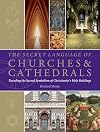
I found few "secrets" that any person with a passing interest wouldn't know but the photos are glorious. The print is miniscule throughout the book so be prepared to bring a magnifying glass when reading it. I did like the helpful numbered items explaining who statues represented and the vocabulary, Hatchment and Southwold Jack for example. Symbolism of the saints and biblical figures (Moses holds tablets, Abraham holds a lamb) are interesting too, but not really a secret. The glossary, show more index and chronology in the back are interesting and there are references for further reading.. This book is definitely worth a look and though small, would be a nice coffee table book for anyone interested in architecture, Christianity, or churches. show less
The Secret Language of Churches & Cathedrals: Decoding the Sacred Symbolism of Christianity's Holy Building by Richard Stemp
This book was everything I hoped it would be (and a refreshing change of pace after a couple other books on similar topics proved more dry/academic than I'd hoped for). I loved all the pictures, artwork, captions, numbered overlays, and info presented here; very well researched and informative.
The secret language of churches & cathedrals : decoding the sacred symbolism of Christianity's holy buildings by Richard Stemp
This book is a beautiful book, not only for the coffee table, but also for ones review. It points back to an era when symbolism in architecture was more common, where the physical attributes reflect the inner person. This is a walk through the rich world of body and soul, showing great works of human achievement attained because of intense spirituality.
You May Also Like


Statistics
- Works
- 6
- Members
- 400
- Popularity
- #60,684
- Rating
- 3.9
- Reviews
- 6
- ISBNs
- 22
- Languages
- 5