
Beth Kobliner
Author of Get a Financial Life: Personal Finance in Your Twenties and Thirties
About the Author
Beth Kobliner is a farmer staff writer at Money magazine and has contributed to New York Times and the Wall Street Journal. She has appeared on CNN, MSNBC, Today, and NPR. She served on the President's Advisory Council on Financial Capability for Young Americans. Her newest book, Make Your Kid's show more Money Genius (Even If You're Not), is a must-have guide for parents. Visit her at bethkobliner.com. Follow her on Twitter @BethKobliner. show less
Image credit: Beth Kobliner. Photo courtesy the Center for American Progress Action Fund.
Works by Beth Kobliner
Make Your Kid a Money Genius Even If You’re Not: A Parent's Guide for Kids 3 to 23 (2017) 101 copies, 2 reviews
Tagged
Common Knowledge
- Birthdate
- 1965-01-18
- Gender
- female
- Education
- Brown University (Literature)
- Occupations
- personal finance commentator
journalist
author
advisor
writer - Organizations
- Women's Institute for a Secure Retirement
- Nationality
- USA
- Places of residence
- New York, New York, USA
- Associated Place (for map)
- New York, USA
Members
Reviews
*Free e-book ARC provided by the publisher through Edelweiss/Above the Treeline in exchange for an honest review. No money or other goods were exchanged, and all views are my own.*
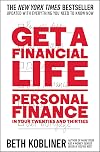
Get a Financial Life: Personal Finance in Your Twenties and Thirties gets an all-new update for a new generation, with updated links and information on all sorts of financial information, from types of debt to investing to buying a home.
This comprehensive guide is short and easy to read, but I would recommend show more jumping to the chapters that are relevant rather than reading it from cover to cover. I enjoy personal finance stuff; this one is pretty dry. It's also ridiculously detailed in some ways, including a whole chapter on services available to military (great to have as a reference, but not for everyone) and a table showing you your tax percentage calculation (I've done my own taxes for years and couldn't tell you exactly what percent of my income I pay).
Most of the advice is solid and matches up with what I've read in other financial articles and books: get out of debt, save and invest, get insurance, live within your means. Author Kobliner, a personal finance journalist and author, gives some good details that I didn't know, for example, that you might be able to save on car insurance by taking a defensive driving class. The advice is math-laden with examples and tables that went a bit beyond what I could follow, but I know those kinds of details would be fascinating to other readers. And then there are a couple of head-scratchers, like her insistence that you should only invest in index funds and not have a financial professional at all. That one I disagree with but could overlook because I could kind of see her rationale. Her mortgage discussion, however, confused me greatly. She assumes a 30-year mortgage, which is standard, but spends a fair amount of space discussing adjustable rate mortgages where, though she cautions you to be careful, she suggests that you may be able to use one to your advantage to have a low rate if you're only planning on staying in a house for a couple of years. While that may be true mathematically, I know enough of human nature to wonder how many people get into an ARM thinking they'll only stay a couple of years and then get surprised when the interest rate skyrockets - much like that "free month" required a credit card to sign up and, oops, I forgot to cancel before the 30 days ran out. And I guess I wouldn't have been so surprised by the long discussion of ARM and using points to reduce your interest rate if it weren't for the fact that she barely mentions the possibility of a 15-year mortgage. Rather than discussing the huge decrease in interest over the payment of the loan, she says they're harder to qualify for (true) and says you may be better off investing the difference. Even if it weren't her personal favorite, wouldn't it make sense to give it equal time with ARMs and discuss the potential difference in interest with the same depth rather than writing it off? Or is it really that hard to qualify for in your 20s and 30s? Finally, as any type of finance book, the exact numbers are out of date as soon as it's printed and in this case, the U.S. federal tax standard deduction (and it's definitely U.S.-centric across the board) has changed since it's printing. As a starting point and guide to reference, this book definitely has some good advice, but my caveat would be to read a few others and make some decisions about your financial behavior, rather than purely the math. show less
Get a Financial Life: Personal Finance in Your Twenties and Thirties gets an all-new update for a new generation, with updated links and information on all sorts of financial information, from types of debt to investing to buying a home.
This comprehensive guide is short and easy to read, but I would recommend show more jumping to the chapters that are relevant rather than reading it from cover to cover. I enjoy personal finance stuff; this one is pretty dry. It's also ridiculously detailed in some ways, including a whole chapter on services available to military (great to have as a reference, but not for everyone) and a table showing you your tax percentage calculation (I've done my own taxes for years and couldn't tell you exactly what percent of my income I pay).
Most of the advice is solid and matches up with what I've read in other financial articles and books: get out of debt, save and invest, get insurance, live within your means. Author Kobliner, a personal finance journalist and author, gives some good details that I didn't know, for example, that you might be able to save on car insurance by taking a defensive driving class. The advice is math-laden with examples and tables that went a bit beyond what I could follow, but I know those kinds of details would be fascinating to other readers. And then there are a couple of head-scratchers, like her insistence that you should only invest in index funds and not have a financial professional at all. That one I disagree with but could overlook because I could kind of see her rationale. Her mortgage discussion, however, confused me greatly. She assumes a 30-year mortgage, which is standard, but spends a fair amount of space discussing adjustable rate mortgages where, though she cautions you to be careful, she suggests that you may be able to use one to your advantage to have a low rate if you're only planning on staying in a house for a couple of years. While that may be true mathematically, I know enough of human nature to wonder how many people get into an ARM thinking they'll only stay a couple of years and then get surprised when the interest rate skyrockets - much like that "free month" required a credit card to sign up and, oops, I forgot to cancel before the 30 days ran out. And I guess I wouldn't have been so surprised by the long discussion of ARM and using points to reduce your interest rate if it weren't for the fact that she barely mentions the possibility of a 15-year mortgage. Rather than discussing the huge decrease in interest over the payment of the loan, she says they're harder to qualify for (true) and says you may be better off investing the difference. Even if it weren't her personal favorite, wouldn't it make sense to give it equal time with ARMs and discuss the potential difference in interest with the same depth rather than writing it off? Or is it really that hard to qualify for in your 20s and 30s? Finally, as any type of finance book, the exact numbers are out of date as soon as it's printed and in this case, the U.S. federal tax standard deduction (and it's definitely U.S.-centric across the board) has changed since it's printing. As a starting point and guide to reference, this book definitely has some good advice, but my caveat would be to read a few others and make some decisions about your financial behavior, rather than purely the math. show less
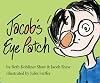
Jacob’s Eye Patch is about a real boy named Jacob who has an eye patch and is constantly asked questions about it, much to his dismay. He really wanted a toy but people would constantly stop him and his family to ask about the eyepatch. He keeps lying to get away, which is something I know I would want to do as a child as well. The message of the story is that sometimes people don’t want to talk about what makes them different, sometimes they do. Everybody has “something that makes show more people curious.” It’s just important to ask at the right time. The art was drawn in a messy style that made it interesting to look at. There were also messages at the end from Jacob and his mother that explain further what is going on with his eye and the effect it has on other people. show less
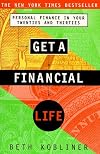
Read per the recommendation of several friends. Somehow missed the existence of a newer version and got the 1996 edition from the library. I doubt the actual advice has changed much, however. The specifics of taxes, interest rates, etc have always been in flux. There would just be websites instead of 800-numbers. I really liked how this covered a wider range of financial advice than a lot of these books do, like a whole chapter on insurance. It wasn't just savings and credit and investing. show more There were no rants about the evils of taxation (although she still tells you to maximize your deductions) and you're told that sometimes it's actually better to rent. I already know a lot of this, but I'm almost 40. It's solid advice for younger people. Although somehow the book did keep making me drowsy, so it took many sessions to finish. And this subject matter usually doesn't do that to me. Maybe she did need to rant a little more. show less
I liked this book. It is an easy-to-read children’s book. The main plot is about how a boy wants to get a light-up globe, and the subplot is about his eye patch. The illustrations help tell the story as Jacob makes his way to the science store. He doesn’t normally mind telling people about his eye patch, but on this day, it annoys him because he’s in a rush. I like the way the author depicts Jacob; he’s a sweet boy who currently doesn’t want to be bothered because he’s on a show more mission. “He is happy to answer questions about his patch anytime—just don’t ask him when he’s in a hurry!” This is a very appropriately written book about kids who are different, and it gives Jacob’s point of view in a way that other kids can understand. It would relate well to kids who have something different about the way they look and often have to answer questions about it. It broadens other readers’ perspectives, those who would be on the other side of Jacob’s story. In the end, Jacob finally is able to explain why he wears an eye patch. The big idea is that it’s okay to be curious about why someone looks or acts different, but that person may not always want to answer questions about it. show less
You May Also Like


Associated Authors
Statistics
- Works
- 3
- Members
- 842
- Popularity
- #30,363
- Rating
- 4.0
- Reviews
- 17
- ISBNs
- 21
- Favorited
- 1