
Ruth Nestvold
Author of Yseult: A Tale of Love in the Age of King Arthur
About the Author
Image credit: Ruth Nestvold © 2011 Britta Mack
Series
Works by Ruth Nestvold
The Leaving Sweater 5 copies
If Tears Were Wishes 3 copies
Exit Before Saving 3 copies
The Thirteenth Year 3 copies
The World Always Begins in Light: Prequel Story to Second Contact (Lost Colonies) (2022) 2 copies, 1 review
الخروج دون حفظ 2 copies
Wooing Ai Kyarem 2 copies
The Other Side Of Silence 2 copies
Rainmakers 2 copies
Woman In Abaya With Onion 2 copies
Princes And Priscilla 2 copies
Shadow Memory 2 copies
Happily Ever Awhile 2 copies
King Orfeigh 1 copy
Swan Lake [short story] — Author — 1 copy
A Line in the Sand [short story] — Author — 1 copy
Diabolo Hawk and the Dragon [short story] — Author — 1 copy
Triple Helix 1 copy
Norita [short story] — Author — 1 copy
Mars, A Traveler's Guide 1 copy
Far Side Of The Moon 1 copy
Fruité [short story] — Author — 1 copy
An Act Of Conviction 1 copy
Degrees of Separation [short story] — Author — 1 copy
Troy And The Aliens 1 copy
The Magician of Words 1 copy
The Rivers Of Eden 1 copy
Killfile 1 copy
A Handful Of Dust 1 copy
Latency Time 1 copy
A Serca Tale 1 copy
To Act The Witch 1 copy
Associated Works
The Year's Best Science Fiction: Twenty-Third Annual Collection (2006) — Contributor — 568 copies, 5 reviews
The Year's Best Science Fiction: Twenty-Fourth Annual Collection (2007) — Contributor — 458 copies, 6 reviews
The James Tiptree Award Anthology 1: Sex, the Future, and Chocolate Chip Cookies (2005) — Contributor — 180 copies, 5 reviews
Tagged
Common Knowledge
- Canonical name
- Nestvold, Ruth
- Birthdate
- 1958
- Gender
- female
- Education
- Clarion West (1998)
Ph.D. in literature - Occupations
- writer
translator
Lecturer and assistant professor at the University of Stuttgart and the University of Freiburg, Germany - Short biography
- Ruth Nestvold heeft verhalen gepubliceerd in Asimov's en Realms of Fantasy en was finaliste voor de Tiptreeprijs en de Sturgeonprijs. Ze is doctor in de literatuur, met specialisaties in gender en hyperfictie. Ze is nu vertaler en werkt in de softwareRuth Nestvold’s short stories have appeared in numerous markets, including Asimov’s, F&SF, Baen’s Universe, Strange Horizons, Realms of Fantasy, and Gardner Dozois’s Year’s Best Science Fiction. Her fiction has been nominated for the Nebula, Tiptree, and Sturgeon Awards. In 2007, the Italian translation of her novella “Looking Through Lace” won the “Premio Italia” award for best international work. Her novel Yseult (available as ebook) appeared in translation with the German imprint of Random House as Flamme und Harfe in 2009 and has since been translated into Dutch and Italian. She maintains a web site at www.ruthnestvold.com.
- Nationality
- USA
- Birthplace
- Washington, USA
- Places of residence
- Washington, USA
Oregon, USA
Stuttgart, Germany - Associated Place (for map)
- USA
Members
Reviews

For some reason it took me a long time to get into this LibraryThing Member Giveaway. Once in, I didn't want to leave, for about half of it. The second half was another story – I didn't much want to pick it up.
It's a famous story: Drystan or Tristan or Tristram, and Isolde or Yseult or Iseult, an offshoot (or rather predecessor) of the Arthurian legend. I knew this story; that's a major challenge for a writer, to take a story with a foregone conclusion and tell it again in such a way show more that knowing the end doesn't negate the suspense of the middle. And there was suspense here, and engagement. But. It's a long book, compared to my average of about 311 pages this year, and knowing (or believing I knew) how it ended along with knowing I had a long ways to go before that end began to be painful. As it turned out, the ending did surprise me – but given that this is based on legend, I didn't really consider it a good thing.
One thing I had a little trouble with, and this is probably not something which will trouble the vast majority of readers, was the variation of "Tristan" used by the author: Drystan. I've had allergies all my life, you see, and what got me through the 80's was an antihistamine called Dristan. It made a tad bit hard to take the hero seriously in the beginning. And the middle. And, ah, the rest.
I had a much greater problem with the language in a few specific places. The writing on the whole is unpretentious, more of the sort that gets out of the reader's way than that which flaunts an attempt at sounding historical, and this is positive. However, in the scene depicting the first sexual encounter of our main characters, the language surprised me and let me down. That scene was almost a deal-breaker for me. Suddenly it was like a common or garden variety romance novel, only instead of "roosters and kitty cats" it was "roosters and something a bit more Anglo Saxon". What is commonly called "the c-word" is not something I ever expected to encounter here. (I generally loathe it when someone resorts to political correctness, shying away from using a "bad word" – but this isn't a word I choose to use. Ever.) It might have been meant as trying to avoid anachronisms, but came off as crude and aimed to shock, and fitted poorly with the rest of the book. My take on the scene was that the book would have been better without the scene entirely rather than with a scene pretending at linguistic accuracy. Especially given that the handling of later love scenes was perfectly balanced with the rest of the storytelling, that one scene stood out – in a bad way, as though it had been roughed out in whatever words came to mind, and never edited to meld with the rest.
The other problem areas I mentioned are occasional other bits of what I would consider modern slang that just did not sit well within the context. Drystan "took out" an enemy soldier: killed, not went on a date with, but either way this usage jarred. At one point the story says that Yseult has trouble wrapping her mind around something. I can't track down too much info on the phrase, but Merriam Webster (online) states that it's an informal American usage. Again, it jars – suddenly Yseult went from medieval wise woman in my head to modern girl wearing Prada. There are more.
There is a lot in here – the growing power of Padraic (Patrick) and Christianity in what will one day be Ireland, versus the waning strength of "paganism"; the struggle of the Irish kings and the British in the wake of the departure of the Romans; the Tuatha De, and Arthur and Gawain and Bedwyr, bards and druids and kings and kingmakers. And, oh look – there's Guinevere (Ginevra)! It's a terrific job of world-building … except that I kept trying to balance the story in front of me – Yseult and Drystan and, eventually, and Londinium and Dumnonia and old Uncle Tom Cobley and all – with what I am familiar with – Isolde and Tristan (and not Dristan) and London and … Dumnonia kept throwing me. I had some vague idea for some reason that it was somewhere in what's now Germany. It wasn't; it's at the southwestern tip of England. I knew Eriu was Ireland. Armorica (which, yes, became "America" in my head a couple of times – Dristan in America. *sigh*), Laigin, and all the rest of it – I never thought I was an expert on medieval Europe, and – I was right! I was completely lost in the sea of place names, and I finally got online about halfway through the book and printed a map of the UK and wrote in the 5th century names from the map at the end of the book. I would have loved that map to be available on the author's website or something, but I didn't see it. It's awkward (at least for me) to click over to the map at the 99% point in the book every time I need to place a character – and it makes a difference whether a character is in Wales or in Germany.
Having Arthur running about was a huge distraction; I kept trying to fit the ancient-ized names in with what I knew, trying to cope with the surprise of Arthur's favorite whore and the son they had, and wait, what? How does he fit in? I wonder why, when Guinevere was Ginevra and Merlin was Myrddin and Mark was Marcus, Arthur wasn't Arcturus or Arturius or something. And I kept waiting for Lancelot.
Part of me admired the way Kustonnen became Constantine to Marcus, and Dyn Tagell is Tintagel and Caer Leon compacts to Caerleon, the river Sabrina is the Severn, and the character names are familiar yet strange. The rest of me wanted to tear my hair out. I can usually keep a lot of plates spinning while I read – that's how I sometimes manage to have eight books in my "currently reading" list. But Erainns and Saxons and Romans, oh my – all with a wild variation of names (those fighting at Drystan's side at one point include Tuthal, Gerenhir, and Flavius). There's no telling players without a scorecard. (And a map.)
All else aside, the overriding problem I had with the book is the central relationship. Again, I knew it going in: boy meets girl, boy loves girl, girl marries boy's father, boy and girl keep relationship going anyway – for starters. And if that was it, the bare bones of it, with only three people involved who could be hurt by the couple's lust-blinded stupidity, or if there was the oft-used excuse of a love potion determining the lust-blinded stupidity, that would be one thing. I can see an almost clean tragedy coming out of that, Romeo and Juliet-esque maybe. (I feel I should clarify here that by "clean" I mean not Victorian/bowdlerized clean, but as in no collateral damage, either decisions made by adults affecting themselves only or decisions made under the influence of a spell which left them no choice. The word refers more to my feelings about the plot rather than anything within it. Adultery is never going to be clean.) But it all begins with a lie. An understandable lie, but still a great huge life-changing lie. And once that's overcome, it's too late for them: Yseult is on her way to marry Drystan's father, and cannot just run away with Drystan because it would endanger someone else.
It's when (no spoiler this, as there wouldn't be much of a book if it didn't happen) the two of them carry on the affair under the roof of Yseult's new husband (Drystan's father, remember) that I lost all patience with them. On the boat over was one thing – stupid, since they took the song from Avenue Q as their motto ("You Can Be As Loud As the Hell You Want") and sailors talk, but still: only putting themselves at risk. Sneaking around – ever so subtly – under Marcus's very nose: good lord. (It was often noted in the narration how loud they became. Which to me means they're even dumber than the politically lethal adultery already painted them.) Even then, if they were shown as having the sense God gave a dormouse (if I could have been on their side), enough to keep it quick and quiet, I could have gone along with it: life sucks, take what joy you can, stick it to the Man (so to speak), yadda yadda. But their stupidity ends up hurting Yseult's best friend, Brangwyn, whose troubles were part of the reason Yseult let herself be sold off as a foreign bride in the first place. It made me angry, and sick. And it escalates. Of course. Any enjoyment I might have been able to find in the suspense and "romance" of the story vanished at that moment; it just left me feeling sick and angry.
Drystan I can cope with. He wants what he wants, and at times this singlemindedness can almost supersede his duty. He genuinely loves Yseult and wants nothing more in the world than to be with her. My issue is with Yseult. She is supposed to be a wise woman, raised by Yseult the Wise, a Queen, surrounded by the wise of their clan. She behaves for the most part with a deep grace and maturity – she is bred to be a leader and healer and to solve problems. With Drystan, though, she becomes wishy-washy, in a bull-headed way. She makes a decision with great determination, then regrets it, abruptly changes her mind; flings herself into the affair with no heed of repercussion and then without warning pulls away and turns cold. Lather, rinse, repeat.
I was interested, in looking into the Tristan and Isolde legend, to see a mention that in many versions the love triangle here is very like that in the Arthurian legends: like Arthur and Lancelot and Guinevere, Tristan and Isolde and Mark all love and respect each other. That's the part that always rips my heart out about Guinevere: she does love both men. That aspect is completely nonexistent here. Marcus is Drystan's father (not adopted, as in some versions), and as of the beginning of the story the two have not seen each other in years, as Drystan has been fostered in Dumnonia, and when they meet again there is no love lost. Marcus is ambitious, has at least one illegitimate (and rather incestuous) child, and wants Yseult for the power she brings and for her beauty. (She could have Fran Drescher's voice, the brains of a Snooki, and the personality of Ann Coulter and he wouldn't care as long as she kept her beauty.) Nobody's ever rooting for Marcus here, especially not the reader. That turns the adultery into something more palatable, and rather undercuts the historic tragedy of the story.
The theme of the book is, I think, betrayal; the central focus is Yseult betraying her husband, Drystan his father. But as the story wears on, it seems like just about everybody betrays someone at some point. It's depressing.
As I mentioned at the top of the review, the ending surprised me. There's a sequel, which explains some of it. The fact that the surprise of the ending was an unpleasant one to me was in part down to my expectations. I'm not a huge fan of tragedy, on the whole, Shakespeare aside – but this was a bit like doing a version of Romeo and Juliet in which Romeo wakes up, sees Juliet dead, and says "Well, damn. So… does anyone still have Rosaline's number?" I said earlier that it was painful working through 500-odd pages knowing that with every chapter the heartbreak was only going to intensify. By the end of the book I wanted something to make the trek worthwhile. I wanted to need a box of Kleenex. I wanted grand, operatic, searing tragedy. Honestly, I wanted something out of Shakespeare, with half the cast of characters lying dead or dying – not because I hated anyone; I didn't dislike anyone (even Marcus) enough to want them dead. (I never felt as though I'd gotten to know anyone enough to love them or hate them or grieve or cheer or … care. They all just were.) It just seemed a fitting payoff (and in keeping with the legend). Instead, there was a muted melancholy and a general air of "To be continued…"
I was thinking that part of me would like to see what this author does with the rest of the Arthur saga; Yseult is part one of "The Pendragon Chronicles". However, Arthur Pendragon seems to be still a background character in the second book, Shadow of Stone, in the description for which I found this: "The threat to their way of life throws [Cador] together with Yseult, the woman he has secretly loved since he was a youth." So much for the great and tragic love of Tristan and Isolde – I was being facetious when I put words into not-dead Romeo's mouth a minute ago, but as it turns out I was … sadly, kind of accurate. show less
It's a famous story: Drystan or Tristan or Tristram, and Isolde or Yseult or Iseult, an offshoot (or rather predecessor) of the Arthurian legend. I knew this story; that's a major challenge for a writer, to take a story with a foregone conclusion and tell it again in such a way show more that knowing the end doesn't negate the suspense of the middle. And there was suspense here, and engagement. But. It's a long book, compared to my average of about 311 pages this year, and knowing (or believing I knew) how it ended along with knowing I had a long ways to go before that end began to be painful. As it turned out, the ending did surprise me – but given that this is based on legend, I didn't really consider it a good thing.
One thing I had a little trouble with, and this is probably not something which will trouble the vast majority of readers, was the variation of "Tristan" used by the author: Drystan. I've had allergies all my life, you see, and what got me through the 80's was an antihistamine called Dristan. It made a tad bit hard to take the hero seriously in the beginning. And the middle. And, ah, the rest.
I had a much greater problem with the language in a few specific places. The writing on the whole is unpretentious, more of the sort that gets out of the reader's way than that which flaunts an attempt at sounding historical, and this is positive. However, in the scene depicting the first sexual encounter of our main characters, the language surprised me and let me down. That scene was almost a deal-breaker for me. Suddenly it was like a common or garden variety romance novel, only instead of "roosters and kitty cats" it was "roosters and something a bit more Anglo Saxon". What is commonly called "the c-word" is not something I ever expected to encounter here. (I generally loathe it when someone resorts to political correctness, shying away from using a "bad word" – but this isn't a word I choose to use. Ever.) It might have been meant as trying to avoid anachronisms, but came off as crude and aimed to shock, and fitted poorly with the rest of the book. My take on the scene was that the book would have been better without the scene entirely rather than with a scene pretending at linguistic accuracy. Especially given that the handling of later love scenes was perfectly balanced with the rest of the storytelling, that one scene stood out – in a bad way, as though it had been roughed out in whatever words came to mind, and never edited to meld with the rest.
The other problem areas I mentioned are occasional other bits of what I would consider modern slang that just did not sit well within the context. Drystan "took out" an enemy soldier: killed, not went on a date with, but either way this usage jarred. At one point the story says that Yseult has trouble wrapping her mind around something. I can't track down too much info on the phrase, but Merriam Webster (online) states that it's an informal American usage. Again, it jars – suddenly Yseult went from medieval wise woman in my head to modern girl wearing Prada. There are more.
There is a lot in here – the growing power of Padraic (Patrick) and Christianity in what will one day be Ireland, versus the waning strength of "paganism"; the struggle of the Irish kings and the British in the wake of the departure of the Romans; the Tuatha De, and Arthur and Gawain and Bedwyr, bards and druids and kings and kingmakers. And, oh look – there's Guinevere (Ginevra)! It's a terrific job of world-building … except that I kept trying to balance the story in front of me – Yseult and Drystan and, eventually, and Londinium and Dumnonia and old Uncle Tom Cobley and all – with what I am familiar with – Isolde and Tristan (and not Dristan) and London and … Dumnonia kept throwing me. I had some vague idea for some reason that it was somewhere in what's now Germany. It wasn't; it's at the southwestern tip of England. I knew Eriu was Ireland. Armorica (which, yes, became "America" in my head a couple of times – Dristan in America. *sigh*), Laigin, and all the rest of it – I never thought I was an expert on medieval Europe, and – I was right! I was completely lost in the sea of place names, and I finally got online about halfway through the book and printed a map of the UK and wrote in the 5th century names from the map at the end of the book. I would have loved that map to be available on the author's website or something, but I didn't see it. It's awkward (at least for me) to click over to the map at the 99% point in the book every time I need to place a character – and it makes a difference whether a character is in Wales or in Germany.
Having Arthur running about was a huge distraction; I kept trying to fit the ancient-ized names in with what I knew, trying to cope with the surprise of Arthur's favorite whore and the son they had, and wait, what? How does he fit in? I wonder why, when Guinevere was Ginevra and Merlin was Myrddin and Mark was Marcus, Arthur wasn't Arcturus or Arturius or something. And I kept waiting for Lancelot.
Part of me admired the way Kustonnen became Constantine to Marcus, and Dyn Tagell is Tintagel and Caer Leon compacts to Caerleon, the river Sabrina is the Severn, and the character names are familiar yet strange. The rest of me wanted to tear my hair out. I can usually keep a lot of plates spinning while I read – that's how I sometimes manage to have eight books in my "currently reading" list. But Erainns and Saxons and Romans, oh my – all with a wild variation of names (those fighting at Drystan's side at one point include Tuthal, Gerenhir, and Flavius). There's no telling players without a scorecard. (And a map.)
All else aside, the overriding problem I had with the book is the central relationship. Again, I knew it going in: boy meets girl, boy loves girl, girl marries boy's father, boy and girl keep relationship going anyway – for starters. And if that was it, the bare bones of it, with only three people involved who could be hurt by the couple's lust-blinded stupidity, or if there was the oft-used excuse of a love potion determining the lust-blinded stupidity, that would be one thing. I can see an almost clean tragedy coming out of that, Romeo and Juliet-esque maybe. (I feel I should clarify here that by "clean" I mean not Victorian/bowdlerized clean, but as in no collateral damage, either decisions made by adults affecting themselves only or decisions made under the influence of a spell which left them no choice. The word refers more to my feelings about the plot rather than anything within it. Adultery is never going to be clean.) But it all begins with a lie. An understandable lie, but still a great huge life-changing lie. And once that's overcome, it's too late for them: Yseult is on her way to marry Drystan's father, and cannot just run away with Drystan because it would endanger someone else.
It's when (no spoiler this, as there wouldn't be much of a book if it didn't happen) the two of them carry on the affair under the roof of Yseult's new husband (Drystan's father, remember) that I lost all patience with them. On the boat over was one thing – stupid, since they took the song from Avenue Q as their motto ("You Can Be As Loud As the Hell You Want") and sailors talk, but still: only putting themselves at risk. Sneaking around – ever so subtly – under Marcus's very nose: good lord. (It was often noted in the narration how loud they became. Which to me means they're even dumber than the politically lethal adultery already painted them.) Even then, if they were shown as having the sense God gave a dormouse (if I could have been on their side), enough to keep it quick and quiet, I could have gone along with it: life sucks, take what joy you can, stick it to the Man (so to speak), yadda yadda. But their stupidity ends up hurting Yseult's best friend, Brangwyn, whose troubles were part of the reason Yseult let herself be sold off as a foreign bride in the first place. It made me angry, and sick. And it escalates. Of course. Any enjoyment I might have been able to find in the suspense and "romance" of the story vanished at that moment; it just left me feeling sick and angry.
Drystan I can cope with. He wants what he wants, and at times this singlemindedness can almost supersede his duty. He genuinely loves Yseult and wants nothing more in the world than to be with her. My issue is with Yseult. She is supposed to be a wise woman, raised by Yseult the Wise, a Queen, surrounded by the wise of their clan. She behaves for the most part with a deep grace and maturity – she is bred to be a leader and healer and to solve problems. With Drystan, though, she becomes wishy-washy, in a bull-headed way. She makes a decision with great determination, then regrets it, abruptly changes her mind; flings herself into the affair with no heed of repercussion and then without warning pulls away and turns cold. Lather, rinse, repeat.
I was interested, in looking into the Tristan and Isolde legend, to see a mention that in many versions the love triangle here is very like that in the Arthurian legends: like Arthur and Lancelot and Guinevere, Tristan and Isolde and Mark all love and respect each other. That's the part that always rips my heart out about Guinevere: she does love both men. That aspect is completely nonexistent here. Marcus is Drystan's father (not adopted, as in some versions), and as of the beginning of the story the two have not seen each other in years, as Drystan has been fostered in Dumnonia, and when they meet again there is no love lost. Marcus is ambitious, has at least one illegitimate (and rather incestuous) child, and wants Yseult for the power she brings and for her beauty. (She could have Fran Drescher's voice, the brains of a Snooki, and the personality of Ann Coulter and he wouldn't care as long as she kept her beauty.) Nobody's ever rooting for Marcus here, especially not the reader. That turns the adultery into something more palatable, and rather undercuts the historic tragedy of the story.
The theme of the book is, I think, betrayal; the central focus is Yseult betraying her husband, Drystan his father. But as the story wears on, it seems like just about everybody betrays someone at some point. It's depressing.
As I mentioned at the top of the review, the ending surprised me. There's a sequel, which explains some of it. The fact that the surprise of the ending was an unpleasant one to me was in part down to my expectations. I'm not a huge fan of tragedy, on the whole, Shakespeare aside – but this was a bit like doing a version of Romeo and Juliet in which Romeo wakes up, sees Juliet dead, and says "Well, damn. So… does anyone still have Rosaline's number?" I said earlier that it was painful working through 500-odd pages knowing that with every chapter the heartbreak was only going to intensify. By the end of the book I wanted something to make the trek worthwhile. I wanted to need a box of Kleenex. I wanted grand, operatic, searing tragedy. Honestly, I wanted something out of Shakespeare, with half the cast of characters lying dead or dying – not because I hated anyone; I didn't dislike anyone (even Marcus) enough to want them dead. (I never felt as though I'd gotten to know anyone enough to love them or hate them or grieve or cheer or … care. They all just were.) It just seemed a fitting payoff (and in keeping with the legend). Instead, there was a muted melancholy and a general air of "To be continued…"
I was thinking that part of me would like to see what this author does with the rest of the Arthur saga; Yseult is part one of "The Pendragon Chronicles". However, Arthur Pendragon seems to be still a background character in the second book, Shadow of Stone, in the description for which I found this: "The threat to their way of life throws [Cador] together with Yseult, the woman he has secretly loved since he was a youth." So much for the great and tragic love of Tristan and Isolde – I was being facetious when I put words into not-dead Romeo's mouth a minute ago, but as it turns out I was … sadly, kind of accurate. show less
This review was written for LibraryThing Member Giveaways.

Yseult: A Tale of Love in the Age of King Arthur by Ruth Nestvold was slightly disappointing. It wasn’t the WORST Arthurian Legend based book I’ve ever read, but it wasn’t the best either. I picked it up because I LOVE books about King Arthur, Merlin, Morgan Le Fay, you name it - the legends just lend themselves to just fantastic re-tellings. Not so much in this case. In this book I found both Yseult and Drystan (Isolde and Tristan) just...annoying, boring, and unlikable - traits that show more you don’t really want to see in main characters. I found myself skimming ALOT in this book.
I did enjoy the first half of the book though - there was a lot of promise with a plot line of melding the Pagan and Christian traditions, Yseult had a little more depth to her character and the pacing of the book kept things interesting. Then Yseult goes across the sea, marries a douche and continues her affair with her step-son. Once that happened the book got boring and repetitive. Also - while Yseult maintained her healer aspect of her character, the warrior aspect got completely lost - which i thought was strange for a character who worked so hard to be respected as a warrior in the beginning of the book.
If you enjoy reading about toxic relationships and repetitive battle scenes - this book is for you. If you want a little more complex story about the women of King Arthur I would advise The Mists of Avalon by Marion Zimmer Bradley.
* I was provided with a complimentary copy of this book, through Reading Deals, and I gave an honest review. show less
I did enjoy the first half of the book though - there was a lot of promise with a plot line of melding the Pagan and Christian traditions, Yseult had a little more depth to her character and the pacing of the book kept things interesting. Then Yseult goes across the sea, marries a douche and continues her affair with her step-son. Once that happened the book got boring and repetitive. Also - while Yseult maintained her healer aspect of her character, the warrior aspect got completely lost - which i thought was strange for a character who worked so hard to be respected as a warrior in the beginning of the book.
If you enjoy reading about toxic relationships and repetitive battle scenes - this book is for you. If you want a little more complex story about the women of King Arthur I would advise The Mists of Avalon by Marion Zimmer Bradley.
* I was provided with a complimentary copy of this book, through Reading Deals, and I gave an honest review. show less

Looking Through Lace is the story of Toni, a xenolinguist who is assigned to work with a first contact team. She's been relegated to doing grunt work until now, and is really excited for the opportunity to prove herself.
The alien world in Looking Through Lace is fascinating – although the inhabitants are descended from humans, they have a unique history and culture. The women speak an entirely different language among themselves that the men are not allowed to learn, and Toni is determined show more to figure out how and why that happened. However, she has a jealous senior colleague and the affections of an attractive native (who just happens to be in a group marriage) to contend with.
I enjoyed reading a science-fiction story by Nestvold; all the other work I've read by her has been fantasy. She keeps up the excellent worldbuilding and characters. I found the revelations concerning the history of the world very interesting. The antagonist xenolinguist seemed like a bit of a caricature, but the interesting alien world more than made up for it.
Originally posted on my blog. show less
The alien world in Looking Through Lace is fascinating – although the inhabitants are descended from humans, they have a unique history and culture. The women speak an entirely different language among themselves that the men are not allowed to learn, and Toni is determined show more to figure out how and why that happened. However, she has a jealous senior colleague and the affections of an attractive native (who just happens to be in a group marriage) to contend with.
I enjoyed reading a science-fiction story by Nestvold; all the other work I've read by her has been fantasy. She keeps up the excellent worldbuilding and characters. I found the revelations concerning the history of the world very interesting. The antagonist xenolinguist seemed like a bit of a caricature, but the interesting alien world more than made up for it.
Originally posted on my blog. show less
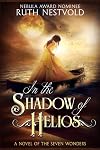
Kalandra is a mage and the wife of the Archon of the island of Rodos. She is devastated when she learns that her husband has died while trying to run away with another ruler’s wife. In her anger and heartbreak, she keeps her knowledge of her husband’s death from her people and plots her revenge. Her choices bring her back into the arms of her childhood sweetheart but also risk the future of her island and its people.
In the Shadow of Helios: A Novel of the Seven Wonders takes place in a show more world where Rome never ruled, and Christianity remained one of many faiths. On Rodos the Colossus stands, overlooking one of the islands in the Mediterranean which have joined together to form a trading and defensive alliance. This alternate world also has an interesting system of magic or psychic powers. The world building is interesting. The novel has romance, suspense, palace intrigue and battles. Kalandra is a mage of prophecy who basically gave up the craft after her marriage to the Archon of Rodos. That choice didn’t make a lot of sense to me as a character decision, but it made some sense in terms of the plot because it would be hard for a husband to cheat on a wife who was a practising mage of prophecy. The explanation for her lapsed practice didn’t make a great deal of sense. That choice, as well as her initial reaction to her husband’s betrayal and death, made me unsure if I was going to enjoy this novel. However, Kalandra grew and became a stronger and better character as the story progressed. I enjoyed this novel and am looking forward to visiting the other Wonders of this version of the ancient world. show less
In the Shadow of Helios: A Novel of the Seven Wonders takes place in a show more world where Rome never ruled, and Christianity remained one of many faiths. On Rodos the Colossus stands, overlooking one of the islands in the Mediterranean which have joined together to form a trading and defensive alliance. This alternate world also has an interesting system of magic or psychic powers. The world building is interesting. The novel has romance, suspense, palace intrigue and battles. Kalandra is a mage of prophecy who basically gave up the craft after her marriage to the Archon of Rodos. That choice didn’t make a lot of sense to me as a character decision, but it made some sense in terms of the plot because it would be hard for a husband to cheat on a wife who was a practising mage of prophecy. The explanation for her lapsed practice didn’t make a great deal of sense. That choice, as well as her initial reaction to her husband’s betrayal and death, made me unsure if I was going to enjoy this novel. However, Kalandra grew and became a stronger and better character as the story progressed. I enjoyed this novel and am looking forward to visiting the other Wonders of this version of the ancient world. show less
 This review was written for LibraryThing Early Reviewers.
Awards


You May Also Like


Associated Authors
Statistics
- Works
- 60
- Also by
- 16
- Members
- 445
- Popularity
- #55,081
- Rating
- 3.7
- Reviews
- 30
- ISBNs
- 22
- Languages
- 3


