
Johanna Drucker
Author of The Alphabetic Labyrinth: The Letters in History and Imagination
About the Author
Johanna Drucker is the Distinguished Breslauer Professor of Bibliographical Studies in the Department of Information Studies at the University of California, Los Angeles. She is the author of The General Theory of Social Relativity and Diagrammatic Writing.
Works by Johanna Drucker
Inventing the Alphabet: The Origins of Letters from Antiquity to the Present (2023) 70 copies, 1 review
A Human Document: Selections From the Sackner Archive of Concrete and Visual Poetry (2013) 12 copies
The Dual Muse: The Writer as Artist, The Artist as Writer: Catalogue of the Exhibition. Introduction by Cornelia Homburg (1997) 9 copies
The JAB Anthology: Selections from the Journal of Artists' Books, 1994-2020 (Impressions) (2023) 6 copies, 1 review
American Art 1975-1995 from the Whitney Museum/Arte Americana 1975-1995 Dal Whitney Museum: Multiple Identity/Identita Multiple (1997) 2 copies
Damaged Spring 2 copies
from A to Z 1 copy
The Fall 1 copy
The Current Line 1 copy
Quantum 1 copy
Prove before laying 1 copy
Associated Works
First Person: New Media as Story, Performance, and Game (2004) — Contributor — 176 copies, 3 reviews
Jimmy & Lucy's House of "K", #2 — Contributor — 1 copy
L=A=N=G=U=A=G=E, Number 12, (Vol. 3, No. 2) — Contributor — 1 copy
Tagged
Common Knowledge
- Canonical name
- Drucker, Johanna
- Legal name
- Drucker, Johanna Ruth
- Birthdate
- 1952-05-30
- Gender
- female
- Education
- University of California, Berkeley (MA|1982 - Visual Studies, PhD|1986)
California College of Arts and Crafts (BFA|1972 - Printing) - Occupations
- bibliographer
book artist
professor
visual theorist
cultural critic - Organizations
- University of California, Los Angeles
Harvard University
Columbia University
Yale University
Purchase College
University of Virginia (show all 7)
University of Texas at Dallas - Awards and honors
- American Academy of Arts & Sciences (2014)
American Philosophical Society (2023)
Oscar Lewis Award (2014)
Steven Heller Award for Cultural Criticism (2021)
American Printing History Association Individual Achievement Award (2010)
Walter Ong Award (2015) - Nationality
- USA
- Birthplace
- Philadelphia, Pennsylvania, USA
- Associated Place (for map)
- Pennsylvania, USA
Members
Reviews
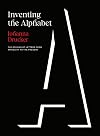
Few technologies are as important to our daily lives as the alphabet. But, as Johanna Drucker argues, we rarely give its history any thought at all. Despite its title, her book is not about the invention of the alphabet per se, but about how people have thought about its invention. The alphabet has been continually reinvented by each generation of thinkers in a story that meanders from Herodotus to the present day, via Jewish mystics, Arabic scholars, early modern typographers and show more 18th-century antiquarians.
As Drucker writes, the idea that the Greeks invented the alphabet is deeply ingrained in modern thought. But this is the opposite of what the Greeks themselves thought; they were clear that it was borrowed. From the Greek perspective, the alphabet was invented either by the Phoenicians and given to the Greeks by Cadmus (this is the account given to us by Herodotus) or invented by the Egyptian god Thoth (as in the account of Plato). Other Greek descriptions tend to riff on either or both of these basic narratives. For most of the 19th and 20th centuries scholarship lauded the ‘genius’ of the Greeks for adding vowels to the existing consonantal alphabet used by the Phoenicians. Only recently has it begun to describe the birth of the Greek alphabet as a process of cultural contact, borrowing and collaboration.
Inventing the Alphabet raises all of the questions that have vexed historians. The Bible presents insoluble problems. If God wrote the Ten Commandments for Moses, what language were they in? What alphabet? If it was the first ever written text, how did Moses know how to read it? These questions led early modern thinkers to develop an intense interest in Hebrew and other Semitic languages. But Drucker also shows how incomplete each generation’s information was. Knowledge of inscriptions and coins was very limited in the early modern period, which meant that the Hebrew alphabet known in Europe was the elegant ‘square’ script rather than the Palaeo-Hebrew script used in the earliest part of antiquity. This was, therefore, how they imagined Hebrew to have been written in the distant past as well.
Read the rest of the review at HistoryToday.com.
Katherine McDonald is Assistant Professor in Classics at the University of Durham. show less
As Drucker writes, the idea that the Greeks invented the alphabet is deeply ingrained in modern thought. But this is the opposite of what the Greeks themselves thought; they were clear that it was borrowed. From the Greek perspective, the alphabet was invented either by the Phoenicians and given to the Greeks by Cadmus (this is the account given to us by Herodotus) or invented by the Egyptian god Thoth (as in the account of Plato). Other Greek descriptions tend to riff on either or both of these basic narratives. For most of the 19th and 20th centuries scholarship lauded the ‘genius’ of the Greeks for adding vowels to the existing consonantal alphabet used by the Phoenicians. Only recently has it begun to describe the birth of the Greek alphabet as a process of cultural contact, borrowing and collaboration.
Inventing the Alphabet raises all of the questions that have vexed historians. The Bible presents insoluble problems. If God wrote the Ten Commandments for Moses, what language were they in? What alphabet? If it was the first ever written text, how did Moses know how to read it? These questions led early modern thinkers to develop an intense interest in Hebrew and other Semitic languages. But Drucker also shows how incomplete each generation’s information was. Knowledge of inscriptions and coins was very limited in the early modern period, which meant that the Hebrew alphabet known in Europe was the elegant ‘square’ script rather than the Palaeo-Hebrew script used in the earliest part of antiquity. This was, therefore, how they imagined Hebrew to have been written in the distant past as well.
Read the rest of the review at HistoryToday.com.
Katherine McDonald is Assistant Professor in Classics at the University of Durham. show less
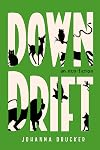
Fascinating satire on evolution and today's ecological and environmental movements. The part-time narrator is a length of genetic code surrounded by cells, called an Archaeon. The work describes what the Archaeon calls "downdrift", the adoption by non-human sentient species of human behavior, traits and even thinking. The "story" is built on the foundation of the meeting of an elderly lion [coming from Africa] and a calico house cat, Callie, from Boston. Drawn together by some sort of feline show more telecommunication, the journeys of the two towards each other note the various changes in the animal kingdom; most are humorous: squirrels abandon their storing nuts for the winter and knit frenetically, opening a clothing emporium. They also paint billboards after an election is finished. Many species make music, the giraffes for one species blowing into flutes but jerboas controlling passage of air into the holes. In south Africa, several species control the diamond trade from start to finish, each doing what they are best at. We are given examples of extinction [wooly mammoths] and hybridization [cow-ticks]. Each geographical location brings with it a vignette. From time to time the Archaeon interrupts with its ruminations and telling us how it is fighting off diseases: viruses, bacteria, and prion. It warns how downdrift might begin to work the other way: humans developing animal traits and appearance.
Whimsical, fantastical, and highly original. Recommended. show less
Whimsical, fantastical, and highly original. Recommended. show less
 This review was written for LibraryThing Early Reviewers.
Aug 24 2018 update: I've found myself thinking a lot about this novel in these last few days while visiting a friend who had a serious accident this summer and needs a lot of help still. Unnecessary things like yard work have slipped...the squirrels have found the stuffing in the lawn swing pillows and are busy borrowing it for themselves...the raccoons are bolder...and I began to think again about the changes that come across the world in this novel, where events unfold in a very show more interesting mix of glacial slowness and cataclysmic swiftness. Like evolution itself. I would wish for more people to seek this book out and read it.
Original review:
Downdrift is a book that amazed and delighted me. As the novel begins, organisms in every ecological niche on Earth have begun to experience the intrusion of human-like characteristics into their behaviors. This change is presented as the opposite of evolutionary progress: to behave in a human way is instead categorized as “downdrift.” The story is narrated throughout by “Archaeon,” a unicellular organism that belongs to the Kingdom Archaea, a creature that has (through contact with others of its kind) absolute knowledge of events the whole world over, but that has almost no sense of narrative suspense.
Archeaon explains its sense of narrative timing this way:
Our time scales–yours and mine–are as different as our size and complexity. To me, all of the follies of the animal kingdom are the trivial business of a few seconds of my historical memory. Nearly three-quarters of the earth’s existence has passed in my presence, billions of years. Compare that to the mere millions in which primitive arthropods and other organisms came into being. And you? A blip on the screen, a tweak in the evolutionary chain, a phenomenon of rapid acceleration. I will long outlive you and the changes wrought on this world by your machinations.
What forward narrative momentum there is in Downdrift (and it barely registered with me as I read along) hangs on the stories of a lost cat and a peripatetic lion, creatures that re-appear at intervals in the story, and that seem destined to meet at some point. And they do meet. But that meeting seems beside the point when it happens, because the real delight of the novel is not in narrative at all, but in an accumulation of detail, sentence after sentence, that by the end paints a picture of vast ecological disruption.
Another round of salamander antics is taking place in the autumn woods. A big group outing, comprised of extended families and pseudo-families, is underway at the edges of a pool. They have collected food bright as their red bellies or the stark yellow of their spots. The older ones are picking at a few, very few, highly colored bits of fungus and mixing them with all manner of beetles and flies, worms and larvae, spiders and moths and grasshoppers to make a banquet from an ancient recipe. These traditions may also soon be at risk, but not yet.
In a brave choice on the author’s part Homo sapiens barely signifies in this novel at all. At one point coyotes are stealing human babies; at another point Archaeon wryly observes “an outbreak of human shoaling, seepage into the homo sapiens from the minnows and sardines,” an image that carries with it both the idea of humans under stress, as well as the lack of significance that humans and their problems have to this story.
Because this is not humanity’s story. The subtitle to Downdrift is “an eco-fiction,” and the novel fulfills the goals of this relatively new genre in a significant way. The novel is a metaphor for the way we value convenience over preservation; the way we prioritize the artificial over the natural; the way we focus on our daily worries rather than the long-term problem of potential ecological collapse. For those who have the willingness to let the a story flow past at its own pace, the novel offers a unique and thought-provoking take on the world and our place in it.
Downdrift: An Ecofiction by Johanna Drucker (2018: Three Rooms Press) show less
Original review:
Downdrift is a book that amazed and delighted me. As the novel begins, organisms in every ecological niche on Earth have begun to experience the intrusion of human-like characteristics into their behaviors. This change is presented as the opposite of evolutionary progress: to behave in a human way is instead categorized as “downdrift.” The story is narrated throughout by “Archaeon,” a unicellular organism that belongs to the Kingdom Archaea, a creature that has (through contact with others of its kind) absolute knowledge of events the whole world over, but that has almost no sense of narrative suspense.
Archeaon explains its sense of narrative timing this way:
Our time scales–yours and mine–are as different as our size and complexity. To me, all of the follies of the animal kingdom are the trivial business of a few seconds of my historical memory. Nearly three-quarters of the earth’s existence has passed in my presence, billions of years. Compare that to the mere millions in which primitive arthropods and other organisms came into being. And you? A blip on the screen, a tweak in the evolutionary chain, a phenomenon of rapid acceleration. I will long outlive you and the changes wrought on this world by your machinations.
What forward narrative momentum there is in Downdrift (and it barely registered with me as I read along) hangs on the stories of a lost cat and a peripatetic lion, creatures that re-appear at intervals in the story, and that seem destined to meet at some point. And they do meet. But that meeting seems beside the point when it happens, because the real delight of the novel is not in narrative at all, but in an accumulation of detail, sentence after sentence, that by the end paints a picture of vast ecological disruption.
Another round of salamander antics is taking place in the autumn woods. A big group outing, comprised of extended families and pseudo-families, is underway at the edges of a pool. They have collected food bright as their red bellies or the stark yellow of their spots. The older ones are picking at a few, very few, highly colored bits of fungus and mixing them with all manner of beetles and flies, worms and larvae, spiders and moths and grasshoppers to make a banquet from an ancient recipe. These traditions may also soon be at risk, but not yet.
In a brave choice on the author’s part Homo sapiens barely signifies in this novel at all. At one point coyotes are stealing human babies; at another point Archaeon wryly observes “an outbreak of human shoaling, seepage into the homo sapiens from the minnows and sardines,” an image that carries with it both the idea of humans under stress, as well as the lack of significance that humans and their problems have to this story.
Because this is not humanity’s story. The subtitle to Downdrift is “an eco-fiction,” and the novel fulfills the goals of this relatively new genre in a significant way. The novel is a metaphor for the way we value convenience over preservation; the way we prioritize the artificial over the natural; the way we focus on our daily worries rather than the long-term problem of potential ecological collapse. For those who have the willingness to let the a story flow past at its own pace, the novel offers a unique and thought-provoking take on the world and our place in it.
Downdrift: An Ecofiction by Johanna Drucker (2018: Three Rooms Press) show less
This was a scary take on what we are doing to the animal kingdom. Although I had laugh out loud moments, I was also terrified that my cat might leave me to hang out with lizards who are running a prosthetic limb clinic! I did find it "wordy" at times and then I would have to put it down to comprehend what I just read. Overall it was interesting and I recommend it to anyone that is worried about this planet and the environment.
This review was written for LibraryThing Early Reviewers.You May Also Like


Associated Authors
Statistics
- Works
- 58
- Also by
- 5
- Members
- 1,400
- Popularity
- #18,343
- Rating
- 3.6
- Reviews
- 14
- ISBNs
- 67
- Languages
- 3
- Favorited
- 1

