
Andrea Wang
Author of Watercress
About the Author
Image credit: photo by Elaine Freitas Photography
Works by Andrea Wang
Associated Works
Tagged
Common Knowledge
- Birthdate
- 1970
- Gender
- female
- Education
- Wellesley College (MS, Environmental Science)
University of Indiana (MS, Environmental Studies)
Lesley University (MA, Creative Writing for Young People) - Birthplace
- Cambridge, Massachusetts, USA
- Places of residence
- Colorado, USA
Yellow Springs, Ohio, USA
Massachusetts, USA - Map Location
- USA
Members
Reviews
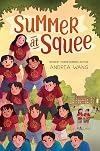
After surviving the loneliness of seventh grade, Phoenix can’t wait to be with her favorite people in her happy place just one last time, before she’s too old.
SCCWEE, or Summertime Chinese Culture, Wellness, and Enrichment Experience, is Phoenny’s sanctuary. She loves all the fun camp traditions and the heritage classes, like Chinese rice dough sculpting and ribbon dancing. But her plans for a perfect time are interrupted by the arrival of new girls who don’t share her positive show more attitude toward camp and Chinese culture, which leaves Phoenny feeling confused and threatened. Plus, she’s competing with one of them for the attention of the same boy. Thankfully, Phoenny has her passion for sewing clothes to help her deal with the stress. Once she learns that the new girls are transracial adoptees from white families and face their own unique set of challenges, Phoenny opens up, and a virtuous cycle of vulnerability, empathy, and acceptance ensues. When trolls post racist comments on the camp’s social media, the campers use their joyful creativity to resist the fear and hate. Through careful research and interviews, Wang has crafted a narrative that reflects many transracial adoptees’ feelings and experiences. The believable dialogue questions and explores deeply held beliefs about culture. Phoenny’s lovingly detailed, introspective viewpoint will positively influence readers’ awareness of their own emotional and cultural landscapes.
Blending moxie and grace, this novel is a worthy guide through cultural expansiveness and summer camp antics and angst. (author’s note) (Fiction. 8-13)
-Kirkus Review show less
SCCWEE, or Summertime Chinese Culture, Wellness, and Enrichment Experience, is Phoenny’s sanctuary. She loves all the fun camp traditions and the heritage classes, like Chinese rice dough sculpting and ribbon dancing. But her plans for a perfect time are interrupted by the arrival of new girls who don’t share her positive show more attitude toward camp and Chinese culture, which leaves Phoenny feeling confused and threatened. Plus, she’s competing with one of them for the attention of the same boy. Thankfully, Phoenny has her passion for sewing clothes to help her deal with the stress. Once she learns that the new girls are transracial adoptees from white families and face their own unique set of challenges, Phoenny opens up, and a virtuous cycle of vulnerability, empathy, and acceptance ensues. When trolls post racist comments on the camp’s social media, the campers use their joyful creativity to resist the fear and hate. Through careful research and interviews, Wang has crafted a narrative that reflects many transracial adoptees’ feelings and experiences. The believable dialogue questions and explores deeply held beliefs about culture. Phoenny’s lovingly detailed, introspective viewpoint will positively influence readers’ awareness of their own emotional and cultural landscapes.
Blending moxie and grace, this novel is a worthy guide through cultural expansiveness and summer camp antics and angst. (author’s note) (Fiction. 8-13)
-Kirkus Review show less

Chinese-American children's author Andrea Wang, whose previous picture-books include the Chinese New Year's tale The Nian Monster, and the biographical Magic Ramen: The Story of Momofuku Ando, turns to her own childhood in this deeply felt and immensely moving tale of a young girl who is embarrassed by her family. Passing a wealth of watercress by the side of the road one day, the girl's parents stop the car, and the entire family is enlisted to harvest the plants. Uncomfortable and ashamed show more - what if other people from her Ohio town see her in the muddy ditch? why can't their family have food from the store, like everyone else? - the girl's resentment builds, finally finding its expression at the dinner table. It is then that her mother does something she never has before: she gets out a family photograph, and shares the story of her own childhood experience, during a terrible famine in China - a famine that claimed the life of her younger brother. Ashamed of her shame, the girl finally eats the watercress, discovering its sharp pleasure, and making a new memory with her family...
I was close to tears on a number of occasions, while reading Watercress, and suspect that I will be thinking of it for some time to come. Simply but powerfully told, Andrea Wang's story addresses issues of poverty, feeling different, family relationships, and the all-pervasive influence of the past. This last, in particular, stood out to me, and is addressed by Wang in her afterword, as she discusses how important it is for immigrant families to share their stories with the younger generation, so that understanding and compassion can replace resentment and shame. The accompanying watercolor artwork from the marvelously talented Jason Chin, who won a Caldecott Honor for his Grand Canyon, perfectly captures the emotional register of the story, from the girl's acute embarrassment at the side of the road, to her overflowing resentment at the dinner table, to her consternation and grief, when she learns her mother's story. This is a story rooted in the Chinese and Chinese-American experience - although not mentioned specifically, it's clear that the famine experienced by the girls' parents was the Great Chinese Famine of 1959-1961, caused by the disastrous "Great Leap Forward" that was inflicted by the Chinese Communists on their country - but it is also universal, something Chin notes in his own afterword. His artwork captures the feeling of the story and its protagonist, while also situating it in a specifically American context, neatly capturing the two strands of the girl's identity.
Moving, thought-provoking, and immensely beautiful, Watercress is a book that I highly recommend, and gained one of my rare five-star ratings. Of the picture-books I have read thus far, that were published in 2021, it is my top contender for the Caldecott Medal. show less
I was close to tears on a number of occasions, while reading Watercress, and suspect that I will be thinking of it for some time to come. Simply but powerfully told, Andrea Wang's story addresses issues of poverty, feeling different, family relationships, and the all-pervasive influence of the past. This last, in particular, stood out to me, and is addressed by Wang in her afterword, as she discusses how important it is for immigrant families to share their stories with the younger generation, so that understanding and compassion can replace resentment and shame. The accompanying watercolor artwork from the marvelously talented Jason Chin, who won a Caldecott Honor for his Grand Canyon, perfectly captures the emotional register of the story, from the girl's acute embarrassment at the side of the road, to her overflowing resentment at the dinner table, to her consternation and grief, when she learns her mother's story. This is a story rooted in the Chinese and Chinese-American experience - although not mentioned specifically, it's clear that the famine experienced by the girls' parents was the Great Chinese Famine of 1959-1961, caused by the disastrous "Great Leap Forward" that was inflicted by the Chinese Communists on their country - but it is also universal, something Chin notes in his own afterword. His artwork captures the feeling of the story and its protagonist, while also situating it in a specifically American context, neatly capturing the two strands of the girl's identity.
Moving, thought-provoking, and immensely beautiful, Watercress is a book that I highly recommend, and gained one of my rare five-star ratings. Of the picture-books I have read thus far, that were published in 2021, it is my top contender for the Caldecott Medal. show less
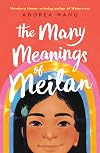
This book is overflowing with heart -- Meilan takes a lot onto herself and feels things very deeply and has a ton of things going on -- leaving her extended family and their bakery in Boston behind to move to Ohio, bad feelings between her family members, bullying and racism in her new town and tornados. All of that, and the larger loss of her grandmother and the ripple effect it has on everyone around her. So much going on, but she finds her way with the help of new friends and family. I show more love the way she thinks about language and names -- it's a particularly cool feature of the book. show less
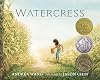
Emotions stir in this thoughtfully told and beautifully illustrated book. In this story, our protagonist and her brother, along with their Chinese immigrant parents, stop along an Ohio road when they spot watercress, growing wild, in the ditch, along the road. Her parents are delighted with memories of watercress from their past in China, but the girl is feeling ashamed and wanting to get their food from the store like everyone else. The girl refuses to try the watercress even from the show more urging of her parents (it is fresh, it is free). She is given a reminder of the difficult past her mother has lived through and then feels "ashamed of being ashamed of my family." She then eats the watercress with her family, building new memories with them. show less
Lists
Awards


You May Also Like


Associated Authors
Statistics
- Works
- 14
- Also by
- 1
- Members
- 1,502
- Popularity
- #17,107
- Rating
- 4.4
- Reviews
- 146
- ISBNs
- 72
- Languages
- 2