
Lois Sepahban
Author of Paper Wishes
Series
Works by Lois Sepahban
Animal Testing: Life-Saving Research vs. Animal Welfare (Perspectives Flip Books: Issues) (2015) 45 copies
Temple Grandin: Inspiring Animal-Behavior Scientist (Core Library: Great Minds of Science) (2014) 5 copies
Jane Goodall: Revolutionary Primatologist and Anthropologist (Great Minds of Science) (2015) 3 copies
Rüzgara Birakilan Dilekler 1 copy
Tagged
Common Knowledge
- Gender
- female
Members
Reviews
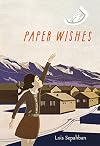
This book tells the story of Manami, a young Japanese-American girl who is forced out of her home and into an awful camp because white Americans are paranoid and terrible. She tries to bring the family dog, Yujiin, with her, but he's found and the soldiers take him. Manami stops talking, and starts drawing pictures of Yujiin and sending them out on the wind to call him back to the family. I really liked the spare writing style here. It's choppy, but Manami feels so dislocated from everything show more that she knew and loved - I think the choppy style represents her feelings really well. I loved reading about this event from her 10-year-old perspective, as she learns more about what's happening despite her parents trying to protect her from bad truths. Her brother comes to live with them, even though he would have been able to stay in university, because he wouldn't have been able to bear the guilt - mirroring Manami's guilt of letting Yujiin get taken away.
This book made me cry. show less
This book made me cry. show less
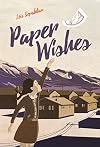
After the bombing of Pearl Harbor, Manami Tanaka is forced to evacuate from her home and sent to a camp. Japanese-American's were considered "dangerous" and forced to live at these camps with other Japanese-Americans. While on their way to the camp, Manami's dog, Yujiin was not allowed to go with them. Manami tried her hardest to sneak the dog in, but ultimately failed and this forced her into becoming mute. It was in this moment that Manani started to communicate through her paintings and show more drawings. She eventually gets another dog and faced with the same situation when the guard tried taking this dog away. Manami stood up for herself and gets her voice back.
I mean wow. This book was so powerful and eye-opening. I was never fully aware of the Japanese-American camps that occurred after the Pearl Harbor bombing. Reading about this made me sick to my stomach. I love the character development of Manami, though it was not your typical upward journey. This was more of a roller-coaster journey to her path of finding her voice again… Which is more like how life is. I love how the book is written in the way a child would have written it. Sentences were simple, yet flowed well, and we are given a genuine story line. The only issue I had was why in the worl was Yujiin not allowed in the camp!? When I read that there were other dogs at this camp, I was FURIOUS. Other than that, I loved the book and would like to do more research on the Japanese-American camps. show less
I mean wow. This book was so powerful and eye-opening. I was never fully aware of the Japanese-American camps that occurred after the Pearl Harbor bombing. Reading about this made me sick to my stomach. I love the character development of Manami, though it was not your typical upward journey. This was more of a roller-coaster journey to her path of finding her voice again… Which is more like how life is. I love how the book is written in the way a child would have written it. Sentences were simple, yet flowed well, and we are given a genuine story line. The only issue I had was why in the worl was Yujiin not allowed in the camp!? When I read that there were other dogs at this camp, I was FURIOUS. Other than that, I loved the book and would like to do more research on the Japanese-American camps. show less
My favorite part of this book is the rhythm of the text. Sepahban most likely researched Japanese texts or traditions to create that steady, progressive feeling within Menami's internal dialogue. The Japanese American immigrants and later citizens were not accepted into American culture well and kept close many of the traditions from their heritage. One aspect of this book that really almost ruined it for me was Yujiin being taken away. I am sure the dog was just killed based on the show more situation. When I was living in Seattle I read several books on this process of evacuation and found it so impressive how ugly the American public can be and not have anyone really think about it. So much of our learning about WW2 is based around Hitler because of our "eurocentric", mainstream heritage yet we were setting up camps of our own here! It is not talked about enough, which is why this book is important while also being a difficult read. It is well written and really seems to capture the attitudes of a child going through such a crisis. Sepahban mentions the aspects of city versus rural communities within the camps which fascinated her and is ultimately what leads to Menami's family to uproot yet again at the finish of the book. The ending was nicely cyclical. Sepahban reuses the phrasing of "normal but not normal" but shows Menami's emotional difference in the two occasions of her family moving. She displays the courage and strength she is developing despite her difficulties initially entering the camp. This books is a great read to accompany an American WW2 unit or American immigrant or American minority study. show less
This book was hard for me to read but at the same time hard for me to put down. Such a bittersweet tale about a young girl and her family and her love of her dog. I absolutely loved that Sepahban used the bond between human and pet as the main focus to highlight this horrific time period in American history. Sepahban gives readers an honest and pretty accurate portrayal of what it was like to be Japanese-American at the time. I felt such a connection to Manami for her love of her dog from show more her beloved-ed home and learning to allow room in her heart for another and also could not believe the horrible things she had to deal with when her family was relocated because they were a "threat" to American citizens.
Highly recommend for young readers but also for those who love reading diverse books and widening their horizons. Has made me look at current events with an even more wider lens now. show less
Highly recommend for young readers but also for those who love reading diverse books and widening their horizons. Has made me look at current events with an even more wider lens now. show less
Lists
Awards


You May Also Like


Statistics
- Works
- 16
- Members
- 540
- Popularity
- #46,138
- Rating
- 4.0
- Reviews
- 37
- ISBNs
- 61