
Robin Koontz
Author of What Was Hurricane Katrina?
About the Author
Series
Works by Robin Koontz
El viejo McPerro tenia un zoologico (Alitas rojas, niveles 1-2 / Red Readers, Grades 1-2) (2011) 50 copies
The Complete Backyard Nature Activity Book: Fun Projects for Kids to Learn About the Wonders of Wildlife and Nature (1998) 14 copies
Home on the Range-cowboy, on Level Reader States and Regions: Harcourt School Publishers Social Studies (Social Studies 07) (2005) 5 copies
Movers and Makers: How Animals Build and Use Tools to Survive (Amazing Animal Skills) (2012) 4 copies
The Case of the Grumpy Chicken (Short Tales: Furlock & Muttson Mysteries) (Short Tales Furlock and Muttson Mysteries) (2010) 4 copies
Why A Dog By A Cat 1 copy
Tu árbol genealógico 1 copy
Associated Works
Tagged
Common Knowledge
- Legal name
- Koontz, Robin Michal
- Gender
- female
- Occupations
- writer
illustrator - Nationality
- USA
- Birthplace
- Wheaton, Maryland, USA
- Associated Place (for map)
- Maryland, USA
Members
Reviews
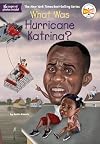
I find it easier to work through difficult issues through books so I was impressed when my son picked out out this history of Hurricane Katrina written for children. The book does a good job of setting up the history of New Orleans' location and the necessity of levees as well as a primer on hurricanes and other storms. The details about the storm and the flooding are clear and not sugar-coated (without being overly graphic) and it does not shy away from the poor decisions of political show more leaders. There is also a chapter on the role that climate change played in the disaster. All in all it's a good introduction for children to one of the great tragedies of recent years, but something that may seem a long time ago to them. show less
Bug by Robin Koontz
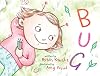
A little girl - nicknamed Bug for her love of bugs - loves to draw bugs, but struggles with math. But suddenly she has incentive: "If everyone does well on the big math test tomorrow, we'll plan a trip to the science museum!" Bug wants to see the bug room at the science museum, so she tries to study, but ends up observing and drawing bugs instead - and collecting lucky crickets. But she realizes that she IS doing math when she counts clusters of insects, and she does well on the test - until show more her lucky crickets escape.
Bug is sweet, the teacher Mrs. Muskie is reasonably good-humored about the escaped crickets and Bug's creative way of doing math, and all's well that ends well. show less
Bug is sweet, the teacher Mrs. Muskie is reasonably good-humored about the escaped crickets and Bug's creative way of doing math, and all's well that ends well. show less
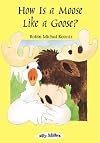
This story falls under the easy to read genre with its controlled vocabulary perfect for beginning readers. It provides factual information about a variety of different animals, which allows the book to also classify as a non-fiction information book. In the story, two very different animals are compared and contrasted. Facts are given on what makes the two animals different and what makes the two animals similar. Not only will that help extend the students' knowledge on the animals at hand, show more it will also model the concept of comparing/contrasting. If I were to use this book in my classroom, I would either read the book aloud or have them read in small groups. Throughout the story, I would point out the similarities and differences that the animals have. I would also highlight key words that help tell us if the trait is a similarity or difference, like "also" and "unlike" respectively. After reading the story, I would show the students how to create Venn Diagrams with the similarities in the center where each circle overlaps and the differences on the respective side of the animal that they belong to. I think this book provides the opportunity to address an important concept at an understandable and appropriate level for early readers. I truly think this would be great to use in my classroom! show less
One feature of this text I like is that, while telling the story of the hurricane, the author chose to intermix fact boxes about other things related to hurricanes. For instance, one fact box talks about how hurricanes are rated. Another one talks about how hurricanes are named. This gives the reader even more information about hurricanes in general. Another feature I liked about the book are the informative illustrations. It was a very interesting choice to include illustrations instead of show more photographs, but that was probably for the best. In order to keep the book child friendly, actual photographs may have been a little to graphic for young readers. The detailed black and white illustrations, however, provide a more-than-adequate visual for the students. The big message could be to show the power of human beings even in the face of extreme natural disasters. show less
Awards


You May Also Like


Associated Authors
Statistics
- Works
- 105
- Also by
- 3
- Members
- 2,409
- Popularity
- #10,649
- Rating
- 3.9
- Reviews
- 17
- ISBNs
- 333
- Languages
- 2