
Michael Buckley (1) (1969–)
Author of The Fairy-Tale Detectives
For other authors named Michael Buckley, see the disambiguation page.
About the Author
Michael Buckley was born in Akron, Ohio in 1969. After graduating from Ohio University, he moved to New York City to be an intern on the Late Show with David Letterman which led to stints developing programming for Discovery Networks, MTV, MTV Animation and Klasky Csupo. He writes The Sisters Grimm show more series and the N.E.R.D.S. series. After working for David Letterman he moved into a television production job where he worked on documentaries. Michael Buckley and his writing partner Joe Deasy have created an animated series for Cartoon Network called Horrorbots. (Bowker Author Biography) show less
Series
Works by Michael Buckley
Associated Works
Tagged
Common Knowledge
- Birthdate
- 1969
- Gender
- male
- Education
- Ohio State University
- Occupations
- children's book author
- Nationality
- USA
- Birthplace
- Akron, Ohio, USA
- Places of residence
- New York, New York, USA
Akron, Ohio, USA - Associated Place (for map)
- USA
Members
Discussions
Found: YA Novel, people from the sea go to school with humans, human tutors one of these people from the sea, big war in Name that Book (August 2021)
Reviews

Barnacle, Garlic, and Melancholy Weirdie are triplets who wake up one day in their enormous family mansion to find everyone gone - all the servants, all the house guests, and both their parents. Eventually, they are taken to an orphanage - Our Lady of Perpetual Side-Eye (love it!) - where their different-ness turns off prospective adoptive parents. Luckily, their caseworker, Miss Emily, sees something special in them and adopts them herself.
This is a funny, sweet, totally odd, and endearing show more tale of what it means to be different and what, actually, is "weird" anyway. I laughed out loud in parts during the short listen (it's only about 90 minutes long), and reveled in Kate Winslet's absolutely wonderful narration. Definitely one I'll listen to again, and if the ending is any indication, I may get to learn more about The Weirdies in another volume.
4.5 stars show less
This is a funny, sweet, totally odd, and endearing show more tale of what it means to be different and what, actually, is "weird" anyway. I laughed out loud in parts during the short listen (it's only about 90 minutes long), and reveled in Kate Winslet's absolutely wonderful narration. Definitely one I'll listen to again, and if the ending is any indication, I may get to learn more about The Weirdies in another volume.
4.5 stars show less

Sabrina and Daphne Grimm have had a difficult childhood. After the mysterious disappearances of their mother and father, they were shuttled from the orphanage to a myriad of terrible foster homes. The latest – and last – is that of a woman claiming to be the grandmother they were told was dead! To make things worse, the old lady clearly has a bit of a screw loose – she tells them that they are descendants of THE Brothers Grimm – and that the famous book of fairy tales is actually a show more record of real observations. Throughout the years the Grimm family has upheld a tradition as fairy-tale detectives to clear up any mischief involving the Everafters. Sabrina must overcome her skepticism, and her desire to protect herself and her sister, in order to take up the family role and save the town, and her family from the clutches of a malicious giant.
While I was annoyed at Sabrina’s stubborn refusal to accept magical status (once I have suspended my disbelief, I expect characters to follow – it’s an egotistical failing of mine), it was very naturally and realistically done. There are believable emotional reasons behind her behavior, and being left ‘in charge’ of her younger sister has taken a real toll on her. I loved the take on Prince Charming, Jack the Giant Killer, and the Big Bad Wolf, but I really disliked the portrayal of Puck. The character seemed to have much more in common with Peter Pan than with the woodland sprite I know and love. Still – it’s a decent way to get kids interested in Shakespeare, I suppose.
The characters were likeable and believable in these fractured fairy tales, and there were enough twists to keep younger readers guessing and older ones entertained. A great series for anyone who likes quick and quirky fractured fairy tale fun. show less
While I was annoyed at Sabrina’s stubborn refusal to accept magical status (once I have suspended my disbelief, I expect characters to follow – it’s an egotistical failing of mine), it was very naturally and realistically done. There are believable emotional reasons behind her behavior, and being left ‘in charge’ of her younger sister has taken a real toll on her. I loved the take on Prince Charming, Jack the Giant Killer, and the Big Bad Wolf, but I really disliked the portrayal of Puck. The character seemed to have much more in common with Peter Pan than with the woodland sprite I know and love. Still – it’s a decent way to get kids interested in Shakespeare, I suppose.
The characters were likeable and believable in these fractured fairy tales, and there were enough twists to keep younger readers guessing and older ones entertained. A great series for anyone who likes quick and quirky fractured fairy tale fun. show less
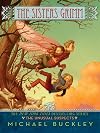
This series continues to delight. Picking up immediately from Book 1, the Sisters Grimm are sent to school in Fairyport Landing and it soon becomes obvious that something is amiss when Sabrina finds her teacher dead in a web. Sabrina is a giant brat in this book, and it took a lot for me to not roll my eyes at her and give up on the book. But, I didn't, and it turned out that her anger was very plot-relevant!
And, it ended on a cliffhanger so of course I had to start book three right away...
And, it ended on a cliffhanger so of course I had to start book three right away...

The first entry in an on-going middle-grade fantasy series, The Fairy-Tale Detectives follows the story of Sabrina and Daphne Grimm, who, after a year and a half in and out of various foster homes, find themselves deposited with the grandmother they had no idea existed. Sabrina, the elder at almost twelve, is naturally distrustful - a characteristic much amplified by more than a year's experience with abusive and/or neglectful adults - and determined to protect the more innocent Daphne. She show more wants none of this strange Grandma Relda, with her colorful food, mysterious preoccupation with fairy-tale creatures, and somewhat foreboding companion, Mr. Canis; and has no interest in staying in Ferryport Landing, the small forest-enclosed town, on the banks of the Hudson River, to which she and Daphne have come. But when all her preconceived notions - her conviction that Relda Grimm is a fraud and a lunatic, her belief that those stories known as "fairy-tales" are fiction - are utterly destroyed by witnessing a two-hundred-foot-tall giant kidnap Grandma Relda and Mr. Canis, Sabrina swings into action, Daphne at her side. She may have lost one family, when her parents disappeared, but Sabrina Grimm is not the girl to lose a second, now that she's finally found it...
I was curious to see how I would like this first entry in Michael Buckley's Sisters Grimm series, as so many of my online friends seem either to dislike it, or, at best, to be ambivalent about it. Although rather strict, in my ideas about what makes a desirable folk or fairy-tale retelling - I prefer faithfulness to the original - I am far more tolerant of works of fantasy fiction that are inspired by various folk traditions, as they are generally not presented as retellings of the original stories themselves. In fact, the overlap between folklore and fantasy is a particular area of interest for me, and something I would like to research. Given that this is so, it's probably not that surprising that I enjoyed The Fairy-Tale Detectives more than some of my fellow reviewers. I liked the idea of it, and I enjoyed many of the details of the story: that Grandma Relda was so colorful, that Mr. Canis (erstwhile Big Bad Wolf) was a reformed character, that Prince Charming was a not-so-charming opportunist, out for number one. I appreciated the fact that the Grimms, and the "Everafter" community that they helped to establish, were relocated to the Hudson Valley, as this seems to offer an oblique commentary on the immigration of so many Germans to this continent, and the safe-haven (however imperfect) it supplied to them. Finally, I really appreciated Sabrina's character, and didn't find her distrust of adults at all unbelievable. Yes, she was rather obnoxious at first, but I would have been far more skeptical and displeased, if she had simply accepted the situation in Ferryport Landing, and learned to trust again, all in an instant. These things take time, and I think Buckley made the right decision, in allowing her distrust to play itself out naturally, only overcome by the evidence of her own senses.
All that said, this wasn't a book without flaw, and I did find myself a little impatient with the way Buckley conflated any number of works of fantasy and fairy-tale. If Ferryport Landing was established to house those creatures and beings that the Brothers Grimm - ancestors of our Sabrina and Daphne - encountered through their stories, then the cast of characters should have been limited to the Grimms' fairy-tales. Or, if it was necessary to bring in the work of other fairy-tale authors (Andersen, Perrault) and modern fantasists (Baum, Carroll), then some sort of explanation should have been offered. Perhaps, once established, the town (originally "Fairyport Landing") began to attract other creatures? I also felt that the informative afterword, in the edition I read, was at times misleading, and at times factually inaccurate. Without ever stating this explicitly, Buckley made it seem as if the Brothers Grimm were the first to record fairy-tales, when any reader with even a cursory knowledge of the subject knows that they were preceded by the French salon movement, which was itself inspired by earlier Italian traditions, in the same vein. I was also very frustrated (yet again!), to see the factually incorrect statement that the Chinese variant of Cinderella was the first to be recorded, as the story of the Greek slave girl Rhodopis (see: The Egyptian Cinderella) predates it by more than a millennium.
Leaving these issues aside - and they seem to be questions of a more scholarly, rather than literary nature - I did enjoy The Fairy-Tale Detectives enough to want to read subsequent entries in the series. I'm curious to see how Puck's inclusion in the Grimm household will work out, whether Sabrina's trust issues continue, and how the mysterious Red Hand society - could this be a reference to the "Red Hand" of Irish mythology? - comes into all of it. It looks like I will have to track down a copy of The Unusual Suspects... show less
I was curious to see how I would like this first entry in Michael Buckley's Sisters Grimm series, as so many of my online friends seem either to dislike it, or, at best, to be ambivalent about it. Although rather strict, in my ideas about what makes a desirable folk or fairy-tale retelling - I prefer faithfulness to the original - I am far more tolerant of works of fantasy fiction that are inspired by various folk traditions, as they are generally not presented as retellings of the original stories themselves. In fact, the overlap between folklore and fantasy is a particular area of interest for me, and something I would like to research. Given that this is so, it's probably not that surprising that I enjoyed The Fairy-Tale Detectives more than some of my fellow reviewers. I liked the idea of it, and I enjoyed many of the details of the story: that Grandma Relda was so colorful, that Mr. Canis (erstwhile Big Bad Wolf) was a reformed character, that Prince Charming was a not-so-charming opportunist, out for number one. I appreciated the fact that the Grimms, and the "Everafter" community that they helped to establish, were relocated to the Hudson Valley, as this seems to offer an oblique commentary on the immigration of so many Germans to this continent, and the safe-haven (however imperfect) it supplied to them. Finally, I really appreciated Sabrina's character, and didn't find her distrust of adults at all unbelievable. Yes, she was rather obnoxious at first, but I would have been far more skeptical and displeased, if she had simply accepted the situation in Ferryport Landing, and learned to trust again, all in an instant. These things take time, and I think Buckley made the right decision, in allowing her distrust to play itself out naturally, only overcome by the evidence of her own senses.
All that said, this wasn't a book without flaw, and I did find myself a little impatient with the way Buckley conflated any number of works of fantasy and fairy-tale. If Ferryport Landing was established to house those creatures and beings that the Brothers Grimm - ancestors of our Sabrina and Daphne - encountered through their stories, then the cast of characters should have been limited to the Grimms' fairy-tales. Or, if it was necessary to bring in the work of other fairy-tale authors (Andersen, Perrault) and modern fantasists (Baum, Carroll), then some sort of explanation should have been offered. Perhaps, once established, the town (originally "Fairyport Landing") began to attract other creatures? I also felt that the informative afterword, in the edition I read, was at times misleading, and at times factually inaccurate. Without ever stating this explicitly, Buckley made it seem as if the Brothers Grimm were the first to record fairy-tales, when any reader with even a cursory knowledge of the subject knows that they were preceded by the French salon movement, which was itself inspired by earlier Italian traditions, in the same vein. I was also very frustrated (yet again!), to see the factually incorrect statement that the Chinese variant of Cinderella was the first to be recorded, as the story of the Greek slave girl Rhodopis (see: The Egyptian Cinderella) predates it by more than a millennium.
Leaving these issues aside - and they seem to be questions of a more scholarly, rather than literary nature - I did enjoy The Fairy-Tale Detectives enough to want to read subsequent entries in the series. I'm curious to see how Puck's inclusion in the Grimm household will work out, whether Sabrina's trust issues continue, and how the mysterious Red Hand society - could this be a reference to the "Red Hand" of Irish mythology? - comes into all of it. It looks like I will have to track down a copy of The Unusual Suspects... show less
Lists
Awards


You May Also Like


Associated Authors
Statistics
- Works
- 32
- Also by
- 1
- Members
- 19,721
- Popularity
- #1,104
- Rating
- 4.0
- Reviews
- 422
- ISBNs
- 511
- Languages
- 9
- Favorited
- 24