
Derryl Murphy
Author of Napier's Bones
About the Author
Works by Derryl Murphy
Associated Works
The Year's Best Science Fiction: Twenty-Third Annual Collection (2006) — Contributor — 567 copies, 5 reviews
Time Machines: The Greatest Time Travel Stories Ever Written (1998) — Contributor — 82 copies, 5 reviews
Northern Suns : The New Anthology of Canadian Science Fiction (1999) — Contributor — 69 copies, 1 review
Tesseracts Twelve: New Novellas of Canadian Fantastic Fiction (2008) — Contributor — 31 copies, 2 reviews
Canadian Speculative Fiction (Prairie Fire, Vol. 15., no.2 - 1994 Summer) (1994) — Contributor — 11 copies
Tagged
Common Knowledge
- Canonical name
- Murphy, Derryl
- Birthdate
- 1963-04-20
- Gender
- male
- Occupations
- science fiction writer
- Organizations
- Science Fiction and Fantasy Writers of America
SF Canada - Nationality
- Canada
- Birthplace
- Middleton, Nova Scotia, Canada
- Associated Place (for map)
- Nova Scotia, Canada
Members
Reviews

Before I start down I look one more time in the stream. I can see nothing swimming in it, no fish, no beetle.
As I walk, I wish there were still birds to sing to me.
Eleven stories about the end of the world as we know it. Although the overall theme of the book is ecological disaster, apocalypse comes in many forms, from invading aliens, water shortages, and garbage-covered oceans, to swarms of huge insects and far future earth that is about to be swallowed by the sun. "What Goes Around" is a show more more light-hearted story and brings a bit of light relief to the book.
The only story I disliked was "Summer's Humans", which was inspired by Nadine Gordimer's story "July's People". The characters were unpleasant and the aliens' constant hair-shedding made me shudder in disgust (although that was probably the point).
My favourite story was The History of Photography, which was subtle and lyrical and poignant. The author said that when this story appeared in a photography magazine, the readers sent in lots of irate letters complaining about inaccuracies, as the magazine hadn't made it clear that it was fiction. "Those Graves of Memory" and "Wasps at the Speed of Sound" make up my top three. show less
As I walk, I wish there were still birds to sing to me.
Eleven stories about the end of the world as we know it. Although the overall theme of the book is ecological disaster, apocalypse comes in many forms, from invading aliens, water shortages, and garbage-covered oceans, to swarms of huge insects and far future earth that is about to be swallowed by the sun. "What Goes Around" is a show more more light-hearted story and brings a bit of light relief to the book.
The only story I disliked was "Summer's Humans", which was inspired by Nadine Gordimer's story "July's People". The characters were unpleasant and the aliens' constant hair-shedding made me shudder in disgust (although that was probably the point).
My favourite story was The History of Photography, which was subtle and lyrical and poignant. The author said that when this story appeared in a photography magazine, the readers sent in lots of irate letters complaining about inaccuracies, as the magazine hadn't made it clear that it was fiction. "Those Graves of Memory" and "Wasps at the Speed of Sound" make up my top three. show less
 This review was written for LibraryThing Early Reviewers.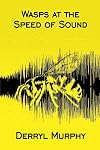
A collection of 11 apocalypsi (apocalypses?) - I think the thing that impressed me the most was how very different all the apocalypsi were, apart from a common environmental theme. Well written stories, and I enjoyed reading all excepting one (What Goes Around, which I just didn't get). My favourite is probably The History of Photography, but Blue Train, The Abbey Engine, and Those Graves of Memory also made pretty good impressions. Day's Hunt didn't overly appeal - it was pretty gruesome in show more fact - but still well-written. I have the feeling if I met most of the protaganists in the street I'd possibly cross it to avoid them, but somehow despite that Derryl Murphy made me care about almost all of them, leaving only the viewpoint character in the final story (Laura, from Summer's Humans) and everyone in the aforementioned What Goes Around that I was happy to leave.
Bottom line: Skip the foreword, go straight into the stories. A lot of interesting apocalypsi await you. show less
Bottom line: Skip the foreword, go straight into the stories. A lot of interesting apocalypsi await you. show less
This review was written for LibraryThing Early Reviewers.
Imagine being able to manipulate numbers to do magic, just as so many fictional wizards manipulate words, as spells, to accomplish their ends. Imagine seeing everything as a number, with formulae streaming into the air from every physical thing, allowing you to bend and change them — using your abilities to smear a license plate into a new number, say, or blurring the serial numbers on dollar bills. It gives new meaning to the word “numerate.”
Derryl Murphy’s protagonist in Napier’s show more Bones is a numerate. As the novel opens, Dom is seeking an artifact of mathematical power when the numbers throw him far away, onto a bus in a city distant from his search. More than that, he has somehow picked up an adjunct; that is, residing in his body with him is the mind and soul of Billy, another numerate whose physical body died an unknown time ago. Billy remembers little of his past, but he knows that he and Dom are in danger from whatever entity threw them away from the artifact. As the two become acquainted, a young woman, Jenna, joins them at a large park where they are resting in the grass, claiming to be able to “see” Billy as a type of shadow. She can definitely hear the difference in Dom’s voice when Billy is using it; Billy has an English accent. The three are attacked by a series of “search numbers,” and begin a flight that takes them a continent, and ultimately a couple of realities, away.
It’s an interesting conceit, but Murphy doesn’t develop the phenomenon of numeracy as fully as he might. He does not explain how it works, that is, where the numbers come from and how they can be manipulated; he just posits that it is so. It does not appear that those who can manipulate the numbers have any special ability at mathematics of any sort — this isn’t a talent you can develop by becoming highly proficient at arithmetic, geometry or any other discipline, but is an inborn trait. As the trio travels from place to place, obtaining useful artifacts with interesting relationships to numbers (wiring from Apollo 13, for instance, carries substantial “mojo” because the rocket lifted off on the 13th of the month at 1313 hours; Dom explains that “Coincidences like that create a rush of numbers that push their way in, forcing out the bland, everyday number that make up the fabric of life. When they do that, there’s a dynamic that’s created, on the numerates can use to their benefit.” That’s about as much of an explanation as we ever get, and numeracy remains a mystery.
Why John Napier is trying to catch up to them and destroy them, as they eventually figure out, is another mystery that is never resolved. Napier is an historical figure who does not seem to have been evil, as portrayed in this book, though he was thought to have dabbled in necromancy and alchemy. He makes a good foil for the protagonist even if he is never explained, and the novel quickly becomes a fast, action-packed chase story rather than one that explores the magic system that sets the chase in motion.
The ending is a serious letdown from all the action, as things come together too quickly and a couple of deus ex machinas appear to aid the hardy trio of good guys. I was dismayed, for instance, to find out the identity of the Billy persona; there are no real clues to it in what went before. Nor is there any real explanation for Jenna’s sudden facility with quantum mathematics.
In short, this book strikes me as a fascinating idea that is not rendered particularly well. The concept of numeracy is so interesting that I kept reading the book even though I grew progressively more unhappy with Murphy’s failure to make more of it.
http://www.fantasyliterature.com/reviews/napiers-bones/ show less
Derryl Murphy’s protagonist in Napier’s show more Bones is a numerate. As the novel opens, Dom is seeking an artifact of mathematical power when the numbers throw him far away, onto a bus in a city distant from his search. More than that, he has somehow picked up an adjunct; that is, residing in his body with him is the mind and soul of Billy, another numerate whose physical body died an unknown time ago. Billy remembers little of his past, but he knows that he and Dom are in danger from whatever entity threw them away from the artifact. As the two become acquainted, a young woman, Jenna, joins them at a large park where they are resting in the grass, claiming to be able to “see” Billy as a type of shadow. She can definitely hear the difference in Dom’s voice when Billy is using it; Billy has an English accent. The three are attacked by a series of “search numbers,” and begin a flight that takes them a continent, and ultimately a couple of realities, away.
It’s an interesting conceit, but Murphy doesn’t develop the phenomenon of numeracy as fully as he might. He does not explain how it works, that is, where the numbers come from and how they can be manipulated; he just posits that it is so. It does not appear that those who can manipulate the numbers have any special ability at mathematics of any sort — this isn’t a talent you can develop by becoming highly proficient at arithmetic, geometry or any other discipline, but is an inborn trait. As the trio travels from place to place, obtaining useful artifacts with interesting relationships to numbers (wiring from Apollo 13, for instance, carries substantial “mojo” because the rocket lifted off on the 13th of the month at 1313 hours; Dom explains that “Coincidences like that create a rush of numbers that push their way in, forcing out the bland, everyday number that make up the fabric of life. When they do that, there’s a dynamic that’s created, on the numerates can use to their benefit.” That’s about as much of an explanation as we ever get, and numeracy remains a mystery.
Why John Napier is trying to catch up to them and destroy them, as they eventually figure out, is another mystery that is never resolved. Napier is an historical figure who does not seem to have been evil, as portrayed in this book, though he was thought to have dabbled in necromancy and alchemy. He makes a good foil for the protagonist even if he is never explained, and the novel quickly becomes a fast, action-packed chase story rather than one that explores the magic system that sets the chase in motion.
The ending is a serious letdown from all the action, as things come together too quickly and a couple of deus ex machinas appear to aid the hardy trio of good guys. I was dismayed, for instance, to find out the identity of the Billy persona; there are no real clues to it in what went before. Nor is there any real explanation for Jenna’s sudden facility with quantum mathematics.
In short, this book strikes me as a fascinating idea that is not rendered particularly well. The concept of numeracy is so interesting that I kept reading the book even though I grew progressively more unhappy with Murphy’s failure to make more of it.
http://www.fantasyliterature.com/reviews/napiers-bones/ show less
AN intrguiging collection of short stories all from the same author, and all loosely gathered around the same theme and topic - the environment, our interactions with it, and the future. They are generally distopian, and vary from the very depressing through to the might be slight bit of grey in the dark of the tunnel ahead. There's a forward by Peter Watss, which doens't really add very much, as he mostly talks about his own work, but at lerast he manages not to spoil any of the stories show more unlike most 'mainstream' author forewards I've read. The author commentary at the start of each story is only slightly less banal, but does occasionally add some insight into how the stories came to be.
As usual with a short story collection some are a bit more hit and miss than others. The title story appears about halfway through, and is about the equal of any of the others in the book. In an distopian future insects have evolved into larger meaner versions of those we hate already. Wasps now travel at supersonic speeds capable of denting sheet steel. But fortunetly the mathmaticians of the insect world - spiders - have developed interdimensional gateways in their now giant webs, allowing transfer to other less dispoiled earths. And not all insects are genetically disposed against humanity, if you can survive long enough to reach a web. Weird. But poignant. And well written. Like all the stories. They tend to fade away at the end without leaving a truly dramtic pause to finish them - something that is hard to achieve consistency on.
Enjoyable. I'm not quite sure that I'm up for reading this author in full novel length, but its' certainly a name to look out for. show less
As usual with a short story collection some are a bit more hit and miss than others. The title story appears about halfway through, and is about the equal of any of the others in the book. In an distopian future insects have evolved into larger meaner versions of those we hate already. Wasps now travel at supersonic speeds capable of denting sheet steel. But fortunetly the mathmaticians of the insect world - spiders - have developed interdimensional gateways in their now giant webs, allowing transfer to other less dispoiled earths. And not all insects are genetically disposed against humanity, if you can survive long enough to reach a web. Weird. But poignant. And well written. Like all the stories. They tend to fade away at the end without leaving a truly dramtic pause to finish them - something that is hard to achieve consistency on.
Enjoyable. I'm not quite sure that I'm up for reading this author in full novel length, but its' certainly a name to look out for. show less
This review was written for LibraryThing Early Reviewers.Awards


You May Also Like
Associated Authors
Statistics
- Works
- 6
- Also by
- 18
- Members
- 155
- Popularity
- #135,096
- Rating
- 3.6
- Reviews
- 13
- ISBNs
- 11
- Favorited
- 1
