
Jake Page (1936–2016)
Author of In the Hands of the Great Spirit
About the Author
Jake Page was born in Boston, Massachusetts on January 24, 1936. He received a bachelor's degree from Princeton University in 1958 and a master's degree from the Graduate Institute of Book Publishing at New York University in 1960. He worked for Doubleday as an editor of Anchor Books. In 1962, he show more was put in charge of Natural History Press, which also gave him responsibility for Natural History magazine. He eventually took the job of science content editor for Smithsonian magazine. He also wrote a monthly science column for the magazine entitled Phenomena, Comment and Notes. His columns for Smithsonian and Science were collected in Pastorale: A Natural History of Sorts and Songs to Birds. He wrote dozens of books on the wonders of science including earthquakes, dinosaurs, arctic exploration, zoos, and the languages of cats and dogs. He then turned his attention to the Indians of the American Southwest. He retired from Smithsonian magazine in the late 1970s to help photographer Susanne Anderson on a book documenting the Hopi tribe. Hopi was published in 1982 and followed by Navajo in 1995. His other books include Lords of the Air: The Smithsonian Book of Birds written with Eugene S. Morton, The Big One: The Earthquake That Rocked Early America and Helped Create a Science written with Charles B. Officer, The First Americans: In Pursuit of Archaeology's Greatest Mystery written with J. M. Adovasio, In the Hands of the Great Spirit: The 20,000-Year History of American Indians, and Uprising: The Pueblo Indians and the First American War for Religious Freedom. He also wrote five mystery novels including The Stolen Gods and The Lethal Partner. He died from vascular disease on February 10, 2016 at the age of 80. (Bowker Author Biography) show less
Image credit: via babelio.com
Series
Works by Jake Page
The First Americans: In Pursuit of Archaeology's Greatest Mystery (Modern Library Paperbacks) (2002) 198 copies, 2 reviews
The Big One: The Earthquake That Rocked Early America and Helped Create a Science (2004) 73 copies, 2 reviews
Do Cats Hear with Their Feet?: Where Cats Come From, What We Know About Them, and What They Think About Us (2008) 41 copies
Blood: The River of Life 1 copy
The Big One 1 copy
Zoo, The Modern Ark 1 copy
Associated Works
Tagged
Common Knowledge
- Canonical name
- Page, Jake
- Other names
- Page, James Keena, Jr. (birth name)
- Birthdate
- 1936-01-24
- Date of death
- 2016-02-10
- Gender
- male
- Education
- Princeton University (BA|1958)
New York University (MA|1960) - Occupations
- publisher
magazine editor
miner - Relationships
- Morton, Eugene S.
Officer, Charles B. (co-author)
Adovasio, J. M. (co-author)
Page, Susanne (wife) - Short biography
- James Keena "Jake" Page, Jr. was the founding editor of Doubleday's Natural History Press, as well as editorial director of Natural History magazine and science editor of Smithsonian magazine. He has written more than forty books on the natural sciences, zoological topics, and Native American affairs, as well as mystery fiction.
- Nationality
- USA
- Birthplace
- Boston, Massachusetts, USA
- Places of residence
- Corrales, New Mexico, USA
- Place of death
- Lyons, Colorado, USA
- Associated Place (for map)
- USA
Members
Reviews

Separating fact from fiction in an unbiased manner when it comes to the history of America’s native populations is a nearly impossible task. In the Hands of the Great Spirit, Jake Page, has tried to give a dispassionate overview of Native American history of the United States from the earliest migrations from Asia to the early parts of the 21st century. Page doesn’t’ apology for the more egregious acts of the European settlers or later the American’s pushing American Indians from the show more lands promised to them through treaties. Nor does demean the American Indians culture to the point of caricature to make a political statement. Page does a very good job of presenting the events of history as the happened without judgment, letting the reader decide for themselves whether or not the outcome was just. Considering how contentious the interactions of the Native American and the people wishing to exploit their resources have been in the past, it is really admirable to attempt to remain in the middle of the road. At the same time Page paints the American Indian culture as being far more complex and less homogenous then is often portrayed. American Indians were not and are not passive inhabitants of the land. They exploited the resources available to them, used and fought with other tribes and communities to their advantage, and modified their ways of life readily to deal with the changing times. Tribal life may have afforded them a different understanding of property and ownership, but they were in no way less sophisticated than their European counterparts. Their struggles and victories are well documented in this single volume work. Certainly there are more detailed accounts available but they would be hard pressed in presenting a fairer overview than In the Hands of the Great Spirit.
My one and only grip about the book is the last chapter, where Page attempts to cover some of the current events and possible political future of the American Indians. This is the worst thing a well written historic account can do. Any predications based on current information of human behavior are bound to be wrong. In this case they weren’t too far off, but only scratched the surface of the issues faced by American Indians. Page even acknowledges the flaws of such a chapter, but goes ahead and throws in his own predictions. These sort of chapters should be left out. show less
My one and only grip about the book is the last chapter, where Page attempts to cover some of the current events and possible political future of the American Indians. This is the worst thing a well written historic account can do. Any predications based on current information of human behavior are bound to be wrong. In this case they weren’t too far off, but only scratched the surface of the issues faced by American Indians. Page even acknowledges the flaws of such a chapter, but goes ahead and throws in his own predictions. These sort of chapters should be left out. show less
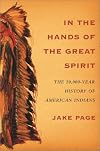
In the Hands of the Great Spirit was my first comprehensive introduction to the Native American peoples. It was love at first sight.
Page traces the history of the early humans who settled the American continent in Prehistory; their cultural, religious and societal development and their proliferation across North America. The latter forms the backbone of his narrative as he charts the tragic interaction of these indigenous peoples with the Occident and what subsequently transpired.
One can show more easily see that compressing the most essential of historical points in a 480 page compendium is bound to have its own recurring challenges. While Page treads already broken ground-Geronimo, Sitting Bull etc-he also explores lesser known figures such as Joseph Medicine Crow and the Pueblo Pope.
The most conspicuous element of In the Hands of the Great Spirit besides its scope is the fluidity of its prose. It is comprehensible for expert and lay alike owing to its avoidance of heavy jargon and this makes it a page turner given that Page narrates rather than relates; something which involves the reader in a mental learning process rather than constantly depending on the author's own perceptions (we forget that Page is the narrator here after all given the value of what he narrates).
Overall, in the grand scheme of things, Page makes no secret of the fact that the history of any society can only be effectively explored through the history of its great men and women. He is a Carlylean in this sense, selecting to focus on the leaders of various Native American peoples and their achievements/failures to chart the fate of subsequent generations rather than kowtowing to the post-structuralist line of contemporary factors and contemporary factors alone influencing a people and history being the study of these factors .
This is an invaluable piece of literature and should grace the bookshelves of all amateur and expert historians alike. show less
Page traces the history of the early humans who settled the American continent in Prehistory; their cultural, religious and societal development and their proliferation across North America. The latter forms the backbone of his narrative as he charts the tragic interaction of these indigenous peoples with the Occident and what subsequently transpired.
One can show more easily see that compressing the most essential of historical points in a 480 page compendium is bound to have its own recurring challenges. While Page treads already broken ground-Geronimo, Sitting Bull etc-he also explores lesser known figures such as Joseph Medicine Crow and the Pueblo Pope.
The most conspicuous element of In the Hands of the Great Spirit besides its scope is the fluidity of its prose. It is comprehensible for expert and lay alike owing to its avoidance of heavy jargon and this makes it a page turner given that Page narrates rather than relates; something which involves the reader in a mental learning process rather than constantly depending on the author's own perceptions (we forget that Page is the narrator here after all given the value of what he narrates).
Overall, in the grand scheme of things, Page makes no secret of the fact that the history of any society can only be effectively explored through the history of its great men and women. He is a Carlylean in this sense, selecting to focus on the leaders of various Native American peoples and their achievements/failures to chart the fate of subsequent generations rather than kowtowing to the post-structuralist line of contemporary factors and contemporary factors alone influencing a people and history being the study of these factors .
This is an invaluable piece of literature and should grace the bookshelves of all amateur and expert historians alike. show less
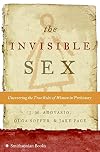
This book attempts to correct mistaken ideas about prehistoric humans, especially concerning the role of women. In so doing, it's necessary also to correct ideas about the role of men. Overall, it's well written, easy to read, and flows nicely through the narrative. There are a few places where I suspected certain things were added to make the book long enough, particularly the point where the authors include the stories from the Seven Daughters of Eve. These could have been summarized in show more much less space, but then the book might have been too short for consideration by a publisher, I suppose. There are a couple of other spots that are similarly unnecessary. In addition, there are a couple of occasions where the authors draw some rather complex and definitive conclusions from evidence that doesn't appear adequate to support that conclusion; this is ironic, since that's what they are basically accusing other writers of doing. I also felt some of the attempts to fit findings into their conclusion of egalitarian societies where women weren't necessarily oppressed were a bit labored, given the evidence they had to work with. I felt like they were twisting definitions past the breaking point in some of these cases. It's also a bit annoying whenever the ubiquitous "noble savage" comes shining through, because at some point, the noble savage myth actually ignores the true humanity of the individuals it's trying to build up. Overall, however, it's a good read and I'd recommend it for anyone skeptical enough that they don't automatically believe whoever they last read. show less

Who, is killing the movie people, and why? A good look at the culture and society of Sante Fe NM in the 90s. Mo and Connie are interesting enough protagonists to make this series pleasant reading. Though blind, Mo is cerebrally sufficient enough to sort out the motive and mystery behind the deaths.
Lists
You May Also Like


Associated Authors
Statistics
- Works
- 52
- Also by
- 1
- Members
- 2,746
- Popularity
- #9,341
- Rating
- 3.6
- Reviews
- 28
- ISBNs
- 138
- Languages
- 8
- Favorited
- 1