
Melissa Bank (1960–2022)
Author of The Girls' Guide to Hunting and Fishing
About the Author
Melissa Bank won the 1993 Nelson Algren Award for short fiction. She has published stories in the Chicago Tribune, including Zoetrope, The North American Review, and Other Voices and Ascent. Her work has also been heard on "Selected Shorts" on National Public Radio. She holds an MFA from Cornell show more University and divides her time between New York City and Sag Harbor, New York. (Bowker Author Biography) show less
Image credit: www.mathieu-bourgois.com
Works by Melissa Bank
Associated Works
Tagged
Common Knowledge
- Legal name
- Bank, Melissa Susan
- Birthdate
- 1960-10-11
- Date of death
- 2022-08-02
- Gender
- female
- Education
- Cornell University (MFA)
Hobart and William Smith Colleges (BA - American Studies) - Occupations
- novelist
advertising copywriter
short story writer - Cause of death
- lung cancer
- Nationality
- USA
- Birthplace
- Boston, Massachusetts, USA
- Places of residence
- New York, New York, USA
Elkins Park, Pennsylvania, USA - Place of death
- East Hampton, New York, USA
- Associated Place (for map)
- USA
Members
Reviews
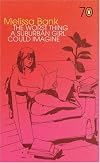
A Girls' Guide to Work and Grief
A review of the Pocket Penguin 70 paperback (2005) which is a short story excerpted from [book:The Girls' Guide to Hunting and Fishing|33926] (December 29, 1998).
I wanted to read Melissa Bank immediately after seeing Berengaria's outstanding 4.5 rounded up to 5 star review of The Girls' Guide to Hunting and Fishing. As luck would have it, a nice used copy of this short story excerpt was available and I snapped it up right away.
As B says, the titles here are show more deceptive and are not really descriptive of the contents. The Worst Thing ... is about a young editorial assistant making her way in the publishing world while dealing with a dying parent on the one hand and a rekindled relationship with an older man on the other.
The writing throughout is excellent and often insightful and humorous about life and its foibles. The portrayals of the boss editor, the boyfriend, the father and the rest of the family is in turns funny, poignant and precise. It was really a joy to read. Thank you again for the discovery B!
Trivia and Link
This edition is part of the Pocket Penguin 70 series which are 70 short samplers of various novels, short stories or essays in order to promote works by writers whose books were published by Penguin Books. show less
A review of the Pocket Penguin 70 paperback (2005) which is a short story excerpted from [book:The Girls' Guide to Hunting and Fishing|33926] (December 29, 1998).
I wanted to read Melissa Bank immediately after seeing Berengaria's outstanding 4.5 rounded up to 5 star review of The Girls' Guide to Hunting and Fishing. As luck would have it, a nice used copy of this short story excerpt was available and I snapped it up right away.
As B says, the titles here are show more deceptive and are not really descriptive of the contents. The Worst Thing ... is about a young editorial assistant making her way in the publishing world while dealing with a dying parent on the one hand and a rekindled relationship with an older man on the other.
The writing throughout is excellent and often insightful and humorous about life and its foibles. The portrayals of the boss editor, the boyfriend, the father and the rest of the family is in turns funny, poignant and precise. It was really a joy to read. Thank you again for the discovery B!
Trivia and Link
This edition is part of the Pocket Penguin 70 series which are 70 short samplers of various novels, short stories or essays in order to promote works by writers whose books were published by Penguin Books. show less

Melissa Bank's second (and last) novel, THE WONDER SPOT (2005), was an absolute pleasure to read, its narrator Sophie Applebaum a memorable character, funny and likable, the middle kid in a Jewish family from suburban Philadelphia, her father is a Judge. Sophie tells us, serially, of her relationships with men, starting in junior high and, briefly, Hebrew school. Then her college years in upstate New York, followed by her NYC years, initially searching for a job and living first with her show more brothers, then with her grandmother, while she teaches herself to type, trying to find an entry job in publishing, which she finally does, and then later works as a copywriter in advertising. The story follows her into her forties and through several different men, none of them ever quite a good match. Sophie herself is something of a hoot, with a dry, self-effacing sense of humor that often cracked me up. As in once, when only half listening to an architect friend talking about "tongue-in-groove" construction, she says she thought he was talking about sex.
We also learn much about her own famiy, the judge, her mother, her womanizing older brother Jack, and her younger brother, Robert, a perfectionist physician, and his very kosher wife, Naomi. And there are a number of other odd secondary characters, her best friends, her co-workers in publishing and advertising, jobs she never really loves.
Whatever I might say here, I can't begin to convey what an entertaining read this book was. And, sadly, it wasn't anywhere near as successful as her first book, THE GIRL'S GUIDE TO HUNTING AND FISHING (1999), an international bestseller that I read and enjoyed a dozen or more years ago.
I was left feeling a bit sad as I finished this book, because Bank had some very bad luck while writing that first book. She was hit by a car while riding her bicycle, and suffered a concussion with long-lasting effects - short term memory loss and aphasia. So its amazing that she was even able to finish that first book (which took her nearly twelve years), let alone a second one. Bank died from lung cancer in 2019, at 61. THE WONDER SPOT is a wonderfully entertaining book - intelligent, moving and often very funny. I loved it.
- Tim Bazzett, author of the memoir, BOOKLOVER show less
We also learn much about her own famiy, the judge, her mother, her womanizing older brother Jack, and her younger brother, Robert, a perfectionist physician, and his very kosher wife, Naomi. And there are a number of other odd secondary characters, her best friends, her co-workers in publishing and advertising, jobs she never really loves.
Whatever I might say here, I can't begin to convey what an entertaining read this book was. And, sadly, it wasn't anywhere near as successful as her first book, THE GIRL'S GUIDE TO HUNTING AND FISHING (1999), an international bestseller that I read and enjoyed a dozen or more years ago.
I was left feeling a bit sad as I finished this book, because Bank had some very bad luck while writing that first book. She was hit by a car while riding her bicycle, and suffered a concussion with long-lasting effects - short term memory loss and aphasia. So its amazing that she was even able to finish that first book (which took her nearly twelve years), let alone a second one. Bank died from lung cancer in 2019, at 61. THE WONDER SPOT is a wonderfully entertaining book - intelligent, moving and often very funny. I loved it.
- Tim Bazzett, author of the memoir, BOOKLOVER show less
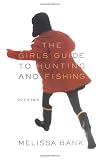
Jane Rosenal is funny, straightforward, uncertain, beautiful (but not nearly as beautiful as her great aunt, the novelist), vulnerable, and kind. She’s disinterested in her career in publishing, or maybe she’s just not that good at it. She’s equally not so good at her life, often baffled by relationships, her own and others, and missing out on that guy who gets her for who she is. Although verbally witty, she’s not acerbic, which probably marks her out as not a real New Yorker. And show more although she finds and loses loves, it’s rather as though she’s still waiting for her life to begin.
Through a series of standalone stories, Melissa Bank introduces us to Jane at the age of 14 and then returns to her at key points in her life. In all but one of these stories, Jane is the main protagonist. And it is Jane’s voice, with running piquant commentary (not always uttered aloud), that carries us along. She’s quirky adorable and you’ll want her to find what she needs even if it isn’t what she wants. But you’ll also feel her humiliations and fear that things just might not work out for her.
In most of the stories, the tone is breezy and light even though the subject matter may be difficult, such as infidelity, or concerning, such as abusive relationships or end-of-life dramas. As such, that works better in some stories than in others. That’s not exactly an inconsistency, just an acknowledgement that the book is built out of separate stories and not through-written as a novel. However, some of these stories are so distinctive and droll that they must surely get reprinted (or read) even today as standalones. show less
Through a series of standalone stories, Melissa Bank introduces us to Jane at the age of 14 and then returns to her at key points in her life. In all but one of these stories, Jane is the main protagonist. And it is Jane’s voice, with running piquant commentary (not always uttered aloud), that carries us along. She’s quirky adorable and you’ll want her to find what she needs even if it isn’t what she wants. But you’ll also feel her humiliations and fear that things just might not work out for her.
In most of the stories, the tone is breezy and light even though the subject matter may be difficult, such as infidelity, or concerning, such as abusive relationships or end-of-life dramas. As such, that works better in some stories than in others. That’s not exactly an inconsistency, just an acknowledgement that the book is built out of separate stories and not through-written as a novel. However, some of these stories are so distinctive and droll that they must surely get reprinted (or read) even today as standalones. show less
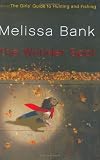
Melissa Bank’s always witty, occasionally hilarious follow-up to her best-selling novel The Girls’ Guide to Hunting and Fishing finds Sophie Applebaum coming to maturity in east-coast urban America of the 1970s and 1980s. Sophie is the middle child of a well-to-do Jewish family from suburban Surrey, Pennsylvania: her even-keeled father a judge, her anxious mother a housewife. Older brother Jack is ambitious, full of ideas, but unreliable; younger brother Robert is ultra-smart and the show more family’s rule-follower. The eight stories in The Wonder Spot follow wise-cracking, insecure Sophie from childhood to her late thirties and chronicle her efforts to a) find a satisfying job, and b) find a satisfying man (not necessarily in that order). From the outset, we realize that Sophie is the kind of person who mostly does what she’s told, who second-guesses her clothes/makeup/behaviour, who often masks an almost debilitating lack of confidence with self-deprecating humour, who can’t help but envy (and feel inferior to) those around her who seem to know their place in the world and aren’t afraid to speak their mind. Her search for love dominates much of the action as she develops into a young woman who, if a desirable man makes eye contact, her imagination goes to work and in seconds has conjured a life together: children, grandchildren, companionable old age. A hopeless romantic, frequent disappointment leaves her cautious, but just short of overtly cynical. Sophie’s search for a fulfilling career follows a similar pattern (one many will recognize): falling into a position because it’s available, boss from hell, survival mode. Later, as she leaves her twenties behind, family returns to the spotlight. She remains close to her brothers and after her father’s death her relationship with her mother deepens, becoming mutually supportive and almost compassionate. The Wonder Spot was initially criticized for straddling the fence: reviewers couldn’t decide if it was serious literature or chick lit. Readers are advised to dismiss categories and simply read the book. Fiction this entertaining doesn’t come along very often. show less
Lists
Awards

You May Also Like


Associated Authors
Statistics
- Works
- 8
- Also by
- 1
- Members
- 7,096
- Popularity
- #3,460
- Rating
- 3.3
- Reviews
- 139
- ISBNs
- 112
- Languages
- 16
- Favorited
- 10
