
Tony Black
Author of Paying for it
About the Author
Image credit: Webseite des Autors: http://www.tonyblack.net/contact/4526102325
Series
Works by Tony Black
The Long Drop 1 copy
The Holy Father 1 copy
Enough Of This Shit Already 1 copy
LA STANZA DEI CADAVERI 1 copy
Associated Works
D*CKED: Dark Fiction Inspired by Dick Cheney — Contributor — 4 copies
Tagged
Common Knowledge
- Birthdate
- 1972
- Gender
- male
- Occupations
- journalist
- Nationality
- Australia (birth)
- Birthplace
- Newcastle, New South Wales, Australia
- Places of residence
- Edinburgh, Scotland, UK
- Associated Place (for map)
- Edinburgh, Scotland, UK
Members
Reviews
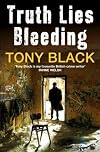
Tony Black has a taken a break from journalist turned Private Eye Gus Dury in his earlier four novels to write a police procedural featuring Edinburgh cop Rob Brennan. Comparisons are obviously going to be drawn between Dury and Brennan so let's get them out of the way up front. Dury is an outsider, the sort of bloke that trouble will turn right across heavy traffic to have a go at. Brennan's a family man, albeit one that's been indulging in a bit of extra-marital with the police show more psychologist. One that's having trouble coming to grips with a teenage daughter, and who obviously needs to sort it out with his wife. He's also suffering badly over the unsolved murder of his brother. There's a distinct possibility that trouble for Brennan will be wielding a handbag, looking for a word in his shell-like.
Brennan has just returned to work when he's given the case to solve. The body of a young girl in a dumpster in an Edinburgh alleyway seems somehow sort of predictable. But as her identity is revealed, her family found, and the fact that she'd recently had a baby of which there is absolutely no sign revealed, Brennan finds himself with quite a complicated problem to solve. Not helped because his boss is climbing the slippery ladder of career achievement and is more than happy to grind her high heels in the head of a subordinate that she can't even pretend to like.
Scottish noir at it's absolute and utter best, TRUTH LIES BLEEDING is a rollercoaster of the personal and professional, dark and light, desperation and determination. The personal relationships swirling around Brennan are drawn beautifully, and the fight to solve the crime, and find this missing baby is just the right mix of frustration and desperation, intuition and good old fashioned detecting. I must admit I did start to wonder at one point what it is about women and Brennan - just about every female character in this book wanted at or rid of him.
Aside from that one observation TRUTH LIES BLEEDING was very difficult to put down. There's none of the lunacy of the Dury books, and despite Brennan being yet another complex and confronted policeman making mistakes, up against the world, put upon and misunderstood, he's a very solid example of those characteristics. Likeable and annoying, understandable and completely inexplicable, Brennan's very believable. I can't remember who said it or where it was, but I do always remember something about police characters needing that sort of conflict in their lives in order to explain their drive to succeed - solve the case. Certainly that idea rang in my head as I read this book, but at no stage is the conflict overdone or overblown. There are echoes of some other well known Scottish detectives from the same location, but Black has set Brennan in the margins of Edinburgh society, sad, grim and surrounded by a lot that seems hopeless, and then he gives him a spark of something that could just mean he's going to get his act together. show less
Brennan has just returned to work when he's given the case to solve. The body of a young girl in a dumpster in an Edinburgh alleyway seems somehow sort of predictable. But as her identity is revealed, her family found, and the fact that she'd recently had a baby of which there is absolutely no sign revealed, Brennan finds himself with quite a complicated problem to solve. Not helped because his boss is climbing the slippery ladder of career achievement and is more than happy to grind her high heels in the head of a subordinate that she can't even pretend to like.
Scottish noir at it's absolute and utter best, TRUTH LIES BLEEDING is a rollercoaster of the personal and professional, dark and light, desperation and determination. The personal relationships swirling around Brennan are drawn beautifully, and the fight to solve the crime, and find this missing baby is just the right mix of frustration and desperation, intuition and good old fashioned detecting. I must admit I did start to wonder at one point what it is about women and Brennan - just about every female character in this book wanted at or rid of him.
Aside from that one observation TRUTH LIES BLEEDING was very difficult to put down. There's none of the lunacy of the Dury books, and despite Brennan being yet another complex and confronted policeman making mistakes, up against the world, put upon and misunderstood, he's a very solid example of those characteristics. Likeable and annoying, understandable and completely inexplicable, Brennan's very believable. I can't remember who said it or where it was, but I do always remember something about police characters needing that sort of conflict in their lives in order to explain their drive to succeed - solve the case. Certainly that idea rang in my head as I read this book, but at no stage is the conflict overdone or overblown. There are echoes of some other well known Scottish detectives from the same location, but Black has set Brennan in the margins of Edinburgh society, sad, grim and surrounded by a lot that seems hopeless, and then he gives him a spark of something that could just mean he's going to get his act together. show less
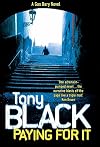
Straight out of the gate this book forces the reader to consider a hard truth: "it doesn't look good to be moved by things like funerals and death." While you chew on that dark notion, Black's story picks up speed and keeps going, hurtling along its frantic arc as fast as its protagonist, hard-drinking ex-journalist Gus Dury, can take it.
Set in Edinburgh, it's steeped with new-century Scottish atmosphere, and it made me long to experience the city behind the facade - me a Californian who's show more never gotten anywhere near the UK. I think sometimes American readers fall hard for the language and the history and the melancholy and the romance of dissolution, none of which we can lay legitimate claim to. Count me among the guilty, but it my enthusiasm for PAYING FOR IT goes beyond all that, due to Black's relentless storytelling.
Dury drinks, and he works hard to pretend his ties to other people don't hold him. His ex-wife. His neighbor. The father of a friend. A girlfriend. And, inevitably, his father, a horror who - diminished by age and health - still has the power to drive him away, but not before ripping the scabs off decades-old hurts.
Distracting Dury from his slow self-erosion takes a series of acts so base that they cut through all his layers of remove. They are both personal and institutional and the reader burns with rage along with Dury as he scrapes the bottom of his resources to fight back. Like Bruen's Taylor, Dury works outside the system, both of it and rejected by it and sick at heart at its failures.
It is not hard to root for Dury - it is only hard to put the book aside without knowing what bleak avenue will call him next and if he can weather one more fresh assault. show less
Set in Edinburgh, it's steeped with new-century Scottish atmosphere, and it made me long to experience the city behind the facade - me a Californian who's show more never gotten anywhere near the UK. I think sometimes American readers fall hard for the language and the history and the melancholy and the romance of dissolution, none of which we can lay legitimate claim to. Count me among the guilty, but it my enthusiasm for PAYING FOR IT goes beyond all that, due to Black's relentless storytelling.
Dury drinks, and he works hard to pretend his ties to other people don't hold him. His ex-wife. His neighbor. The father of a friend. A girlfriend. And, inevitably, his father, a horror who - diminished by age and health - still has the power to drive him away, but not before ripping the scabs off decades-old hurts.
Distracting Dury from his slow self-erosion takes a series of acts so base that they cut through all his layers of remove. They are both personal and institutional and the reader burns with rage along with Dury as he scrapes the bottom of his resources to fight back. Like Bruen's Taylor, Dury works outside the system, both of it and rejected by it and sick at heart at its failures.
It is not hard to root for Dury - it is only hard to put the book aside without knowing what bleak avenue will call him next and if he can weather one more fresh assault. show less
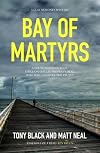
Whenever you're confronted by a jointly authored novel it's very hard to dampen the temptation to constantly look for hints on who contributed what components. Which was the case for around the first 20 pages of BAY OF MARTYRS and then I totally forgot to look.
Set in the South East of Victoria around the town of Warrnambool in particular, this is a great novel featuring a cynical local newspaper reporter, a new in town photographer, a dodgy local developer and an even dodgier politician. show more Nothing particularly surprising in the later I hear you say, and it's a very sad indictment on current day politics that as soon as the pollie made an appearance I had him marked as "one of the baddies", but how or why or when everything connects up is really the point of BAY OF MARTRYS. So named, because in the opening scenes of the novel the body of a young woman is found washed up on the beach of the bay of that name, drowned in what the local police inspector and notorious tricky bastard, would very much like to write off as an accident.
Only Moloney smells a story here, as well as in the sudden government cash splurge on the local airport - all supposedly in the name of tourism and economic growth. Meanwhile back at the newspaper he works for everybody's under pressure, big city owners are putting the brakes on costs, and his editor in chief would like nothing better than to see the back of the difficult to deal with Moloney. Bec, new girl in town, Irish-born photographer and hide-out from a tricky past is thrust into the investigation as part of her working day with Moloney and because of her relationship with one of the local cops.
There are many elements to the plot of BAY OF MARTYRS that come right from the playbook of corrupt goings on. Whilst much of the underlying truth won't come as any surprise to most readers, it's delivered in an engaging, paced and believable manner, partially because of some great characterisations, but mostly because it is so believable. Clay Moloney is a great character, perfectly capable of shouldering the responsibility of being centre to the newspaper's ongoing fortunes, the investigation into the young woman's death and uncovering a bunch of questionable goings on in a small community which is part long-term locals, part blow-in recent arrivals. He's also dealing with the housing crisis bought on by influx of students to the town, and the problems that a somewhat rudder-less life up until now have left in its wake. Whilst there are romantic attachments for all parties in BAY OF MARTYRS they aren't over blown and they certainly don't run smoothly. There are more bodies, there is a build up of tension towards the end, and there is a hefty dose of journalist-jeopardy that's not that hard to swallow at all, even if the twist in the tail was a bit Hollywood cliffhanger.
Nicely done, BAY OF MARTYRS is a very entertaining outing in what seems likely to be an ongoing series from UK based author Tony Black and local Matt Neal.
https://www.austcrimefiction.org/review/review-bay-martyrs-tony-black-matt-neal show less
Set in the South East of Victoria around the town of Warrnambool in particular, this is a great novel featuring a cynical local newspaper reporter, a new in town photographer, a dodgy local developer and an even dodgier politician. show more Nothing particularly surprising in the later I hear you say, and it's a very sad indictment on current day politics that as soon as the pollie made an appearance I had him marked as "one of the baddies", but how or why or when everything connects up is really the point of BAY OF MARTRYS. So named, because in the opening scenes of the novel the body of a young woman is found washed up on the beach of the bay of that name, drowned in what the local police inspector and notorious tricky bastard, would very much like to write off as an accident.
Only Moloney smells a story here, as well as in the sudden government cash splurge on the local airport - all supposedly in the name of tourism and economic growth. Meanwhile back at the newspaper he works for everybody's under pressure, big city owners are putting the brakes on costs, and his editor in chief would like nothing better than to see the back of the difficult to deal with Moloney. Bec, new girl in town, Irish-born photographer and hide-out from a tricky past is thrust into the investigation as part of her working day with Moloney and because of her relationship with one of the local cops.
There are many elements to the plot of BAY OF MARTYRS that come right from the playbook of corrupt goings on. Whilst much of the underlying truth won't come as any surprise to most readers, it's delivered in an engaging, paced and believable manner, partially because of some great characterisations, but mostly because it is so believable. Clay Moloney is a great character, perfectly capable of shouldering the responsibility of being centre to the newspaper's ongoing fortunes, the investigation into the young woman's death and uncovering a bunch of questionable goings on in a small community which is part long-term locals, part blow-in recent arrivals. He's also dealing with the housing crisis bought on by influx of students to the town, and the problems that a somewhat rudder-less life up until now have left in its wake. Whilst there are romantic attachments for all parties in BAY OF MARTYRS they aren't over blown and they certainly don't run smoothly. There are more bodies, there is a build up of tension towards the end, and there is a hefty dose of journalist-jeopardy that's not that hard to swallow at all, even if the twist in the tail was a bit Hollywood cliffhanger.
Nicely done, BAY OF MARTYRS is a very entertaining outing in what seems likely to be an ongoing series from UK based author Tony Black and local Matt Neal.
https://www.austcrimefiction.org/review/review-bay-martyrs-tony-black-matt-neal show less

A short story, so I'll keep it short.
Excellent.
OK, maybe a word or two more.
Really excellent.
'Long Way Down' is what we in the trade are calling a ’14,000-word novella’ and I think I got it for free, off the US Kindle store. After Tony Black mentioned it on Twitter, I'm pretty sure.
It's about a group of characters in Edinburgh, who could possibly be called some of the last chance saloon's best customers. Those with their own stool and their name on their mug behind the bar. The main show more character Gus Dury has certainly known better times. When the story opens, he's busy minding his own business, washing his clothes in a launderette and patching his iPod with an Elastoplast but then finds himself coerced by an old friend into helping to find an(other) old school friend. No problem. But it soon becomes clear, that the friend needs to find the other friend, to save his own skin. Then Dury realises he has to find a way of getting his first friend - and himself - out of a somewhat tricky situation involving, as it does, Irish gangsters and the decidedly un-amusing, amusingly named Edinburgh crime-boss, Boaby ’Shakey’ Stevens.
It’s written in a style that emphasises the Scottish-ness (or should it be Edinburgh-ness?) of the situation and the lifestyle of its main characters. The way people who are down on their luck, see their situation, shall we say. But by blaming it completely on luck, they surely don’t see how they can get out of it, so carry on refusing to realise they're also to blame in the situation - and so carry on blaming it on luck. The style reminded me of another novel I read many years ago, by a Scottish writer called Jeff Torrington. The book was called ’Swing Hammer Swing!’ 'Long Way Down' isn’t as thickly Scottish as that, but that’s probably because this is set in Edinburgh and not Glasgow. But there was something in the atmosphere of Long Way Down, that did remind me. What disappointed me a little, has really nothing at all to do with Tony Black and his writing. In the version I have, there is a list, amongst the quotes from reviewers, of who we should compare Tony Black to. I was a little disappointed not to see Mark Timlin's name mentioned. Mark Timlin may be my personal favourite writer of this sort of on the edge - of despair, of crime, of death - drama, but I really do think that Tony Black and Mark Timlin can and should be compared. Favourably and to mutual benefit.
There are wry smiles to be had amidst the gritty realism, but it's in no way a comedy. A tragicomedy maybe. Like 'Rab C Nesbit’ for example (though that too, was Glasgow and Govan, rather than Edinburgh and Morningside), with the same energy and pathos and the lying in the gutter looking at the stars cursing your luck. Not the belly laughs, for sure, but the spirit. And in Long Way Down, you're smiling with Dury, not at him. Though he does perhaps sometimes try a bit too hard with the street poetry and the flowery metaphors don’t always ring true. I felt it could have done with being more understated to be fully effective, otherwise it just gets in the way, as it becomes, of necessity, more and more elaborate, more and more ornate and so the less and less effective and more annoying it can get. It can come between the reader and the story, like a tall bloke sat in front of you in the cinema.
However, all in all, I look forward to getting hold of - even paying for! - some of Tony Black’s longer stories. show less
Excellent.
OK, maybe a word or two more.
Really excellent.
'Long Way Down' is what we in the trade are calling a ’14,000-word novella’ and I think I got it for free, off the US Kindle store. After Tony Black mentioned it on Twitter, I'm pretty sure.
It's about a group of characters in Edinburgh, who could possibly be called some of the last chance saloon's best customers. Those with their own stool and their name on their mug behind the bar. The main show more character Gus Dury has certainly known better times. When the story opens, he's busy minding his own business, washing his clothes in a launderette and patching his iPod with an Elastoplast but then finds himself coerced by an old friend into helping to find an(other) old school friend. No problem. But it soon becomes clear, that the friend needs to find the other friend, to save his own skin. Then Dury realises he has to find a way of getting his first friend - and himself - out of a somewhat tricky situation involving, as it does, Irish gangsters and the decidedly un-amusing, amusingly named Edinburgh crime-boss, Boaby ’Shakey’ Stevens.
It’s written in a style that emphasises the Scottish-ness (or should it be Edinburgh-ness?) of the situation and the lifestyle of its main characters. The way people who are down on their luck, see their situation, shall we say. But by blaming it completely on luck, they surely don’t see how they can get out of it, so carry on refusing to realise they're also to blame in the situation - and so carry on blaming it on luck. The style reminded me of another novel I read many years ago, by a Scottish writer called Jeff Torrington. The book was called ’Swing Hammer Swing!’ 'Long Way Down' isn’t as thickly Scottish as that, but that’s probably because this is set in Edinburgh and not Glasgow. But there was something in the atmosphere of Long Way Down, that did remind me. What disappointed me a little, has really nothing at all to do with Tony Black and his writing. In the version I have, there is a list, amongst the quotes from reviewers, of who we should compare Tony Black to. I was a little disappointed not to see Mark Timlin's name mentioned. Mark Timlin may be my personal favourite writer of this sort of on the edge - of despair, of crime, of death - drama, but I really do think that Tony Black and Mark Timlin can and should be compared. Favourably and to mutual benefit.
There are wry smiles to be had amidst the gritty realism, but it's in no way a comedy. A tragicomedy maybe. Like 'Rab C Nesbit’ for example (though that too, was Glasgow and Govan, rather than Edinburgh and Morningside), with the same energy and pathos and the lying in the gutter looking at the stars cursing your luck. Not the belly laughs, for sure, but the spirit. And in Long Way Down, you're smiling with Dury, not at him. Though he does perhaps sometimes try a bit too hard with the street poetry and the flowery metaphors don’t always ring true. I felt it could have done with being more understated to be fully effective, otherwise it just gets in the way, as it becomes, of necessity, more and more elaborate, more and more ornate and so the less and less effective and more annoying it can get. It can come between the reader and the story, like a tall bloke sat in front of you in the cinema.
However, all in all, I look forward to getting hold of - even paying for! - some of Tony Black’s longer stories. show less
Awards

You May Also Like


Associated Authors
Statistics
- Works
- 29
- Also by
- 6
- Members
- 370
- Popularity
- #65,127
- Rating
- 3.5
- Reviews
- 14
- ISBNs
- 114
- Languages
- 1
- Favorited
- 1