
Denise Mina
Author of Garnethill
About the Author
Denise Mina was born in Glasgow in 1966. She initially left school at the age of 16 and worked a variety of low skilled jobs like bar maid and kitchen porter. She later returned to school and earned a law degree from Glasgow University. She has since become a crime writer and playwright. She has show more authored the Garnethill trilogy and three novels featuring the character Patricia Meehan, a Glasgow journalist. She has also done some comic book writing with 13 issues of Hellblazer. She won the John Creasy Dagger for Best First Crime Novel for her book, Garnethill, in 1998. She also won the Theakston's Old Peculier Crime Novel of the Year Award with her title,The End of Wasp Season, in 2012. (Bowker Author Biography) show less
Series
Works by Denise Mina
Hellblazer #226 2 copies
Hellblazer #227 2 copies
Hellblazer #228 2 copies
The Field of Blood Part 1 2 copies
Helena And The Babies 1 copy
Chris Takes The Bus 1 copy
The dog of the South 1 copy
Muerte en Glasgow 1 copy
Associated Works
Bibliomysteries, Volume Two: Stories of Crime in the World of Books and Bookstores (2018) — Contributor — 80 copies, 3 reviews
The World's Finest Mystery and Crime Stories: Second Annual Collection (2001) — Contributor — 56 copies, 1 review
Birds, Strangers and Psychos: New stories inspired by Alfred Hitchcock (2025) — Contributor — 12 copies, 1 review
Tagged
Common Knowledge
- Birthdate
- 1966-08-21
- Gender
- female
- Education
- University of Glasgow
University of Strathclyde - Occupations
- crime writer
comic book writer
playwright - Agent
- HEnry Dina
- Short biography
- Denise Mina was born in Glasgow, Scotland to an oil engineer whose work caused the family to move 20 times as she grew up, from Paris to The Hague, to England, Scotland, and Norway. She left school at age 16 and worked in a variety of low-skilled jobs, including barmaid, kitchen porter, cook, and hospice nurse. At age 21, she returned to school and earning a law degree from Glasgow University.
It was while researching her PhD thesis in criminal justice at Strathclyde University in the 1990s that she decided to write her first novel, Garnethill. It was published in 1998 and won the John Creasy Award for best first crime novel. She turned to writing fiction full-time and her work has been described as Tartan Noir. Her 2005 novel The Field of Blood, the first in a trilogy featuring the young Glaswegian journalist and amateur sleuth Patricia "Paddy" Meehan, was adapted into a television film by the BBC in 2011. The Dead Hour was filmed and broadcast in 2013. She lives in Glasgow with her partner Stephen Evans and their son. - Nationality
- UK
- Birthplace
- Glasgow, Scotland, UK
- Places of residence
- Glasgow, Scotland, UK (birth)
Paris, France
The Hague, Netherlands
England, UK
Norway - Map Location
- Scotland, UK
Members
Reviews

It is difficult to summarize The Red Road without potentially giving away major plot points. Part of the thrill of this book is the revelations that arise from following two stories over different timelines: one in the present day, and one centred on August 31, 1997, the day Princess Diana died. This book will make you think about the chance nature of our day-to-day interactions and how one small action can have serious repercussions down the line.
The Red Road referenced in the title is a show more complex of apartments called the Red Road flats, built in the 1960s to house low-income families but now demolished after a period of decline. One heart-stopping scene in this book is set in one of the partially demolished buildings. Readers who are afraid of heights may want the Gravol on hand for that part.
This book may not be suitable for those who prefer lighter mysteries, but for those who like mysteries that tackle social issues and dig into the heart of a city (in this case, Glasgow), this book, and this series, is very much recommended. show less
The Red Road referenced in the title is a show more complex of apartments called the Red Road flats, built in the 1960s to house low-income families but now demolished after a period of decline. One heart-stopping scene in this book is set in one of the partially demolished buildings. Readers who are afraid of heights may want the Gravol on hand for that part.
This book may not be suitable for those who prefer lighter mysteries, but for those who like mysteries that tackle social issues and dig into the heart of a city (in this case, Glasgow), this book, and this series, is very much recommended. show less
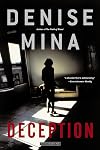
A well-written noir about a woman psychiatrist who is convicted of murdering a serial killer, told by the point of view of her husband, who is trying to clear her but gradually unearths her secrets. The most remarkable thing about this novel is that the husband as narrator is completely unlikable and somewhat unreliable, yet Mina still makes him compelling--sort of like that compulsion to look at a car accident. I'm not sure about the "twist" ending; it seemed to come out of the blue.
Exile by Denise Mina
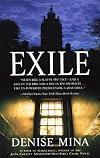
I can see why this book might not be for everyone. There’s a fair amount of Glasgow vernacular, more whisky is consumed than on a raucous Hogmanay—by one woman—and the atmosphere is unremittingly dark, grimy and threatening. There is no place to hide, no light relief, and no real hope for any of the characters.
But I loved it.
In Exile we rejoin Maureen and Leslie who, fresh from dealing with a nasty, murdering rapist in their own way, become involved in the search for Ann, a woman who show more had taken refuge in the Glasgow Place of Safety, a shelter for battered women. Ann has disappeared and everyone assumes her husband Jimmy is behind it. But when Ann turns up dead in the Thames, Maureen heads to London to look for answers.
This is exquisite writing, with well-drawn, brilliantly observed characters. It’s exactly the sort of book I love. Exile is the second book in Mina’s Garnethill trilogy. While the Alex Morrow books always left me eager to start the next instalment the moment I finished one, I feel the need to take Garnethill slowly. These novels are bruising. They require decompression at the end and time to appreciate what Mina has done.
I think that some people struggle with the fact that Maureen keeps on making really bad decisions which put herself at risk, missing the point that she is a completely broken person. She drinks to blank it out and when she drinks she chooses to do exactly the wrong thing. A lot of the time she doesn’t really care. It’s all so bleak that she simply wants to feel alive, to have the thrill and sensation of following the catastrophic path.
The details are breathtaking. Every scene is redolent with texture: the sights, the smells and the sounds of deprivation. Mina doesn’t need long descriptions. She can sketch a picture in three or four words and convey it perfectly. There are no unimportant characters. Everyone has a role that matters, and there’s clear movement along a longer narrative arc.
You can already sense that more trouble lies ahead for Maureen, as the shadows of her father and her mad, alcoholic mother loom behind the grimy net curtains that separate the reader from the next book: Resolution. show less
But I loved it.
In Exile we rejoin Maureen and Leslie who, fresh from dealing with a nasty, murdering rapist in their own way, become involved in the search for Ann, a woman who show more had taken refuge in the Glasgow Place of Safety, a shelter for battered women. Ann has disappeared and everyone assumes her husband Jimmy is behind it. But when Ann turns up dead in the Thames, Maureen heads to London to look for answers.
This is exquisite writing, with well-drawn, brilliantly observed characters. It’s exactly the sort of book I love. Exile is the second book in Mina’s Garnethill trilogy. While the Alex Morrow books always left me eager to start the next instalment the moment I finished one, I feel the need to take Garnethill slowly. These novels are bruising. They require decompression at the end and time to appreciate what Mina has done.
I think that some people struggle with the fact that Maureen keeps on making really bad decisions which put herself at risk, missing the point that she is a completely broken person. She drinks to blank it out and when she drinks she chooses to do exactly the wrong thing. A lot of the time she doesn’t really care. It’s all so bleak that she simply wants to feel alive, to have the thrill and sensation of following the catastrophic path.
The details are breathtaking. Every scene is redolent with texture: the sights, the smells and the sounds of deprivation. Mina doesn’t need long descriptions. She can sketch a picture in three or four words and convey it perfectly. There are no unimportant characters. Everyone has a role that matters, and there’s clear movement along a longer narrative arc.
You can already sense that more trouble lies ahead for Maureen, as the shadows of her father and her mad, alcoholic mother loom behind the grimy net curtains that separate the reader from the next book: Resolution. show less

When The Dead Hour ended I had to immediately start this, the final entry in the Paddy Meehan trilogy. Paddy is such an irresistible character that I would have enjoyed spending time with her regardless of the quality of the story. But Mina provides an enticing story too, with great characters, suspense, and an interesting family life in the background. The contemplation of five-year-old Pete is so genuine, that I would be surprised if Mina is not a mother herself. Highly recommended.
Lists
British Mystery (5)
Allie's Wishlist (1)
READ IN 2022 (1)
Awards


You May Also Like


Associated Authors
Statistics
- Works
- 60
- Also by
- 16
- Members
- 11,377
- Popularity
- #2,065
- Rating
- 3.7
- Reviews
- 544
- ISBNs
- 643
- Languages
- 13
- Favorited
- 24