
Kathi Appelt
Author of The Underneath
About the Author
Kathi Appelt is the author of many picture books, as well as several books for older readers, including Kissing Tennessee: And Other Stories from the Stardust Dance, chosen as a Best Book for Young Adults by the American Library Association. A graduate of Texas A&M University, Kathi teaches writing show more to both children and adults. She lives in College Station, Texas, with her husband and their two sons show less
Image credit: Photograph taken by Ken Appelt
Series
Works by Kathi Appelt
Associated Works
Our Story Begins: Your Favorite Authors and Illustrators Share Fun, Inspiring, and Occasionally Ridiculous Things They Wrote and Drew as Kids (2017) — Contributor — 105 copies, 2 reviews
Tagged
Common Knowledge
- Canonical name
- Appelt, Kathi
- Other names
- Cowgill, Kathi
- Birthdate
- 1954-07-26
- Gender
- female
- Education
- Spring Branch High School
Texas A&M University
University of Iowa - Occupations
- teacher
- Organizations
- Unitarian Universalist Church of the Brazos Valley (Trustee)
- Awards and honors
- C.K. Esten Award for outstanding student in Theater Arts, Texas A&M University (1975)
Sue German Award for Excellence in Teaching, Awarded by the New Jersey Writing Project in Texas, Houston, TX (1997)
Women Who Make a Difference, Awarded by the Brazos Maternal and Child Health Clinic, Bryan College Station, TX (2001) - Relationships
- Cowgill, Bill (father)
Cowgill, Patricia (mother)
Cowgill, Patti (sister)
Cowgill, B.J. (sister)
Appelt, Ken (husband)
Appeltt, Jacob (son) (show all 7)
Appelt, Cooper (son) - Nationality
- USA
- Places of residence
- Fayetteville, North Carolina, USA
El Paso, Texas, USA
Houston, Texas, USA
College Station, Texas, USA - Associated Place (for map)
- Texas, USA
Members
Reviews
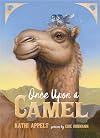
I always am a fan of little known historical events being brought to life, and this one does exactly that. Masterfully.
Zada is a camel, the last camel in Texas around 1910. Her herd has long disappeared, and she now hangs around with her 'family' of birds. When they tell her a huge mountain is swallowing everything up, she realizes the danger for what it is—a huge dust storm. During their attempt to flea, the bird mom and dad get swept away by the wind, leaving Zada with their two chicks. show more She swears she'll protect them and get them to the Mission, where they can find water and shelter. But this might be a bigger adventure than she can handle.
This is such a lovely read. A really enjoy Zada, and the author has done a great job on bringing her across in a way young readers are sure to enjoy. She's wise, and her thoughts and decisions are easy for readers to understand. Her determination to save the baby chicks makes her hard not to root for. And her friends are adorable.
Tension runs high in these pages as Zada faces various dangers and does her best to keep the chicks safe, and all of these are appropriate for the intended age group. But this story isn't ony about determination and fun adventure. There is a lot of history. The author swipes the reader across the world to Zada's birth place and let's the foreign desert unfold as well as the sea journey to reach Texas. And, of course, there's Texan history, too. These moments are brought across in the stories Zada tells the chicks to keep the calm. The author keeps the reader from growing confused not only through the different characters, but each chapter starts with the date. While I'm not always a fan of flashbacks, they flow well and enrich the tale step by step.
The writing fits the age group well, too, and even suits the younger side of the middle grade audience. There are lovely illustrations sprinkled throughout the tale, which are a treat and add a change-up from the text.
This one is definitely worth a read and will delight more than animal fans. show less
Zada is a camel, the last camel in Texas around 1910. Her herd has long disappeared, and she now hangs around with her 'family' of birds. When they tell her a huge mountain is swallowing everything up, she realizes the danger for what it is—a huge dust storm. During their attempt to flea, the bird mom and dad get swept away by the wind, leaving Zada with their two chicks. show more She swears she'll protect them and get them to the Mission, where they can find water and shelter. But this might be a bigger adventure than she can handle.
This is such a lovely read. A really enjoy Zada, and the author has done a great job on bringing her across in a way young readers are sure to enjoy. She's wise, and her thoughts and decisions are easy for readers to understand. Her determination to save the baby chicks makes her hard not to root for. And her friends are adorable.
Tension runs high in these pages as Zada faces various dangers and does her best to keep the chicks safe, and all of these are appropriate for the intended age group. But this story isn't ony about determination and fun adventure. There is a lot of history. The author swipes the reader across the world to Zada's birth place and let's the foreign desert unfold as well as the sea journey to reach Texas. And, of course, there's Texan history, too. These moments are brought across in the stories Zada tells the chicks to keep the calm. The author keeps the reader from growing confused not only through the different characters, but each chapter starts with the date. While I'm not always a fan of flashbacks, they flow well and enrich the tale step by step.
The writing fits the age group well, too, and even suits the younger side of the middle grade audience. There are lovely illustrations sprinkled throughout the tale, which are a treat and add a change-up from the text.
This one is definitely worth a read and will delight more than animal fans. show less
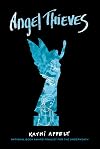
I was provided a copy of the book for review purposes. I gave this book four-and-a-half stars, rounding up to five here.
I honestly don’t know where to begin with author Kathi Appelt’s latest young adult novel Angel Thieves! The structure, the characters, the writing – they all come together to make something magical. This isn’t just one story, but several separate stories that slowly intersect, with the common tie amongst them being Bayou.
This was a book that DEMANDED I sit down and show more savor it. The synopsis was intriguing but admittedly, going into I could not figure out how the different characters and smaller storylines would relate. The plot unwinds slowly, and Appelt doesn’t divulge much of anything at first. Instead, the details are handed out slowly and carefully, not unlike how my son, as a toddler, would carefully and meticulously share Goldfish crackers from his snack cup, placing each tidbit in your hand with studied intent. The story does jump between points of view, and the timeline does as well (hop around, that is) don’t expect a tidy unfolding of the story.
That said, it’s a book with which you need to be patient and just let the story flow. And flow it does, with language that is simply beautiful and lush. Some of the most beautiful passages belong to her characters which have been anthropomorphized, the Buffalo Bayo and Zorra the ocelot, and the chapters on the marble field and the marble carver.
Give us Georgia after the long march, after the thin boy and his people were forced out of their mountains and all they knew, when the marble lay there untouched, quiet, just as it had when it formed on the bottom of the ancient sea floor, pressed down by water and ice, pressed first into limestone and then into marble. Metamorphic. Silent. Rising up through the receding waters until it sat just beneath the Georgia dirt, waiting. Waiting for a new carver.
– from Angel Thieves by Kathi Appelt
The Bayou’s chapters serve to pull the timelines together, present-day and Achsah’s and the era of slavery in Texas after winning its independence from Mexico. It has a mind of its own, traps things in its depths, spitting them up for others to find when it wills it.
The bayou’s no angel, that’s a fact. But who’s to say she hasn’t seen one or two, their tattered wings, their tangled hair.
– from Angel Thieves by Kathi Appelt
The story was eye-opening from a historical standpoint - I was not aware that one reason behind the Texian fight for independence from Mexico was to allow slavery in Texas, necessary for the success of the wealthy landowners to grow cotton and sugar-cane. (Neither did I realize that slavery was illegal in Mexico). It was also new information to me that the underground railroad also ran south to Mexico, allowing slaves in Texas or Louisiana to flee to freedom.
Needless to say, I love any novel that I can walk away from having learned something new. This book offered the opportunity in multiples all the while entertaining.
The different POV wind around each other and wrap up quickly. I confess I did want a little more from Soleil’s story, particularly as it intersected with Cade’s. Overall, though, this book was a delight (you just have to stop asking “what is going on” and let the stories unfold on their own. Angel Thieves is a novel of what we do for those we love, of what makes a family, and of survival. show less
I honestly don’t know where to begin with author Kathi Appelt’s latest young adult novel Angel Thieves! The structure, the characters, the writing – they all come together to make something magical. This isn’t just one story, but several separate stories that slowly intersect, with the common tie amongst them being Bayou.
This was a book that DEMANDED I sit down and show more savor it. The synopsis was intriguing but admittedly, going into I could not figure out how the different characters and smaller storylines would relate. The plot unwinds slowly, and Appelt doesn’t divulge much of anything at first. Instead, the details are handed out slowly and carefully, not unlike how my son, as a toddler, would carefully and meticulously share Goldfish crackers from his snack cup, placing each tidbit in your hand with studied intent. The story does jump between points of view, and the timeline does as well (hop around, that is) don’t expect a tidy unfolding of the story.
That said, it’s a book with which you need to be patient and just let the story flow. And flow it does, with language that is simply beautiful and lush. Some of the most beautiful passages belong to her characters which have been anthropomorphized, the Buffalo Bayo and Zorra the ocelot, and the chapters on the marble field and the marble carver.
Give us Georgia after the long march, after the thin boy and his people were forced out of their mountains and all they knew, when the marble lay there untouched, quiet, just as it had when it formed on the bottom of the ancient sea floor, pressed down by water and ice, pressed first into limestone and then into marble. Metamorphic. Silent. Rising up through the receding waters until it sat just beneath the Georgia dirt, waiting. Waiting for a new carver.
– from Angel Thieves by Kathi Appelt
The Bayou’s chapters serve to pull the timelines together, present-day and Achsah’s and the era of slavery in Texas after winning its independence from Mexico. It has a mind of its own, traps things in its depths, spitting them up for others to find when it wills it.
The bayou’s no angel, that’s a fact. But who’s to say she hasn’t seen one or two, their tattered wings, their tangled hair.
– from Angel Thieves by Kathi Appelt
The story was eye-opening from a historical standpoint - I was not aware that one reason behind the Texian fight for independence from Mexico was to allow slavery in Texas, necessary for the success of the wealthy landowners to grow cotton and sugar-cane. (Neither did I realize that slavery was illegal in Mexico). It was also new information to me that the underground railroad also ran south to Mexico, allowing slaves in Texas or Louisiana to flee to freedom.
Needless to say, I love any novel that I can walk away from having learned something new. This book offered the opportunity in multiples all the while entertaining.
The different POV wind around each other and wrap up quickly. I confess I did want a little more from Soleil’s story, particularly as it intersected with Cade’s. Overall, though, this book was a delight (you just have to stop asking “what is going on” and let the stories unfold on their own. Angel Thieves is a novel of what we do for those we love, of what makes a family, and of survival. show less

In this lovely picture-book biography, author Kathi Appelt and illustrator Joy Fisher Hein, both natives of Texas, tell the story of Claudia Alta Taylor, better known to America and the world as Lady Bird Johnson, the First Lady of the United States from 1963 through 1969. Born in 1912, just outside the village of Karnak, Texas, she got her unusual nickname from a childhood nanny, and she grew up with a great love of wildflowers. The Texas Bluebell, in particular, brought Lady Bird comfort show more after the death of her mother. Meeting and falling in love with Lyndon Baines Johnson while a student at the University of Texas, Lady Bird joined him in his life in Washington, D.C., first as the wife of a congressman, then as Second Lady, when Johnson was Vice President, and finally as First Lady. She worked consistently on programs to clean up and beautify public spaces, from parks to freeways, and the Highway Beautification Act of 1965 was informally named after her, being known as "Lady Bird's Bill." Many years later, after the death of her husband, Lady Bird helped to found the National Wildflower Research Center, now named after her, outside Austin, Texas...
Although familiar with the figure of Lady Bird Johnson, and aware of her importance to the Highway Beautification Act - there's an amusing but rather impolite joke about this, in the film Good Morning, Vietnam - I actually knew very little about her life, going in to Miss Lady Bird's Wildflowers: How a First Lady Changed America. I sought out the book because an online friend had reviewed it positively, and am glad I did - thank you, Kathryn! - as I found it informative, engaging, and beautiful. The narrative here really focuses on Lady Bird's lifelong love for flowers, and it does a good job of explaining why that love was so strong. I was particularly happy to learn of the Lady Bird Johnson Wildflower Center, and its role in research and conservation, as I think this highlights the important legacy of this woman's work, which I have sometimes seen dismissed as merely decorative, and therefore somehow superficial. I have enjoyed other books from author Kathi Apelt before, so I was not surprised to find the text here so engaging, but this was my first encounter with illustrator Joy Fisher Hein, and her artwork was something of a revelation. The illustrations here were just beautiful, with a gorgeous color palette, and a style that reminded me of Claire A. Nivola, which is surely a high compliment. I will definitely look for more of Hein's work, and for other picture-books about America's First Ladies, which is not a topic I have explored that deeply, in my reading. Recommended to young flower lovers, and to picture-book readers who enjoy biography or are interested in the history of conservation.
Addendum: I was surprised to see a critical review of Hein's artwork mentioning that all of the non Euro-American characters were depicted in a stereotypical fashion - the African-American nanny who named Lady Bird, the Mexican mariachi band playing during the scene from her Mexican honeymoon, the Japanese ladies in traditional kimono at the cherry tree planting in Washington - as these were scenes that actually occurred during the subject's life. Lady Bird did have an African-American nanny, she most likely experienced a mariachi band while on honeymoon in Mexico, and she most certainly planted a cherry tree together with a Japanese woman wearing a kimono. There's photographs documenting the latter, just as there are more recent photographs of Michelle Obama with a kimono-clad Japanese woman, viewing a cherry tree. Is the artist meant not to depict these true-to-life scenes, because this reviewer imagines they are stereotypical? What about all of the other non Euro-American characters in the book? For my own part, I liked the fact that although the main cast of characters - Lady Bird and her friends and family - were all Euro-American, Hein depicted a diverse range of people in many of the public scenes. When Lady Bird is walking beside the polluted Potomac River, children of all backgrounds are playing nearby, while on the page which discusses Lady Bird's belief that all children should be plant caretakers, we see young gardeners of all races depicted. Likewise, when discussing the scientists and ecologists who do their research at the Lady Bird Johnson Wildflower Center, a diverse range of people are shown.
As a general rule, I try not to respond directly to other amateur reviewers, in my own reviews, although I have always felt that professional reviews were fair game. That said, I found this other review so misleading, that I felt I needed to address the point it raised, lest potential readers be put off from picking up this excellent book. show less
Although familiar with the figure of Lady Bird Johnson, and aware of her importance to the Highway Beautification Act - there's an amusing but rather impolite joke about this, in the film Good Morning, Vietnam - I actually knew very little about her life, going in to Miss Lady Bird's Wildflowers: How a First Lady Changed America. I sought out the book because an online friend had reviewed it positively, and am glad I did - thank you, Kathryn! - as I found it informative, engaging, and beautiful. The narrative here really focuses on Lady Bird's lifelong love for flowers, and it does a good job of explaining why that love was so strong. I was particularly happy to learn of the Lady Bird Johnson Wildflower Center, and its role in research and conservation, as I think this highlights the important legacy of this woman's work, which I have sometimes seen dismissed as merely decorative, and therefore somehow superficial. I have enjoyed other books from author Kathi Apelt before, so I was not surprised to find the text here so engaging, but this was my first encounter with illustrator Joy Fisher Hein, and her artwork was something of a revelation. The illustrations here were just beautiful, with a gorgeous color palette, and a style that reminded me of Claire A. Nivola, which is surely a high compliment. I will definitely look for more of Hein's work, and for other picture-books about America's First Ladies, which is not a topic I have explored that deeply, in my reading. Recommended to young flower lovers, and to picture-book readers who enjoy biography or are interested in the history of conservation.
Addendum: I was surprised to see a critical review of Hein's artwork mentioning that all of the non Euro-American characters were depicted in a stereotypical fashion - the African-American nanny who named Lady Bird, the Mexican mariachi band playing during the scene from her Mexican honeymoon, the Japanese ladies in traditional kimono at the cherry tree planting in Washington - as these were scenes that actually occurred during the subject's life. Lady Bird did have an African-American nanny, she most likely experienced a mariachi band while on honeymoon in Mexico, and she most certainly planted a cherry tree together with a Japanese woman wearing a kimono. There's photographs documenting the latter, just as there are more recent photographs of Michelle Obama with a kimono-clad Japanese woman, viewing a cherry tree. Is the artist meant not to depict these true-to-life scenes, because this reviewer imagines they are stereotypical? What about all of the other non Euro-American characters in the book? For my own part, I liked the fact that although the main cast of characters - Lady Bird and her friends and family - were all Euro-American, Hein depicted a diverse range of people in many of the public scenes. When Lady Bird is walking beside the polluted Potomac River, children of all backgrounds are playing nearby, while on the page which discusses Lady Bird's belief that all children should be plant caretakers, we see young gardeners of all races depicted. Likewise, when discussing the scientists and ecologists who do their research at the Lady Bird Johnson Wildflower Center, a diverse range of people are shown.
As a general rule, I try not to respond directly to other amateur reviewers, in my own reviews, although I have always felt that professional reviews were fair game. That said, I found this other review so misleading, that I felt I needed to address the point it raised, lest potential readers be put off from picking up this excellent book. show less

Max was a cat with paws made for pouncing, legs built for trouncing, and a heart bent on attack. His fascination with the fishbowl remained a constant in his day, although other matters - the lizard climbing the blinds, the string attached to one of his human's shoes - also provided entertainment. In the end, his attack on his piscine neighbors was messy but not entirely triumphant. Fortunately, he had a bowl of crunchies to turn to...
I found Max Attacks an absolutely delightful show more picture-book, appreciating both Kathi Appelt's playful text and Penelope Dullaghan's droll artwork. The poetic text - "In a bowl of water brimming... / Fishes! / Lots of fishes swimming. / Max's paws are made for pounces. / Max's legs are made for trounces. / Like a dozen kitty wishes, midst the bubbles swish the fishes" - makes for an excellent read-aloud, while the colorful, expressive illustrations capture the humor and motion of the tale. Recommended to all young cat lovers - I definitely recognized a few felines I have known in Max! - and to anyone looking for entertaining new tales in rhyme for the picture-book set. show less
I found Max Attacks an absolutely delightful show more picture-book, appreciating both Kathi Appelt's playful text and Penelope Dullaghan's droll artwork. The poetic text - "In a bowl of water brimming... / Fishes! / Lots of fishes swimming. / Max's paws are made for pounces. / Max's legs are made for trounces. / Like a dozen kitty wishes, midst the bubbles swish the fishes" - makes for an excellent read-aloud, while the colorful, expressive illustrations capture the humor and motion of the tale. Recommended to all young cat lovers - I definitely recognized a few felines I have known in Max! - and to anyone looking for entertaining new tales in rhyme for the picture-book set. show less
Lists
Newbery Adjacent (1)
Cats in Fiction (1)
Awards


You May Also Like


Associated Authors
Statistics
- Works
- 53
- Also by
- 2
- Members
- 8,403
- Popularity
- #2,867
- Rating
- 3.9
- Reviews
- 455
- ISBNs
- 220
- Languages
- 6
- Favorited
- 4