
Eliot Coleman
Author of Four-Season Harvest: Organic Vegetables from Your Home Garden All Year Long
About the Author
Image credit: Eliot Coleman
Works by Eliot Coleman
Four-Season Harvest: Organic Vegetables from Your Home Garden All Year Long (1992) 779 copies, 8 reviews
The New Organic Grower: A Master's Manual of Tools and Techniques for the Home and Market Gardener (A Gardener's Supply (1989) 525 copies, 2 reviews
The Winter Harvest Handbook: Year Round Vegetable Production Using Deep-Organic Techniques and Unheated Greenhouses (2009) 432 copies, 10 reviews
The New Organic Grower, 3rd Edition: A Master's Manual of Tools and Techniques for the Home and Market Gardener, 30th Anniversary Edition (2018) 118 copies
The winter-harvest manual: Farming the back side of the calendar : commercial greenhouse production of fresh vegetables in cold-winter climates without supplementary heat (1998) 11 copies, 1 review
Associated Works
Tagged
Common Knowledge
- Birthdate
- 1938
- Gender
- male
- Relationships
- Coleman, Melissa (daughter)
Damrosch, Barbara (wife) - Nationality
- USA
- Associated Place (for map)
- USA
Members
Reviews
Four-Season Harvest: Organic Vegetables from Your Home Garden All Year Long, 2nd Edition by Eliot Coleman
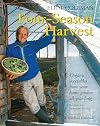
In a conversational tone – like you leaned over the fence and asked for advice from the neighbor with the enviable garden – the author explains how to keep on producing salad greens and a variety of other crops right through the winter and into spring, without breaking the bank on a heated greenhouse. “This book won't discuss heat pumps, thermal mass, solar gain, or R factors because they are too complicated. They make the simple joys of food production seem more industrial than show more poetic. Given the option, we choose poetry.” [pg 79]
The idea here is that you can grow whatever they grow at your latitude in Europe, where they have the same day length, so long as you provide some protection to offset the difference in climate. It's not about providing warmth, but providing protection from freezing and the rapid weather changes of the US climate which stress and kill winter plants. He covers simple, easy-to-use season-extenders such as cold frames, low tunnels, and row covers, and more complicated ones such as greenhouses and high tunnels (known around here as poly tunnels). Your food will be seasonal – not the perpetual summer you get with a heated greenhouse – but it will be fresh from the garden. Coleman, who lives in Maine, is about even (latitudinally) with southwestern France, which he visited in the winter to see what they were growing and how. Throughout the book, he relates anecdotes about his trip to show what can be done with or without complicated systems and equipment, and the variety of food plants (some new, some old, some new again) that can be produced. The system is simple, requiring more planning than physical work. With careful planning and well-timed planting and greenhouse moving you can extend every season and out-produce every other gardener on the block. He makes it sound both easy and downright magical. If we had the space for one I'd be out there right now, setting one up so we could start a CSA! show less
The idea here is that you can grow whatever they grow at your latitude in Europe, where they have the same day length, so long as you provide some protection to offset the difference in climate. It's not about providing warmth, but providing protection from freezing and the rapid weather changes of the US climate which stress and kill winter plants. He covers simple, easy-to-use season-extenders such as cold frames, low tunnels, and row covers, and more complicated ones such as greenhouses and high tunnels (known around here as poly tunnels). Your food will be seasonal – not the perpetual summer you get with a heated greenhouse – but it will be fresh from the garden. Coleman, who lives in Maine, is about even (latitudinally) with southwestern France, which he visited in the winter to see what they were growing and how. Throughout the book, he relates anecdotes about his trip to show what can be done with or without complicated systems and equipment, and the variety of food plants (some new, some old, some new again) that can be produced. The system is simple, requiring more planning than physical work. With careful planning and well-timed planting and greenhouse moving you can extend every season and out-produce every other gardener on the block. He makes it sound both easy and downright magical. If we had the space for one I'd be out there right now, setting one up so we could start a CSA! show less
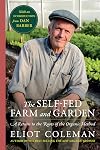
I read my first Eliot Coleman gardening book back in the early 90s and found him to be inspirational - how to grow organically with the vegetables looking fantastic. He himself also looks like he did back in the 90s if the picture on the front cover is a recent one.
The book is an ode to organic gardening as Coleman understands it which includes a closed loop method of growing where inputs are not brought onto the farm, but everything for an increasing fertility is produced on site. He argues show more against the rise of 'organic' products that are essentially inputs labeled organic but have to be bought, e.g. compost, rock dust, manure - purchased inputs.
Coleman defines organic farming through seven statements that he lives by:
Organic farming is based on the creation and maintenance of a biologically active soil.
Optimum soil conditions are strived for to produce pest free plants.
There is a definite link between soil health and human health.
Fertile soil produces some of the most nutrient dense food.
Soil fertility does not have to be purchased from outside inputs but created and maintained through the use of compost, crop rotations, green manures, cover crops (I'm not sure of the difference between the last two), shallow cultivation, nutrient-dense powdered rock, enhanced biodiversity and other proctices that nurture and respect the earth.
Deep-rooting forbes make available minerals from deep down in the soil and grazing livestock benefit the soil.
Growing in this way is easily understood and accessible to all at a low cost.
This is the definition of a self-fed farm or closed loop and means that the grower is not dependent on anyone else and the agriculture industry does not retain the majrity of the financial benefits. I do wonder about seeds, though. Does Coleman save seeds from the farm or does he purchase them? Yes, he has started to save his own.
So, how do you do this? How do you decide what to sow as a cover crop or green manure and when. The chapter 'Putting Green Manures at the Heart of the System' goes some way to explaining this.
Bell beans (not sure what these are - fava?) and alfalfa are legumes so pull nitrogen from the air into the soil but are also deep rooted and so bring up nutrients from the subsoil.
Buckwheat smothers weeds because of its fast growth and large leaves.
Forage radish has deep roots that scavenge minerals from the subsoil.
The appendices detail when to sow particular cover crops and when to till/dig/rake them in and what can follow but even in his home garden, Coleman leaves one half to grow a deep rooted forb (or grass) for a year and then swaps over because he believes that to be the most prepared and best soil to grow on.
Those who have read Coleman's previous books will find much that is familiar in this one. At 87, although looking spritely, there can't be too many more books. This book is a reminder of the use and purpose of green manures. show less
The book is an ode to organic gardening as Coleman understands it which includes a closed loop method of growing where inputs are not brought onto the farm, but everything for an increasing fertility is produced on site. He argues show more against the rise of 'organic' products that are essentially inputs labeled organic but have to be bought, e.g. compost, rock dust, manure - purchased inputs.
Coleman defines organic farming through seven statements that he lives by:
Organic farming is based on the creation and maintenance of a biologically active soil.
Optimum soil conditions are strived for to produce pest free plants.
There is a definite link between soil health and human health.
Fertile soil produces some of the most nutrient dense food.
Soil fertility does not have to be purchased from outside inputs but created and maintained through the use of compost, crop rotations, green manures, cover crops (I'm not sure of the difference between the last two), shallow cultivation, nutrient-dense powdered rock, enhanced biodiversity and other proctices that nurture and respect the earth.
Deep-rooting forbes make available minerals from deep down in the soil and grazing livestock benefit the soil.
Growing in this way is easily understood and accessible to all at a low cost.
This is the definition of a self-fed farm or closed loop and means that the grower is not dependent on anyone else and the agriculture industry does not retain the majrity of the financial benefits. I do wonder about seeds, though. Does Coleman save seeds from the farm or does he purchase them? Yes, he has started to save his own.
So, how do you do this? How do you decide what to sow as a cover crop or green manure and when. The chapter 'Putting Green Manures at the Heart of the System' goes some way to explaining this.
Bell beans (not sure what these are - fava?) and alfalfa are legumes so pull nitrogen from the air into the soil but are also deep rooted and so bring up nutrients from the subsoil.
Buckwheat smothers weeds because of its fast growth and large leaves.
Forage radish has deep roots that scavenge minerals from the subsoil.
The appendices detail when to sow particular cover crops and when to till/dig/rake them in and what can follow but even in his home garden, Coleman leaves one half to grow a deep rooted forb (or grass) for a year and then swaps over because he believes that to be the most prepared and best soil to grow on.
Those who have read Coleman's previous books will find much that is familiar in this one. At 87, although looking spritely, there can't be too many more books. This book is a reminder of the use and purpose of green manures. show less
The New Organic Grower: A Master's Manual of Tools and Techniques for the Home and Market Gardener (A Gardener's Supply Book) by Eliot Coleman
Fantastic seemingly quality information. I know Coleman can get criticized because of his popularity, but from this book I can completely understand this popularity. He is clear, seemingly practical, and has a sound philosophy to base from. I have no idea if he truly 'practices what he preaches' and all but I love what he preaches. His intentional and thought-as-input style of farming is exactly what drew me to the field in the first place. I definitely feel like this is a reference book show more that I will draw upon in the future and a great buy. I don't necessarily know if his methods are all applicable to a raised bed style farm like mine but I do hope to use some of his practices. And even more important in the long term may be his practice of continual inquisition, observation and improvement. show less
Although most of his methods for producing vegetables to sell in Maine are not suitable for my small private vegetable beds in Vienna, I learned a lot, and stayed interested in the book. I think I will end up with more fresh vegetables next winter.
Lists
You May Also Like


Associated Authors
Statistics
- Works
- 9
- Also by
- 1
- Members
- 1,879
- Popularity
- #13,698
- Rating
- 4.3
- Reviews
- 23
- ISBNs
- 22
- Languages
- 2
- Favorited
- 3