
Gene Logsdon (1931–2016)
Author of Small-Scale Grain Raising
About the Author
Gene Logsdon farms in Upper Sandusky, Ohio, and is author of more than two dozen books including Living at Nature's Pace, Good Spirits, and The Contrary Farmer. He writes a popular blog at OrganicToBe.org.
Works by Gene Logsdon
Gene Logsdon's Practical Skills: A Revival of Forgotten Crafts, Techniques, and Traditions (1985) 141 copies
Successful Berry Growing: How to Plant, Prune, Pick and Preserve Bush and Vine Fruits (1974) 123 copies, 1 review
Wildlife in the Garden, Expanded Edition: How to Live in Harmony with Deer, Raccoons, Rabbits, Crows, and Other Pesky Creatures (1983) 71 copies
Letter to a Young Farmer: How to Live Richly without Wealth on the New Garden Farm (2017) 60 copies, 1 review
A Sanctuary of Trees: Beechnuts, Birdsongs, Baseball Bats, and Benedictions (2012) 43 copies, 2 reviews
Gene Logsdon's Moneysaving Secrets: A Treasury of Salvaging, Bargaining, Recycling, and Scavenging Techniques (1986) 27 copies
The Mother of All Arts: Agrarianism and the Creative Impulse (Culture of the Land) (2007) 25 copies, 1 review
The Farm journal almanac 1 copy
Associated Works
Tools for homesteaders, gardeners, and small-scale farmers: A catalog of hard-to-find implements and equipment (1978) — Contributor — 18 copies, 2 reviews
Tagged
Common Knowledge
- Canonical name
- Logsdon, Gene
- Legal name
- Logsdon, Eugene H.
- Other names
- The Contrary Farmer (known as)
- Birthdate
- 1931-11-05
- Date of death
- 2016-05-31
- Gender
- male
- Occupations
- farmer
critic
writer - Organizations
- Farm Journal
- Awards and honors
- Ohioana Career Award (2000)
- Cause of death
- cancer
- Nationality
- USA
- Birthplace
- Tiffin, Ohio, USA
- Places of residence
- Upper Sandusky, Ohio, USA
- Place of death
- Upper Sandusky, Ohio, USA
- Associated Place (for map)
- Ohio, USA
Members
Reviews
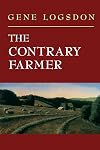
Where, how and why I got this book I simply don't recall. But if I had read it when it first came out it would've saved me a lot of puzzlement, experimentation and hair. I spent a decade and a half as exactly the kind of farmer described in this book before having to surrender to heart problems and move into town. Every thing that the author describes is almost exactly as I found it to be - this is simply the best book on modern small farming from a practical standpoint that I have ever show more read. I honestly don't think a better book of advice on this subject could be written. Oh, and it's also poetic and powerful as well as practical. If getting back to the land as a small holder is your goal, get this book first. A more honest appraisal of this life you shan't find. show less
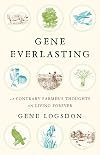
This collection of essays is thought provoking, poignant, and optimistic. Gene Logsdon is a farmer, and these essays were composed after he was diagnosed with cancer and was facing his own mortality. He writes with a straightforwardness toward death that is lacking in American society in general. His perspective of death in nature and its role in the rejuvenation and continuation of life offers comfort to those who are unwilling or unable to find solace in religious myths surrounding death show more and an afterlife or in the myriad of scientific promises of some form of everlasting life.
Logsdon is indeed a contrary farmer, and his essays may be offensive to some, but his essays offer humor and observations of the natural world that you don't often get to read. Overall, he offers a hopefulness about nature's ability to regenerate herself and the comfort that our own deaths can continue those regenerative processes. show less
Logsdon is indeed a contrary farmer, and his essays may be offensive to some, but his essays offer humor and observations of the natural world that you don't often get to read. Overall, he offers a hopefulness about nature's ability to regenerate herself and the comfort that our own deaths can continue those regenerative processes. show less
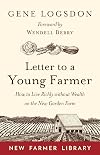
I like Gene Logsdon's brand of irascibility and I enjoyed these essays. I don't agree with everything in them, but in general I love how he bridges so many of the divides that exist in America. His focus is on how to create a sustainable lifestyle caring for a smaller acreage and the many ways that contributed to a better world, and he's very eloquent and inspiring on that subject.
Small-Scale Grain Raising: An Organic Guide to Growing, Processing, and Using Nutritious Whole Grains for Home Gardeners and Local Farmers, 2nd Edition by Gene Logsdon
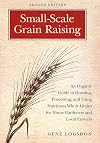
First published in 1977, this book—from one of America’s most famous and prolific agricultural writers—became an almost instant classic among homestead gardeners and small farmers. Now fully updated and available once more, Small-Scale Grain Raising offers a entirely new generation of readers the best introduction to a wide range of both common and lesser-known specialty grains and related field crops, from corn, wheat, and rye to buckwheat, millet, rice, spelt, flax, and even beans show more and sunflowers.
More and more Americans are seeking out locally grown foods, yet one of the real stumbling blocks to their efforts has been finding local sources for grains, which are grown mainly on large, distant corporate farms. At the same time, commodity prices for grains—and the products made from them—have skyrocketed due to rising energy costs and increased demand. In this book, Gene Logsdon proves that anyone who has access to a large garden or small farm can (and should) think outside the agribusiness box and learn to grow healthy whole grains or beans—the base of our culinary food pyramid—alongside their fruits and vegetables.
Starting from the simple but revolutionary concept of the garden “pancake patch,” Logsdon opens up our eyes to a whole world of plants that we wrongly assume only the agricultural “big boys” can grow. He succinctly covers all the basics, from planting and dealing with pests, weeds, and diseases to harvesting, processing, storing, and using whole grains. There are even a few recipes sprinkled throughout, along with more than a little wit and wisdom.
Never has there been a better time, or a more receptive audience, for this book. Localvores, serious home gardeners, CSA farmers, and whole-foods advocates—in fact, all people who value fresh, high-quality foods—will find a field full of information and ideas in this once and future classic. show less
More and more Americans are seeking out locally grown foods, yet one of the real stumbling blocks to their efforts has been finding local sources for grains, which are grown mainly on large, distant corporate farms. At the same time, commodity prices for grains—and the products made from them—have skyrocketed due to rising energy costs and increased demand. In this book, Gene Logsdon proves that anyone who has access to a large garden or small farm can (and should) think outside the agribusiness box and learn to grow healthy whole grains or beans—the base of our culinary food pyramid—alongside their fruits and vegetables.
Starting from the simple but revolutionary concept of the garden “pancake patch,” Logsdon opens up our eyes to a whole world of plants that we wrongly assume only the agricultural “big boys” can grow. He succinctly covers all the basics, from planting and dealing with pests, weeds, and diseases to harvesting, processing, storing, and using whole grains. There are even a few recipes sprinkled throughout, along with more than a little wit and wisdom.
Never has there been a better time, or a more receptive audience, for this book. Localvores, serious home gardeners, CSA farmers, and whole-foods advocates—in fact, all people who value fresh, high-quality foods—will find a field full of information and ideas in this once and future classic. show less
Lists
Awards

You May Also Like


Associated Authors
Statistics
- Works
- 32
- Also by
- 2
- Members
- 2,115
- Popularity
- #12,169
- Rating
- 4.1
- Reviews
- 17
- ISBNs
- 82
- Favorited
- 9