
Wendell Berry
Author of Jayber Crow
About the Author
Wendell Berry The prolific poet, novelist, and essayist Wendell Berry is a fifth-generation native of north central Kentucky. Berry taught at Stanford University; traveled to Italy and France on a Guggenheim Fellowship; and taught at New York University and the University of Kentucky, Lexington, show more before moving to Henry County. Berry owns and operates Lanes Landing Farm, a small, hilly piece of property on the Kentucky River. He embraced full-time farming as a career, using horses and organic methods to tend the land. Harmony with nature in general, and the farming tradition in particular, is a central theme of Berry's diverse work. As a poet, Berry gained popularity within the literary community. Collected Poems, 1957-1982, was particularly well-received. Novels and short stories set in Port William, a fictional town paralleling his real-life home town of Port Royal further established his literary reputation. The Memory of Old Jack, Berry's third novel, received Chicago's Friends of American Writers Award for 1975. Berry reached his broadest audience and attained his greatest popular acclaim through his essays. The Unsettling of America: Culture and Agriculture is a springboard for contemporary environmental concerns. In his life as well as his art, Berry has advocated a responsible, contextual relationship with individuals in a local, agrarian economy. (Bowker Author Biography) show less
Series
Works by Wendell Berry
Watch With Me and Six Other Stories of the Yet-Remembered Ptolemy Proudfoot and His Wife, Miss Minnie, Née Quinch (1994) 191 copies, 1 review
Wendell Berry: Port William Novels & Stories: The Civil War to World War II (2018) 182 copies, 1 review
Blessed Are the Peacemakers: Christ's Teachings About Love, Compassion and Forgiveness (2005) 148 copies
Wendell Berry: Port William Novels & Stories: The Postwar Years (LOA #381) (Library of America, 381) (2024) 37 copies
Sabbaths 2002 6 copies
Sabbaths 2013 5 copies
One of Us 3 copies
The Great Interruption 3 copies
The Wheel & The Dance 3 copies
Sabbaths 2016 3 copies
The Kentucky River : two poems 2 copies
An Eastward look 2 copies
The Stackpole Legend 2 copies
Horses: [a poem] 2 copies
Notes: Unspecializing Poetry 2 copies
The Loss of the University 1 copy
Wendell Berry Collection 3 Books Set (The Peace of Wild Things, The World-Ending Fire & Stand By Me) (2024) 1 copy
A Rainbow 1 copy
collection of poetry 1 copy
Gift of Goodland, The 1 copy
Associated Works
My Bookstore: Writers Celebrate Their Favorite Places to Browse, Read, and Shop (2012) — Contributor — 622 copies, 16 reviews
Teaching with Fire: Poetry That Sustains the Courage to Teach (2003) — Contributor — 226 copies, 1 review
Touchstone Anthology of Contemporary Creative Nonfiction: Work from 1970 to the Present (2007) — Contributor — 219 copies, 3 reviews
The Poetry Pharmacy: Tried-and-True Prescriptions for the Heart, Mind, and Soul (2017) 198 copies, 5 reviews
The Best American Science and Nature Writing 2009 (2009) — Contributor, some editions — 194 copies, 3 reviews
Lost Mountain: A Year in the Vanishing Wilderness -- Radical Strip Mining and the Devastation of Appalachia (2006) — Introduction — 188 copies, 7 reviews
Enduring Seeds: Native American Agriculture and Wild Plant Conservation (1989) — Foreword — 136 copies
Leading from Within: Poetry That Sustains the Courage to Lead (2007) — Contributor — 116 copies, 3 reviews
The Poet's Work: 29 Poets on the Origins and Practice of Their Art (1979) — Contributor — 96 copies, 1 review
Anxious about Empire: Theological Essays on the New Global Realities (2004) — Contributor — 95 copies
Minutes of the Lead Pencil Club: Second Thoughts on the Electronic Revolution (1996) — Contributor — 88 copies, 1 review
The Case Against Free Trade: GATT, NAFTA, and the Globalization of Corporate Power (1993) — Contributor — 58 copies, 1 review
The Meat You Eat: How Corporate Farming Has Endangered America's Food Supply (2004) — Foreword, some editions — 47 copies, 1 review
Missing Mountains: We went to the mountaintop but it wasn't there (2005) — Afterword & Contributor — 27 copies
On Moral Medicine: Theological Perspectives in Medical Ethics (2012) — Contributor, some editions — 22 copies, 1 review
Between Two Rivers: Stories from the Red Hills to the Gulf (2004) — Contributor — 19 copies, 1 review
Every Man an Artist: Readings in the Traditional Philosophy of Art (Library of Perennial Philosophy) (2005) — Contributor, some editions — 15 copies
Editor's Choice II: Fiction, Poetry & Art from the U.S. Small Press, 1978 to 1983 (Contemporary Anthology Series) (1987) — Contributor — 6 copies
An Economics of Peace — Contributor — 4 copies
One Hundred Miles from Home : nuclear contamination in the communities of the Ohio River Valley : Mound, Paducah, Piketon, Fernald, Maxey Flats, and Jefferson Proving Ground (2008) — Foreword, some editions — 3 copies
New World Writing 21 — Contributor — 1 copy
Tagged
Common Knowledge
- Legal name
- Berry, Wendell Erdman
- Birthdate
- 1934-08-05
- Gender
- male
- Education
- University of Kentucky (BA ∙ 1956 ∙ MA ∙ 1957 ∙ English)
Stanford University (Wallace Stegner Fellowship ∙ 1958) - Occupations
- novelist
poet
critic
farmer
short story writer
essayist - Organizations
- Fellowship of Southern Writers
The Berry Center
American Academy of Arts and Letters (2014)
Fellow, American Academy of Arts and Sciences (2013) - Awards and honors
- Lannan Literary Award ( [1989])
American Academy of Arts and Letters Academy Award ( [1971])
T. S. Eliot Award (1994)
Aiken Taylor Award (1994)
John Hay Award (Orion Society)
Cleanth Brooks Medal for Lifetime Achievement (2009) (show all 10)
National Humanities Medal (2010)
Jefferson Lecture (2012)
Russell Kirk Paideia Prize (2012)
Kentucky Writers Hall of Fame (2015) - Relationships
- Berry, Tanya Amyx (wife)
- Nationality
- USA
- Birthplace
- Henry County, Kentucky, USA
- Places of residence
- Port Royal, Kentucky, USA
- Associated Place (for map)
- Kentucky, USA
Members
Reviews
Wendell Berry: Port William Novels & Stories: The Civil War to World War II: Nathan Coulter / Andy Catlett: Early Travels / A World Lost / A Place on Earth / Stories (The Library of America) by Wendell Berry
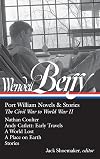
1. Andy Catlett: Early Travels is more like a memoir than a novel, as it is told from the point of view of the older man reflecting on his 9-year-old self--the boy whose story this is. It is also eerily timely, as it contemplates the problem of racism, particularly the non-violent, "kindly" yet condescending paternalistic kind that presented itself in the treatment of the black people he encountered in his community and on his grandparents' farms in his childhood during the 1940's.
Read and show more reviewed in 2020.
2. Nathan Coulter: A wonderful "slice of life" story told from the perspective of a young boy starting to observe the way things happen, watching his older brother grow away from him, hunting with his Uncle Burley, coping with the death of his mother, and beginning to think about things he's been used to taking for granted. The language is wonderful, the characters are rich and real, and wryly funny; the setting is...well, the setting is home to me. Port William, KY, and its surroundings are very like the small town and countryside where I grew up, if you substitute our corn for their tobacco, and move forward into the 20th century just a few decades. Nothing will do for me now but that I become as familiar with this world and its inhabitants as I am with Yoknapatawpha County. Luckily, Berry won't make me work quite as hard at it as Ol' Uncle Billy did. That was the main course---this is dessert.
3. The two short novels, Andy Catlett: Early Travels, and A World Lost, with all the short stories that fit chronologically between them, comprised a good deal of my August 2020 reading time, and it was wonderful to be in and about Port William. These stories have a great appeal to me...they tick all the boxes, as they say. Simple good people, a few rascals and ne'er-do-wells, some drunkards, but very little real wickedness. There's plenty of sorrow, hardship, loss and grief, but it feels as "right", in context, as the freedom of childhood and the routine of daily life, until World War II and the murder of Andy's favorite uncle knock it all off kilter. Berry's ability to re-create the world of rural farm life (in Kentucky, but that only means tobacco is the main crop--it could so easily be the little pocket of the Delaware River Valley in Pennsylvania where I grew up) in the early 20th century is nothing short of genius. A perfect antidote to living in the early 21st. Highly recommended for your soul. show less
Read and show more reviewed in 2020.
2. Nathan Coulter: A wonderful "slice of life" story told from the perspective of a young boy starting to observe the way things happen, watching his older brother grow away from him, hunting with his Uncle Burley, coping with the death of his mother, and beginning to think about things he's been used to taking for granted. The language is wonderful, the characters are rich and real, and wryly funny; the setting is...well, the setting is home to me. Port William, KY, and its surroundings are very like the small town and countryside where I grew up, if you substitute our corn for their tobacco, and move forward into the 20th century just a few decades. Nothing will do for me now but that I become as familiar with this world and its inhabitants as I am with Yoknapatawpha County. Luckily, Berry won't make me work quite as hard at it as Ol' Uncle Billy did. That was the main course---this is dessert.
3. The two short novels, Andy Catlett: Early Travels, and A World Lost, with all the short stories that fit chronologically between them, comprised a good deal of my August 2020 reading time, and it was wonderful to be in and about Port William. These stories have a great appeal to me...they tick all the boxes, as they say. Simple good people, a few rascals and ne'er-do-wells, some drunkards, but very little real wickedness. There's plenty of sorrow, hardship, loss and grief, but it feels as "right", in context, as the freedom of childhood and the routine of daily life, until World War II and the murder of Andy's favorite uncle knock it all off kilter. Berry's ability to re-create the world of rural farm life (in Kentucky, but that only means tobacco is the main crop--it could so easily be the little pocket of the Delaware River Valley in Pennsylvania where I grew up) in the early 20th century is nothing short of genius. A perfect antidote to living in the early 21st. Highly recommended for your soul. show less
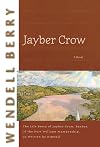
Berry has an incredible skill for writing about things we've all felt, but they sound both new and familiar in his prose. Jayber tells his own story about his life, particularly his time as barber in Port William, Kentucky. Through the years he watches dramas unfold from his solitary place. He sees how time changes the community, deals with his own heartbreak, hatred, and struggles with faith. It is a book that flows slowly and should be savored. Nothing big happens and yet all of life is show more packed within its pages.
"All the world, as a matter of fact, is a mosaic of little places invisible to the powers that be."
“I don't believe that grief passes away. It has its time and place forever. More time is added to it; it becomes a story within a story. But grief and griever alike endure.”
“As I have read the Gospels over the years, the belief has grown in me that Christ did not come to found an organized religion but came instead to found an unorganized one. He seems to have come to carry religion out of the temples into the fields and sheep pastures, onto the roadsides and the banks of the rivers, into the houses of sinners and publicans, into the town and the wilderness, toward the membership of all that is here. Well, you can read and see what you think.” show less
"All the world, as a matter of fact, is a mosaic of little places invisible to the powers that be."
“I don't believe that grief passes away. It has its time and place forever. More time is added to it; it becomes a story within a story. But grief and griever alike endure.”
“As I have read the Gospels over the years, the belief has grown in me that Christ did not come to found an organized religion but came instead to found an unorganized one. He seems to have come to carry religion out of the temples into the fields and sheep pastures, onto the roadsides and the banks of the rivers, into the houses of sinners and publicans, into the town and the wilderness, toward the membership of all that is here. Well, you can read and see what you think.” show less
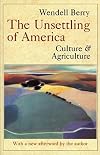
The first casualties of exploitation are character and community. Wendell Berry
This was a prophetic book in 77 and it's still a sobering read today, given that our alienation from the land, our embrace of specialization resulting in food sources that are less resistant to blight, pests, invasive species, drought or any of the challenges faced by farmers. The book bears reading even for an audience not familiar with agriculture because of the broader picture - that a society accepting of show more exploitation of land and natural resources tends to be accepting of the exploitation of people. Berry's exploration of the margins, of the healing and regeneration needed between growing cycles, and of the necessity of diversity are lessons that address many wrongs still being committed not only by agribusiness but any industry that commodifies what once was considered a part of the membership of the community. show less
This was a prophetic book in 77 and it's still a sobering read today, given that our alienation from the land, our embrace of specialization resulting in food sources that are less resistant to blight, pests, invasive species, drought or any of the challenges faced by farmers. The book bears reading even for an audience not familiar with agriculture because of the broader picture - that a society accepting of show more exploitation of land and natural resources tends to be accepting of the exploitation of people. Berry's exploration of the margins, of the healing and regeneration needed between growing cycles, and of the necessity of diversity are lessons that address many wrongs still being committed not only by agribusiness but any industry that commodifies what once was considered a part of the membership of the community. show less
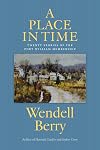
Wendell Berry has been writing poetry and essays on farming life for more than half a century. But he has also written fiction set in Port William, Ky., which rivals William Faulkner’s Yoknapatawpha County in terms of its breadth of imagined historical detail. A Place in Time includes 20 stories that feature familiar characters from earlier novels and stories, but it is not necessary to have read those to get pleasure out of these.
This is a good introduction to many of the families that show more inhabit Port William. The Catletts and Feltners are prominent in several stories. While individual characters like Burley Coulter, Elton Penn, and Andy Catlett stand out. The stories span more than a century and a half of history from the opening story, set in the Civil War era to the titular tale that ends the book during the first decade of the new millennium.
The stories are not plot driven but focus on character, including the character of Port William itself. The relationships of characters are as important as their actions in these beautiful vignettes of small town life. As someone who was raised in a small town I found moments that resonated with my own experience. "Andy Catlett: Early Education" reminded me of my own schooldays while also bringing my reading of books like Tom Sawyer to mind. One of the most potent stories, for instance, is markedly subtle: “A Desirable Woman” tracks the intersection of a pastor’s wife and a young farmhand shortly before the start of World War II, and the story turns on the young man’s unrequited crush on the woman shortly before he’s sent off to war. “Sold” has a similarly soft-focus, nostalgic cast, narrated by an elderly woman recalling the accumulations that are about to be sold at auction before she enters a nursing home. Some of the stories are suggestive of homespun tales or Twain (again), as in “A New Day,” which climaxes in a competition between two horse teams dragging bricks, or “A Burden,” about the antics of a drunk relation.
Throughout the collection Berry's writing style is poetic as he shares episodes of loss and love, achievement and angst; all set against the backdrop of the evolution of Port William through time. The historic context was omnipresent but not overwhelming. It intruded with tales of soldiers returning or not returning from war and notes of other events, although the focus was continually on the families -- their follies, their foibles, and their faith. Berry is a writer whose beautiful sentences are imbued with an agrarian spirit. That and a concern for both time past and time future make this a fine collection. show less
This is a good introduction to many of the families that show more inhabit Port William. The Catletts and Feltners are prominent in several stories. While individual characters like Burley Coulter, Elton Penn, and Andy Catlett stand out. The stories span more than a century and a half of history from the opening story, set in the Civil War era to the titular tale that ends the book during the first decade of the new millennium.
The stories are not plot driven but focus on character, including the character of Port William itself. The relationships of characters are as important as their actions in these beautiful vignettes of small town life. As someone who was raised in a small town I found moments that resonated with my own experience. "Andy Catlett: Early Education" reminded me of my own schooldays while also bringing my reading of books like Tom Sawyer to mind. One of the most potent stories, for instance, is markedly subtle: “A Desirable Woman” tracks the intersection of a pastor’s wife and a young farmhand shortly before the start of World War II, and the story turns on the young man’s unrequited crush on the woman shortly before he’s sent off to war. “Sold” has a similarly soft-focus, nostalgic cast, narrated by an elderly woman recalling the accumulations that are about to be sold at auction before she enters a nursing home. Some of the stories are suggestive of homespun tales or Twain (again), as in “A New Day,” which climaxes in a competition between two horse teams dragging bricks, or “A Burden,” about the antics of a drunk relation.
Throughout the collection Berry's writing style is poetic as he shares episodes of loss and love, achievement and angst; all set against the backdrop of the evolution of Port William through time. The historic context was omnipresent but not overwhelming. It intruded with tales of soldiers returning or not returning from war and notes of other events, although the focus was continually on the families -- their follies, their foibles, and their faith. Berry is a writer whose beautiful sentences are imbued with an agrarian spirit. That and a concern for both time past and time future make this a fine collection. show less
Lists
Awards


You May Also Like


Associated Authors
Statistics
- Works
- 160
- Also by
- 61
- Members
- 24,846
- Popularity
- #845
- Rating
- 4.2
- Reviews
- 356
- ISBNs
- 350
- Languages
- 6
- Favorited
- 131
