
Mary Oliver (1) (1935–2019)
Author of A Poetry Handbook: A Prose Guide to Understanding and Writing Poetry
For other authors named Mary Oliver, see the disambiguation page.
About the Author
Mary Oliver was born in Cleveland, Ohio on September 10, 1935. She attended Ohio State University and Vassar College, but did not receive a degree. Her first collection of poems, No Voyage and Other Poems, was published in 1963. She wrote more than 20 volumes of poetry including The River Styx, show more Ohio; The Leaf and the Cloud; Evidence; Blue Horses; and Felicity. She received several awards including the Pulitzer Prize for American Primitive, the Christopher Award and the L. L. Winship/PEN New England Award for House of Light, and the National Book Award for New and Selected Poems. Her books of prose include A Poetry Handbook, Rules for the Dance: A Handbook for Writing and Reading Metrical Verse, and Long Life: Essays and Other Writings. She held the Catharine Osgood Foster Chair for Distinguished Teaching at Bennington College from 1995 to 2001. She died on January 17, 2019 at the age of 83. (Bowker Author Biography) show less
Image credit: Mary Oliver in 2010.
Series
Works by Mary Oliver
A Poetry Handbook: A Prose Guide to Understanding and Writing Poetry (1994) 2,201 copies, 25 reviews
A Mary Oliver Collection: A Thousand Mornings, Dog Songs, Blue Horses, and Felicity (2020) 12 copies
The Journey 2 copies
Singapore 1 copy
Mockingbirds 1 copy
Sleeping in the Forest 1 copy
Associated Works
The Making of a Poem: A Norton Anthology of Poetic Forms (2000) — Contributor — 1,474 copies, 9 reviews
A Book of Luminous Things: An International Anthology of Poetry (1996) — Contributor — 945 copies, 12 reviews
The Vintage Book of Contemporary American Poetry (1990) — Contributor, some editions — 858 copies, 3 reviews
Cries of the Spirit: A Celebration of Women's Spirituality (2000) — Contributor — 404 copies, 2 reviews
Teaching with Fire: Poetry That Sustains the Courage to Teach (2003) — Contributor — 225 copies, 1 review
The Poetry Pharmacy: Tried-and-True Prescriptions for the Heart, Mind, and Soul (2017) 198 copies, 5 reviews
Leading from Within: Poetry That Sustains the Courage to Lead (2007) — Contributor — 116 copies, 3 reviews
You Don't Have to Be Everything: Poems for Girls Becoming Themselves (2021) — Contributor — 86 copies, 2 reviews
I Wouldn't Thank You for a Valentine: Poems For Young Feminists (1992) — Contributor — 57 copies, 2 reviews
Buzz Words: Poems About Insects (Everyman's Library Pocket Poets Series) (2021) — Contributor — 56 copies
I Still Believe Anita Hill: Three Generations Discuss the Legacies of Speaking Truth to Power (2012) — Contributor — 23 copies, 1 review
Necessary Light: poems by Patricia Fargnoli (Swenson Poetry Award) (1999) — Foreword, some editions — 22 copies, 2 reviews
When She Named Fire: An Anthology of Contemporary Poetry by American Women (2008) — Contributor — 15 copies
Tagged
Common Knowledge
- Canonical name
- Oliver, Mary
- Legal name
- Oliver, Mary Jane
- Birthdate
- 1935-09-10
- Date of death
- 2019-01-17
- Gender
- female
- Education
- Ohio State University
Vassar College - Occupations
- secretary
professor
poet
writer
editor - Organizations
- Case Western Reserve University (teacher)
Bennington College (teacher) - Awards and honors
- Pulitzer Prize for Poetry (1984)
National Book Award for Poetry (1992)
American Academy of Arts and Letters Academy Award (Literature, 1983)
New England Booksellers Association Award for Literary Excellence (1999)
Lannan Literary Award (Poetry, 1998)
L.L. Winship/PEN New England Award (1991) (show all 9)
National Endowment for the Arts Fellowship
Shelley Memorial Award (1969/1970)
Guggenheim Fellowship - Agent
- Steven Barclay Agency
Bill Reichblum (literary executor) - Relationships
- Cook, Molly Malone (partner)
- Short biography
- Mary Oliver (1935-2019) was born in Ohio and as a teenager lived briefly in the home of Edna St. Vincent Millay, helping Millay's family sort through the poet's papers. She attended both Ohio State University and Vassar College, though she did not receive a degree.
Her first collection of poems, No Voyage, and Other Poems, was published in 1963. Since then, she has published numerous books, including New and Selected Poems (1992), which won the National Book Award, and American Primitive (1983), for which she won the Pulitzer Prize.
"Mary Oliver's poetry is an excellent antidote for the excesses of civilization," wrote one reviewer for the Harvard Review, "for too much flurry and inattention, and the baroque conventions of our social and professional lives. She is a poet of wisdom and generosity whose vision allows us to look intimately at a world not of our making."
Her many awards include the Poetry Society of America's Alice Fay di Castagnola Award.
Mary Oliver held the Catharine Osgood Foster Chair for Distinguished Teaching at Bennington College until 2001. - Cause of death
- lymphoma
- Nationality
- USA
- Birthplace
- Cleveland, Ohio, USA
- Places of residence
- Provincetown, Massachusetts, USA
Bennington, Vermont, USA
Florida, USA
Maple Heights, Ohio, USA - Place of death
- Hobe Sound, Florida, USA
- Map Location
- Ohio, USA
Members
Discussions
Got Lists? in Welcome to LibraryThing! (December 2025)
Reviews
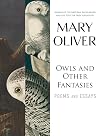
I return sporadically to this book when I want a sense of calm. The calm of a knowing bird's silent gaze, the calm of a swan slipping along the top of a lake, the calm of birdsong coming from everywhere and nowhere at once. There's a peace in these poems that I fall into, whether reading it in glimpses or in whole.
Nature poetry doesn't always have the power (to me) of these poems. Often enough, I grow bored or annnoyed with it seemingly trying to do more than it does, or be more than it is. show more Pushing language too hard and erupting overtop what it's supposedly attempting. But Oliver's poems are something else, quiet and good and easy, but still with an awareness of the larger world even as she examines the simple forms, actions, and attentions described so beautifully here.
And of course there are the essays. When I come back to this work, I say I won't cry over a re-read of "Bird", and then of course I do indeed cry over a reread of "Bird." Perhaps one day I'll look up interviews or see what she's said more about this essay and the experience driving it, or perhaps I'll just reread it again and cry again with the imagining.
The poems here are gorgeous. And in a world so dark as it can be, sometimes the simplest glimpse of a bird, as in these pages, can mean everything.
Recommended. show less
Nature poetry doesn't always have the power (to me) of these poems. Often enough, I grow bored or annnoyed with it seemingly trying to do more than it does, or be more than it is. show more Pushing language too hard and erupting overtop what it's supposedly attempting. But Oliver's poems are something else, quiet and good and easy, but still with an awareness of the larger world even as she examines the simple forms, actions, and attentions described so beautifully here.
And of course there are the essays. When I come back to this work, I say I won't cry over a re-read of "Bird", and then of course I do indeed cry over a reread of "Bird." Perhaps one day I'll look up interviews or see what she's said more about this essay and the experience driving it, or perhaps I'll just reread it again and cry again with the imagining.
The poems here are gorgeous. And in a world so dark as it can be, sometimes the simplest glimpse of a bird, as in these pages, can mean everything.
Recommended. show less
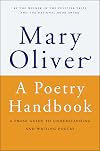
I’m in awe of how much essential information Oliver managed to fit in so few pages without sacrificing reader-friendliness. Any budding poet should read and reread this book, but it would also be helpful to readers who’d like a better understanding of what poetry hopes to accomplish and how it aims to.
Oliver assumes that anyone interested in writing poetry will also read poems and a wide variety of other subjects and immerse herself in the natural world. I was struck by her image of show more poetry, collectively, as a river. Some might feel burdened by the thought of adding to such a rich tradition, but I found it liberating. She includes apt examples to illustrate the points she’s making. Some were poems I’ve read many times; others were new to me, and I was happy to become acquainted with them.
I liked the balance she strikes between participating in well-run workshops and pursuing solitude. She closes with two quotations, with her comments on them. In one, Flaubert names three requirements—patience, effort of will, and intense observation. A good recipe for a poet. Emerson, meanwhile, calls a poem a confession of faith. To this, Oliver adds: “Poetry is a life-cherishing force. . . . For poems are not words, after all, but fires for the cold, ropes let down to the lost, something as necessary as bread in the pockets of the hungry.” show less
Oliver assumes that anyone interested in writing poetry will also read poems and a wide variety of other subjects and immerse herself in the natural world. I was struck by her image of show more poetry, collectively, as a river. Some might feel burdened by the thought of adding to such a rich tradition, but I found it liberating. She includes apt examples to illustrate the points she’s making. Some were poems I’ve read many times; others were new to me, and I was happy to become acquainted with them.
I liked the balance she strikes between participating in well-run workshops and pursuing solitude. She closes with two quotations, with her comments on them. In one, Flaubert names three requirements—patience, effort of will, and intense observation. A good recipe for a poet. Emerson, meanwhile, calls a poem a confession of faith. To this, Oliver adds: “Poetry is a life-cherishing force. . . . For poems are not words, after all, but fires for the cold, ropes let down to the lost, something as necessary as bread in the pockets of the hungry.” show less
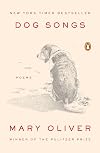
So many friends on Librarything praise the writings of Mary Oliver. Finally, I made time to obtain one of her books -- and it is a gem! A rich collection of poetry based on experiences with her dogs.
Each poem reflects the specialness of the gift they left, and the memories that remain. Every dog, large or small is special, yet she has a unique way of singing the praises in an individual song. And, the title of this book is beautifully indicative of the way in which she frames each experience show more and personality.
Sitting in a comfortable chair, bone tired from gardening today, immediately, I was transformed to Mary's life with, and love of her dogs. The memories flow, and each one of us who loved a dog or dogs, can relate.
Easily, I was transported to the dogs of my childhood and how they rescued me from rainy days of sadness, bringing love and sunshine. Lovingly, I remembered the way in which each dog held a very special place in my life. And, every one was a gift, a beautiful presence, and a present to celebrate.
The beauty of the love each dog brought, far outweighs the sadness of losing them. Mary has a stunning way of letting the sun shine through the clouds.
This is the first, but it won't be the last book of hers that I will read!
FIVE STARS ISN'T ENOUGH show less
Each poem reflects the specialness of the gift they left, and the memories that remain. Every dog, large or small is special, yet she has a unique way of singing the praises in an individual song. And, the title of this book is beautifully indicative of the way in which she frames each experience show more and personality.
Sitting in a comfortable chair, bone tired from gardening today, immediately, I was transformed to Mary's life with, and love of her dogs. The memories flow, and each one of us who loved a dog or dogs, can relate.
Easily, I was transported to the dogs of my childhood and how they rescued me from rainy days of sadness, bringing love and sunshine. Lovingly, I remembered the way in which each dog held a very special place in my life. And, every one was a gift, a beautiful presence, and a present to celebrate.
The beauty of the love each dog brought, far outweighs the sadness of losing them. Mary has a stunning way of letting the sun shine through the clouds.
This is the first, but it won't be the last book of hers that I will read!
FIVE STARS ISN'T ENOUGH show less
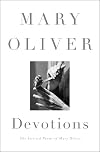
In "Devotions," Mary Oliver selects her own poetry, beginning with her most recent collection ("Felicity," 2015) and continuing in reverse chronological order to her first collection ("No Voyage and Other Poems," 1963). The result is a showcase of her work over the years and a phenomenal reading experience whether the reader works her way from beginning to end or dips in at random.
Oliver is known for her focus on the natural world, and that is evident throughout this collection with most of show more the poems giving at least one image from nature even when it is not the focus of the poems. And nature is not just poetic: she is aware of the dog-eat-dog (or, to be more precise, heron-eat-frog) world out there. By the end of her work, Oliver could really encapsulate a moment or an image in a universal way, inserting herself in the poem with an "I" in such a way that the reader is also drawn in and could be that "I" as she reads the poem. As I read back to her older work, that "I" was much more her and the reading much more personal as some poems were clearly about a very specific, singular experience in Oliver's life. In that way, reading back chronologically almost felt like starting a friendship, and by the time I got to the end we already had enough rapport that I cared about those personal experiences in a way I would not have if I read it first. This would be an excellent introduction to Oliver's work for first-time readers and a welcome revisit to those who have read multiple collections. show less
Oliver is known for her focus on the natural world, and that is evident throughout this collection with most of show more the poems giving at least one image from nature even when it is not the focus of the poems. And nature is not just poetic: she is aware of the dog-eat-dog (or, to be more precise, heron-eat-frog) world out there. By the end of her work, Oliver could really encapsulate a moment or an image in a universal way, inserting herself in the poem with an "I" in such a way that the reader is also drawn in and could be that "I" as she reads the poem. As I read back to her older work, that "I" was much more her and the reading much more personal as some poems were clearly about a very specific, singular experience in Oliver's life. In that way, reading back chronologically almost felt like starting a friendship, and by the time I got to the end we already had enough rapport that I cared about those personal experiences in a way I would not have if I read it first. This would be an excellent introduction to Oliver's work for first-time readers and a welcome revisit to those who have read multiple collections. show less
Lists
Awards


You May Also Like


Associated Authors
Statistics
- Works
- 54
- Also by
- 40
- Members
- 21,607
- Popularity
- #996
- Rating
- 4.2
- Reviews
- 447
- ISBNs
- 172
- Languages
- 5
- Favorited
- 41


