
Jane Kenyon (1947–1995)
Author of Otherwise: New & Selected Poems
About the Author
Jane Kenyon (1947-1995) published four collections of poetry during her lifetime: From Room to Room, The Boat of Quiet Hours, Let Evening Come, and Constance, as well as a volume of translations, Twenty Poems of Anna Akhmatova. Kenyon's posthumous publications include Otherwise: New Selected Poems show more and A Hundred White Daffodils. Her Collected Poems was published in 2005. show less
Works by Jane Kenyon
"Bright unequivocal eye" poems, papers, and remembrances from the First Jane Kenyon Conference (2000) 4 copies
Green House, volume I, number II, winter 1977: Special Seciton: Poetry in Translation — Editor — 1 copy
Green House, volume II, number I, winter 1978: Special Section: Poems of Affection — Editor — 1 copy
What it's like 1 copy
Jane Kenyon: Selected Poems 1 copy
Associated Works
The Making of a Poem: A Norton Anthology of Poetic Forms (2000) — Contributor — 1,473 copies, 9 reviews
Literature: An Introduction to Fiction, Poetry, and Drama (1995) — Contributor, some editions — 1,017 copies, 7 reviews
Sisters of the Earth: Women's Prose and Poetry About Nature (1991) — Contributor — 443 copies, 5 reviews
Cries of the Spirit: A Celebration of Women's Spirituality (2000) — Contributor — 404 copies, 2 reviews
You Don't Have to Be Everything: Poems for Girls Becoming Themselves (2021) — Contributor — 86 copies, 2 reviews
When She Named Fire: An Anthology of Contemporary Poetry by American Women (2008) — Contributor — 15 copies
Tagged
Common Knowledge
- Birthdate
- 1947-05-23
- Date of death
- 1995-04-23
- Gender
- female
- Education
- University of Michigan (BA|1970|MA|1972)
- Occupations
- poet
translator - Awards and honors
- PEN/Voelcker Award (1994)
- Relationships
- Hall, Donald (husband)
- Cause of death
- leukemia
- Nationality
- USA
- Birthplace
- Ann Arbor, Michigan, USA
- Places of residence
- Ann Arbor, Michigan, USA
Wilmot, New Hampshire, USA - Place of death
- Wilmot, New Hampshire, USA
- Burial location
- Proctor Cemetery, Andover, Merrimack County, New Hampshire, USA
- Map Location
- Michigan, USA
Members
Reviews
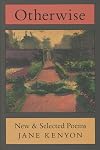
Jane Kenyon, along with her husband, Donald Hall, are two of my favorite poets. Both write concrete, accessible verse that communicates the universal through their particular experience. In this collection, Kenyon's newest poems were written after her diagnosis of the cancer that eventually killed her. She suffers greatly, but strives to find the good in a horrible situation. Her struggle is heartbreaking, sad, yet beautiful. It may not replace the beauty of Heaven and ultimate redemption, show more but Kenyon holds on to the beauty of the earth, of her rural surroundings, of her love for Donald and his love for her, of the ultimate goodness of the world despite the fact that she would wish it otherwise. All of us would wish that sickness, and death, especially a death before old age sets in, would be otherwise. Yet the world is not otherwise, and Kenyon accepts that with grace and dignity is these beautiful poems. This is a book for every human being, since every human being has suffered, will suffer, or is suffering. I highly recommend it. show less

I should mention that I first came to know of Jane Kenyon many years ago, as the poet-wife of a favorite New England poet and essayist. Over those years, I’ve read and purchased her poetry here and there. But it was while corresponding with an old friend a few months ago, that Ms. Kenyon came to mind again. I was writing about how her late husband, Donald Hall, would still cry when speaking of her even twenty years after her death. At the time of the correspondence, I was again rereading show more Hall’s poetry and his memoir about losing Jane, but my friend chose to read some Kenyon. For myself, reading more Kenyon came about when I saw this large collection of her poetry was available in paperback.
Large volumes of the collected poetry of a particular poet have become a special treat and addiction for me. You’re sure to find the familiar, the better-known poems, but also the B-sides, so to speak. I still prefer to experience a musician’s latest work via an album, with everything available in the order the artist has chosen. Sitting down with a thick book of poetry allows you to see all their work and get a good feel for them. You will see how their work evolved as their life continued.
Being originally from New England, the setting of many of these poems seems to me extremely familiar and comfortable. I think I still have a feel for the pace of life there. Kenyon loved to write short poems that often came across as meditations on the familiar things, situations, and feelings that are common with many of us.
I came across this quote from Wendell Berry in the New York Times about how Kenyon didn’t allow Hall’s fame and style to stop her from becoming the poet she wanted to be, as "a poet who had set up shop smack in the middle of another poet's subject." Donald Hall was more famous and showier than Jane, and often took up much more of the oxygen in the room. He went on to write about losing her in both memoir (The Best Day the Worst Day), and poetry (Without), after she died of leukemia in early 1995, at the age of 47. Her own poetry rarely touched on her leukemia, but her long experience with depression often made an appearance in her words.
I came away from this book with so much more of an appreciation for her work. As often happens, sitting down with a favored writer and a drink is an adventure through another door. It’s a shame that more of us couldn’t then sit down with the actual writer, drink or not. Having hosted so many writers over the years in our different bookstores, I feel very spoiled in this regard. A few were disappointments, but by far most of them are just like you hoped they would be. Oh, artists. show less
Large volumes of the collected poetry of a particular poet have become a special treat and addiction for me. You’re sure to find the familiar, the better-known poems, but also the B-sides, so to speak. I still prefer to experience a musician’s latest work via an album, with everything available in the order the artist has chosen. Sitting down with a thick book of poetry allows you to see all their work and get a good feel for them. You will see how their work evolved as their life continued.
Being originally from New England, the setting of many of these poems seems to me extremely familiar and comfortable. I think I still have a feel for the pace of life there. Kenyon loved to write short poems that often came across as meditations on the familiar things, situations, and feelings that are common with many of us.
I came across this quote from Wendell Berry in the New York Times about how Kenyon didn’t allow Hall’s fame and style to stop her from becoming the poet she wanted to be, as "a poet who had set up shop smack in the middle of another poet's subject." Donald Hall was more famous and showier than Jane, and often took up much more of the oxygen in the room. He went on to write about losing her in both memoir (The Best Day the Worst Day), and poetry (Without), after she died of leukemia in early 1995, at the age of 47. Her own poetry rarely touched on her leukemia, but her long experience with depression often made an appearance in her words.
I came away from this book with so much more of an appreciation for her work. As often happens, sitting down with a favored writer and a drink is an adventure through another door. It’s a shame that more of us couldn’t then sit down with the actual writer, drink or not. Having hosted so many writers over the years in our different bookstores, I feel very spoiled in this regard. A few were disappointments, but by far most of them are just like you hoped they would be. Oh, artists. show less
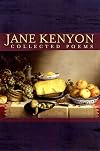
This collection contains all of Kenyon's previously published poems, some unpublished poems and her translations of the poetry of Russian poet Anna Akhmatova. Kenyon's poems are straightforward and beautiful. Most of her poems are about rural living, marriage, illness, death and depression. Kenyon suffered from depression her entire life. Here is part of a multiple part poem about depression:
Having it Out with Melancholy
1. From the Nursery
When I was born, you waited
behind a pile of linen in show more the nursery,
and when we were alone,you lay down
on top of me, pressing
the bile of desolation into every pore.
And from that day on
everything under the sun and moon
made me sad - even the yellow
wooden beads that slid and spun
along a spindle on my crib.
You taught me to exist without gratitude.
You ruined my manners toward God:
"We're here simply to wait for death;
the pleasures of earth are overrated."
I only appeared to belong to my mother,
to live among blocks and cotton undershirts
with snaps; among red tin lunch boxes
and report cards in ugly brown slipcases.
I was already yours - the anti-urge,
the mutilator of souls. show less
Having it Out with Melancholy
1. From the Nursery
When I was born, you waited
behind a pile of linen in show more the nursery,
and when we were alone,you lay down
on top of me, pressing
the bile of desolation into every pore.
And from that day on
everything under the sun and moon
made me sad - even the yellow
wooden beads that slid and spun
along a spindle on my crib.
You taught me to exist without gratitude.
You ruined my manners toward God:
"We're here simply to wait for death;
the pleasures of earth are overrated."
I only appeared to belong to my mother,
to live among blocks and cotton undershirts
with snaps; among red tin lunch boxes
and report cards in ugly brown slipcases.
I was already yours - the anti-urge,
the mutilator of souls. show less
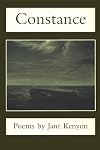
Depressing and beautiful, as it deals with her own and her husband's illnesses. Her husband recovered from major surgery:I brought him home, numbed up/for the trip. He dozed in the car,/woke, and looked with astonishment/at the hills, gold and quince/under October sun, a sight so/overwhelming that we began to cry/he first, and then I.You really need the whole poem before that, but it's incredibly generous of her to give us that moment, and such gifts are why you should read this collection.
Lists
Awards


You May Also Like


Associated Authors
Statistics
- Works
- 16
- Also by
- 17
- Members
- 1,324
- Popularity
- #19,418
- Rating
- 4.1
- Reviews
- 17
- ISBNs
- 21
- Favorited
- 9