
Sharon Olds
Author of The Dead and the Living
About the Author
Sharon Olds was born in San Francisco. She lives in New York City.
Image credit: Catherine Mauger
Works by Sharon Olds
What Does an Elegy Do? (The Judith Lee Stronach Memorial Lecture on the Teaching of Poetry) (2010) 3 copies
Blood, Tin, Straw 1 copy
Olds, Sharon Archive 1 copy
In the Hospital Near the End (included in The Norton Introduction to Literature - 5th Edition) 1 copy
Associated Works
The Making of a Poem: A Norton Anthology of Poetic Forms (2000) — Contributor — 1,474 copies, 9 reviews
Literature: An Introduction to Fiction, Poetry, and Drama (1995) — Contributor, some editions — 1,017 copies, 7 reviews
A Book of Luminous Things: An International Anthology of Poetry (1996) — Contributor — 945 copies, 12 reviews
The Vintage Book of Contemporary American Poetry (1990) — Contributor, some editions — 858 copies, 3 reviews
For the Love of Books: 115 Celebrated Writers on the Books They Love Most (1999) — Contributor — 480 copies, 4 reviews
All We Can Save: Truth, Courage, and Solutions for the Climate Crisis (2020) — Contributor — 470 copies, 12 reviews
Cries of the Spirit: A Celebration of Women's Spirituality (2000) — Contributor — 404 copies, 2 reviews
The Armless Maiden and Other Tales for Childhood's Survivors (1995) — Contributor — 256 copies, 4 reviews
No More Masks: An Anthology of Twentieth-Century American Women Poets (1993) — Contributor, some editions — 226 copies, 3 reviews
Poetry Speaks Expanded: Hear Poets Read Their Own Work from Tennyson to Plath (2007) — Contributor — 158 copies, 2 reviews
The Best American Poetry 2014 (The Best American Poetry series) (2014) — Contributor — 89 copies, 1 review
You Don't Have to Be Everything: Poems for Girls Becoming Themselves (2021) — Contributor — 86 copies, 2 reviews
I Wouldn't Thank You for a Valentine: Poems For Young Feminists (1992) — Contributor — 57 copies, 2 reviews
Buzz Words: Poems About Insects (Everyman's Library Pocket Poets Series) (2021) — Contributor — 56 copies
The Artists' and Writers' Cookbook: A Collection of Stories with Recipes (2016) — Contributor — 19 copies
When She Named Fire: An Anthology of Contemporary Poetry by American Women (2008) — Contributor — 15 copies
Dear Yusef: Essays, Letters, and Poems, For and About One Mr. Komunyakaa (2024) — Contributor — 3 copies
Poetry East : number twenty & twenty-one fall 1986 : poetics — Contributor — 1 copy
Tagged
Common Knowledge
- Canonical name
- Olds, Sharon
- Other names
- Cobb, Sharon Stuart (birth name)
- Birthdate
- 1942-11-19
- Gender
- female
- Education
- Stanford University
Columbia University - Occupations
- teacher
poet - Organizations
- New York University
American Academy of Arts and Letters (2015) - Awards and honors
- Fellowship of the Academy of American Poets (2002)
Robert Frost Medal (2022)
Ruth Lilly Poetry Prize (2022) - Nationality
- USA
- Birthplace
- San Francisco, California, USA
- Places of residence
- San Francisco, California, USA (birth)
- Associated Place (for map)
- San Francisco, California, USA
Members
Reviews

This book would have been five stars for me had it not been for the absolutely mind boggling final section entitled « The Children ». I could perhaps have made it past one poem about her children’s naked bodies uncomfortable and a little alarmed but after reading several in succession I decided to take one and a half stars off for good measure because MY GOD did they make me uncomfortable ! Do you have a right as their mother to write about their bodies? Absolutely. Is it weird for me to show more read them? Yeah! Will I ever pick this book back up again? Maybe. But not the last section that’s for damn sure ! I liked the poem « Conniseuse of Slugs » the most probably. And the ones about her dead grandmother. At least I didn’t have to read about her genitals ! Thanks Sharon for the wild ride. show less
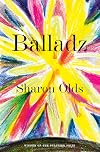
Olds has lost none of her verve at eighty as she writes about love and sex and death and, of course, her mother, but the best was her poem to her husband in the last section "When They Say You Have Maybe Three Months Left" which ends with
"And now we are there! Maybe this has been
death all along! Maybe life is a
kind of dying. Maybe this has been heaven."
"And now we are there! Maybe this has been
death all along! Maybe life is a
kind of dying. Maybe this has been heaven."
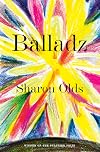
Longlisted for the National Book Award, Balladz by Sharon Olds was my introduction to the poet. Social media friends told me that Olds was a favorite poet. Although I read contemporary poetry in my younger years, I became out of touch after decades of living in rather isolated communities. I am thrilled to be able to discover all that I have been missing.
Olds style, so direct and filled with visceral images, can be jarring. The first section of the book are quarantine poems. Secluded in a show more rural cabin, Olds battles with loneliness–and mice, setting traps, dealing with the blood bath afterwards. She writes a poem to the centipede that she also kills, noting, “Of course I am a killer. I am/human.” And in the next poem she asks, “Is it impossible/for me to be good. Is it possible for us/ to try harder to kill this planet/slower. Would I kill this animal again/it it did its undulation above me/alone the wall. Is this the best that I can/do this morning to work against the killing/done in my name all over the earth.”
She writes angrily about the death of George Floyd. And in Anatomy Lesson for the Officer, of the human connection we share: “And that is a human throat you are kneeling/on. That is our throat, our brother’s,/our son’s, maybe our father’s throat. /That is your mother’s, your father’s, your son’s,/your daughter’s throat. That is your daughter’s throat.”
Amherst Ballads are in the style of Emily Dickinson, and I will need to take my time with them.
The Balladz section includes Best Friend Ballad, in which she remembers “the power of her house, and of the approach to it,” then recalls the girl’s death, praying “for a sleep tonight in which, 9 and 9, we can hold each other in a green dream.” I was transported back to when I was 9 years old, walking to my best friend’s 1900s farm house down the road, filled with grief knowing that she had died decades ago of disease.
And in Ballad Torn Apart, Olds vividly describes the car accident that killed a friend. In Album from a Previous Existence, she writes about her mother and childhood, and it is this harsh mother, who she talks about in earlier poems as tying her in a chair and beating her that is so hard to encounter, my own mother who, for all her flaws, was so giving, her love was like a tether that could not break with death.
Olds writes about her body, her self-image, the self-acceptance of growing old. “Now I’m better at talking to people without/thinking my face makes them want to throw up,”
I have not read all the poems. Poems on the death of her father and husband. There are some poems I need to go back to; I rushed through them, disturbed or confused. But then, is there any end to studying a poem, none the less nearly two hundred pages of poetry? It takes a life time. At least.
I received a free book from A. A. Knopf. My review is fair and unbiased. show less
Olds style, so direct and filled with visceral images, can be jarring. The first section of the book are quarantine poems. Secluded in a show more rural cabin, Olds battles with loneliness–and mice, setting traps, dealing with the blood bath afterwards. She writes a poem to the centipede that she also kills, noting, “Of course I am a killer. I am/human.” And in the next poem she asks, “Is it impossible/for me to be good. Is it possible for us/ to try harder to kill this planet/slower. Would I kill this animal again/it it did its undulation above me/alone the wall. Is this the best that I can/do this morning to work against the killing/done in my name all over the earth.”
She writes angrily about the death of George Floyd. And in Anatomy Lesson for the Officer, of the human connection we share: “And that is a human throat you are kneeling/on. That is our throat, our brother’s,/our son’s, maybe our father’s throat. /That is your mother’s, your father’s, your son’s,/your daughter’s throat. That is your daughter’s throat.”
Amherst Ballads are in the style of Emily Dickinson, and I will need to take my time with them.
The Balladz section includes Best Friend Ballad, in which she remembers “the power of her house, and of the approach to it,” then recalls the girl’s death, praying “for a sleep tonight in which, 9 and 9, we can hold each other in a green dream.” I was transported back to when I was 9 years old, walking to my best friend’s 1900s farm house down the road, filled with grief knowing that she had died decades ago of disease.
And in Ballad Torn Apart, Olds vividly describes the car accident that killed a friend. In Album from a Previous Existence, she writes about her mother and childhood, and it is this harsh mother, who she talks about in earlier poems as tying her in a chair and beating her that is so hard to encounter, my own mother who, for all her flaws, was so giving, her love was like a tether that could not break with death.
Olds writes about her body, her self-image, the self-acceptance of growing old. “Now I’m better at talking to people without/thinking my face makes them want to throw up,”
I have not read all the poems. Poems on the death of her father and husband. There are some poems I need to go back to; I rushed through them, disturbed or confused. But then, is there any end to studying a poem, none the less nearly two hundred pages of poetry? It takes a life time. At least.
I received a free book from A. A. Knopf. My review is fair and unbiased. show less
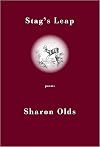
Stag's Leap is a fantastic collection of poetry. I've always admired her writing, her bravery, her honesty, and her wisdom. But I found her ability, in this collection, to look with honesty and compassion at the painful dissolution of her thirty year marriage, and its aftermath, staggering.
It won the Pulitzer five years ago, and it deserves it.
Here are a couple of examples from it.
The Flurry
When we talk about when to tell the kids,
we are so together, so concentrated.
I mutter, “I feel like show more a killer.” “I’m
the killer”—taking my wrist—he says,
holding it. He is sitting on the couch,
the old indigo chintz around him,
rich as a night sea with jellies,
I am sitting on the floor. I look up at him,
as if within some chamber of matedness,
some dust I carry around me. Tonight,
to breathe its Magellanic field is less
painful, maybe because he is drinking
a wine grown where I was born—fog,
eucalyptus, sempervirens—and I’m
sharing the glass with him. “Don’t catch
my cold,” he says, “—oh that’s right, you want
to catch my cold.” I should not have told him that,
I tell him I will try to fall out of
love with him, but I feel I will love him
all my life. He says he loves me
as the mother of our children, and new troupes
of tears mount to the acrobat platforms
of my ducts and do their burning leaps.
Some of them jump straight sideways, and, for a
moment, I imagine a flurry
of tears like a whirra of knives thrown
at a figure, to outline it—a heart’s spurt
of rage. It glitters, in my vision, I nod
to it, it is my hope.
****
An ending excerpt from "Last Look":
and I saw, again, how blessed my life has been,
first, to be able to love,
then, to have the parting now behind me,
and not to have lost him when the kids were young,
and the kids now not at all to have lost him,
and not to have lost him when he loved me, and not to have
lost someone who could have loved me for life. show less
It won the Pulitzer five years ago, and it deserves it.
Here are a couple of examples from it.
The Flurry
When we talk about when to tell the kids,
we are so together, so concentrated.
I mutter, “I feel like show more a killer.” “I’m
the killer”—taking my wrist—he says,
holding it. He is sitting on the couch,
the old indigo chintz around him,
rich as a night sea with jellies,
I am sitting on the floor. I look up at him,
as if within some chamber of matedness,
some dust I carry around me. Tonight,
to breathe its Magellanic field is less
painful, maybe because he is drinking
a wine grown where I was born—fog,
eucalyptus, sempervirens—and I’m
sharing the glass with him. “Don’t catch
my cold,” he says, “—oh that’s right, you want
to catch my cold.” I should not have told him that,
I tell him I will try to fall out of
love with him, but I feel I will love him
all my life. He says he loves me
as the mother of our children, and new troupes
of tears mount to the acrobat platforms
of my ducts and do their burning leaps.
Some of them jump straight sideways, and, for a
moment, I imagine a flurry
of tears like a whirra of knives thrown
at a figure, to outline it—a heart’s spurt
of rage. It glitters, in my vision, I nod
to it, it is my hope.
****
An ending excerpt from "Last Look":
and I saw, again, how blessed my life has been,
first, to be able to love,
then, to have the parting now behind me,
and not to have lost him when the kids were young,
and the kids now not at all to have lost him,
and not to have lost him when he loved me, and not to have
lost someone who could have loved me for life. show less
Lists
Awards


You May Also Like


Associated Authors
Statistics
- Works
- 39
- Also by
- 56
- Members
- 3,798
- Popularity
- #6,675
- Rating
- 4.0
- Reviews
- 52
- ISBNs
- 83
- Languages
- 3
- Favorited
- 21
