
Carolyn Forché
Author of The Country Between Us
About the Author
Carolyn Forche is the author of Gathering the Tribes, winner of the Yale Younger Poets Award; The Country Between Us, which received awards from the Academy of American Poets and the Poetry Society of America; and The Angel of History, winner of the Los Angeles Times Book Prize. She is also the show more editor of the anthology Against Forgetting: Twentieth-Century Poetry of Witness. Recently, she was presented with the Edita and Ira Morris Hiroshima Foundation Award for Peace and Culture in Stockholm. show less
Image credit: MDCarchives
Works by Carolyn Forché
Writing Creative Nonfiction: Instruction and Insights from Teachers of the Associated Writing Programs (2001) — Editor — 324 copies
The Mighty Stream: Poems in celebration of Martin Luther King (Newcastle/Bloodaxe Poetry) (2017) 6 copies
Associated Works
The Making of a Poem: A Norton Anthology of Poetic Forms (2000) — Contributor — 1,475 copies, 9 reviews
Literature: An Introduction to Fiction, Poetry, and Drama (1995) — Contributor, some editions — 1,017 copies, 7 reviews
Unfortunately, It Was Paradise: Selected Poems (2003) — Translator, some editions — 212 copies, 1 review
Language for a New Century: Contemporary Poetry from the Middle East, Asia, and Beyond (2008) — Foreword — 128 copies, 2 reviews
True Stories, Well Told: From the First 20 Years of Creative Nonfiction Magazine (2014) — Contributor — 56 copies, 10 reviews
Oppressive Light: Selected Poems by Robert Walser (2012) — Introduction, some editions — 25 copies, 1 review
Firsts: 100 Years of Yale Younger Poets (Yale Series of Younger Poets) (2019) — Contributor — 15 copies
Peace or perish : a crisis anthology — Contributor — 4 copies
Dear Yusef: Essays, Letters, and Poems, For and About One Mr. Komunyakaa (2024) — Contributor — 3 copies
Antaeus No. 18, Summer 1975 — Contributor — 2 copies
Antaeus No. 34, Summer 1979 — Contributor — 1 copy
Tagged
Common Knowledge
- Legal name
- Forché, Carolyn Louise
Sidlosky, Carolyn Louise (born) - Birthdate
- 1950-04-28
- Gender
- female
- Education
- Michigan State University
Bowling Green State Univesrity - Occupations
- poet
professor (English)
translator
journalist - Organizations
- Georgetown University
- Awards and honors
- Lannan Literary Award ( [1990])
Yale Series of Younger Poets
LA Times Book Critics Circle Award
Robert Creeley Award
Windham–Campbell Literature Prize (2017) - Relationships
- Mattison, Harry (husband)
- Nationality
- USA
- Birthplace
- Detroit, Michigan, USA
- Places of residence
- Detroit, Michigan, USA (birth)
El Salvador - Associated Place (for map)
- Michigan, USA
Members
Reviews
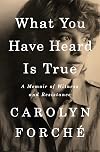
“Over the years, I have been asked why, as a twenty-seven-year-old American poet who spoke Spanish brokenly and knew nothing about the isthmus of the Americas, I would accept the invitation of a man I barely knew to spend time in a country on the verge of war. And why would this stranger…take any interest in a naïve North American poet?”
Poet Carolyn Forche’s memoir about her experiences in El Salvador. In 1977, Leonel, a Salvadoran activist and relatively unknown “friend of a show more friend,” shows up without warning at Carolyn’s home in California, gives her a crash course in Salvadoran history, and convinces her to travel to El Salvador to witness the beginning of the Salvadoran Civil War (1979-1992). He insists that poets are the best witnesses and asks her to write about what she sees.
Leonel knew that a civil war was imminent. He and Carolyn traveled the country. Many times, he left her to her own devices. She saw first-hand how the people lived and the human rights abuses that were being committed. This is one person’s journey on the road to understanding the interrelatedness among people of the world. It is her attempt to open the eyes of others the same way hers were opened by Leonel. I found it powerful and memorable. show less
Poet Carolyn Forche’s memoir about her experiences in El Salvador. In 1977, Leonel, a Salvadoran activist and relatively unknown “friend of a show more friend,” shows up without warning at Carolyn’s home in California, gives her a crash course in Salvadoran history, and convinces her to travel to El Salvador to witness the beginning of the Salvadoran Civil War (1979-1992). He insists that poets are the best witnesses and asks her to write about what she sees.
Leonel knew that a civil war was imminent. He and Carolyn traveled the country. Many times, he left her to her own devices. She saw first-hand how the people lived and the human rights abuses that were being committed. This is one person’s journey on the road to understanding the interrelatedness among people of the world. It is her attempt to open the eyes of others the same way hers were opened by Leonel. I found it powerful and memorable. show less
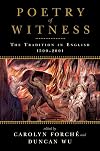
On January 22, I received an electronic review copy of Poetry of Witness from W.W. Norton. Like all of the Norton anthologies this book is huge, so I haven’t begun to work my way completely through it, but I am already at a point where I feel that, even if I used every superlative in my writer’s armamentarium, I wouldn’t be doing this collection justice.
Poetry of Witness, which Forché also calls literature of that-which-happened, has a long history, though I find it less often than show more I’d like in English-language poetry, which seems more preoccupied with relating the complexity of individual emotion—whether joyful of mournful. Forché’s forward, “Reading the Living Archives: The Witness of Literary Lives,” attempts to forge a definition of poetry of witness that captures its meaning for author, reader, and society alike, concluding
"In the poetry of witness, the poems make present to us the experience, rather than a symbolic representation. When we read the poem as witness, we are marked by it and become ourselves witnesses to what it has made present before us. Language incises the page, wounding it with testimonial presence, and the reader is marked by encounter with that presence. Witness begets witness. The text we read becomes a living archive."
Forché reminds us that this living archive is not just figurative, but literal: Anna Akhmatova burned many of her poems after friends had memorized them, keeping them present when their physical presence would have been a very real threat to her life.
Poetry of witness emerges from, not after, experience, since it testifies to experiences that cannot be left behind, cannot become after. Forché argues that the language of poetry of witness is a damaged—and therefore transformed—language. The body of thought, like the body itself can be broken, (partially) rebuilt, mended:
"The witness who writes out of extremity writes his or her wound, as if such writing were making an incision. Consciousness itself is cut open. At the site of the wound, language breaks, becomes tentative, interrogational, kaleidoscopic. The form of this language bears the trance of extremity, and may be composed of fragments: questions, aphorisms, broken passages of lyric prose or poetry, quotations, dialogue, brief and lucid passages that may or may not resemble what previously had been written."
This volume, which is arranged chronologically, is a companion to Forché’s 1993 anthology, Against Forgetting (also published by Norton), which focuses on 20th Century poetry of witness. Poetry of Witness, with its broader focus, offers a powerful lineage of refusal, of questioning, on individuals destroyed upon the altars of states. These poems are part of the flow of literary witness across the last five hundred years of our history: long, damaged, glistening strands, like ropes, like rivers, like the twist of dna. By testifying to the worst in us, they preserve not only horror, but the hope of something better.
I don’t have now, and don’t know if I ever will have, words to capture the fierce, essential nature of this collection. I do know I will read and reread it—and, I hope, use it as a spur to thought, word, and action. show less
Poetry of Witness, which Forché also calls literature of that-which-happened, has a long history, though I find it less often than show more I’d like in English-language poetry, which seems more preoccupied with relating the complexity of individual emotion—whether joyful of mournful. Forché’s forward, “Reading the Living Archives: The Witness of Literary Lives,” attempts to forge a definition of poetry of witness that captures its meaning for author, reader, and society alike, concluding
"In the poetry of witness, the poems make present to us the experience, rather than a symbolic representation. When we read the poem as witness, we are marked by it and become ourselves witnesses to what it has made present before us. Language incises the page, wounding it with testimonial presence, and the reader is marked by encounter with that presence. Witness begets witness. The text we read becomes a living archive."
Forché reminds us that this living archive is not just figurative, but literal: Anna Akhmatova burned many of her poems after friends had memorized them, keeping them present when their physical presence would have been a very real threat to her life.
Poetry of witness emerges from, not after, experience, since it testifies to experiences that cannot be left behind, cannot become after. Forché argues that the language of poetry of witness is a damaged—and therefore transformed—language. The body of thought, like the body itself can be broken, (partially) rebuilt, mended:
"The witness who writes out of extremity writes his or her wound, as if such writing were making an incision. Consciousness itself is cut open. At the site of the wound, language breaks, becomes tentative, interrogational, kaleidoscopic. The form of this language bears the trance of extremity, and may be composed of fragments: questions, aphorisms, broken passages of lyric prose or poetry, quotations, dialogue, brief and lucid passages that may or may not resemble what previously had been written."
This volume, which is arranged chronologically, is a companion to Forché’s 1993 anthology, Against Forgetting (also published by Norton), which focuses on 20th Century poetry of witness. Poetry of Witness, with its broader focus, offers a powerful lineage of refusal, of questioning, on individuals destroyed upon the altars of states. These poems are part of the flow of literary witness across the last five hundred years of our history: long, damaged, glistening strands, like ropes, like rivers, like the twist of dna. By testifying to the worst in us, they preserve not only horror, but the hope of something better.
I don’t have now, and don’t know if I ever will have, words to capture the fierce, essential nature of this collection. I do know I will read and reread it—and, I hope, use it as a spur to thought, word, and action. show less
OMG that was so good! This is a love story, not of romantic love but of the love one has for the person who made them see the world, that taught them to be consequential.
Briefly, Forche was a young poet, teaching at a small college and hiding from the world as she mourned the death by suicide of her Vietnam veteran husband when a Salvadoran resistance leader (this was pre-revolution) dropped on her doorstep through the most tenuous and unlikely of circumstances and convinced her to come to show more witness and then report on the oppression the campasinos were experiencing at the hands of a brutal US-backed regime. Eventually, Carolyn finds herself narrowly escaping death squads, but not escaping seeing their carnage. This is a terrifying painful and riveting story filled with that rarest of things, naked truth. The story is told without softness, there are no spoons filled with sugar to help things go down, but perhaps the one bit of sweetness is Forche's prose, some of the most perfect I have ever read.
I read this and listened to the audio in turn. The words are so beautiful they scream to be seen on the page, but Forche's smoky confiding voice brought an intimacy to this tale that feels like talking to the most interesting person in the world at a coffee shop at 4 am, and that is something I would not have wanted to miss. show less
Briefly, Forche was a young poet, teaching at a small college and hiding from the world as she mourned the death by suicide of her Vietnam veteran husband when a Salvadoran resistance leader (this was pre-revolution) dropped on her doorstep through the most tenuous and unlikely of circumstances and convinced her to come to show more witness and then report on the oppression the campasinos were experiencing at the hands of a brutal US-backed regime. Eventually, Carolyn finds herself narrowly escaping death squads, but not escaping seeing their carnage. This is a terrifying painful and riveting story filled with that rarest of things, naked truth. The story is told without softness, there are no spoons filled with sugar to help things go down, but perhaps the one bit of sweetness is Forche's prose, some of the most perfect I have ever read.
I read this and listened to the audio in turn. The words are so beautiful they scream to be seen on the page, but Forche's smoky confiding voice brought an intimacy to this tale that feels like talking to the most interesting person in the world at a coffee shop at 4 am, and that is something I would not have wanted to miss. show less
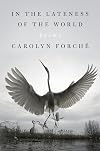
Occasionally you can attend a reading that is path-altering. I had the chance to hear Ms. Forche read a couple of times in the 80s. Students were talking about and sharing poems from her collection The Country Between Us, and her anthology of Poetry of Witness - Against Forgetting was still to come.
Forche spoke of a necessary space between the personal and political where witness poetry emerged – a space made necessary because of the too-narrow definitions that existed. That, in a time show more when young writers tended toward labels - political or confessional or romantic maybe - helped break the illusion that lives could be so compartmentalized.
The poems in her latest collection ‘In the Lateness of the World’ emerge out of this social realm but not without taking a hard look at Western minds that still want to keep lives wracked by war, and our unsavory histories, out of our mind’s eye. The poet shines a light migrations and crossings, and the harm and illusion of insulating ones' self whether in Asia, Central America, Detroit or on the Greek Isles where an overwhelming number of refugees pass. Her work alludes to earliest depictions of war in Western literature, a feeling of intergenerational trauma that overcomes our best efforts to shut it off.
In her poem 'Charmolypi,' this grief descends across generations, an “ache in the cage of breath” or a “light sound of wings brushing the walls” (57), being something brought down from Parnassus by Clio the Muse of History, a feeling that catches us unaware as if all the collective loss across generations were still present. The poem exists both as an acknowledgment of public grief but perhaps also as a rebuke for trying to distance ourselves.
There seem to be at least two certainties about the desire to wall ourselves off – its futility and our repeated efforts to do it.
In ‘Transport,’ Forche provides the reader with a catalog of ways to travel through this ancient land from rickshaws, to oxcarts, to taxis and small trucks. The speaker relates a set of instructions, saying that if the driver ‘struck/a man on foot we should run away before the car / is torched by the crowd and the driver killed.’ The idea of being a bystander collapses and the visions of burning cars invades the speaker’s dreams. Her poem is an answer to the idea of viewing the world from a mythical place of safety – which doesn’t exist. Our likelihood of doing harm diminishes as we stop trying to insulate ourselves – when we ‘go on foot’ (68).
Insulating creates a world surrounded by treachery, an area outside the light’s radius that is cause for fear. This is not the world of the poet whose proper work is to illuminate. Work that demands living like ‘the lensmaker who died / with his lungs full of glass’ or the ‘yew in blossom when the bees swarm’ becoming ‘their amber cathedral.’ The cost of this, like the case of the lensmaker, may be fatal but perhaps the reward ‘Nothing/to be afraid’ is greater. (13).
Forche, who has introduced so many newer readers to poets of witness such as Lorca and Mandelstam, has devoted much of her poetic life to this idea of illumination and implied the danger of writing from behind barriers. The images here put us in the scenes of atrocity, seeing many of them emerging from history, with Forche acting as our guide saying 'I will get you there' (6). show less
Forche spoke of a necessary space between the personal and political where witness poetry emerged – a space made necessary because of the too-narrow definitions that existed. That, in a time show more when young writers tended toward labels - political or confessional or romantic maybe - helped break the illusion that lives could be so compartmentalized.
The poems in her latest collection ‘In the Lateness of the World’ emerge out of this social realm but not without taking a hard look at Western minds that still want to keep lives wracked by war, and our unsavory histories, out of our mind’s eye. The poet shines a light migrations and crossings, and the harm and illusion of insulating ones' self whether in Asia, Central America, Detroit or on the Greek Isles where an overwhelming number of refugees pass. Her work alludes to earliest depictions of war in Western literature, a feeling of intergenerational trauma that overcomes our best efforts to shut it off.
In her poem 'Charmolypi,' this grief descends across generations, an “ache in the cage of breath” or a “light sound of wings brushing the walls” (57), being something brought down from Parnassus by Clio the Muse of History, a feeling that catches us unaware as if all the collective loss across generations were still present. The poem exists both as an acknowledgment of public grief but perhaps also as a rebuke for trying to distance ourselves.
There seem to be at least two certainties about the desire to wall ourselves off – its futility and our repeated efforts to do it.
In ‘Transport,’ Forche provides the reader with a catalog of ways to travel through this ancient land from rickshaws, to oxcarts, to taxis and small trucks. The speaker relates a set of instructions, saying that if the driver ‘struck/a man on foot we should run away before the car / is torched by the crowd and the driver killed.’ The idea of being a bystander collapses and the visions of burning cars invades the speaker’s dreams. Her poem is an answer to the idea of viewing the world from a mythical place of safety – which doesn’t exist. Our likelihood of doing harm diminishes as we stop trying to insulate ourselves – when we ‘go on foot’ (68).
Insulating creates a world surrounded by treachery, an area outside the light’s radius that is cause for fear. This is not the world of the poet whose proper work is to illuminate. Work that demands living like ‘the lensmaker who died / with his lungs full of glass’ or the ‘yew in blossom when the bees swarm’ becoming ‘their amber cathedral.’ The cost of this, like the case of the lensmaker, may be fatal but perhaps the reward ‘Nothing/to be afraid’ is greater. (13).
Forche, who has introduced so many newer readers to poets of witness such as Lorca and Mandelstam, has devoted much of her poetic life to this idea of illumination and implied the danger of writing from behind barriers. The images here put us in the scenes of atrocity, seeing many of them emerging from history, with Forche acting as our guide saying 'I will get you there' (6). show less
Lists
Awards


You May Also Like


Associated Authors
Statistics
- Works
- 25
- Also by
- 32
- Members
- 2,490
- Popularity
- #10,300
- Rating
- 4.0
- Reviews
- 35
- ISBNs
- 54
- Languages
- 3
- Favorited
- 7